


Turned Foot Dresser
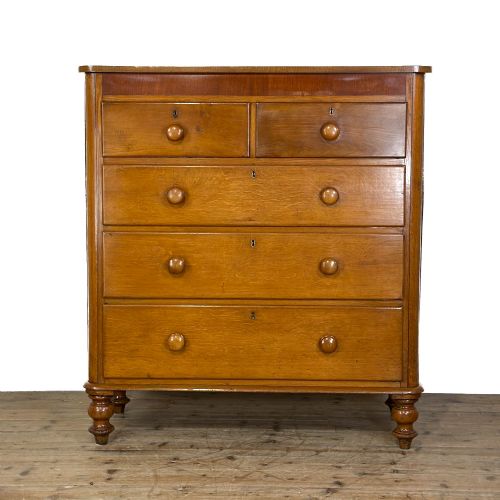
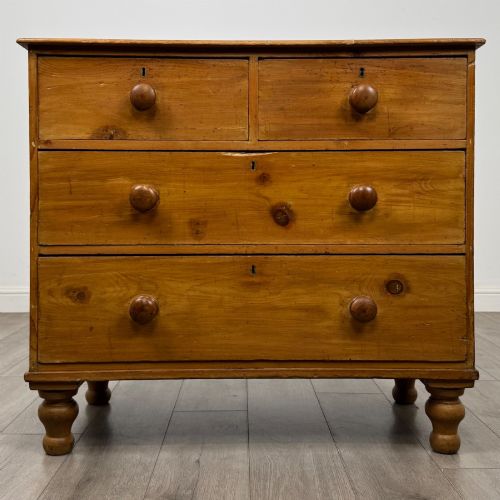
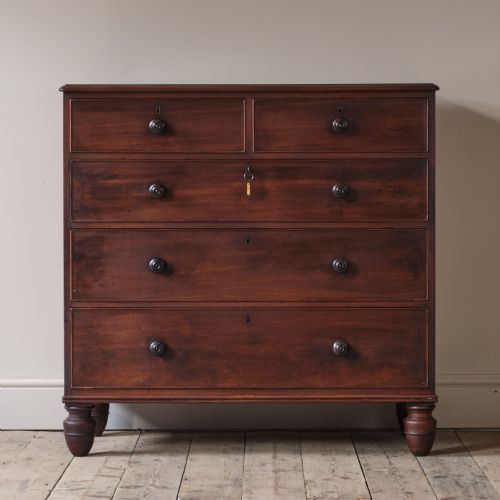
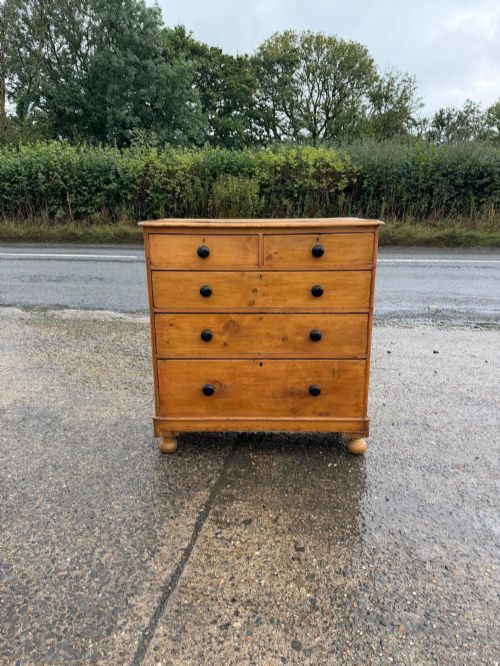
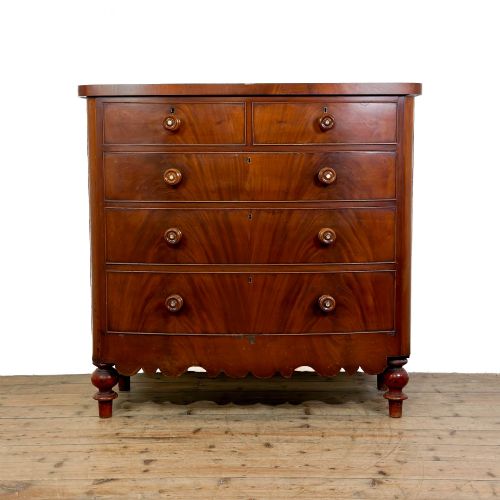
These turned foot dresser examples are solid wood chests of drawers built for storing linen and household goods with traditional joinery.
Turned Foot Dresser
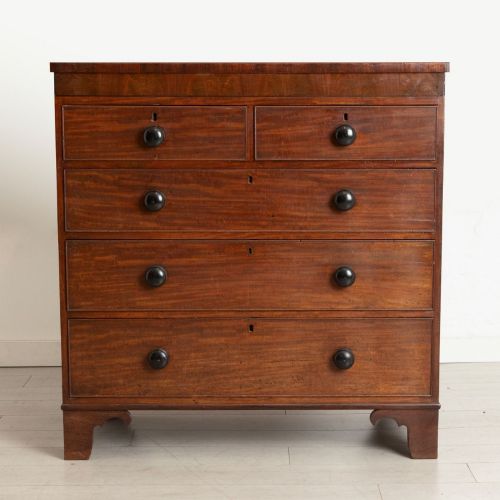
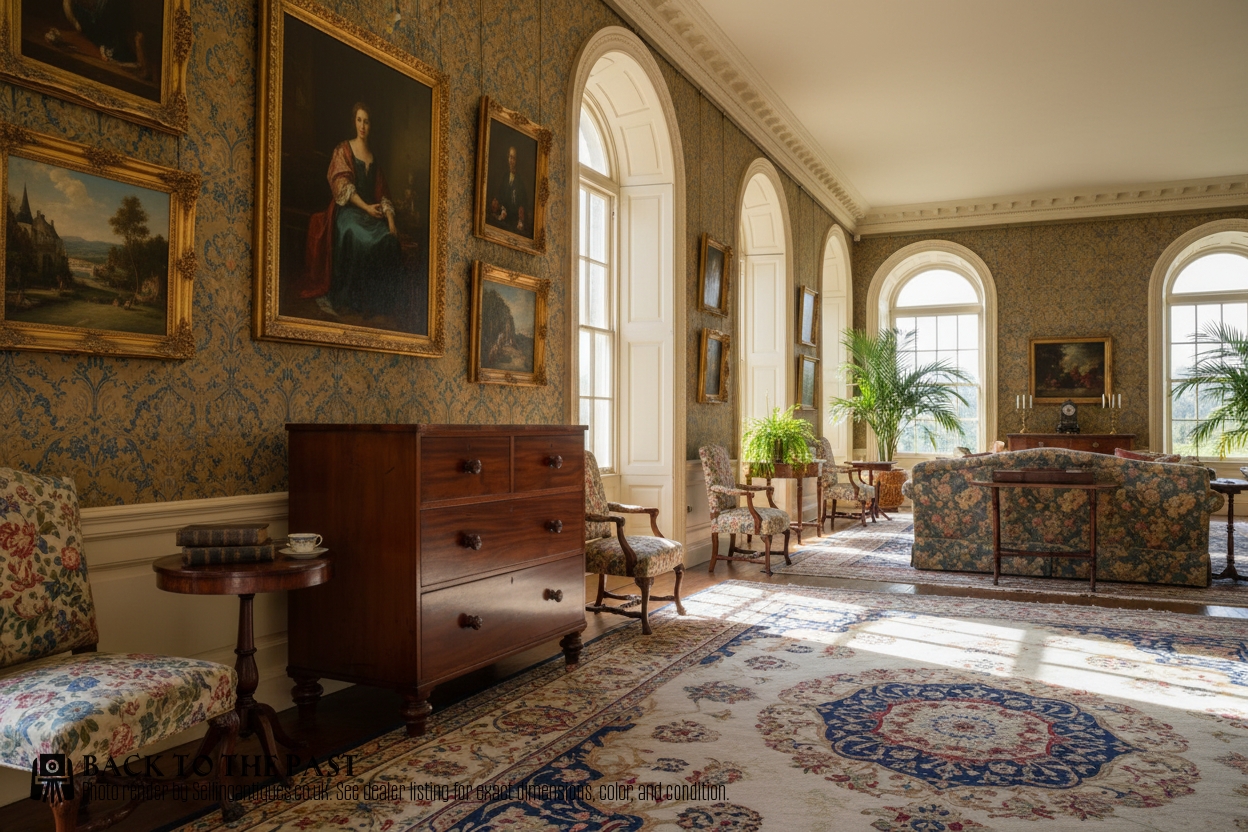
A turned foot dresser is primarily represented here by chests of drawers spanning the Georgian, Regency, and Victorian periods. These pieces serve as functional bedroom and parlour furniture designed with multiple tiers of drawers.
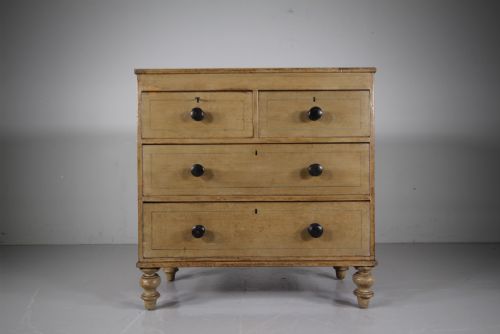
The most common examples on this page are pine and mahogany chests of drawers, often constructed in two over three drawer formats. Buyers also encounter painted pine variants and occasional specialised pieces featuring satin birch or amboyna.
Origins range from English country workshops to French interpretations, displaying styles from early Georgian through to late Victorian country aesthetics. Each piece relies on sturdy wooden construction suited to domestic storage.
How they were made
Construction relies heavily on timber selection, utilising solid pine and mahogany alongside wood veneer surfaces. Cabinetmakers built these carcases using traditional joints, integrating brass hardware and occasionally mother of pearl detailing.
Surface finishes include original paint and polished wood grains that highlight the natural qualities of the timber. Turned wooden knobs and distinct turned feet anchor the structural design of the lower sections.
Some nineteenth-century drawers retain original turned wooden knobs that still wobble gently after generations of daily pulls.
What varies in quality
The grade of timber and the preservation of original surfaces distinguish finer examples from standard utility pieces. Mahogany and figured veneers generally denote higher workshop status compared to everyday painted pine.
Intact original hardware, such as brass pulls and turned feet, elevates a piece's integrity. Superior execution is visible in the crispness of the turned components and the alignment of the drawer tiers.
T & G Seddon
The Turned Foot Dresser Glossary
- Chest of drawers
- A standard item of furniture consisting of multiple parallel drawers stacked above each other. They provide bulk storage for clothing and textiles.
- Bow front
- A convex curved front facade common on Georgian and Victorian case pieces. This stylistic choice softens the rectangular profile of the furniture.
- T & G Seddon
- A notable nineteenth-century cabinetmaking firm known for documented workshop production. Their pieces reflect high standards of urban craftsmanship.
Turned Foot Dresser: Frequently Asked Questions
What is a turned foot dresser?
A turned foot dresser refers to traditional wooden chests of drawers raised on lathe-turned wooden feet. These pieces function as heavy-duty bedroom storage.
They appear across Georgian, Regency, and Victorian eras in timbers like pine and mahogany.
How do I date a chest of drawers?
Dating relies on timber choice, construction techniques, and hardware styles observed across the piece. Georgian and Regency examples often feature different proportions to Victorian pine pieces.
Drawer configuration and foot design further clarify the period of manufacture.
Are painted pine chests authentic?
Many nineteenth-century pine chests retain their original paint finishes applied during the Victorian period. Original paint surfaces are valued by collectors for showing honest domestic history.
Such pieces often originate from country workshops rather than urban cabinetmakers.
What wood was used most?
Pine and mahogany dominate the materials recorded in these listings. Pine served local domestic utility furniture while mahogany was favoured for formal rooms.
Exotic veneers like amboyna and satin birch appear on select decorative pieces.