



Turned Floor Lamp
These turned floor lamp pieces bring height and warm illumination to a room, crafted from traditional timber and brass.
Turned Floor Lamp
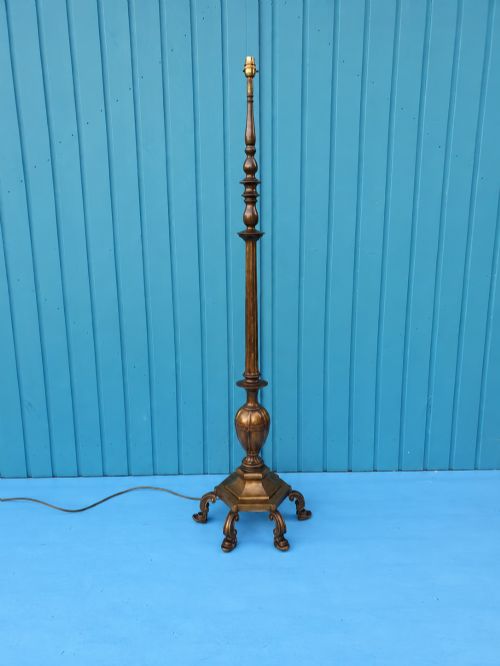
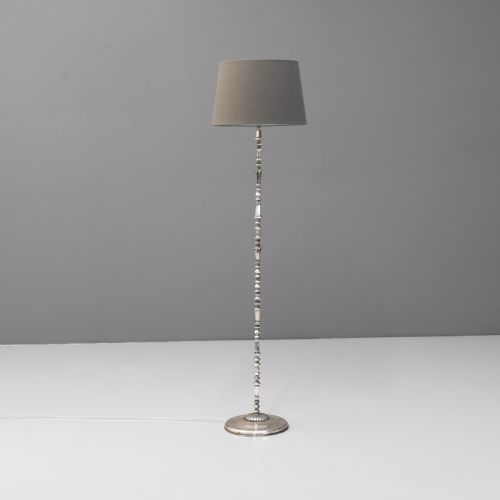
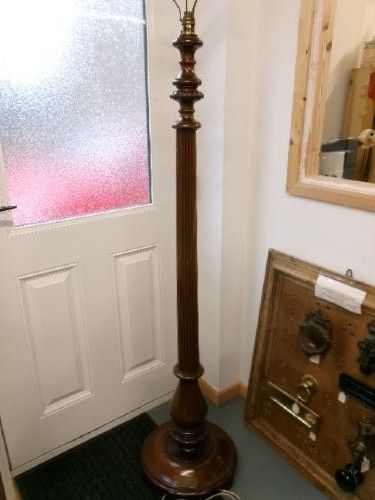
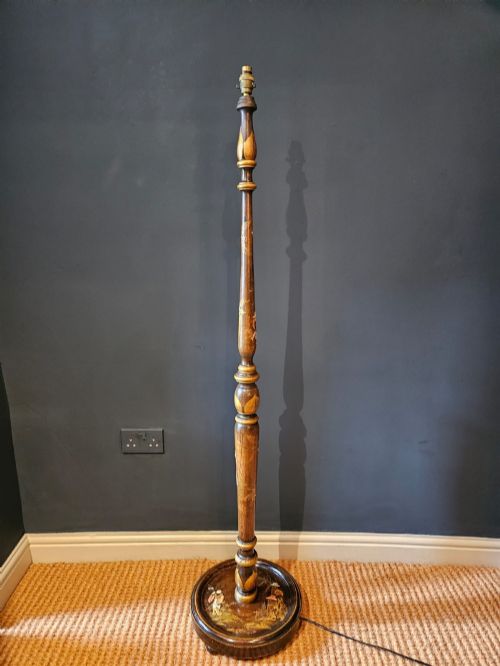
A turned floor lamp is a tall vertical lighting fixture shaped on a lathe, appearing across periods from the Victorian era through the 1930s. These pieces take the form of standard lamps in wood, mahogany, oak, and brass.
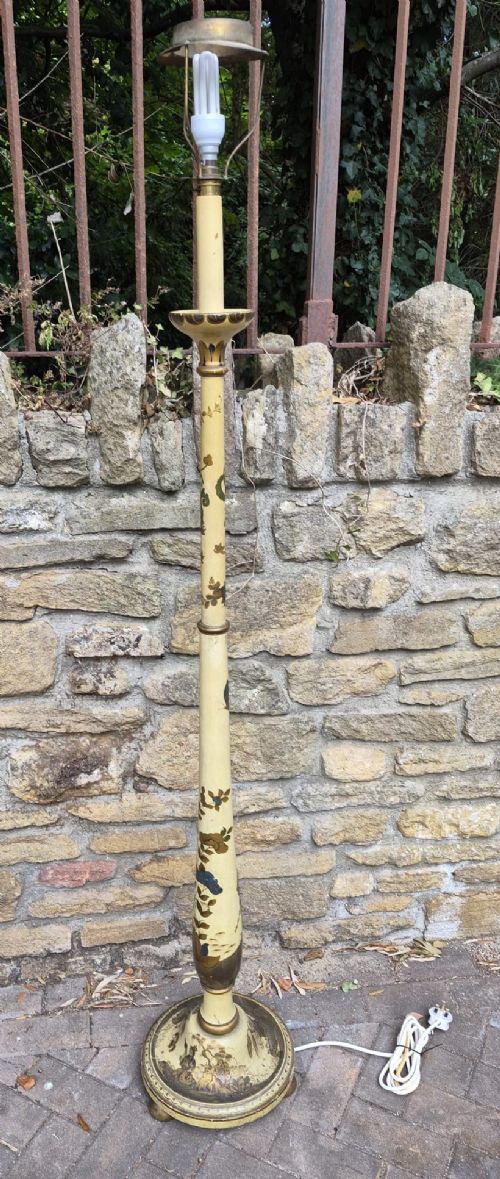
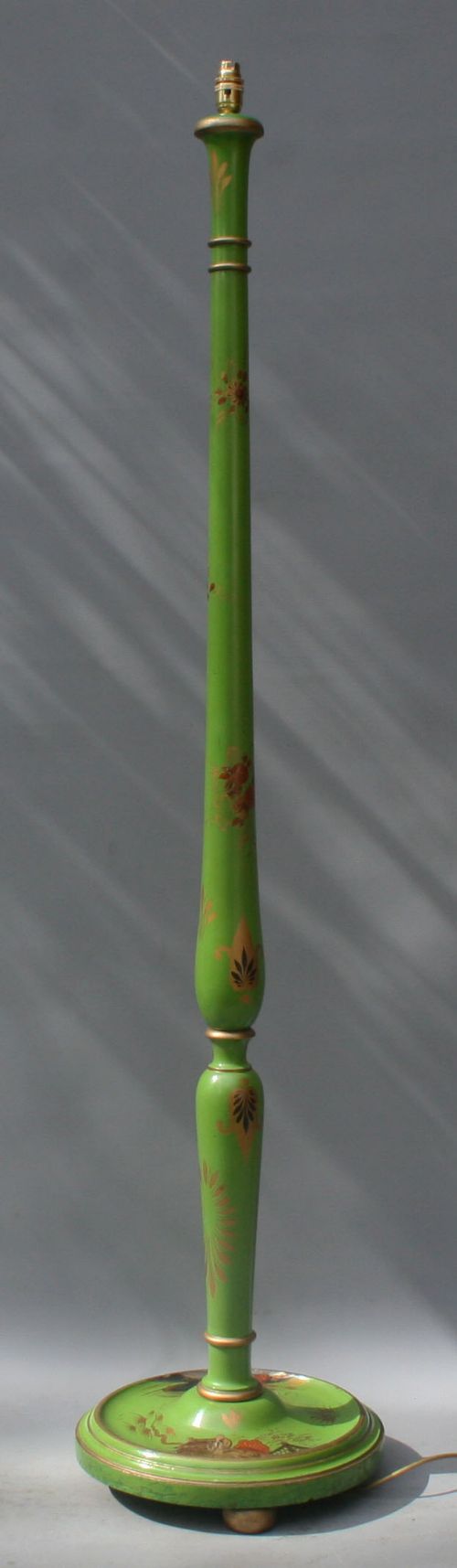
Buyers frequently encounter examples from the Edwardian period and the interwar years, alongside revival styles like Regency Revival and Georgian Revival. Painted wood and Chinoiserie decorated versions also feature among these selections.
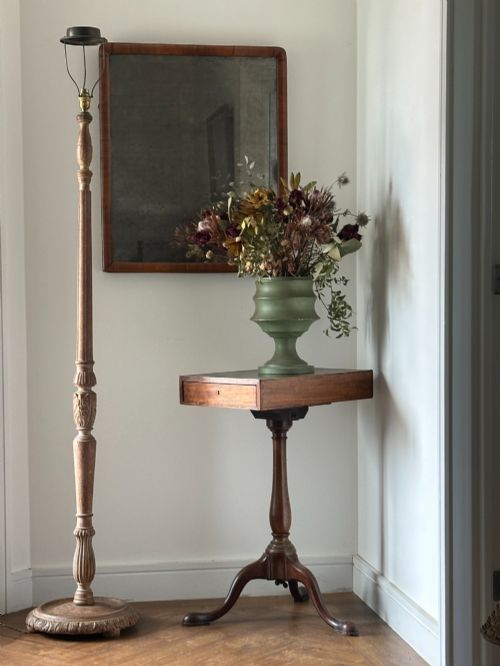
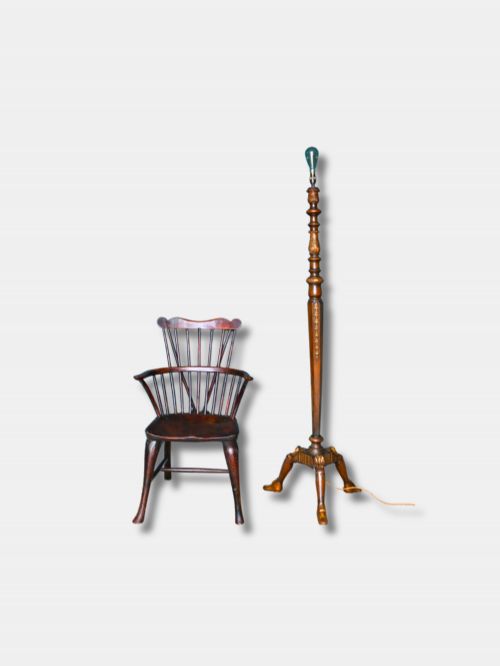
The upright columns often display classical turning details, supported on tripod bases or heavy weighted feet designed to maintain stability. They serve as functional reading lights or corner illumination in traditional interiors.
Construction and Materials
Wood turning forms the core method of construction, utilising timbers such as mahogany, oak, walnut, beech, and pine shaped on a lathe. Carpenters turned the central columns into slender pillars with reeded, fluted, or spool-moulded profiles.
Metal components appear in brass fittings and weighted bases, while decorative surfaces utilise parcel gilt, lacquer, and painted wood finishes, particularly on Chinoiserie examples. Fabric shades complete the structures, sometimes paired with glass shade configurations.
Turned Floor Lamp Retail Price Guide 2026
Typical asking prices for turned floor lamp among the pieces listed under this phrase on Sellingantiques today, from the lower quarter to the upper quarter. They describe what is for sale here now, not the wider market.
Some nineteenth-century makers evidently believed a standard lamp required both roses and thistles to feel properly settled in a British room.
Assessing Quality and Craftsmanship
Quality rests in the precision of the timber turning and the stability of the base construction. Heavier woods like mahogany and walnut offer greater structural integrity than softer pine alternatives.
The refinement of surface decoration, such as hand-applied parcel gilt or detailed Chinoiserie lacquer work, separates standard utility pieces from finer decorative examples.
The Turned Floor Lamp Glossary
- Standard Lamp
- The traditional British term for a floor lamp, used widely across antique and vintage listings. It denotes a tall, free-standing lighting column designed to sit beside furniture.
- Turning
- The process of shaping wood on a lathe by rotating it against cutting tools. This technique produces symmetrical, rounded mouldings along the central column of the lamp.
- Chinoiserie
- European imitation of Chinese artistic traditions, featuring hand-painted motifs and lacquer finishes. This style appears on lamp standards dating from the Victorian era into the 1930s.
- Parcel Gilt
- A decorative technique where specific carved or turned details are highlighted with gold leaf or paint. It is often found on walnut or painted wood lamp bases.
- Tripod Base
- A three-legged support structure beneath the main column. This design ensures stability for tall vertical timber standards.
Turned Floor Lamp: Frequently Asked Questions
What is a turned floor lamp?
A turned floor lamp is a tall interior lighting fixture featuring a vertical wooden column shaped on a lathe. These pieces are also historically termed standard lamps.
They emerged in various period styles, including Edwardian, Victorian, and interwar designs, incorporating materials like mahogany, oak, and brass.
How do I date a floor lamp?
Dating relies on identifying timber types, decorative motifs, and construction methods associated with specific decades. Edwardian and Victorian pieces often show denser hardwoods and traditional hand-finishing.
Interwar examples from the 1920s and 1930s sometimes introduce painted Chinoiserie decoration or different wiring configurations.
Where should I place a standard lamp?
Standard lamps suit corners, beside armchairs, or next to sofas where they provide ambient or reading illumination. Their vertical height adds presence without occupying excessive floor space.
They integrate well into English Country and traditional period room schemes.
What is the difference between oak and mahogany lamps?
Oak lamps typically display prominent grain patterns and heavier textures, fitting well into Arts and Crafts or cottage interiors. Mahogany versions offer a smoother, darker surface often associated with formal revival styles.
Both timbers provide the necessary weight for a stable upright standard.