

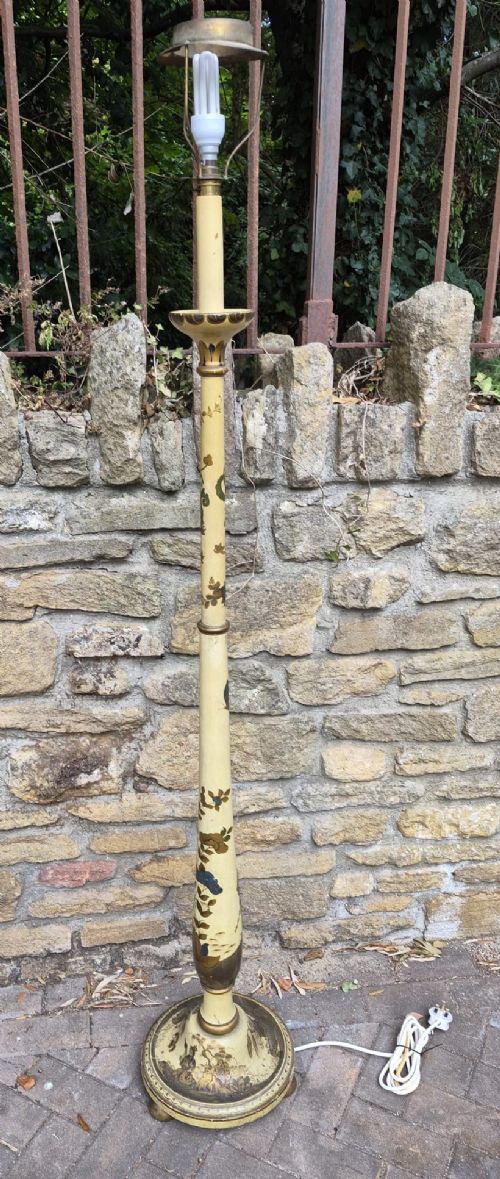


Turn Wood Standard Lamp
A turn wood standard lamp brings height and vertical presence to a room, offering practical illumination through substantial turned timber columns.
Turn Wood Standard Lamp
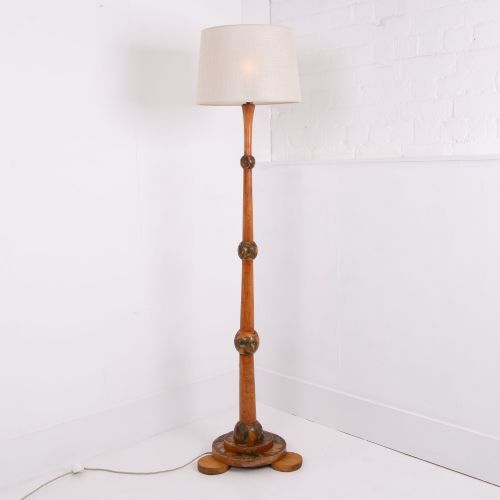
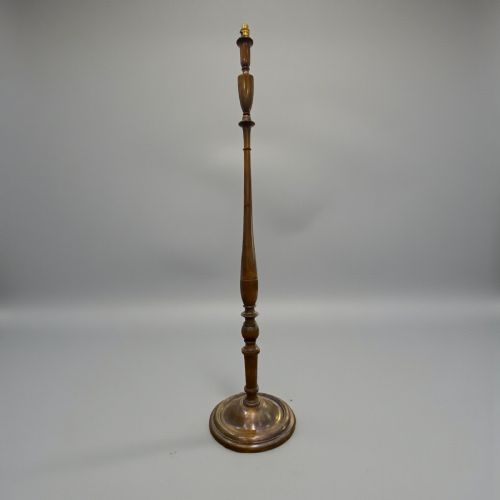
When you search for a turn wood standard lamp, you find tall floor-standing lighting solutions designed to anchor a corner or sit beside a reading chair. These pieces stand on sturdy weighted or timber bases, rising through carved and shaped shafts to hold a shade.
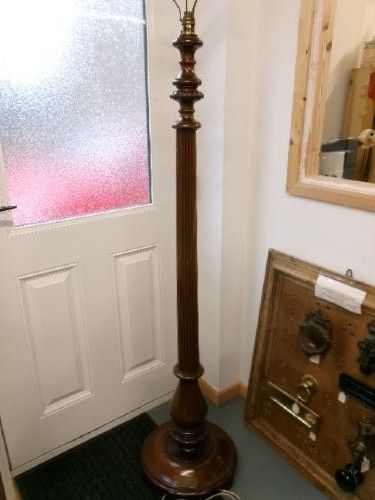
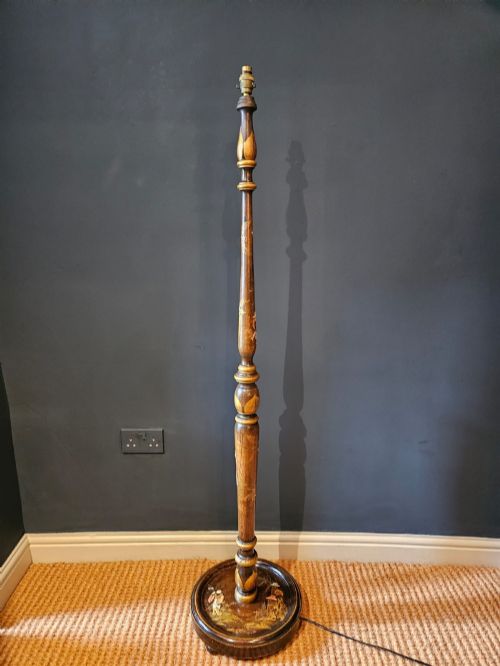
The examples gathered here span from the nineteenth century into the nineteen-thirties, taking forms such as the Edwardian oak standard lamp, carved mahogany standard lamp, and tall turned beech floor lamp. They draw on styles including English Country, Regency Revival, Art Deco, and Chinoiserie.
You are most likely to encounter mahogany, walnut, oak, beech, and pine constructions, alongside painted wood, ebonised wood, and parcel gilt finishes. Many retain or complement brass fittings and fabric shades.
How they were made
These lamps rely on traditional carpentry and woodturning techniques to shape substantial timber into slender, balanced vertical columns. Lathe work creates reeded, fluted, and bobbin-turned profiles that give each shaft its characteristic rhythm and rigidity.
Cabinet makers utilised dense hardwoods like mahogany and walnut alongside more accessible timbers such as beech, oak, and pine. Surface treatments range from clear polish to elaborate Chinoiserie decoration, parcel gilding, and ebonising.
Turn Wood Standard Lamp Retail Price Guide 2026
Typical asking prices for turn wood standard lamp among the pieces listed under this phrase on Sellingantiques today, from the lower quarter to the upper quarter. They describe what is for sale here now, not the wider market.
Several tall lamps secretly house triple glass shades to spread the glow.
What varies in quality
The distinction between ordinary and exceptional standards lies primarily in the ambition of the turning and the choice of timber. Finely figured mahogany or walnut columns with crisp, deep relief carving command greater attention than simple utility pine posts.
Proportion and stability determine the success of the design. A superior lamp balances a heavy, stable base with a slender, perfectly plumb shaft that resists any tendency to wobble.
Heals
The Turn Wood Standard Lamp Glossary
- Standard lamp
- A tall floor-standing lamp designed to illuminate a room from a standing position. These fixtures typically stand between five and six feet tall.
- Turned wood
- Timber shaped on a lathe while rotating, producing symmetrical decorative mouldings and cylindrical profiles. This method creates the central columns seen on these lamps.
- Chinoiserie
- European decorative style inspired by Chinese art and design, featuring painted motifs and lacquered surfaces. It appears on several Victorian and Edwardian examples.
- Parcel gilt
- Wood surfaces partially decorated with gold leaf or gilt paint to highlight specific carved details. This technique adds subtle gleam to darker timber grounds.
- Ebonised wood
- Timber treated with a dark stain or finish to imitate expensive ebony. This process was popular for creating stark, formal contrast in nineteenth-century interiors.
Turn Wood Standard Lamp: Frequently Asked Questions
What is a turn wood standard lamp?
A turn wood standard lamp is a tall floor lamp featuring a wooden column shaped on a lathe. These pieces provide ambient lighting while serving as sculptural vertical elements in a room.
They appear in various timbers and styles, ranging from plain country beech to carved mahogany and decorated Chinoiserie.
How were standard lamps used historically?
These lamps stood beside armchairs, pianos, or in dark corners to provide focused reading light or general illumination before overhead wiring was common. Their portability allowed homeowners to shift pools of light as room layouts changed.
They often formed part of a coordinated drawing room scheme alongside matching furniture.
How do I style a standard lamp today?
Place a standard lamp beside a comfortable seating area where the height can direct light downward for reading. Pair the timber base with a complementary fabric shade to balance the vertical mass against surrounding furniture.
Older examples work well in traditional and eclectic interiors where natural wood tones add warmth.
How do I date an antique standard lamp?
Dating relies on timber choice, turning styles, and surface finishes characteristic of specific periods like the Edwardian era or the nineteen-thirties. Regency Revival pieces draw on earlier classical motifs, while Chinoiserie examples reflect specific decorative vogues.
Wiring methods and lampholders also offer clues, though many pieces have been updated for modern safety standards.