





Turn of Century Urns
Turn of century urns bring sculptural presence and refined proportion to a room, spanning styles from Victorian revival to organic Art Nouveau.
Turn of Century Urns
When you search for turn of century urns, you encounter decorative vessels, pedestals, and related stands that reflect the shifting tastes of the late nineteenth and early twentieth centuries. These pieces encompass classical revivals alongside fluid Art Nouveau designs and utilitarian treen forms.
The versions most common on this page date from the Victorian, Edwardian, and nineteen-hundred periods. They manifest in materials ranging from turned hardwoods to glazed earthenware and chased metal.
Makers and potteries from Britain, continental Europe, and beyond contributed to this category, producing everything from domestic treen to exhibition ceramics.
Materials and construction
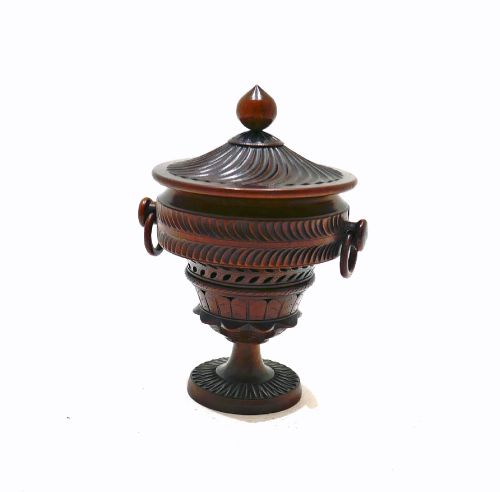
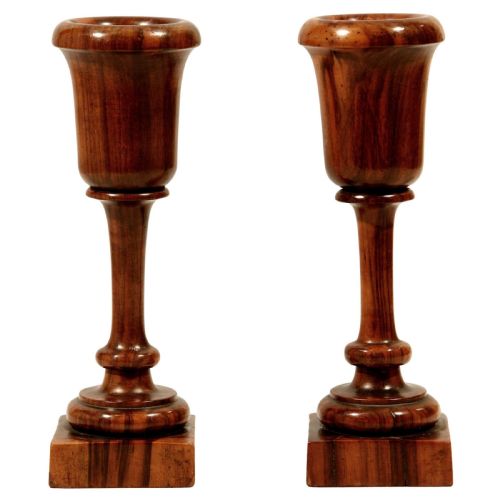
Turned timber vessels rely on dense woods such as walnut, mahogany, fruitwood, and lignum vitae, shaped on a lathe to exploit the natural grain and ring patterns of the material. Artisans utilised boxwood inlay and polished finishes to enhance the surfaces of these turned objects.
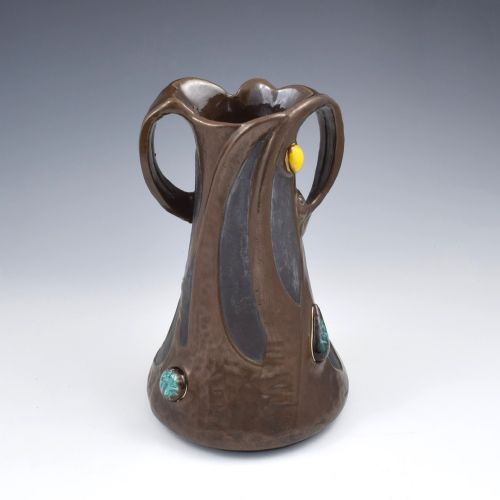
Ceramic and metal examples employ diverse techniques including stoneware throwing, copper mounting, iridescent glass blowing, and champlevé enamel work. Potteries applied lustre glazes, applied cabochons, and chased floral decorations to achieve rich textural contrast.
Turn of Century Urns Retail Price Guide 2026
Typical asking prices for turn of century urns among the pieces listed under this phrase on Sellingantiques today, from the lower quarter to the upper quarter. They describe what is for sale here now, not the wider market.
Listings span the eighteenth, nineteenth, and early twentieth centuries, featuring wood, earthenware, porcelain, copper, and bronze.
Judging quality in turn of century urns
Quality rests in the precision of the turning, the depth of the metal chasing, and the integrity of the ceramic body or glaze. Superior examples display crisp definition in cast or carved ornament without muddying of detail.
The balance of proportions and the selection of timber or clay body dictate the visual weight of the piece. Workshops known for specific artistic direction achieved superior harmony between form and decorative surface.
Royal Doulton Lambeth·Zsolnay Pecs·Bretby Pottery·Ernst Wahliss·Goldscheider·LCT Tiffany
The Turn of Century Urns Glossary
- Treen
- Small domestic wooden objects made by turning or carving. This term covers everything from lidded cups to spill vases.
- Champlevé
- An enamelling technique where troughs are dug into a metal surface and filled with vitreous enamel before firing. It creates rich decorative patterns on bronze bases.
- Favrile glass
- An iridescent art glass developed by Louis Comfort Tiffany. The technique produces a shimmering, rainbow-like surface effect.
- Jardiniere
- An ornamental pot or stand designed to hold a plant or floral arrangement. They appear frequently in ceramic, metal, and turned wood.
- Cabochon
- A polished gemstone or rounded glass jewel set into metalwork. These provide tactile colour accents on decorative metal vessels.
Turn of Century Urns: Frequently Asked Questions
What defines turn of century urns?
These pieces comprise decorative vessels, jardiniere stands, and classical pedestals produced around nineteen hundred. They bridge historic revival styles and modern decorative arts.
Makers utilised diverse media including ceramics, bronze, and turned timber to create sculptural objects for domestic display.
How were these urns used originally?
Many served as purely decorative focal points on mantelpieces, side tables, or dedicated pedestals. Others functioned as jardiniere stands for indoor plants or as lidded containers.
They demonstrated household refinement and cosmopolitan taste during the late Victorian and Edwardian eras.
How do I style these in a modern interior?
Place a ceramic or bronze urn on a side table or mantel to introduce height and texture. Wooden treen vessels anchor natural material palettes in contemporary spaces.
Pair pedestals with sculptural objects to draw the eye upwards and create balanced focal points within a room.
How can I tell Art Nouveau from earlier styles?
Art Nouveau pieces feature organic, asymmetrical lines inspired by plant forms and fluid movement. In contrast, nineteenth-century revival styles adhere to strict classical symmetry and historical precedent.
Glazes, chased metalwork, and figural motifs often signal the transition towards the twentieth century.