


Turn of Century Sewing
Turn of century sewing items span fine mahogany work tables and practical accessories from the Georgian, Regency, and Victorian eras.
Turn of Century Sewing
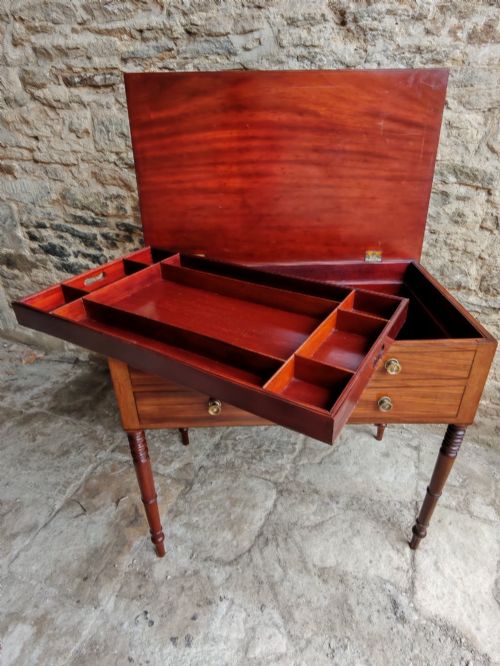
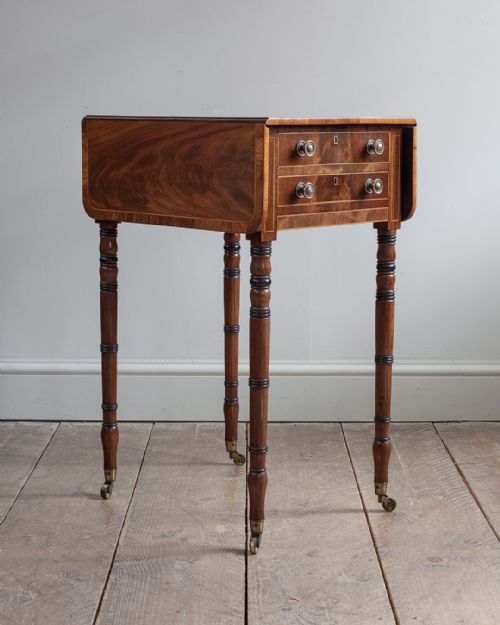
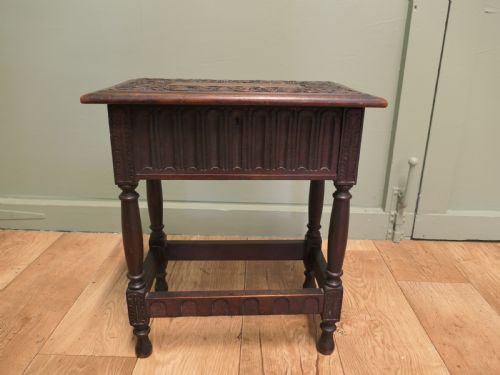
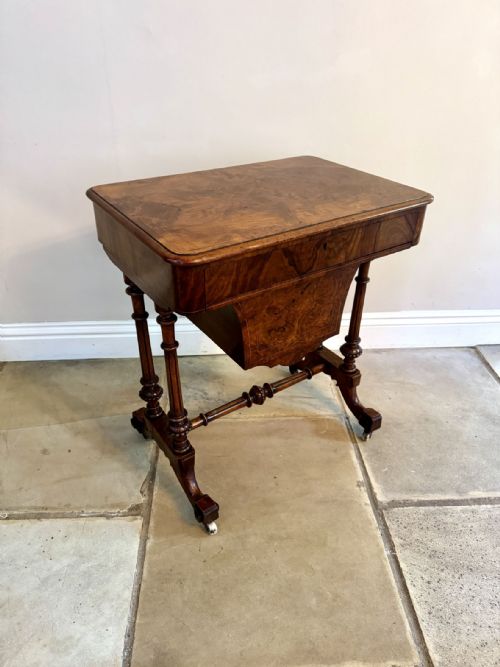
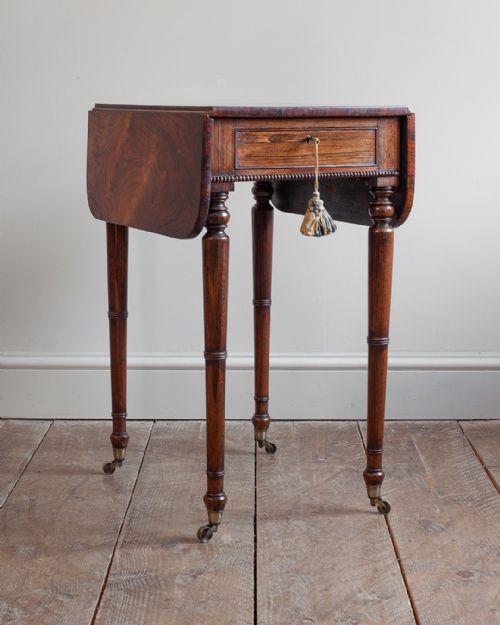
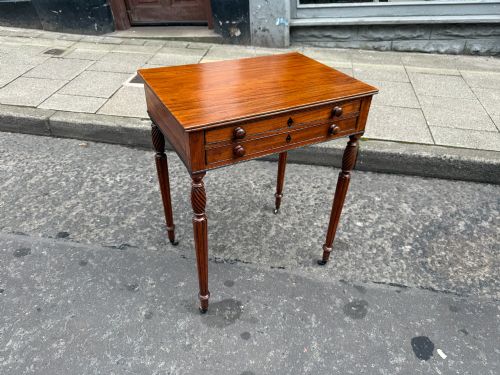
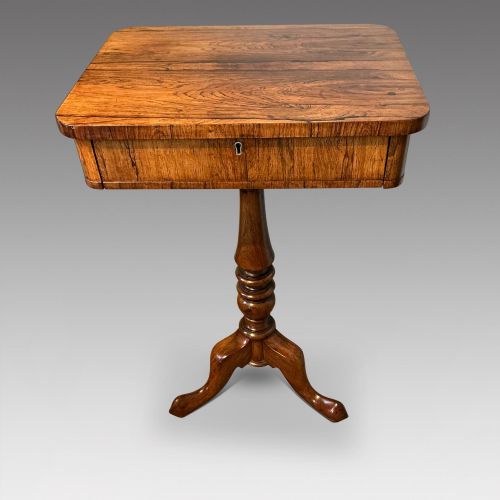
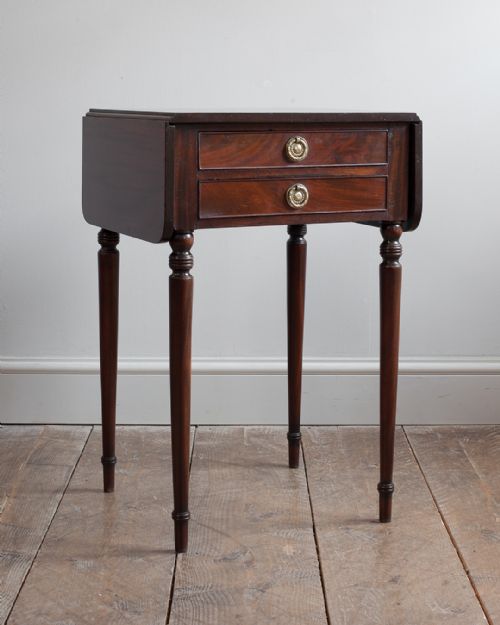
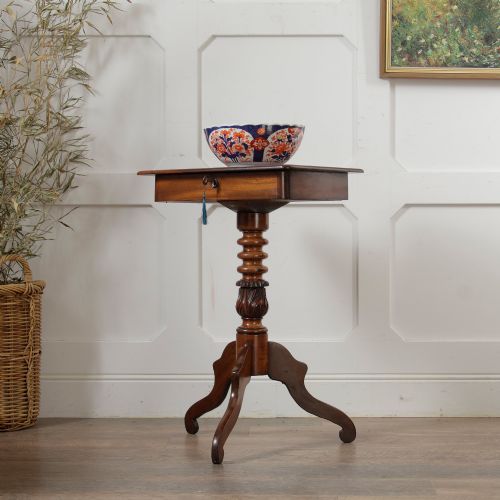
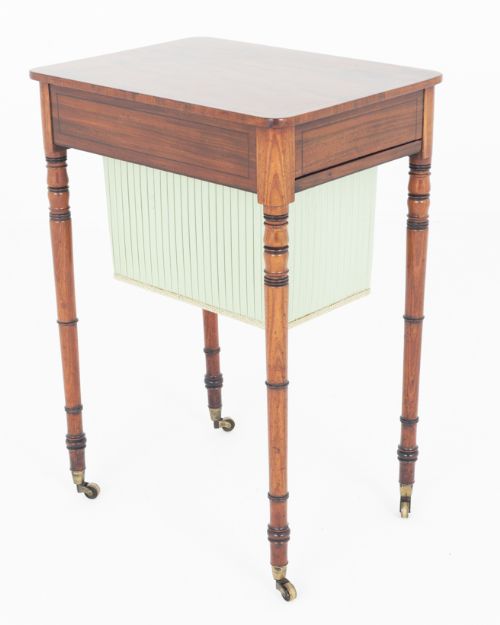
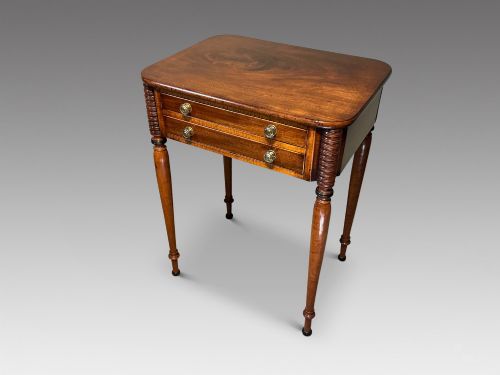
Turn of century sewing pieces encompass sophisticated work tables, sewing tables, and specialised textile tools designed for domestic needlework. The selection includes pedestal tables, drop-leaf variations, and occasional tables equipped with drawers to store threads, needles, and fabric.
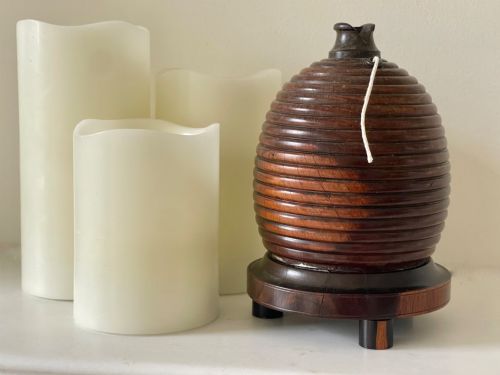
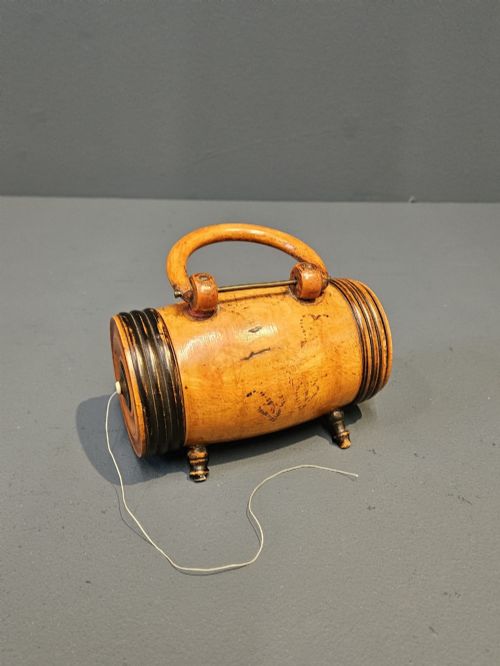
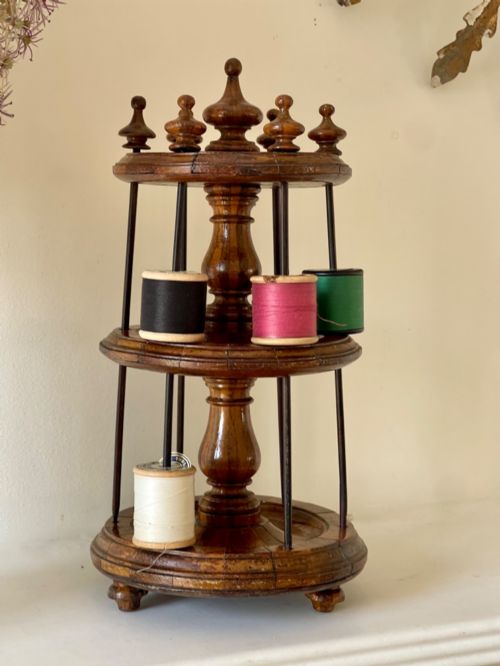
Most examples hail from the 19th century, with Regency and Victorian designs dominating the selection. Alongside furniture, buyers encounter smaller implements like cotton reel stands and bobbin winders that reflect the period's craft culture.
How they were made
Cabinetmakers utilised rich timbers such as mahogany, rosewood, walnut, and burr walnut, frequently employing flame veneers to create striking grain patterns. Satinwood and maple provided contrasting highlights on finer tables.
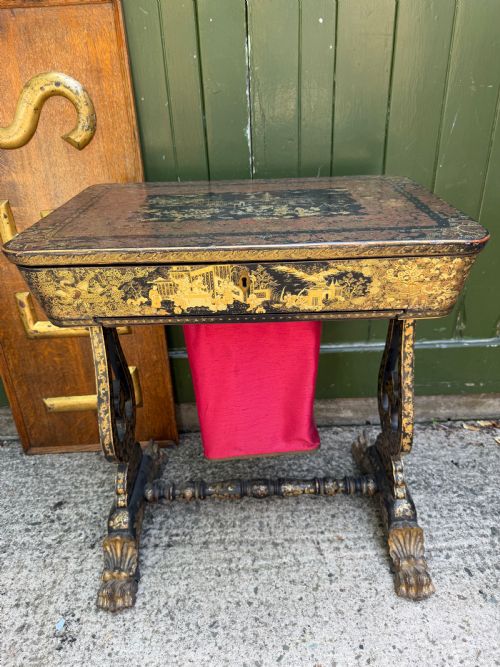
Structural elements incorporated turned supports, carved details, and drop-leaf mechanisms. Chinese Export pieces added gilded decoration over lacquer surfaces, while smaller accessories utilised carved wood and specialised textile tools.
Turn of Century Sewing Retail Price Guide 2026
Typical asking prices for turn of century sewing among the pieces listed under this phrase on Sellingantiques today, from the lower quarter to the upper quarter. They describe what is for sale here now, not the wider market.
Listings feature periods from the 18th century through the Victorian era, utilising mahogany, rosewood, walnut, and satinwood.
What varies in quality
Quality rests in the choice of timber and the precision of the cabinetwork, from plain mahogany frames to intricately inlaid burr walnut. Finer examples display superior grain matching and sophisticated pedestal turns.
The integration of functional compartments, such as fitted drawers for sewing accessories, elevates the utility and desirability of the piece. Decorative flourishes, including gilded lacquer work or delicate stringing, separate standard items from superior works.
The Turn of Century Sewing Glossary
- Work table
- A small domestic table designed specifically for needlework and textile storage, usually featuring an internal compartment or drawer.
- Bobbin winder
- A mechanical tool used to wind thread onto bobbins for sewing, often found as a turned wooden antique from the eighteenth century.
- Drop-leaf table
- A table with hinged flaps on either side that can be raised to extend the surface area or lowered when space is limited.
- Pedestal table
- A table supported by a central pillar rising from a stable base, common in Regency and Victorian designs.
- Burr walnut
- A highly prized timber veneer taken from the burl growths of the walnut tree, known for its swirling, knotted grain patterns.
Turn of Century Sewing: Frequently Asked Questions
What is a work table?
A work table is a specialised piece of furniture designed to hold sewing gear, threads, and textile tools. These tables often feature fitted drawers or compartments beneath the top.
They served as functional companions for ladies performing needlework in the drawing room during the Regency and Victorian periods.
How do I date a sewing table?
Dating relies on identifying the primary wood species, leg styles, and construction methods. Regency pieces often showcase rosewood and bold brass inlay, while Victorian examples frequently use burr walnut.
Looking at the interior compartment construction and turning details on the pedestal provides further chronological clues.
Are these tables suitable for modern rooms?
These compact tables fit easily into contemporary living spaces as side tables or occasional surfaces. Their drawers provide convenient concealed storage for small household items.
Their rich mahogany and walnut tones bring warmth and traditional character to modern interiors.