



Antique Sewing Machine
These heavy iron machines and adapted tables bridge practical domestic history and industrial design.
Antique Sewing Machine
When you search for an antique sewing machine, you encounter cast iron mechanisms, fitted wooden cabinets, and versatile tables suited for modern interiors. The pieces span the Victorian, Edwardian, and twentieth-century eras, reflecting both functional domestic utility and robust industrial manufacturing.
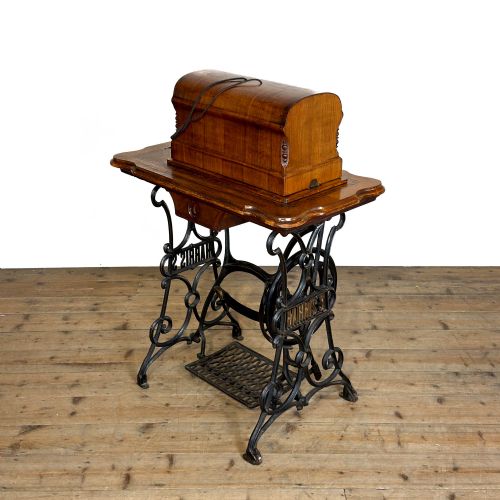
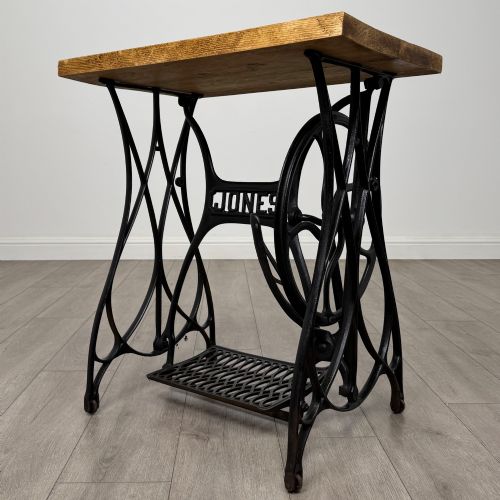
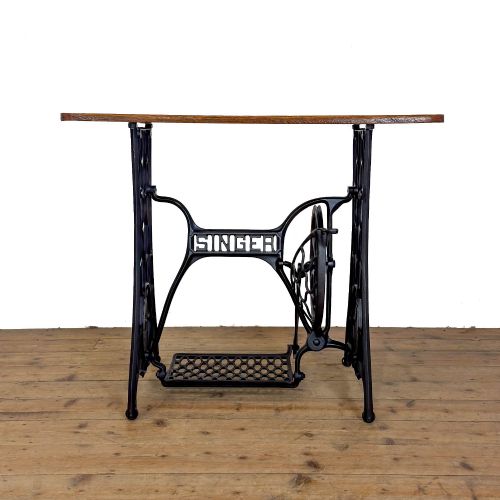
Most examples you meet on this page include machinery mounted on heavy cast iron bases or repurposed into side tables, console tables, and desk chairs. Materials such as elm, oak, walnut, steel, and brass frequently appear alongside the core cast iron structures.
Makers and distributors like Singer, Gritzner and Co, New Goodrich, Kimball & Morton, and Faudels of London represent the historical output. These objects survive either as complete boxed machines or as adapted furniture with timber and marble tops.
How they were made
Makers relied heavily on cast iron for structural bases, providing the immense weight and stability required for high-speed mechanical operation. Steel and brass components formed the intricate inner workings, while enamel and mother-of-pearl added surface decoration.
Timber selection varied according to domestic placement, utilising elm, oak, and walnut for table tops, desks, and fitted sewing cabinets. Intricate decorative touches such as Tunbridge inlay occasionally feature on Victorian boxed cased examples.
Antique Sewing Machine Retail Price Guide 2026
Typical asking prices for sewing machine among the pieces listed under this phrase on Sellingantiques today, from the lower quarter to the upper quarter. They describe what is for sale here now, not the wider market.
Object forms span complete boxed machines, industrial chairs, side tables, console tables, and dedicated sewing cabinets.
What varies in quality
The degree of original surface preservation separates standard machinery from exceptional survivals. Intact enamel finishes, clear maker markings, and well-maintained mother-of-pearl detailing elevate the desirability of the piece.
The quality of conversion work dictates the value of adapted tables and consoles. Expert integration of timber or marble tops with the original cast iron base creates a harmonious piece of furniture.
Singer·Gritzner and Co·New Goodrich·Kimball & Morton·Faudels of London
The Antique Sewing Machine Glossary
- Treadle
- A foot-operated pedal mechanism that powered the sewing machine via a connecting rod and flywheel. This allowed the operator to use both hands to guide the fabric.
- Cast iron
- A strong, heavy alloy of iron and carbon poured into moulds to form the rigid frames and ornate legs of the machines. Its substantial weight prevented vibration during operation.
- Tunbridge inlay
- A meticulous woodworking technique using tiny mosaic wood blocks to create pictorial or geometric patterns on boxes and cabinet surfaces. It is characteristic of specific Victorian decorative items.
- Console table
- A long, narrow table designed to be placed against a wall, frequently formed by adapting sewing machine bases with a new top. These make efficient use of compact spaces in domestic rooms.
Antique Sewing Machine: Frequently Asked Questions
How do I date an antique sewing machine?
Dating relies on mechanical patents, serial numbers stamped into the iron or brass, and stylistic details of the wooden cabinetry. Victorian models often feature ornate cast iron scrolls, whereas twentieth-century examples display cleaner industrial lines.
Evidence from this page shows periods ranging from the nineteenth century through the 1930s, including specific dates like 1885 and 1921.
Were sewing machines used as furniture?
Many machines were built directly into walnut or oak cabinets designed to fold away when not in use. This allowed heavy mechanical equipment to double as domestic side tables or console surfaces.
Over time, surviving cast iron bases frequently receive new elm, oak, or marble tops to serve as modern side tables and desks.
What is a treadle sewing machine?
A treadle machine uses a foot pedal connected by a belt to drive the internal mechanism without electricity. The operator rocks their foot up and down to maintain a steady sewing speed.
These heavy iron bases now form the foundation for many industrial style side tables and chairs found in contemporary homes.
How do I clean a cast iron base?
Cleaning requires removing surface dust with a soft brush and applying light oil or wax to protect the metal from rust. Harsh chemical cleaners can strip away original painted finishes and gold decals.
Preserving the original black cast iron and enamel decoration maintains the historic character of the piece.