









Turkoman Tribal Rug
A turkoman tribal rug brings woven geometry and deep red hues from Central Asian tents directly onto the floor.
Turkoman Tribal Rug
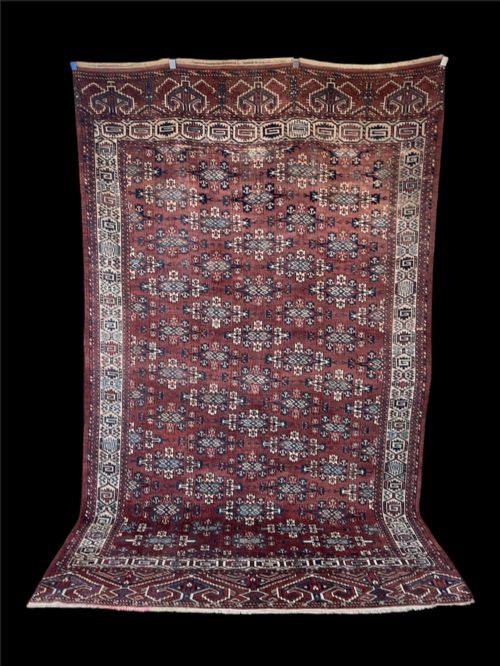
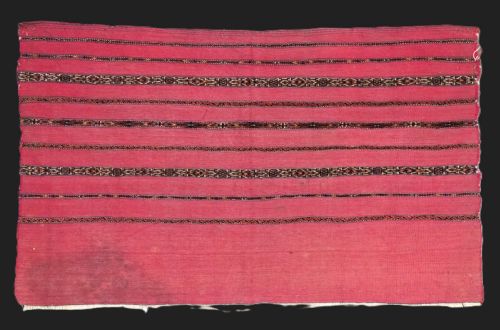
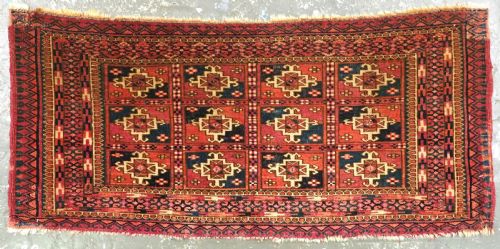
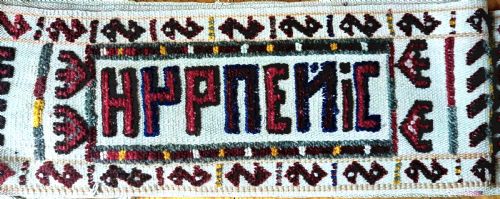
A turkoman tribal rug covers a broad category of woven pieces originating from Central Asia, including major carpets, dowry rugs, tent bands, and small trappings such as chuval faces. Most examples encountered here date from the nineteenth and early twentieth centuries, spanning periods from eighteen fifty to nineteen twenty.
The tradition encompasses distinct tribal groups, with Tekke, Yomut, Ersari, Kizil Ayak, and Karakalpak weavers producing characteristic formats. Pieces range from large floor carpets and runners to functional tent accessories like okbash pole bags and mafrash faces.
Materials and construction
Makers utilised wool and cotton, occasionally incorporating silk highlights to add contrast to the woven surface. Natural dyes provided the deep red, madder-based ground colours that define the visual impact of these textiles.
Weavers knotted the pile densely by hand on foundational warps and wefts, creating durable structures designed to withstand nomadic use inside yurt structures.
Turkoman Tribal Rug Retail Price Guide 2026
Typical asking prices for turkoman tribal rug among the pieces listed under this phrase on Sellingantiques today, from the lower quarter to the upper quarter. They describe what is for sale here now, not the wider market.
Some dowry weavings include silk highlights designed to catch the flickering light of a yurt fire during evening celebrations.
What separates the best pieces
Quality rests in the tightness of the weave, the crispness of the geometric gul motifs, and the depth of the natural dye palette. Finer examples display meticulous knotting and intricate secondary ornaments within the borders.
Condition and completeness also govern the standing of a piece, particularly on older tent trappings and chuval faces that originally served functional roles in tribal life.
The Turkoman Tribal Rug Glossary
- Gul
- A repeating primary medallion motif used by Central Asian weavers. Different tribal groups employ distinct gul designs to signify their heritage.
- Chuval
- A large storage bag face produced by tribal nomads. These panels are frequently preserved and collected as individual rugs.
- Tent Band
- A long woven strip used structurally and decoratively inside a yurt. They measure considerable lengths and encircle the tent framework.
- Okbash
- A specialised tent pole bag placed over the ends of roof struts. They feature triangular tops and narrow necks.
- Mafrash
- A rectangular storage chest face used in nomadic households. Collectors prize these panels for their compact, concentrated design.
Turkoman Tribal Rug: Frequently Asked Questions
How do I identify a Tekke rug?
Tekke rugs typically display rows of octagonal gul medallions on a rich madder red field. They often include fine knotting and precise geometric borders.
Secondary ornaments and asymmetric details help distinguish them from Yomut or Ersari productions.
Where were these rugs made?
Nomadic and settled tribes produced these textiles across Central Asia, including regions associated with modern Turkmenistan and Afghanistan. Weavers worked within specific tribal confederations.
Local plants provided the dyes for the wool harvested from regional flocks.
How should I display a tent band?
Tent bands are extremely long woven strips that function well mounted horizontally along a wall. Their continuous geometric patterns make them effective architectural accents.
Proper backing support helps distribute the weight evenly during hanging.
What is a chuval face?
A chuval face is the decorative front panel of a large nomadic storage sack. Families used these bags inside tents for household storage.
When separated from the plain back panel, they survive as complete pictorial compositions.