



Tunbridge Ware Wood Box
A tunbridge ware wood box brings intricate mosaic geometry and natural timbers straight to a desk or dressing table.
Tunbridge Ware Wood Box
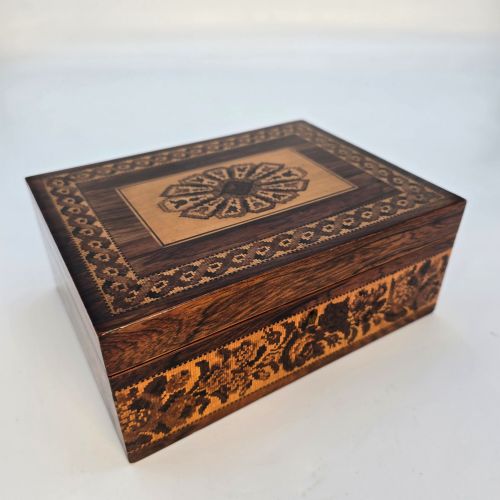
Every tunbridge ware wood box displays meticulous wood mosaic, forming geometric patterns or pictorial scenes from tiny coloured wood blocks. These pieces emerge across the Georgian, Regency, and Victorian periods in forms ranging from tea caddies and writing slopes to small trinket and stationary boxes.
The construction typically relies on rosewood, walnut, or sycamore foundations adorned with detailed marquetry and parquetry. Buyers meet domestic containers designed for letter writing, sewing, jewellery storage, and card games like cribbage.
Makers utilised native and exotic timbers including boxwood and holly to achieve distinct contrasts in the mosaic imagery. These containers served functional domestic roles while demonstrating high levels of decorative woodwork.
Construction and Materials
Craftsmen glued together numerous small strips of dyed and natural woods into geometric or pictorial bundles, then sliced them thinly across the grain to produce multiple identical mosaic tiles. These mosaic bands and panels were applied to sturdy wooden carcases formed from rosewood, walnut, or sycamore.
Makers incorporated contrasting woods such as boxwood, holly, and various mixed woods to define borders and create shading within the floral or architectural motifs. Brass fittings occasionally appear on writing slopes and larger boxes to secure lids and internal compartments.
Tunbridge Ware Wood Box Retail Price Guide 2026
Typical asking prices for tunbridge ware wood box among the pieces listed under this phrase on Sellingantiques today, from the lower quarter to the upper quarter. They describe what is for sale here now, not the wider market.
Keepers of cribbage boxes enjoyed intricate peg tracks hidden alongside tiny mosaic boards, perfect for settling polite parlour disputes.
Judging Quality
The refinement of the mosaic work dictates the distinction between standard items and superior examples, particularly in the scale and complexity of the tesserae. Finer pieces maintain crisp alignment across intricate geometric bands or pictorial panels without visible gaps in the timber.
The selection of base woods, such as figured walnut or dense rosewood, influences the overall presence of the object. Master makers achieved greater depth through careful colour balancing of holly, boxwood, and sycamore segments.
Edmund Nye·Henry Hollamby
The Tunbridge Ware Wood Box Glossary
- Marquetry
- Wood veneer arranged in pictorial designs. Craftsmen cut various timber veneers to form elaborate scenes or motifs applied to the box surface.
- Parquetry
- Geometric wood patterns formed by fitted veneer pieces. This technique creates repetitive tiling effects across lids and sides.
- Tesserae
- The individual small blocks of wood used in mosaic construction. These tiny segments form the complex patterns characteristic of the ware.
- Tea caddy
- A container designed for storing loose tea leaves. These boxes often feature internal compartments and fitted lids.
Tunbridge Ware Wood Box: Frequently Asked Questions
What are tunbridge ware boxes made of?
These boxes combine a solid or veneered wood carcase, such as rosewood, walnut, or sycamore, with intricate surface mosaics. Craftsmen used numerous natural and dyed timbers including boxwood and holly to build up the detailed patterns.
The mosaic sections consist of tiny wooden tiles sliced from bundled rods, creating precise geometric borders and pictorial panels across the exterior.
How do I date a tunbridge ware box?
Dating relies on the overall box form, timber choices, and stylistic markers associated with the Georgian, Regency, and Victorian periods. Writing slopes, tea caddies, and specific stationery formats align with the domestic habits of those eras.
Maker signatures or attribution to workshops like those of Edmund Nye or Henry Hollamby further help narrow the production timeframe during the nineteenth century.
How were these boxes used originally?
Owners utilised these containers to organise correspondence, store jewellery, hold sewing implements, or keep playing cards and cribbage pegs. Tea caddies specifically preserved expensive tea leaves within partitioned interior spaces.
Their decorative nature also made them display pieces for parlour tables, showcasing the owner's taste for intricate domestic woodwork.
How should I care for a wooden box?
Keep the piece away from direct sunlight and dramatic shifts in temperature or humidity to protect the delicate wood mosaic. Gentle dusting with a dry cloth maintains the surface without disturbing the veneer.
Avoid applying modern polishes or liquid cleaners, which can seep between the tiny wooden tesserae and weaken the historic glue.