


Tufted Red Leather Chairs
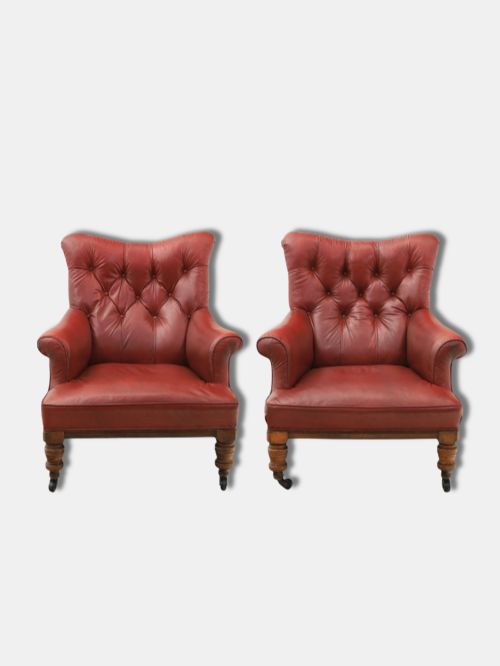
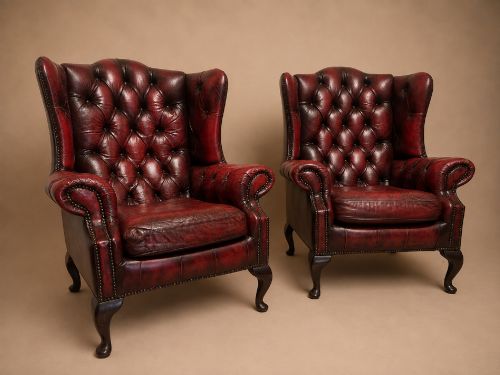
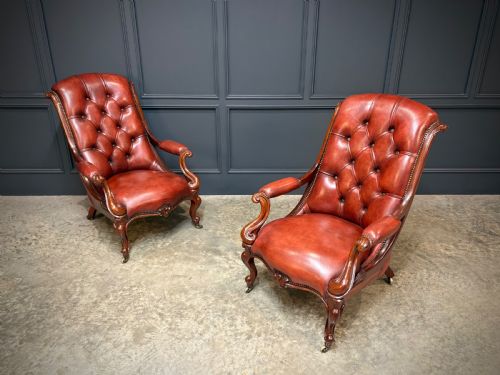
These tufted red leather chairs bring warmth and grounded comfort to a room, ranging from deep library armchairs to compact desk seats.
Tufted Red Leather Chairs
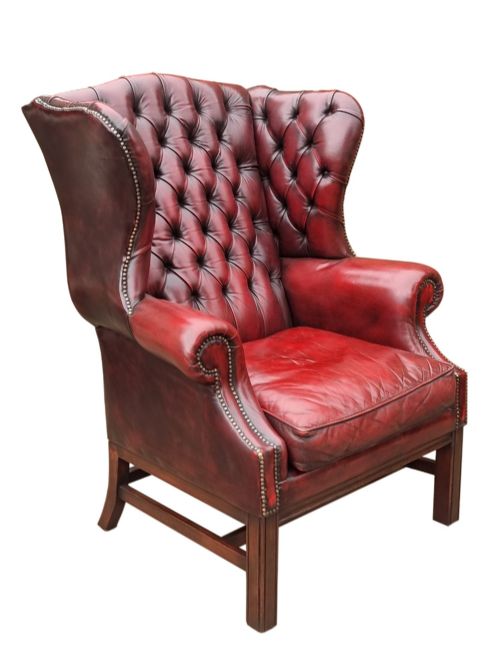
Tufted red leather chairs cover a wide spectrum of seating, from large Chesterfield wingbacks to library armchairs and smaller desk chairs. When searching for tufted red leather chairs, buyers often encounter Victorian buttoned examples alongside George III style pieces and twentieth-century interpretations in oxblood rexine.
The selection ranges across distinct periods including Georgian, William IV, Victorian, and the early twentieth century. Forms span armchairs, wing chairs, revolving desk chairs, nursing chairs, and occasional stools.
Originating largely from traditional British workshops, these pieces serve practical seating roles while anchoring a room with rich red, oxblood, or burgundy tones.
How They Were Made
Makers built the frames of these chairs using sturdy timbers such as mahogany, oak, walnut, and rosewood. These durable hardwoods provided the structural integrity needed for heavy library and desk chairs.
Upholsters worked leather and rexine over padding, securing the surface with deep buttoning and brass detailing. This traditional construction method created the characteristic tufted texture seen across the pieces.
Listings feature frames in mahogany, oak, walnut, and rosewood, paired with red leather, burgundy leather, and oxblood rexine.
What Varies in Quality
The distinction between standard seating and finer examples lies in the quality of the timber frame and the depth of the upholstery work. Superior pieces display carefully chosen mahogany, walnut, or rosewood alongside precise buttoning.
Proportion and execution define the higher end of the range, particularly in George III style wingbacks and nineteenth-century library chairs. The integration of mechanical elements, such as revolving bases or reclining functions, also distinguishes more complex designs.
The Tufted Red Leather Chairs Glossary
- Chesterfield
- A traditional upholstered furniture style characterised by deep button tufting and rolled arms of equal height to the back. This form remains a staple of British seating design.
- Rexine
- A durable artificial leather cloth used as an upholstery material in the early twentieth century. It offered a practical alternative to natural hide.
- Wingback
- An armchair featuring protective side panels designed to shield the sitter from drafts. Early examples often stood near fireplaces in large country houses.
- Cockfighting chair
- A low, specialised seat historically used for viewing spectator sports, typically featuring a padded armrest or writing desk attachment to the back.
- Buttoning
- A tufting technique where upholstery is pulled tight and secured with buttons to create a diamond pattern. This method keeps the internal padding evenly distributed.
Tufted Red Leather Chairs: Frequently Asked Questions
How do I clean antique leather?
Wipe the surface gently with a soft, damp cloth to remove dust and surface dirt. Avoid harsh chemical cleaners that can strip the natural finish.
Condition the leather periodically with a suitable specialist balm to maintain suppleness and prevent cracking over time.
Are revolving desk chairs sturdy?
Nineteenth-century revolving desk chairs utilise solid timber frames and robust mechanical pivots built for daily use. Oak and mahogany examples remain exceptionally stable.
Check the central spindle and base connections to ensure smooth rotation and secure weight distribution.
What is the difference between rexine and leather?
Leather is a natural animal hide valued for its breathability, rich patina, and longevity. It develops distinctive character through handling.
Rexine is a manufactured fabric coated with nitrocellulose, introduced as a hard-wearing alternative during the early twentieth century.
How do I date a Victorian armchair?
Examine the framing timber, joinery techniques, and upholstery style under the seat or behind the back panels. Victorian pieces often employ walnut, mahogany, or oak with distinct buttoning patterns.
Cross-reference the construction details with known periods like early Victorian or late Victorian to narrow down the decade.
Can I use a library chair at a modern desk?
Many Victorian and Edwardian desk chairs feature adjustable heights or revolving mechanisms suited to workspace use. Their compact footprints fit comfortably beneath standard tables.
Verify the seat height and leg clearance against your desk measurements before placing the chair.