
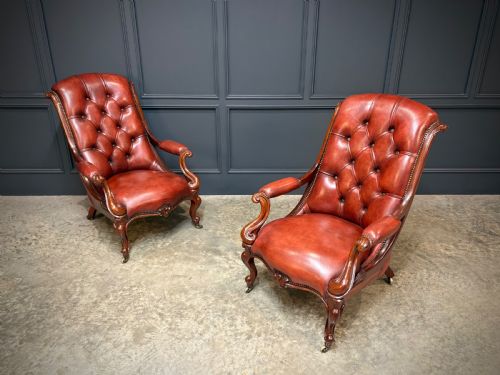


Tufted Red Armchair
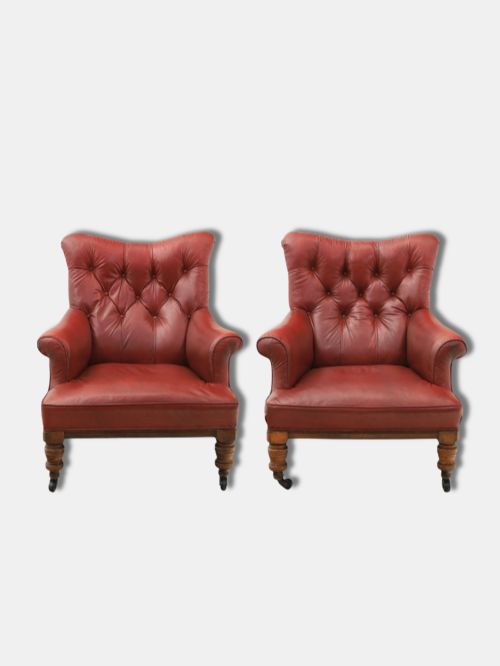
A tufted red armchair brings rich colour and deep upholstery to a room, drawing the eye with buttoned leather or velvet and substantial frames.
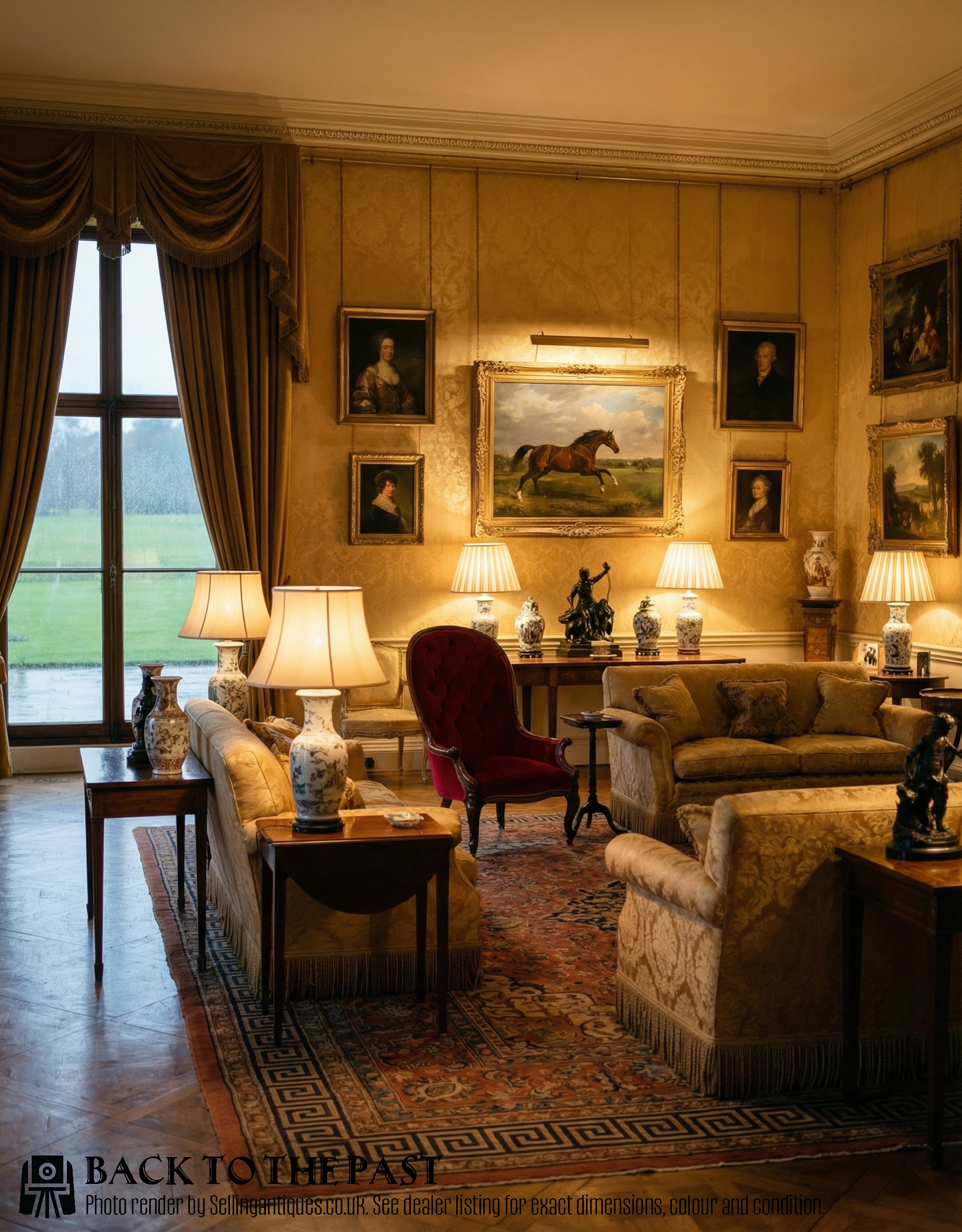
Tufted Red Armchair
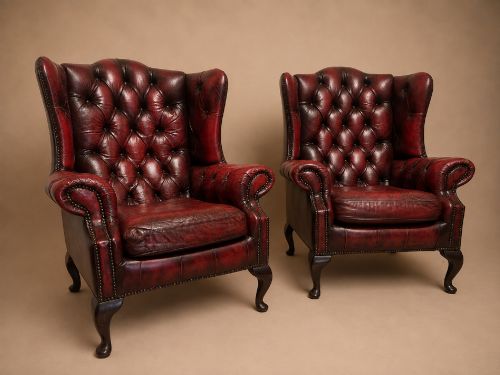
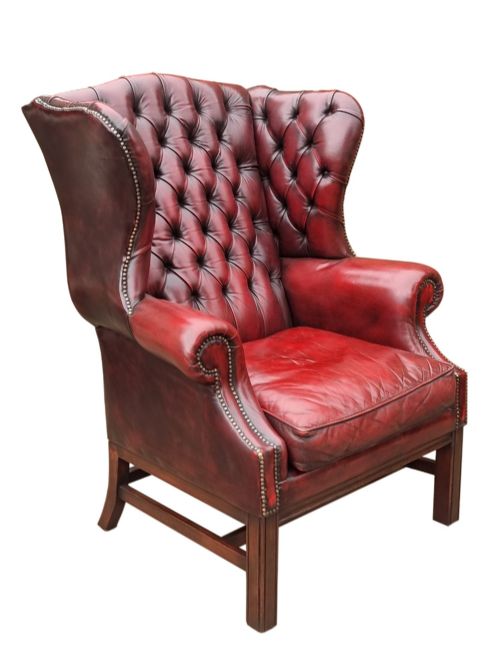
When you search for a tufted red armchair, you encounter a diverse group of seating spanning the Georgian, Victorian, and Edwardian periods, alongside later twentieth-century interpretations. The selection on this page centres on sturdy forms such as Chesterfield wing chairs, library chairs, and revolving desk chairs upholstered in red leather, oxblood rexine, or velvet.
Origins span English country house styles, French gilt decorative chairs, and traditional British workshops, offering multiple interpretations of the red upholstered seat. These chairs serve functional seating roles in studies, libraries, and parlours while providing a striking visual centrepiece through their deep crimson and burgundy tones.
How they were made
Makers constructed the supportive frames of these armchairs using traditional hardwoods including mahogany, walnut, oak, and rosewood, sometimes accented with brass or iron details. These dense timbers provided the structural integrity required for heavy library chairs, swivel desk chairs, and rocking chairs.
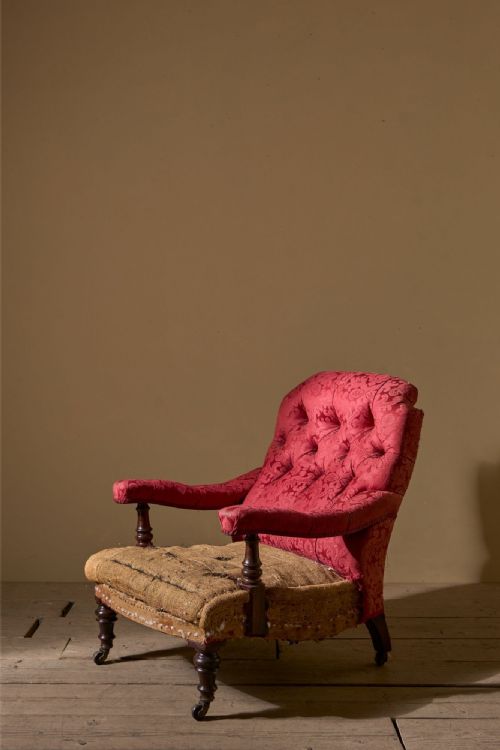
Upholstery techniques combined sturdy internal webbing with horsehair or similar stuffing beneath durable outer layers of leather, rexine, or velvet. Artisans secured the padding through meticulous button tufting, pulling the fabric tight to create structured diamond patterns across the backrests and seats.
Listings feature woods like mahogany, oak, walnut, and rosewood, paired with red leather, velvet, and oxblood rexine.
What varies in quality
The standard of a tufted red armchair rests upon the selection and retention of its timber frame and the depth of its upholstery work. Pieces built from dense hardwoods like mahogany and walnut demonstrate greater resilience than softer woods.
The execution of the buttoning and the suppleness of the leather or velvet define the finish. Finer examples display even tension across the tufted upholstery and robust joinery in the arms and legs.
Gillows·Howard and Sons
The Tufted Red Armchair Glossary
- Chesterfield
- A style of upholstered seating traditionally characterised by deep button tufting and rolled arms of equal height. It remains a staple of British country house interiors.
- Wingback
- An armchair featuring protective wings attached to the backrest designed to shield the sitter from draughts. These chairs frequently appear in leather upholstery.
- Rexine
- A brand of artificial leather made from cloth coated with nitrocellulose, camphor oil, and pigment. It appears on mid-century variations listed on this page.
- Barley twist
- A decorative turning technique resembling a twisted rope, used on the wooden legs and supports of Victorian chairs. It adds subtle texture to the frame.
- Spoonback
- A chair back shaped like the bowl of a spoon, curved to fit the human spine. This form is common in Victorian walnut parlour and nursing chairs.
Tufted Red Armchair: Frequently Asked Questions
What periods do these red armchairs come from?
The pieces span the Georgian, Victorian, and Edwardian eras, with additional examples from the 1920s and 1930s. Victorian designs form a substantial portion of the available selection.
Craftsmen across these periods utilised traditional timbers such as mahogany, oak, and walnut alongside leather and velvet upholstery.
How do I identify a Victorian library chair?
Victorian library chairs typically feature robust hardwood frames in oak or mahogany combined with dark red or burgundy leather upholstery. Deep button tufting and sturdy armrests are common characteristics designed for prolonged reading.
Many incorporate revolving mechanisms or swivel bases, particularly those intended for desks and studies.
Are these chairs suitable for daily use?
Most of these armchairs were built for active domestic or library environments using durable materials like hardwood and heavy leather. Their sturdy construction makes them practical for everyday seating in studies and living rooms.
Maintenance involves treating the leather with suitable balms and ensuring the wooden frames remain stable in controlled environments.
What is the difference between a wing chair and a club chair?
Wing chairs incorporate protective side panels attached to the backrest to block air currents, a form dating back centuries. Club chairs generally feature lower, open backs with thick cushioning and a more compact profile.
Both styles frequently appear on this page upholstered in red leather with traditional button tufting.