


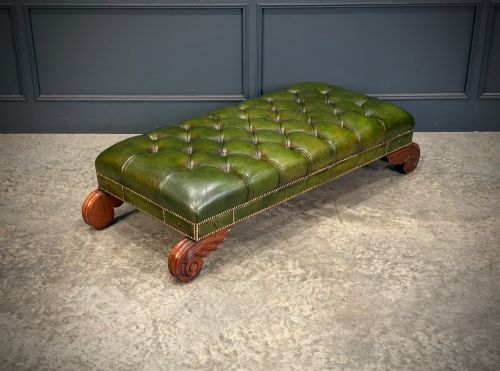
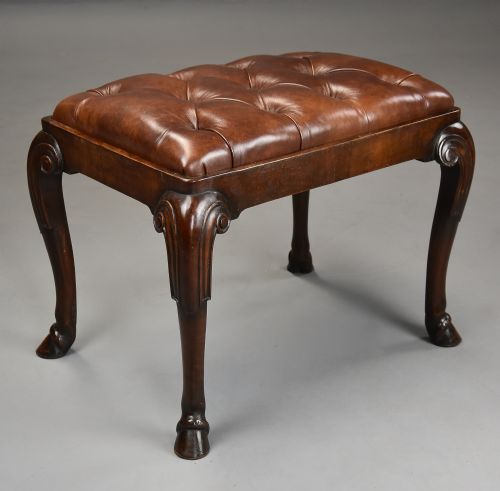
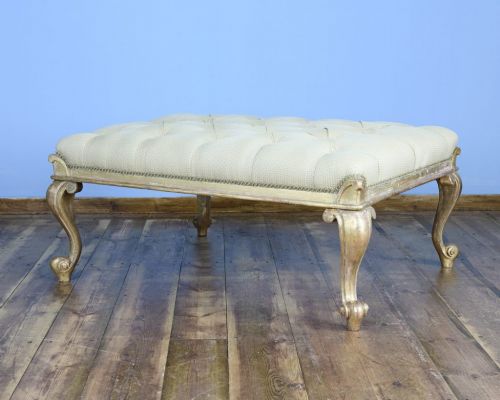


Tufted Ottoman
A tufted ottoman is a deeply upholstered seat designed for comfort, offering a practical footrest or low bench rooted in centuries of craftsmanship.
Tufted Ottoman
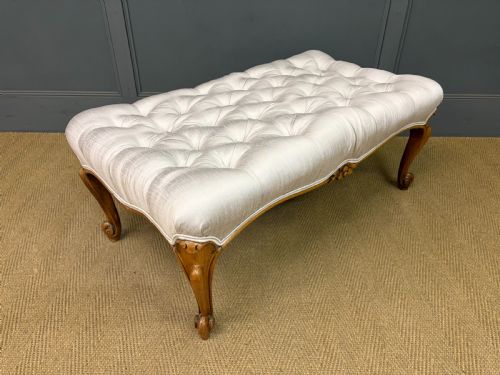
A tufted ottoman spans various historical periods, appearing predominantly as Victorian and Regency low seats, long stools, and footstools.
Makers constructed these pieces from robust woods including mahogany, walnut, rosewood, and oak, often shaping them with cabriole legs, fluted supports, or X-frames.
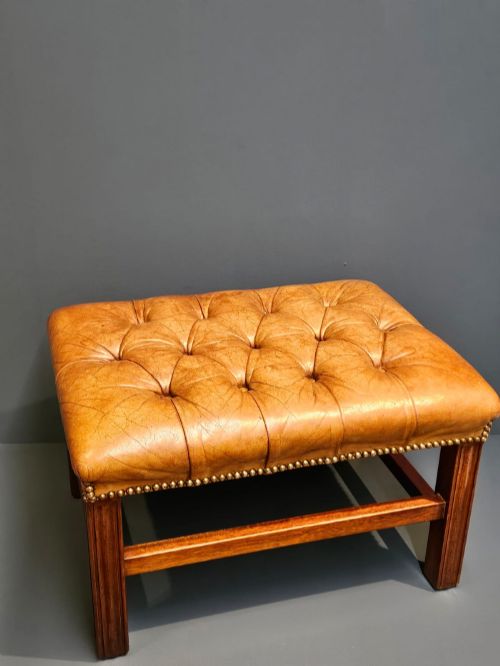
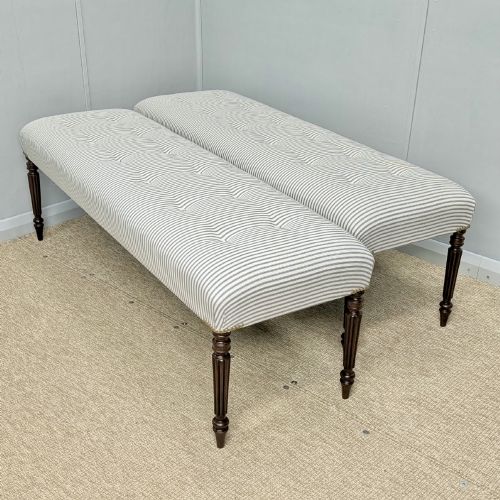
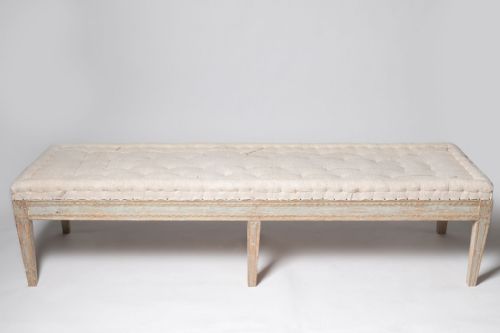
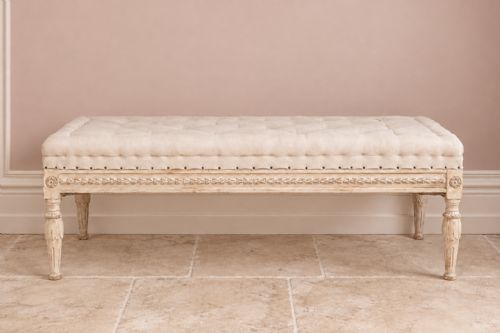
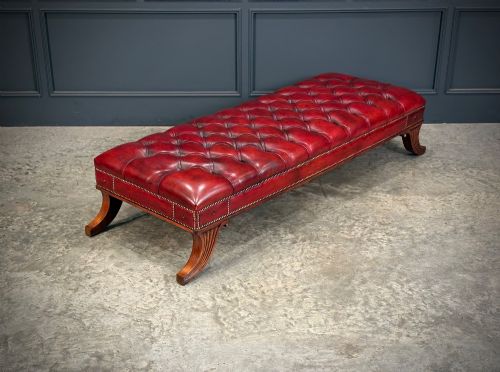
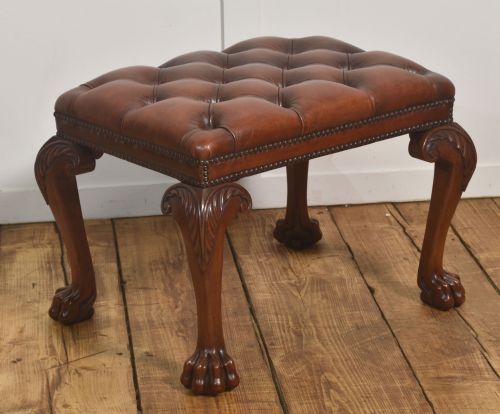
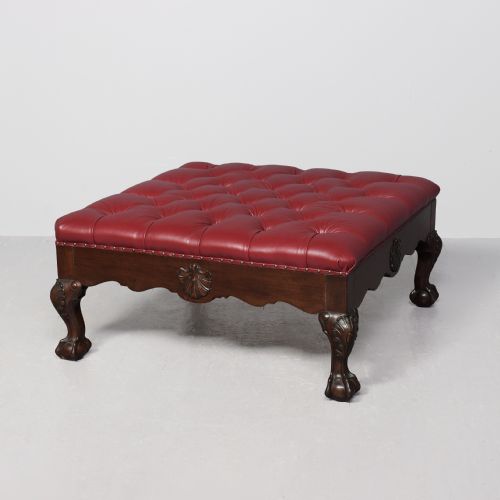
The selections on this page range from compact footstools to grand country house centre stools and library window seats, frequently upholstered in buttoned leather.
How artisans built these upholstered seats
Craftsmen shaped sturdy timber frames from hardwoods such as mahogany, walnut, and rosewood, applying structural joinery and sometimes parcel gilding or painted finishes.
Upholsterers integrated deep buttoning techniques using durable hides, fabrics, or silk, securing the upholstery with brass studs to create tension and texture across the surface.
Tufted Ottoman Retail Price Guide 2026
Typical asking prices for tufted ottoman among the pieces listed under this phrase on Sellingantiques today, from the lower quarter to the upper quarter. They describe what is for sale here now, not the wider market.
Some nineteenth-century stools hide beneath layers of deep red leather and brass studs, ready for weary feet.
What separates standard pieces from exceptional examples
The distinction in quality rests upon the timber selection, the crispness of carved details like cabriole legs or fluted supports, and the structural integrity of the frame.
Execution of the deep buttoning and the choice of hand-dyed leather, hide, or fabric dictate the tactile refinement and overall presence of the piece.
James Shoolbred·A.M.E. Fournier
The Tufted Ottoman Glossary
- Cabriole leg
- A furniture leg that curves outward at the knee and tapers inward to an ankle, popular in eighteenth and nineteenth-century designs.
- Buttoning
- An upholstery technique where indentations are formed in the padding by pulling thread or cord tightly through to the frame, often secured with buttons.
- Parcel gilt
- A decorative treatment where parts of a wooden or metal object are selectively covered in thin gold leaf.
- X-frame
- A structural furniture base formed by intersecting diagonal stretchers or legs shaped like the letter X.
- Brass-studded
- A method of finishing upholstery edges using individual brass tacks spaced neatly along the trim.
Tufted Ottoman: Frequently Asked Questions
What is a tufted ottoman used for?
These versatile pieces serve primarily as footstools, low benches, or centre seats within living spaces and libraries.
Their substantial padded surfaces provide comfortable resting places for feet or additional seating for guests.
How do I identify a Victorian tufted ottoman?
Victorian examples frequently display rich timbers like walnut and mahogany combined with deep buttoned leather upholstery.
Many rest upon cabriole legs or wooden castors, reflecting the heavier proportions characteristic of the nineteenth century.
Are these ottomans suitable for daily use?
Constructed from hardwoods with robust buttoned leather or fabric coverings, these pieces handle regular seating and footresting.
Their durable internal padding and solid timber frames support practical everyday integration into domestic settings.
What distinguishes Regency period styles?
Regency designs often incorporate classical lines, fluted legs, and rosewood or mahogany frames.
Pieces from this era lean towards refined elegance, pairing dark polished woods with supple leather and neat brass studwork.