

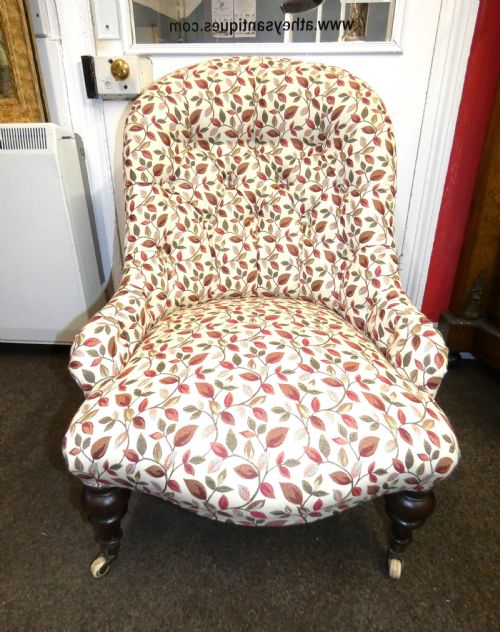
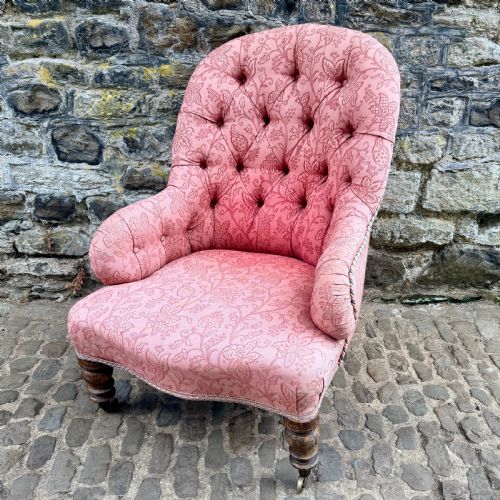
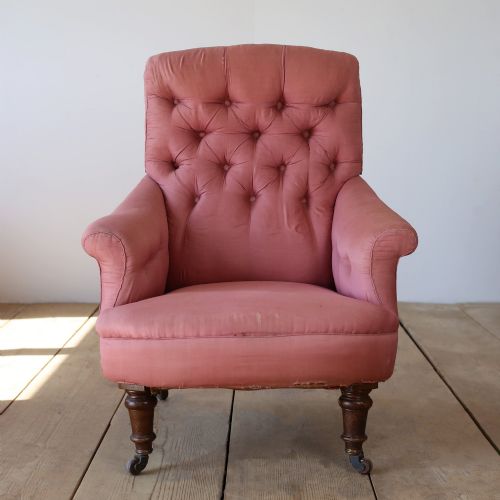
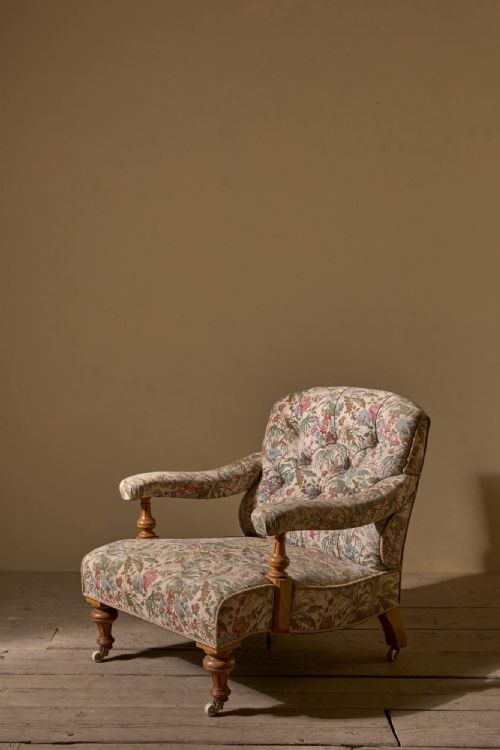

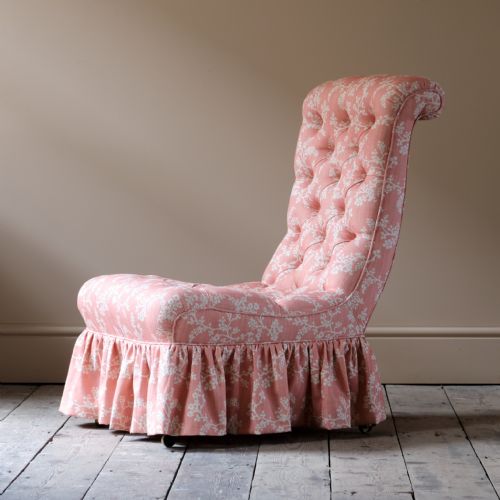

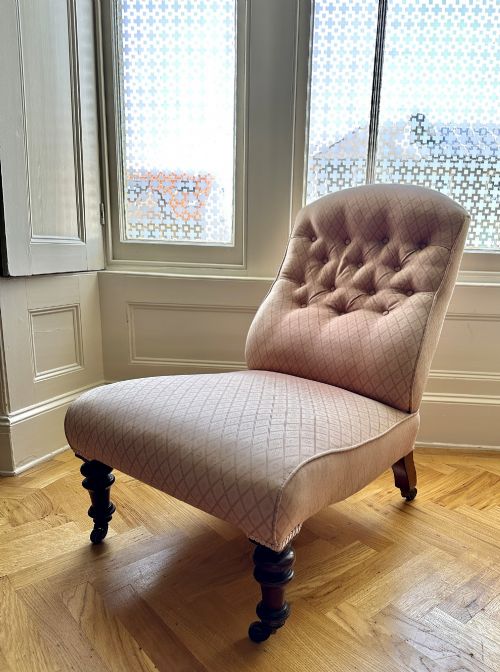
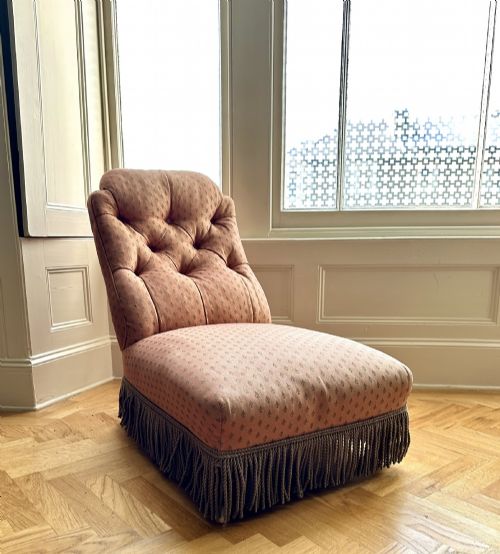


Tufted Low Seat Chair
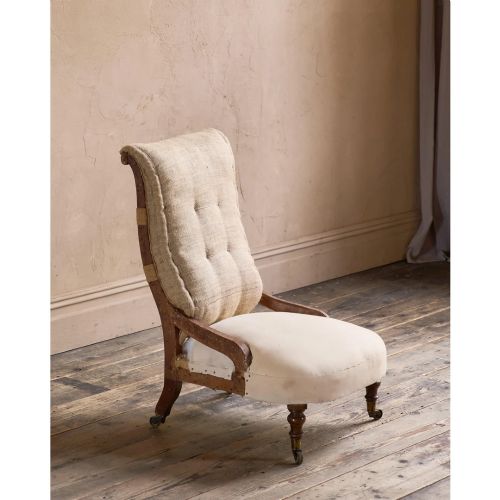
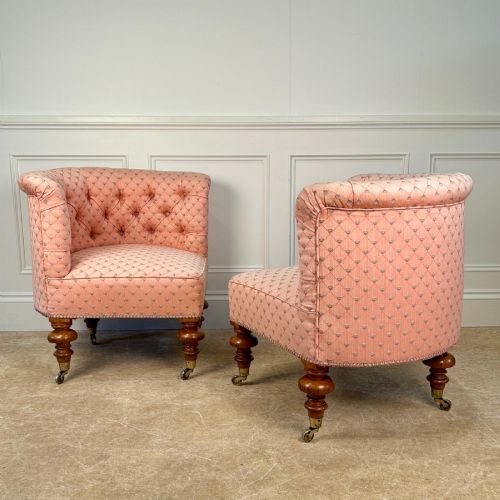
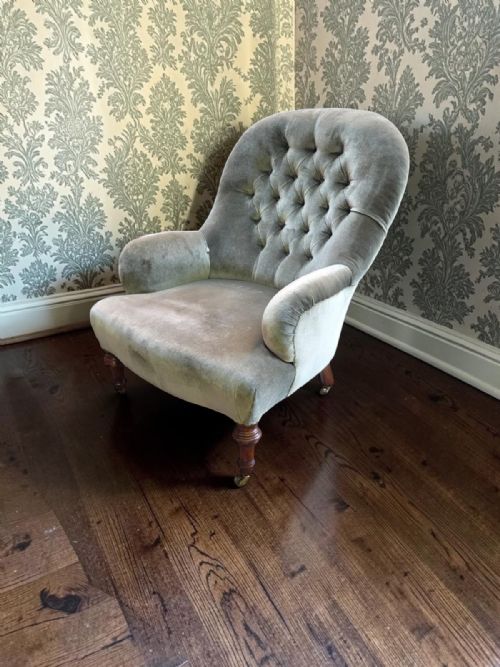
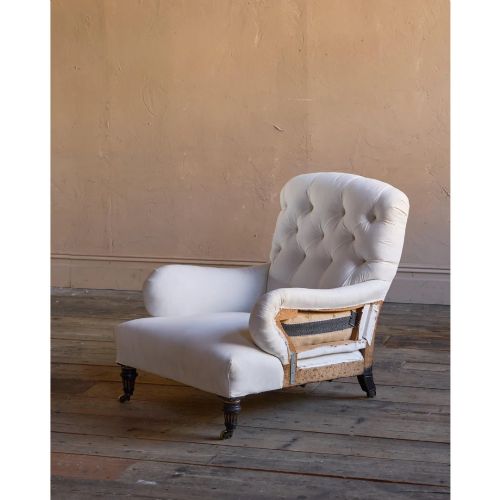
A tufted low seat chair brings intimate comfort to a room, offering low-slung seating designed for sitting close to the fire or dressing.
Tufted Low Seat Chair
When you search for a tufted low seat chair, you encounter a variety of nineteenth-century forms including slipper chairs, nursing chairs, bedroom chairs, and ladies chairs. These compact seats sit low to the ground and typically feature button-tufted upholstery designed for drawing rooms and chambers.
The selection on this page spans the Victorian and Edwardian periods, reaching back to mid-nineteenth-century examples alongside Aesthetic Movement and French nineteenth-century pieces. You meet walnut, mahogany, oak, and rosewood frames supporting low profiles built for relaxation and intimate conversation.
Materials and Technique
Frames take shape from solid hardwoods such as walnut, mahogany, oak, and rosewood, often turned, carved, or ebonised. Supporting structures rely on traditional joinery paired with brass castors and ceramic feet for mobility.
Upholstery defines the character of these pieces, employing deep buttoning, tufting, and springing wrapped in velvet, leather, calico, linen, and fabric. Fringe trim and bullion details frequently finish the lower edges of nineteenth-century examples.
Tufted Low Seat Chair Retail Price Guide 2026
Typical asking prices for tufted low seat chair among the pieces listed under this phrase on Sellingantiques today, from the lower quarter to the upper quarter. They describe what is for sale here now, not the wider market.
Several chairs arrive ready for quiet contemplation in mulberry linen, pink velvet, or gold.
Quality and Distinction
Distinction in these low chairs rests upon the integrity of the timber frame and the refinement of the carved or turned legs. Finer examples display crisp walnut or rosewood carving, well-proportioned buttoning, and robust underlying frames that maintain their stability.
The choice of covering fabric and the precision of the tufting work distinguish standard utility seating from finer salon and drawing-room pieces. Original details like stamped makers' marks, aesthetic movement legs, or distinctive gilt and ebonised accents elevate certain examples above the rest.
Howard and Sons·Gillows
The Tufted Low Seat Chair Glossary
- Slipper chair
- A low-seated upholstered chair originally designed for bedrooms to allow women to dress comfortably. These pieces sit close to the floor and usually lack arms.
- Nursing chair
- A low-backed or low-seated Victorian chair designed for nursing infants or general comfort in private chambers. They frequently feature padded upholstery and sprung seats.
- Button back
- An upholstery technique where buttons are pulled deep into the padding in a diamond pattern to create tufted dips. This method secures the internal stuffing while providing decorative form.
- Aesthetic Movement
- A late-nineteenth-century style emphasising artistic design, often incorporating ebonised wood, simple lines, and refined details. Pieces in this style move away from heavy Victorian revivalism.
- Rococo Revival
- A mid-nineteenth-century design movement inspired by French eighteenth-century curves, featuring flowing carved woodwork, cabriole legs, and floral motifs. Walnut and rosewood frames suit this ornamental style.
Tufted Low Seat Chair: Frequently Asked Questions
What is a tufted low seat chair?
A tufted low seat chair is a compact, low-profile seating piece featuring button-tufted upholstery. These chairs were designed for bedrooms, dressing rooms, and intimate drawing rooms during the nineteenth and early twentieth centuries.
They appear in forms such as slipper chairs, nursing chairs, and salon chairs, offering comfortable seating close to the floor.
Where were these chairs used historically?
These chairs found their primary homes in Victorian and Edwardian bedrooms, boudoirs, and private dressing rooms. Their low height made them practical for tasks requiring a seated position near the floor.
Over time, many transitioned into drawing rooms and reception spaces as decorative accent chairs.
How do I live with an antique low chair?
Integrating a nineteenth-century low chair into a modern interior works well in bedrooms, reading corners, or living rooms as an accent piece. Their compact scale allows them to fit into spaces where standard armchairs prove too bulky.
Pairing them with low coffee tables or placing them beside a fireplace highlights their original purpose and proportions.
How can I tell Victorian and Edwardian chairs apart?
Victorian chairs, dating from the mid to late nineteenth century, frequently feature heavier walnut or rosewood frames, elaborate carving, and Rococo Revival influences. Button-tufted upholstery and turned legs with brass castors remain common across this era.
Edwardian examples, emerging around the turn of the twentieth century, often display lighter framing, refined upholstery choices, and simpler lines that look forward to modern aesthetics.