

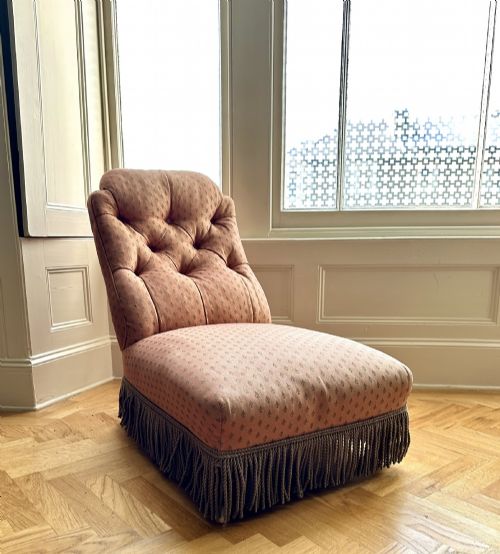


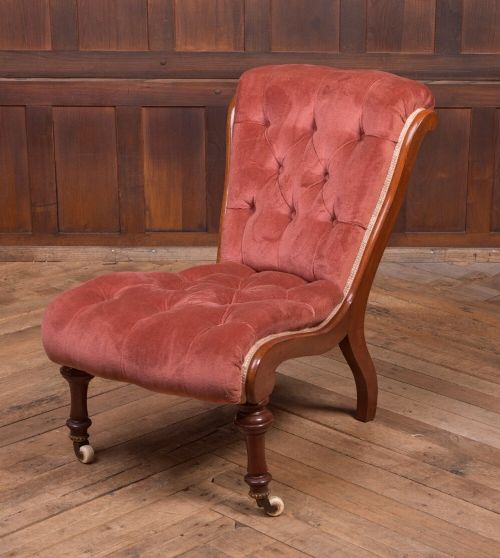


Pink Slipper Chair
A pink slipper chair brings low seating with historic character into a modern room, offering compact comfort paired with nineteenth-century style.
Pink Slipper Chair
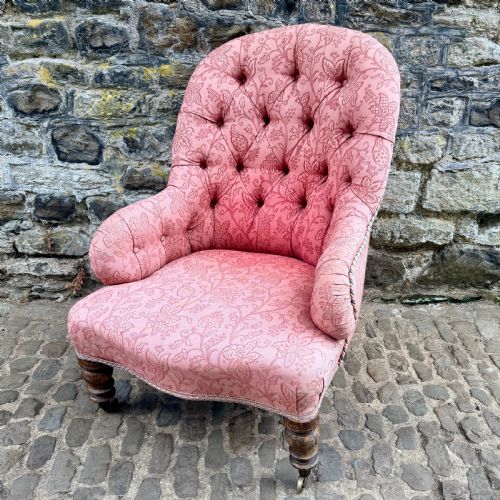
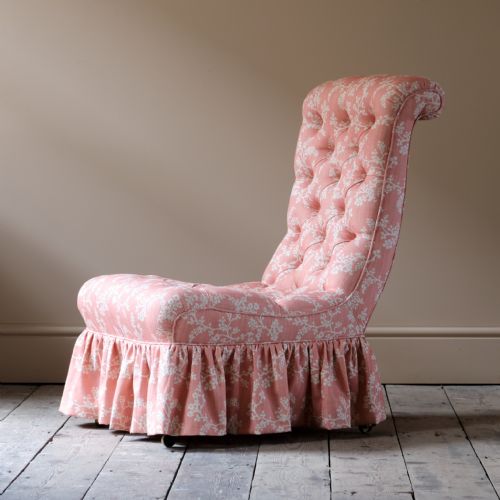
A pink slipper chair typically takes the form of a low-slung nineteenth-century nursing or bedroom chair, designed originally for private dressing rooms and boudoirs. These pieces surface across Victorian, Edwardian, and later periods, often sharing lineage with low ladies chairs and occasional seating.
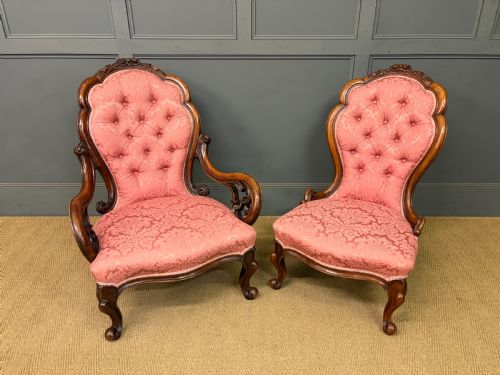
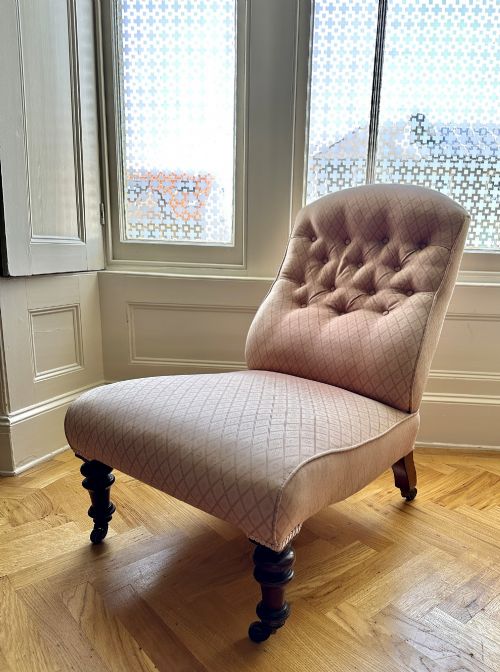
The form prioritises a low seat and an upright or spoon-shaped back, making them distinct from standard armchairs by the absence of high wooden arms. Survivors frequently manifest as walnut or mahogany frames, upholstered in various shades of pink fabric and velvet.
How they were made
Frames rely on sturdy timbers like walnut, mahogany, and rosewood, shaped with turned wooden legs and occasionally brass castors for mobility. Construction methods of the nineteenth century involve traditional joinery, sometimes accented by carved details or intricate barley twist uprights.
Upholstery techniques span button backs, deep tufting, and sprung seats, often finished with textile fringe along the base. Fabrics range from contemporary pink velvets used in restoration to original textiles surviving on Edwardian examples.
Pink Slipper Chair Retail Price Guide 2026
Typical asking prices for pink slipper chair among the pieces listed under this phrase on Sellingantiques today, from the lower quarter to the upper quarter. They describe what is for sale here now, not the wider market.
Some nineteenth-century chairs include hidden brass castors designed simply to glide smoothly across thick Victorian carpets without catching.
What varies in quality
The distinction between standard examples and superior pieces rests upon the crispness of the timber carving and the elegance of the frame proportions. Maker attribution also plays a role, with documented workshops commanding greater attention than anonymous regional vernacular pieces.
Frame integrity and the preservation of original structural elements define the enduring merit of each chair. Superior examples retain their original spring assemblies and rigid joinery beneath the upholstery layers.
Gillows·Holland and Sons·Hindley and Sons·Lamb of Manchester
The Pink Slipper Chair Glossary
- Slipper chair
- A low-seated upholstered chair originally designed for bedrooms and dressing rooms without restrictive arms. This form allows effortless sitting and dressing.
- Nursing chair
- A low nineteenth-century chair intended for nurseries and bedrooms, closely related to the slipper chair format. These pieces often feature balloon or spoon backs.
- Button back
- An upholstery method where depressions are created by pulling strings through the padding to secure buttons in a diamond pattern. This technique adds both structural tension and visual texture.
- Barley twist
- A spiral turning technique applied to wooden furniture legs and uprights during the nineteenth century. This decorative flourish mimics the twist of barley grain.
- Balloon back
- A rounded, oval chair back profile popular during the Victorian era. The curved woodwork resembles the buoyant shape of a balloon.
Pink Slipper Chair: Frequently Asked Questions
What is a pink slipper chair?
A pink slipper chair is a low-slung nineteenth-century occasional or nursing chair upholstered in pink fabric or velvet. These pieces combine compact proportions with traditional Victorian and Edwardian wooden frames.
Originally designed for bedrooms and dressing rooms, their low height serves modern living spaces well as accent seating in bedrooms or living rooms.
How do I date a slipper chair?
Dating relies on examining the timber frame, turning styles, and upholstery construction methods. Victorian examples often show walnut or mahogany frames with balloon or spoon backs.
Later Edwardian iterations display lighter carved walnut frames, while mid-nineteenth-century versions may incorporate iron backs or specific maker signatures.
Where were slipper chairs used?
These low chairs were traditionally kept in Victorian bedrooms, dressing rooms, and nurseries for personal grooming and nursing. Their compact size made them suitable for private domestic spaces.
Today, they function as decorative accent pieces in contemporary living rooms, hallways, and dressing areas.
What is a nursing chair?
A nursing chair is a low-seated nineteenth-century chair built without arms to accommodate the voluminous skirts worn by women during the period. Their height made tending to infants or dressing much easier.
They share many formal characteristics with slipper chairs, including sprung seats and buttoned upholstery.