

Tufted Library Armchair
These tufted library armchair pieces span the nineteenth and early twentieth centuries, offering deep buttoned comfort and sturdy timber frames for daily study or fireside reading.
Tufted Library Armchair
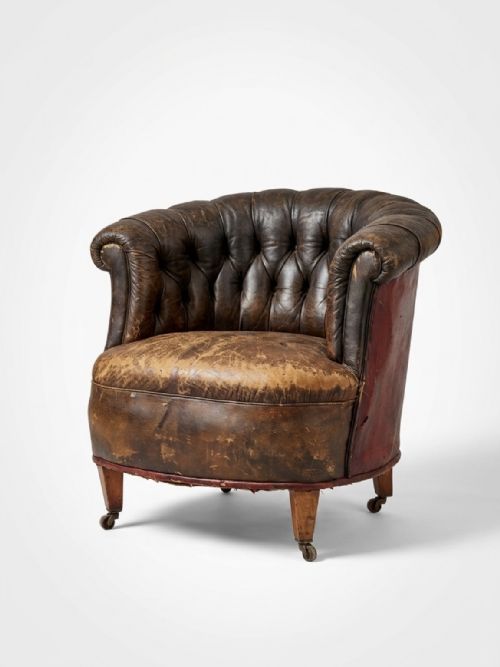
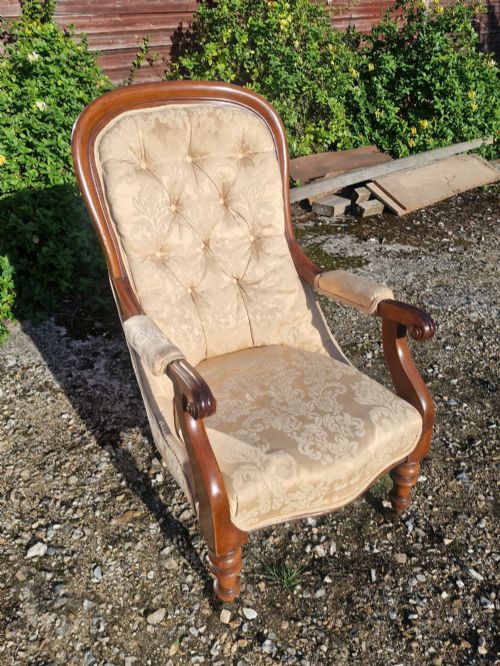
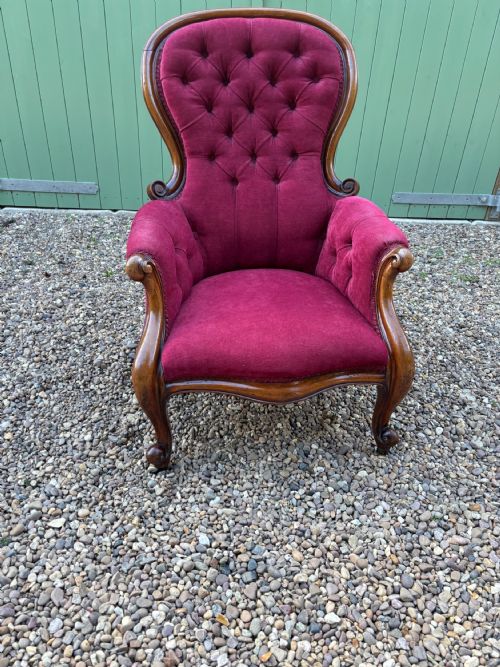
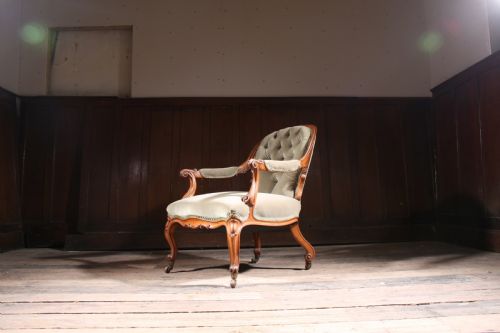
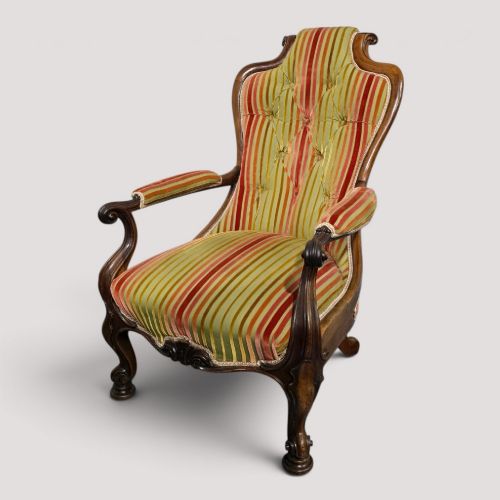
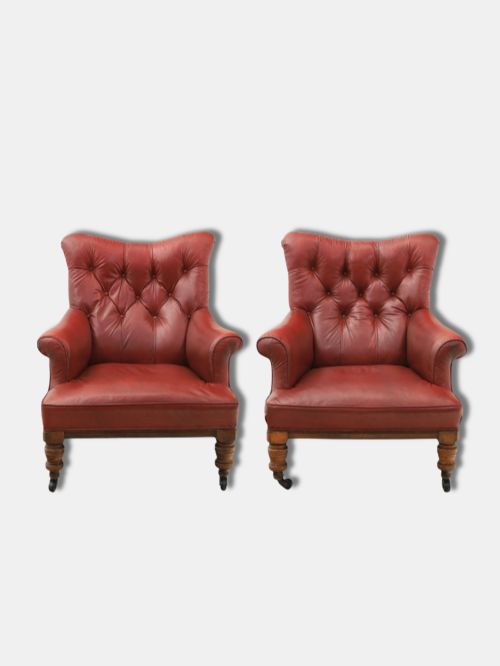
A tufted library armchair is a substantial seat designed for reading rooms, studies, and private libraries, combining deep upholstery with robust framing. When exploring these listings, buyers most commonly encounter Victorian examples alongside Regency, William IV, and Edwardian interpretations.
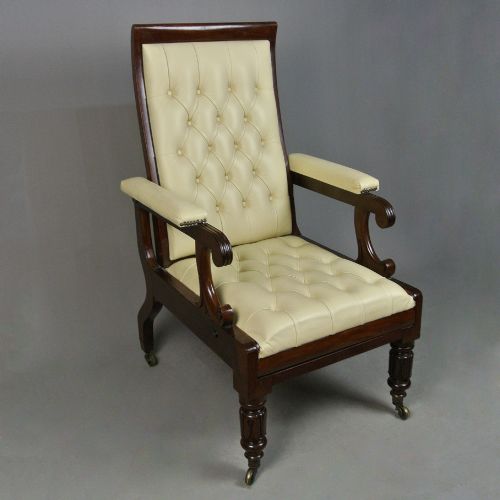
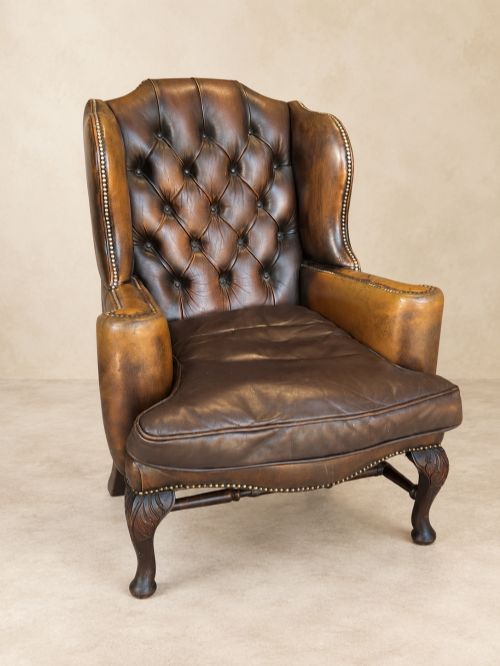
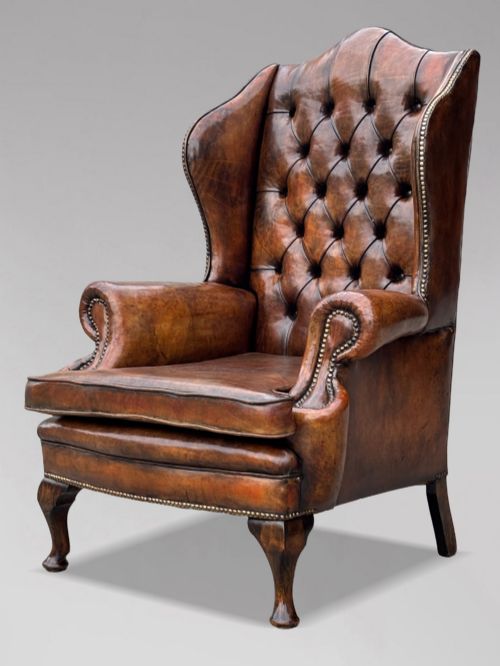
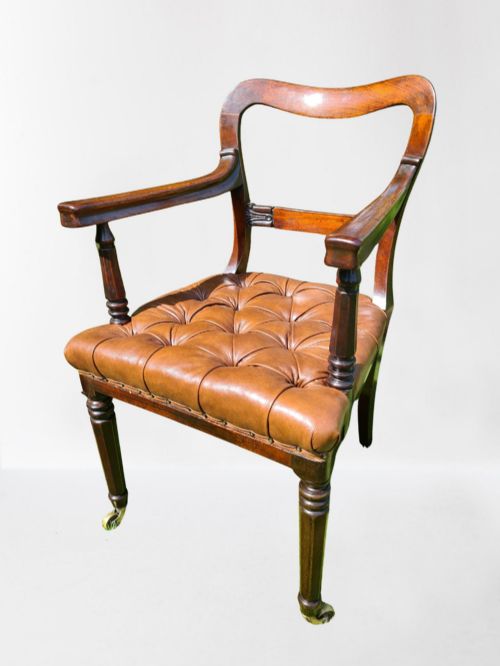
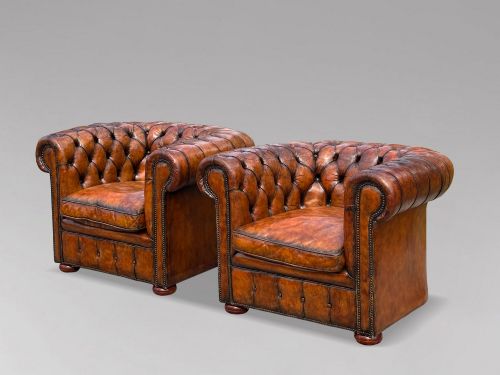
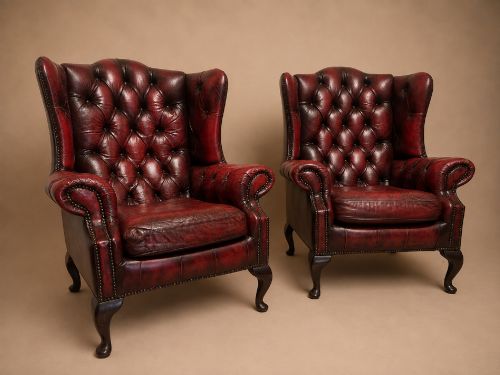
The form typically manifests as a buttoned wingback chair, a club armchair, or a desk chair, occasionally featuring specialised additions such as a reading stand or a reclining mechanism. These pieces originate primarily from nineteenth-century English workshops and country houses.
Makers such as Howard and Sons, Holland and Sons, Hindley and Sons, and Shoolbred appear within the broader design lineage, alongside patented innovations like the Daws Patent reclining chair. The selection ranges from straightforward walnut and oak frames to elaborate brass-inlaid mahogany.
Materials and Construction
The structural framework relies heavily on dense timbers such as mahogany, walnut, oak, and general hardwoods, selected for their structural integrity. These wooden frames are frequently carved or inlaid with brass, particularly in Regency and Victorian iterations.
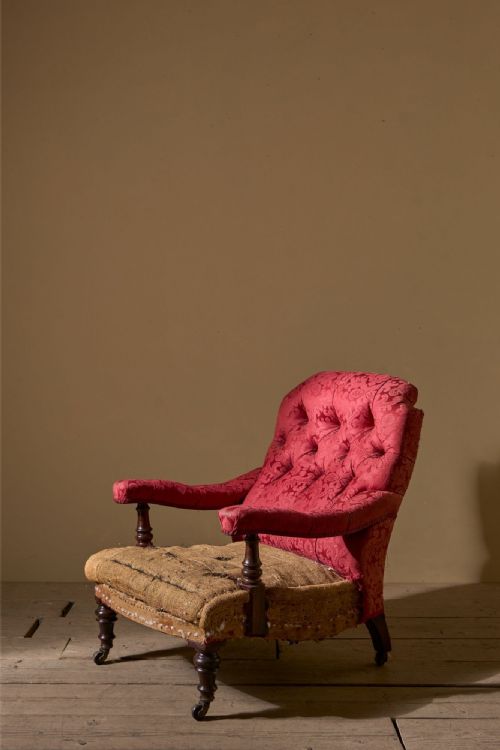
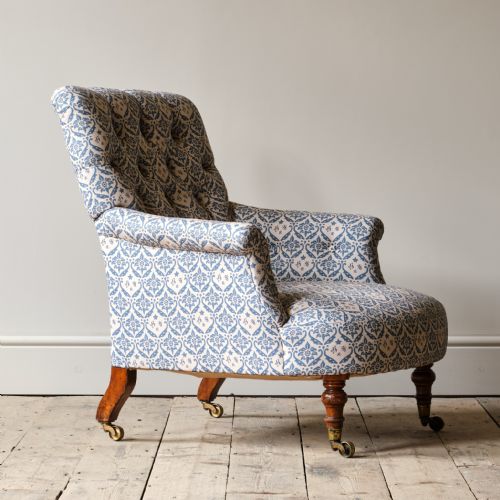
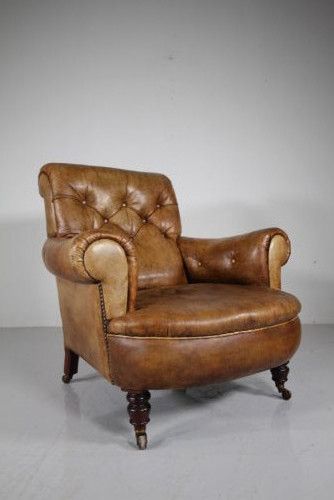
Upholstery defines the character of the piece, utilising leather, fabric, velvet, and occasionally rexine pulled tight over internal padding. Deep buttoning secures the cushioning while creating the characteristic tufted surface pattern seen across club and wingback forms.
Judging Quality and Execution
Quality rests in the harmony of the timber framing and the execution of the upholstery, distinguishing workshop-produced pieces from standard commercial outputs. Finer examples display precise carving on mahogany or walnut frames and thoughtful integration of mechanical elements like reading stands or reclining actions.
The depth and consistency of the buttoning, alongside the selection of durable leather or velvet, mark the distinction between high-grade library seating and simpler utility chairs. Maker attribution, such as work originating from established firms, further elevates the standing of an individual piece.
Howard and Sons·Holland and Sons·Hindley and Sons·Shoolbred
The Tufted Library Armchair Glossary
- Button back
- A method of upholstery where buttons are pulled deep into the padding at regular intervals to create a tufted grid. This technique keeps the internal stuffing firmly anchored during heavy daily use.
- Wing armchair
- A high-backed seat featuring protective side panels, known as wings, designed to shield the sitter from draughts. They remain a staple of nineteenth-century library and fireside seating.
- Club armchair
- A deep, low-slung upholstered seat covered in leather or fabric, built for comfort. These chairs are frequently associated with late nineteenth-century gentleman's clubs and private studies.
- Patent reclining chair
- A mechanical seat featuring adjustable angles, such as those engineered by Daws in the nineteenth century. These allowed the user to alter the pitch of the backrest for reading or resting.
Tufted Library Armchair: Frequently Asked Questions
What defines a library armchair?
A library armchair is built for prolonged reading, typically featuring supportive armrests, a high back, and durable upholstery like leather or velvet. These seats were designed for heavy daily use in private studies and reading rooms.
Many examples incorporate tufted buttoning and sturdy wooden frames made from mahogany, walnut, or oak to withstand decades of sitting.
How do I spot a Victorian model?
Victorian pieces often display dark timber frames, deep button tufting, and generous proportions designed for comfort. Look for characteristic design markers such as turned wooden legs and leather upholstery.
Mid and late nineteenth-century examples frequently include maker stamps or specific patent mechanisms that help confirm their era.
Are these chairs comfortable for daily use?
These armchairs were originally built for hours of reading and study, making them naturally suited to daily sitting. Their deep padding and ergonomic high backs provide substantial support.
Buyers should examine the condition of the internal webbing and leather surface to ensure the seat remains supportive for modern living spaces.