

Antique Upholstery Reading Armchair
An antique upholstery reading armchair invites long hours with a book, offering deep seats and supportive backs.
Antique Upholstery Reading Armchair
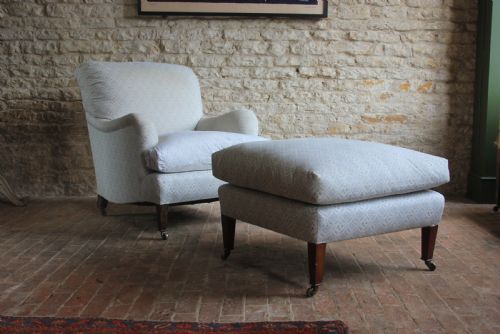
An antique upholstery reading armchair combines comfortable padding with structural support designed for prolonged seating. Buyers seek these pieces for studies, libraries, and living rooms where relaxation and reading take priority.
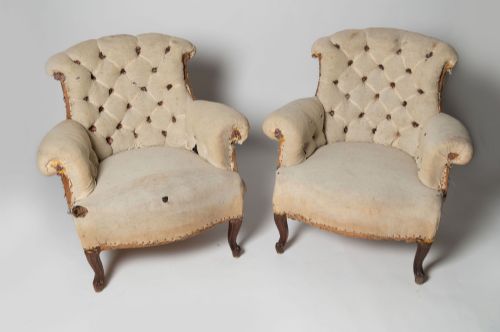
The selections span the nineteenth century, Victorian, and Edwardian eras, encompassing wingbacks, library chairs, and country house forms. Victorian and Edwardian examples appear frequently, often featuring deep seats and upholstered frames.
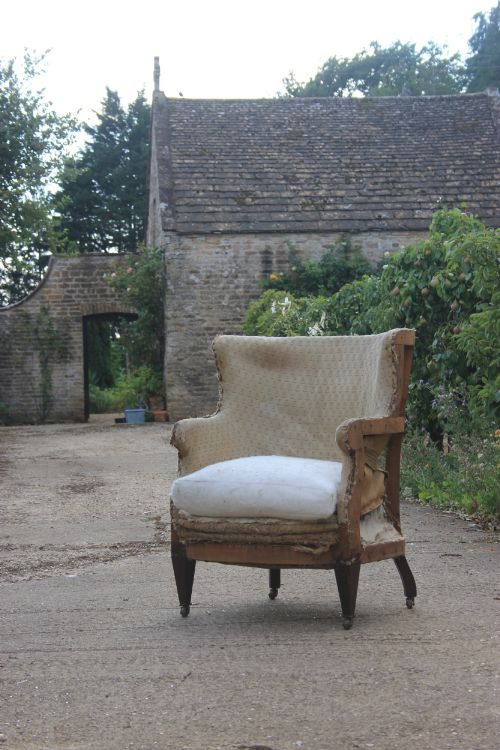
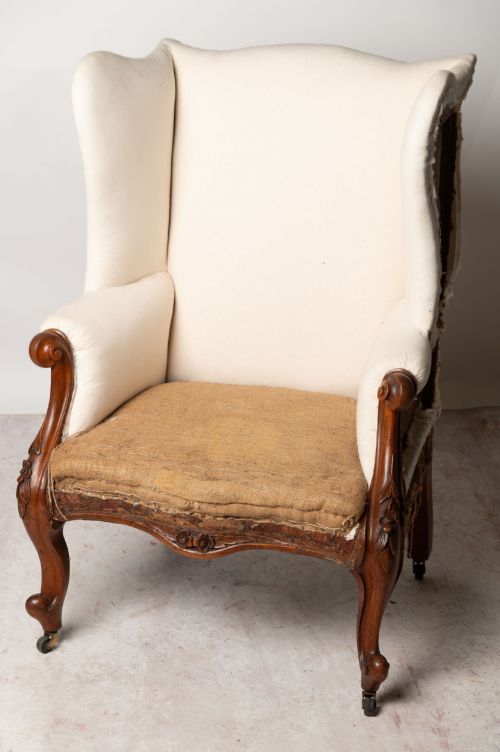
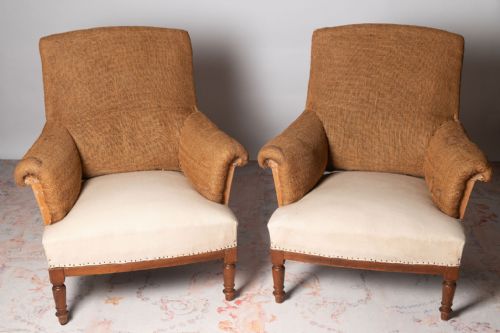
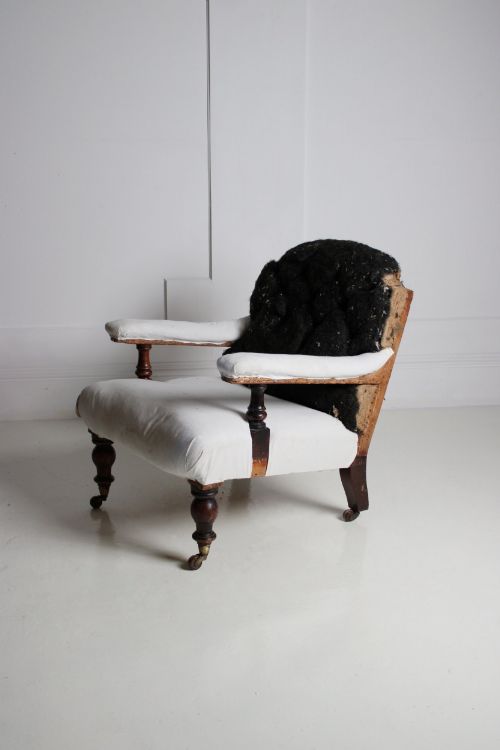
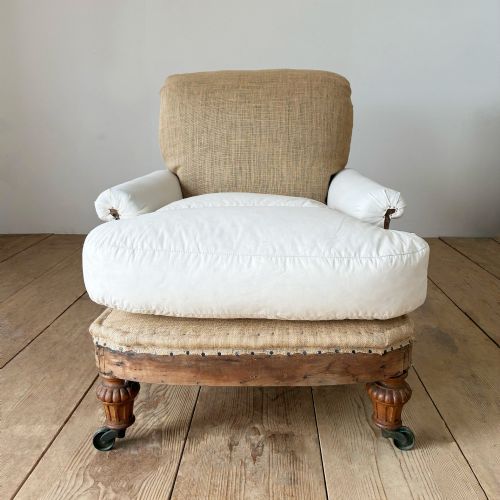
Origins include English workshops, French ateliers, and Irish makers, reflecting diverse regional tastes in domestic comfort. Materials range from exposed mahogany and walnut frames to internal hessian and calico foundations beneath modern fabric covers.
Assessing Quality
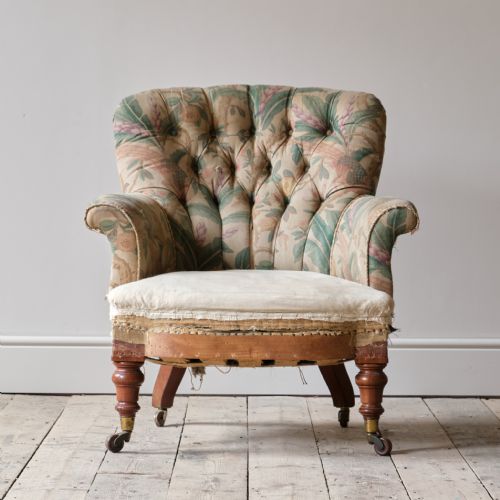
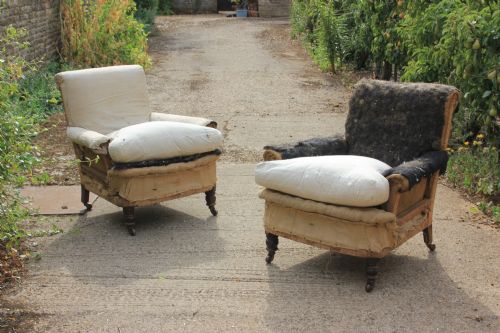
Quality rests upon the integrity of the wooden frame and the depth of the springing system. Well-made chairs maintain rigid joints and supportive internal webbing that resists sagging under heavy use.
The refinement of the carving, the balance of the proportions, and the quality of the timber grain distinguish standard production from exceptional maker-attributed pieces. Original components and untampered frames elevate a piece above later alterations.
Listings feature nineteenth century, Victorian, and Edwardian periods alongside materials such as mahogany, walnut, brass, and hessian.
Howard and Sons·Gillows·Hamptons and Sons·Robert Strahan·Heals
The Antique Upholstery Reading Armchair Glossary
- Calico
- A plain-woven cotton fabric used as an internal lining layer beneath decorative upholstery. It holds the stuffing in place before the final outer cover is applied.
- Hessian
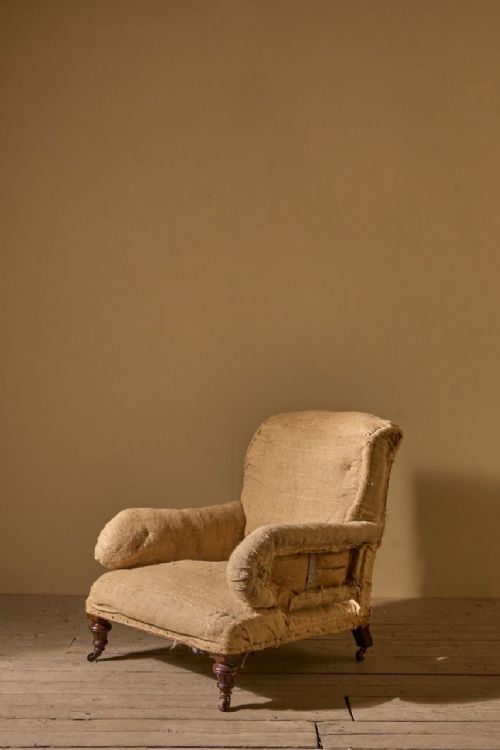
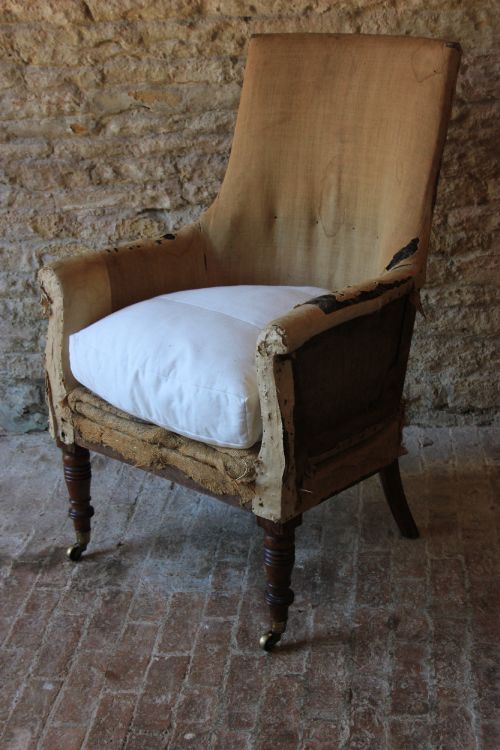
- A coarse woven fabric, typically made from jute fibres, utilised for webbing and foundational support inside upholstered seats. It provides tensile strength to the internal build.
- Wingback
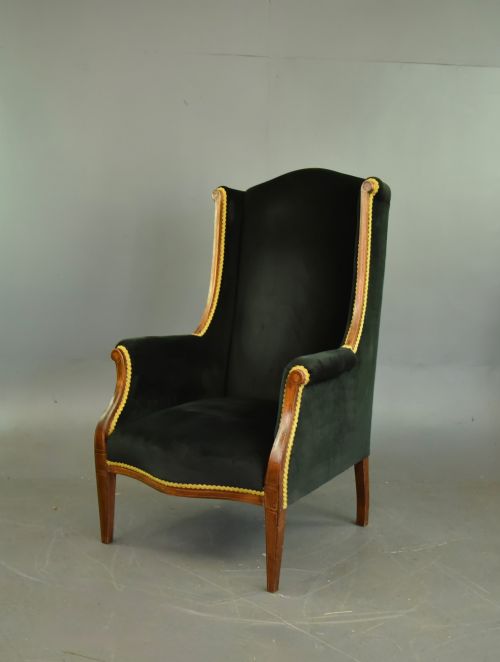
- An armchair featuring protective side panels attached to the backrest to deflect draughts and retain heat. This form dates back centuries and remains popular in library settings.
- Library Chair
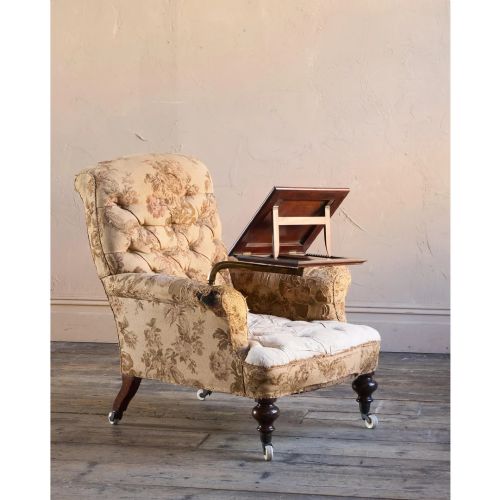
- A seating form designed specifically for reading rooms, often incorporating reading stands, low arms, or mobile castors. Regency and Victorian examples demonstrate this functional typology.
- Button Back
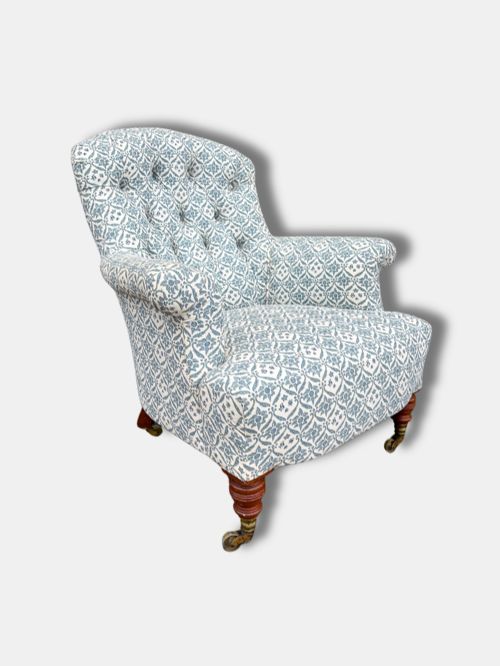
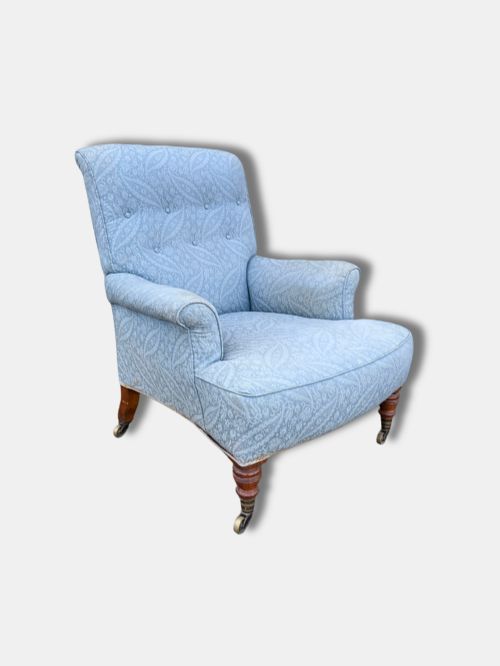
- An upholstery technique where indentations are formed by pulling twine through deep padding and securing it with buttons. This creates a tufted surface that keeps internal stuffing evenly distributed.
Antique Upholstery Reading Armchair: Frequently Asked Questions
What defines a reading armchair?
A reading armchair prioritises seating depth and back support, sometimes incorporating wing panels or adjustable reading stands.
These additions were designed to keep readers comfortable and shielded from draughts during extended periods of study.
How do I identify a Victorian armchair?
Victorian armchairs often feature dark hardwoods like walnut or mahogany, substantial padding, and sometimes button-tufted upholstery.
They tend to be heavily sprung and heavy in proportion, reflecting the era's taste for domestic comfort.
What does calico stage mean?
The calico stage refers to a chair that has been stripped and rebuilt with new internal webbing and a plain cotton calico cover.
This leaves the piece ready for a buyer to apply their own choice of decorative outer fabric.
Are Edwardian armchairs different from Victorian ones?
Edwardian armchairs frequently exhibit lighter proportions, inlaid mahogany details, and barrel-backed or winged shapes.
They maintain deep seating comfort while leaning towards slightly more restrained decorative vocabularies than their Victorian predecessors.