
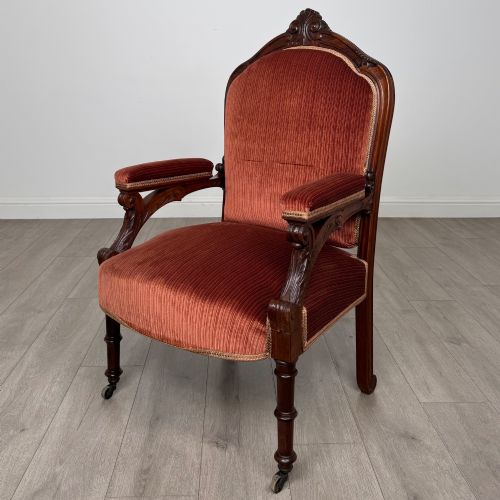
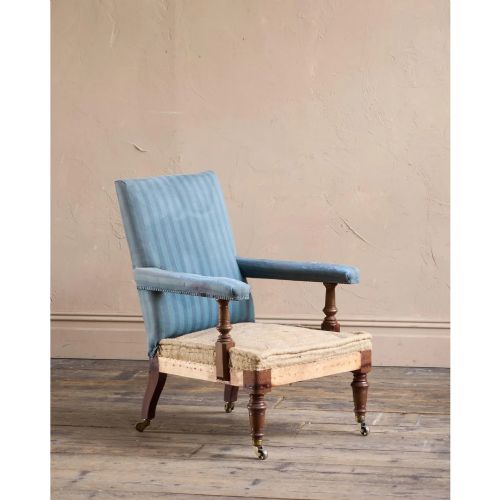
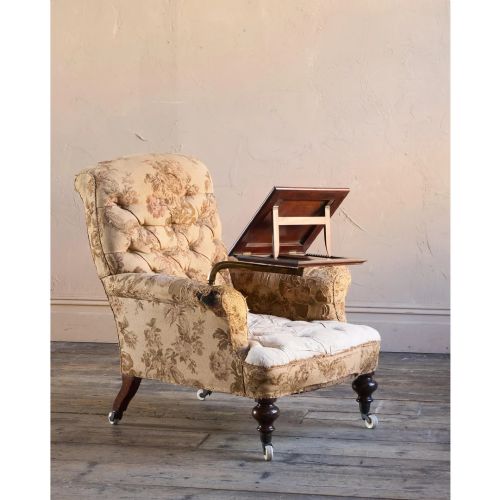
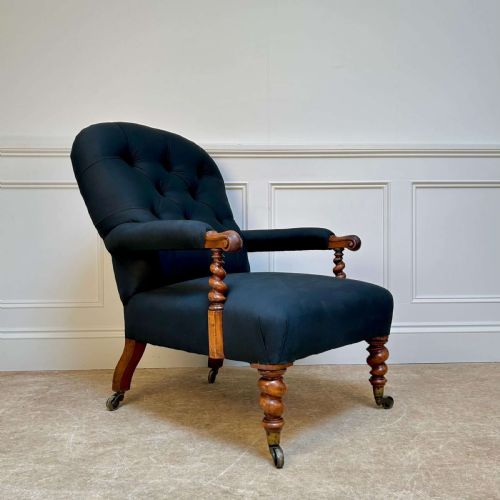


Victorian Gentleman Library Chair
A victorian gentleman library chair provides deep seating and supportive arms, designed for study and comfort.
Victorian Gentleman Library Chair
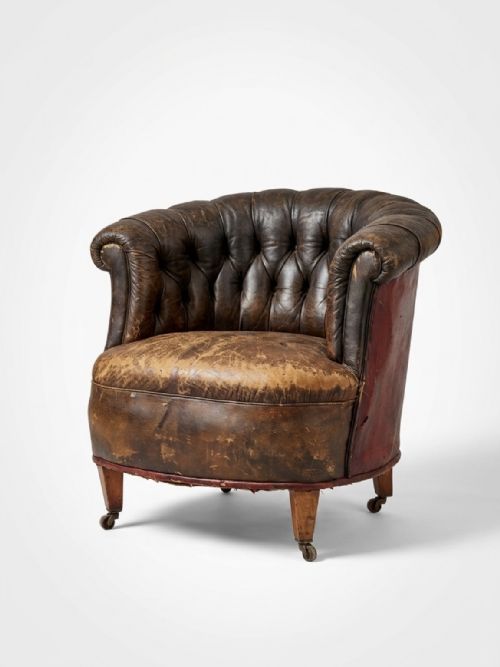
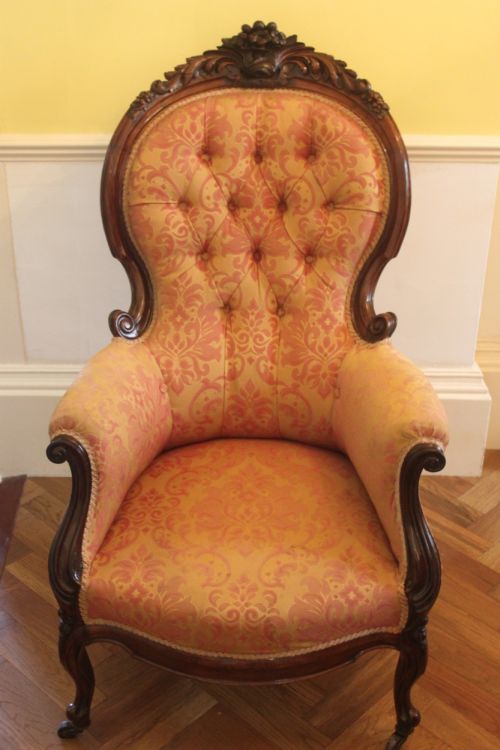
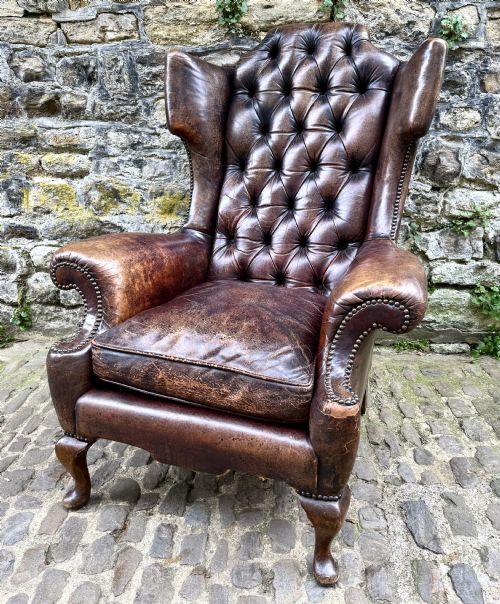
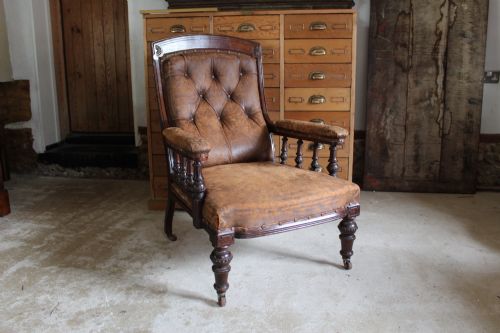
A victorian gentleman library chair is a sturdy upholstered armchair designed for reading rooms and studies during the nineteenth century. These seating pieces typically feature generous proportions, deep seats, and substantial armrests built for extended periods of sitting.
The versions most commonly met on this page date from the Victorian period, spanning the mid to late nineteenth century. Examples range from simple open armchairs to button-backed easy chairs and reading chairs fitted with stands.
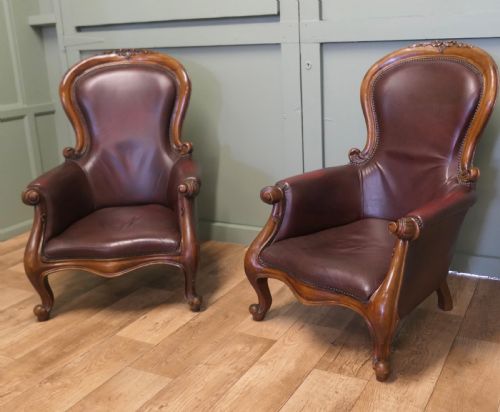
Frames appear in woods such as mahogany, walnut, rosewood, and oak, with several pieces showing revival styles including Chippendale, Gothic, and Rococo. Many incorporate leather upholstery, while others retain fabric or arrive ready for new covering.
How they were made
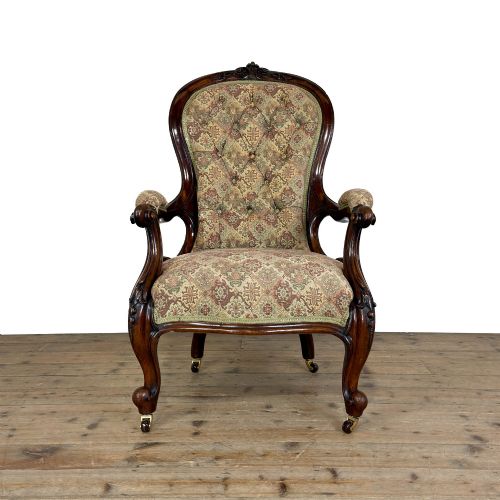
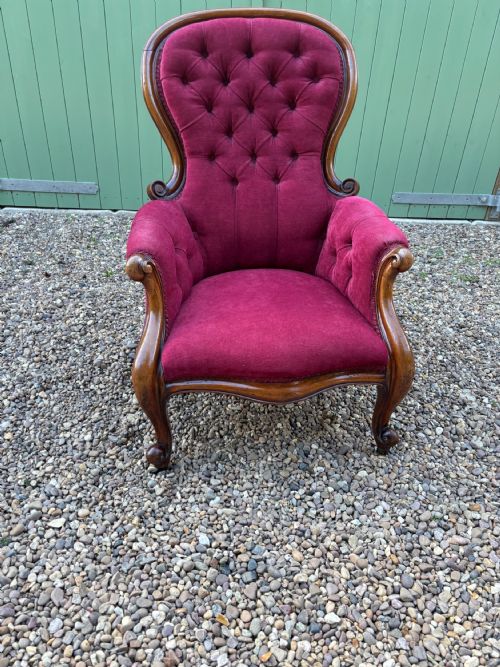
Cabinet makers built the structural frames using dense hardwoods like mahogany, walnut, and rosewood, often shaping the timber with carved scroll arms and show frames. Joinery relied on traditional mortise and tenon joints to withstand the substantial weight and daily use expected of library seating.
Upholstery techniques involved stuffing hair and wool over webbing and springs, secured beneath leather, velvet, or woven fabric. Metal elements such as brass castors appeared on the legs to allow easy movement across floorboards and carpets.
Design styles span the Victorian era, Arts and Crafts movement, and various revival tastes.
What varies in quality
The standard of carving across the wooden frame distinguishes standard production from superior workshop output. Crisp execution of leaf motifs, lion carvings, and scroll arms indicates skilled hand work by master cabinet makers.
The selection of timber grain and the integrity of the underlying frame construction dictate longevity. Dense hardwoods and robust joinery support the heavy leather or fabric upholstery without movement in the joints.
Morison and Co·Hindley and Sons·Gillows
The Victorian Gentleman Library Chair Glossary
- Show frame
- A wooden structural frame left partially visible around the upholstered portions of the chair. This design highlights the carved mahogany or walnut timber.
- Button back
- An upholstery method where tufts are pulled tight and secured with buttons in a geometric pattern. This technique creates deep padded recesses across the backrest.
- Castor
- A small wheel attached to the base of each leg to assist mobility. Brass versions frequently appear on nineteenth-century library armchairs.
- Spoon back
- A shaped wooden backrest resembling the bowl of a spoon, curving inward to fit the human spine. This form is common on Victorian open armchairs.
- Open armchair
- A seating form featuring unpadded wooden armrests rather than fully upholstered sides. These pieces often display carved detail along the arm supports.
Victorian Gentleman Library Chair: Frequently Asked Questions
How were library armchairs used?
These chairs were placed in studies and libraries to provide comfortable seating for reading and writing.
Some examples included reading stands or gaming attachments to support books and papers during long periods of study.
What woods were used for frames?
Cabinet makers utilised dense hardwoods such as mahogany, walnut, rosewood, and oak for structural stability.
Pollard oak and exotic veneers occasionally appeared on specific revival pieces to add decorative grain patterns.
How do I identify a Victorian chair?
Dating relies on timber selection, frame styles, and construction methods characteristic of the nineteenth century.
Revival influences such as Gothic, Chippendale, and Rococo provide additional clues to the exact decade of manufacture.
Can I reupholster these armchairs?
Many listings include chairs upholstered in leather or fabric, while others are sold specifically for reupholstery.
Replacing the covering allows owners to select materials that match existing interior schemes while preserving the historical frame.