

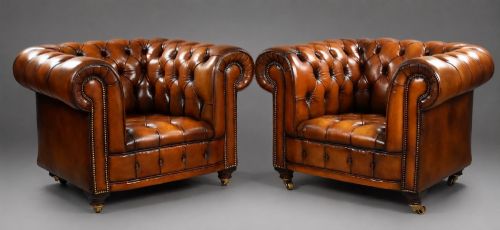
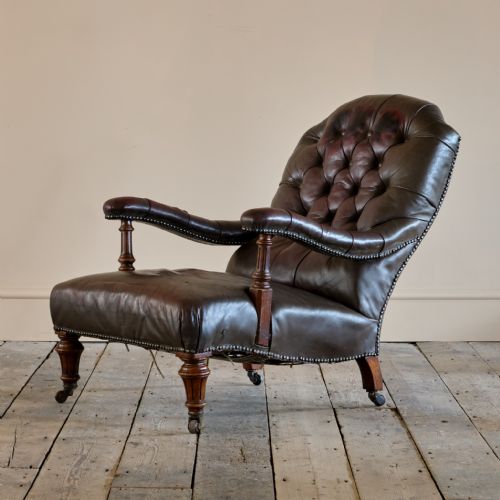
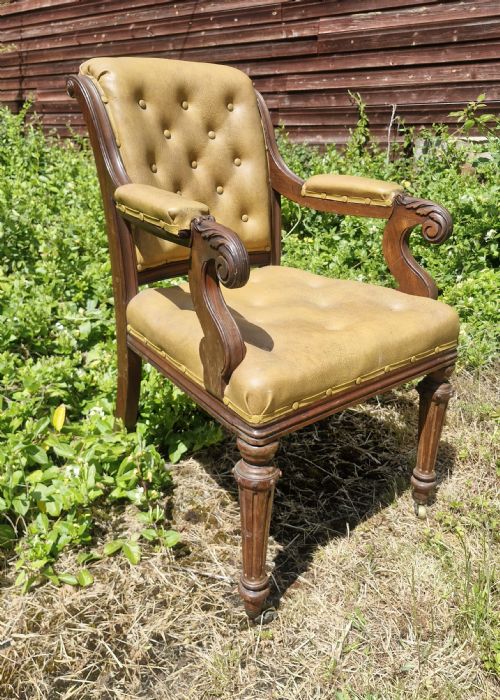
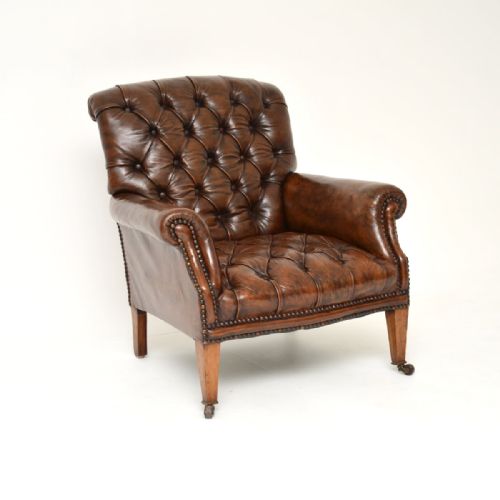


Tufted Leather Arm Chair
A tufted leather arm chair offers the deep comfort and rich patination that define classic British seating.
Tufted Leather Arm Chair
A tufted leather arm chair combines robust timber frames with upholstered hide secured by buttoning, creating a formal yet inviting seat for studies, libraries and drawing rooms. The selection includes library armchairs, desk chairs and club chairs originating from the Regency period through to the early twentieth century.
Victorian examples dominate the listings, frequently featuring buttoned backs, mahogany frames and cabriole legs. Buyers encounter traditional English library chairs alongside compact desk chairs designed for writing tables and partner's desks.
How they were made
Frames employ solid hardwoods such as mahogany, oak, walnut and rosewood, often shaped into structural supports or turned legs. Ebonised wood also appears, offering a dark, uniform contrast to the warm tones of the upholstery.
Upholstery relies on traditional leather hides paired with brass detailing, such as decorative tacks securing the edges. Buttoning techniques pull the leather into distinct tufted patterns across the backrest and arms.
Tufted Leather Arm Chair Retail Price Guide 2026
Typical asking prices for tufted leather arm chair among the pieces listed under this phrase on Sellingantiques today, from the lower quarter to the upper quarter. They describe what is for sale here now, not the wider market.
Materials recorded across the inventory include mahogany, oak, walnut, rosewood and brass alongside leather.
What varies in quality
The refinement of the timber frame and the depth of the buttoning distinguish finer examples from standard seating. Carved details on mahogany and walnut frames indicate higher craftsmanship during the Victorian and Regency periods.
The suppleness and original patination of the leather determine the visual distinction of each piece. Finer hides retain natural textures and aged tones developed through decades of use.
The Tufted Leather Arm Chair Glossary
- Buttoned
- An upholstery technique where buttons are pulled deep into the padding to create a diamond pattern of tufts. This secures the filling and adds structure to the leather backrest.
- Cabriole leg
- A furniture leg that curves outward in a convex swell and tapers inward in a concave curve below. This style appears frequently on Victorian library chairs.
- Ebonised wood
- Timber treated with a finish to resemble ebony, creating a dense black surface. It provides a striking contrast against brown or red leather upholstery.
- Library armchair
- A generous, comfortable seat designed for reading rooms and studies. These chairs often feature upholstered arms and padded backs for extended sitting.
- Regency
- A British design period spanning the early nineteenth century characterised by classical revival motifs and refined proportions. Pieces from this era often incorporate rosewood or mahogany.
Tufted Leather Arm Chair: Frequently Asked Questions
How do I date a leather armchair?
Dating relies on examining the timber frame, construction methods and upholstery style. Victorian pieces often display heavy mahogany frames and buttoned backs, whereas Regency items show earlier classical proportions and finer woods like rosewood.
Matching the materials and leg styles to recorded periods helps narrow down the decade of manufacture. Consulting the listed timber types provides further clues regarding the era.
Are desk chairs suitable for daily use?
Many desk chairs from the nineteenth century remain sturdy enough for regular seating at a modern desk. Their wooden frames and leather seats were built for daily utility in studies and offices.
Checking the stability of the legs and the tension of the leather ensures the chair handles everyday work comfortably. These pieces blend historical character with practical function.
What is Howard style furniture?
Howard style refers to deep, comfortable upholstered seating known for its rolled arms and refined proportions. Originating in the nineteenth century, these chairs set a standard for domestic comfort.
Such armchairs combine generous padding with traditional timber frames, making them sought-after pieces for traditional interiors. Their design prioritises relaxed posture without losing formal elegance.
How should I care for antique leather?
Antique leather benefits from regular dusting and occasional treatment with suitable leather balms to maintain flexibility. Keeping the hide away from direct heat sources prevents it from drying and cracking.
Preserving the natural patination requires gentle cleaning rather than harsh chemical restoration. Proper maintenance protects the aged surface while retaining its historical character.