


Tufted Fabric Chair
A tufted fabric chair brings deep buttoning and traditional upholstery to a room, offering both formal structure and comfortable padding.
Tufted Fabric Chair
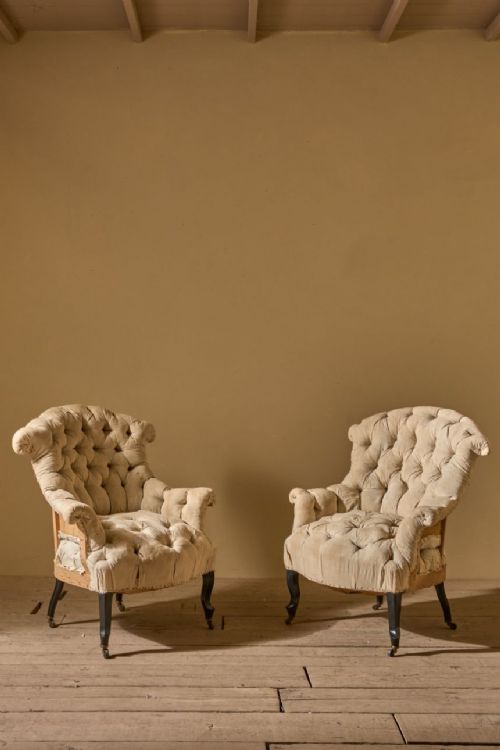
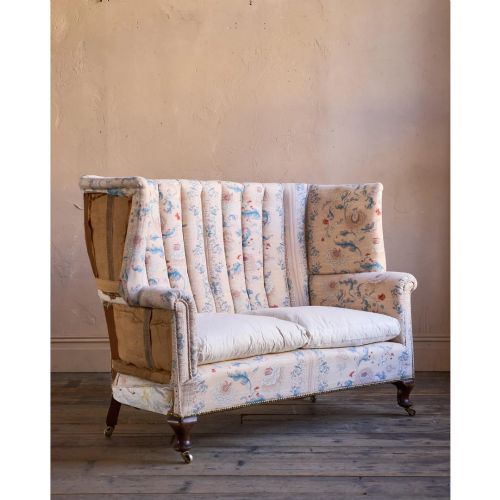
A tufted fabric chair covers a range of traditional seating designed for parlours, libraries and bedrooms, spanning armchairs, slipper chairs and daybeds. When searching for a tufted fabric chair, buyers encounter pieces primarily from the nineteenth century, including Victorian and Napoleon III examples.
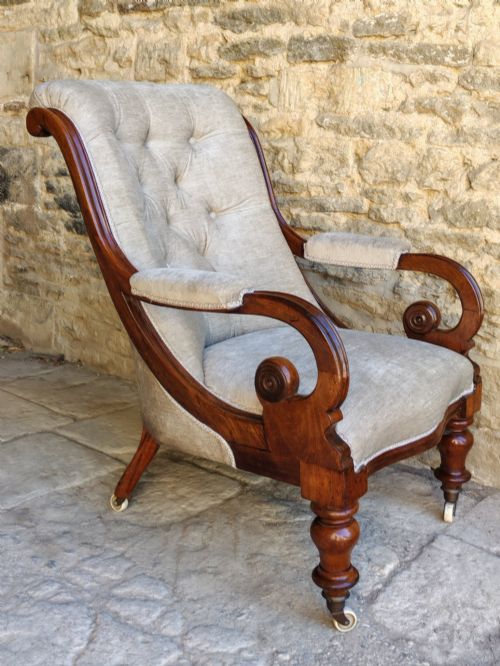
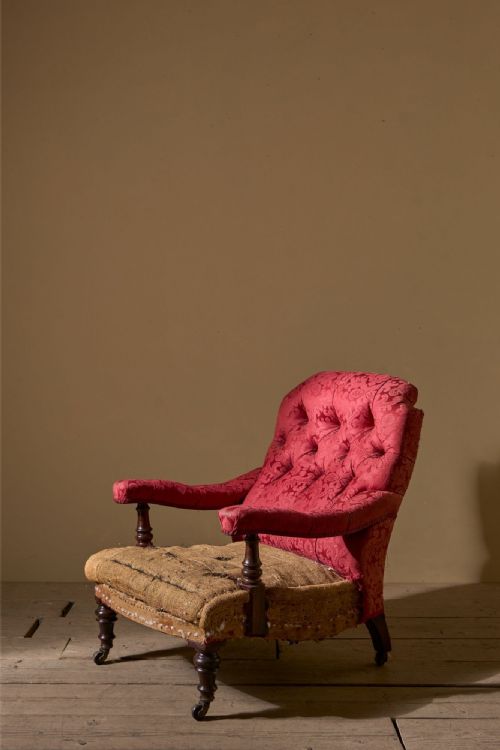
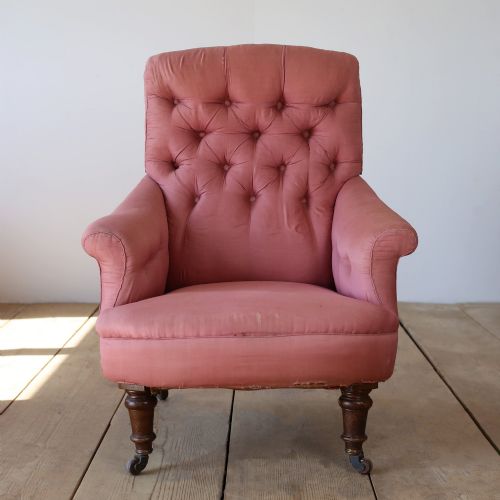
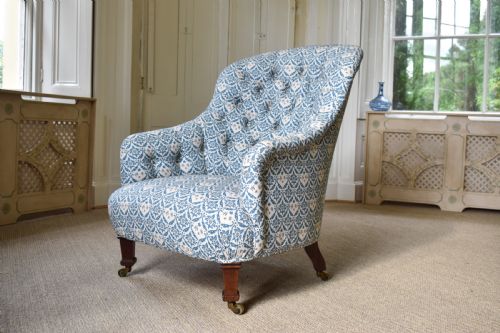
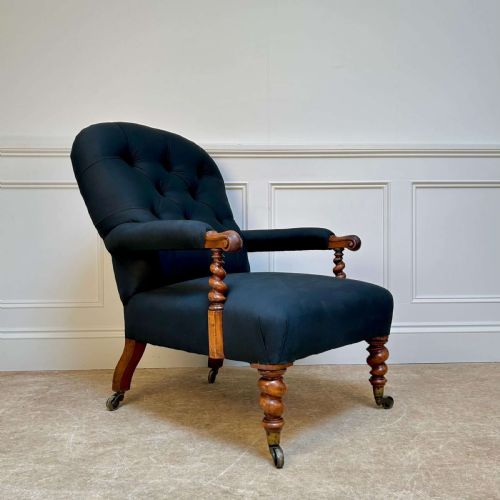
The form most frequently met on this page is the button-backed armchair, often executed in walnut or mahogany with upholstered arms and sprung seats. Alongside these sit chaise longues, tub armchairs and low bedroom chairs featuring tailored fabric coverings.
Origins stretch across English country house workshops and French cabinet makers, yielding styles from Rococo Revival and Edwardian periods down to the nineteen-twenties. These seats served distinct domestic functions, from fireside lounging to formal reception rooms.
Materials and construction
The foundational frames rely on timbers such as walnut and mahogany, supplemented by iron frames in certain Victorian variations and brass details on castors. Wood is turned, carved into cabriole legs, or ebonised and gilt depending on the specific nineteenth-century style.
Deep buttoning defines the upholstery technique, securing the fabric and internal padding into geometric patterns using twine pulled tight through the stuffing. Covering materials span calico, damask fabric, and velvet, often finished with piped edges or brass nail heads.
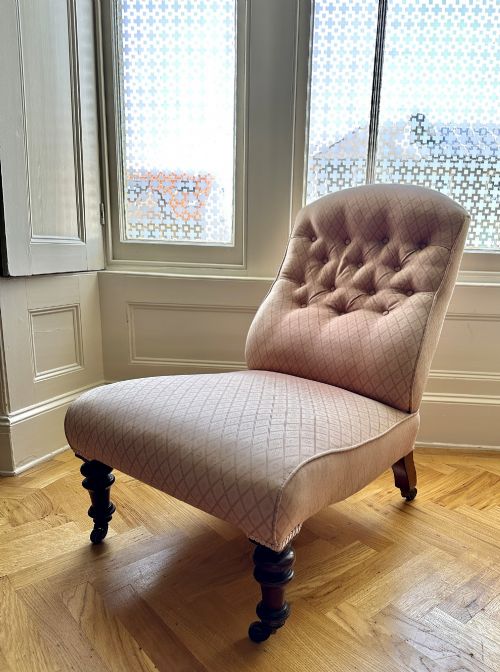
Nineteenth-century makers ensured ladies could sit comfortably in voluminous skirts by designing armless slipper chairs specifically for dressing rooms.
Assessing quality in construction and material
Quality reveals itself in the integrity of the underlying timber frame and the precision of the joinery beneath the upholstery. Robust hardwood frames with well-sprung seats hold their posture and resist sagging over generations of use.
The execution of the deep buttoning and the choice of textile dictate the aesthetic standing of the piece. Finer examples display symmetrical button tension and high-grade period fabrics that complement the carved or polished wooden framework.
Howard & Sons·Hindley & Sons·Gillows
The Tufted Fabric Chair Glossary
- Button back
- An upholstery technique where buttons are sewn through the padding at regular intervals to create recessed indentations and puffy cushions. This method secures internal stuffing while adding geometric texture.
- Cabriole leg
- A furniture leg that curves outward at the knee and tapers inward toward the foot, often ending in a scroll or pad. It is frequently carved from mahogany or walnut on Victorian seating.
- Slipper chair
- A low-set upholstered chair traditionally placed in bedrooms for ladies to sit while putting on shoes. They lack arms to accommodate voluminous nineteenth-century dresses.
- Tub armchair
- A comfortable chair featuring a continuous curved back and armrest structure resembling the shape of a tub. These frames are fully upholstered and often sit on castors.
Tufted Fabric Chair: Frequently Asked Questions
What defines a tufted fabric chair?
A tufted fabric chair is characterised by upholstery secured with buttons that create a gathered, padded surface across the backrest or seat. This method provides both structural support for the internal stuffing and a decorative texture.
Such chairs appear predominantly in nineteenth-century styles, including Victorian and Napoleon III designs, utilising woods like mahogany and walnut for exposed frames.
How were these chairs used historically?
These seats served various domestic purposes depending on their specific form, from fireside lounging in libraries to reception rooms and private bedrooms. Slipper chairs accommodated dressing routines, while chaise longues provided resting spots for reading.
Their placement shifted between formal entertaining spaces and private domestic quarters as household habits evolved through the Victorian and Edwardian eras.
How do I care for a vintage tufted chair?
Preserving these pieces involves gentle maintenance of both the wooden frame and the fabric upholstery. Regular dusting of carved timber elements and careful vacuuming around button indentations prevents dirt accumulation.
Direct sunlight should be avoided to protect sensitive textiles like damask and velvet from fading over time.
How can I tell Victorian chairs apart?
Victorian seating is distinguished by shifts in timber choice, leg shape, and upholstery styling across different decades of the nineteenth century. Early pieces often feature dark mahogany with robust cabriole legs, while later examples incorporate ebonised finishes, iron frames, or distinct Edwardian proportions.
Maker stamps on wooden rails or castors offer definitive clues to origin and workshop provenance.