
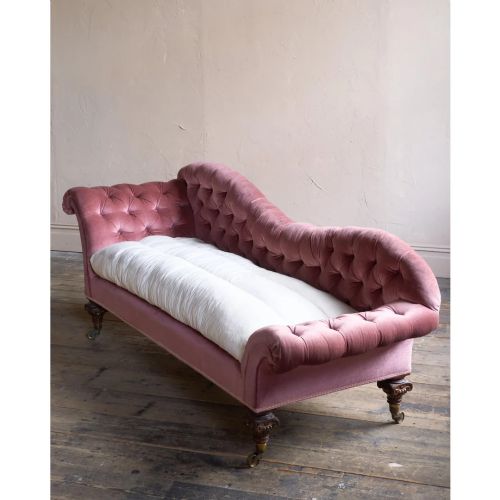
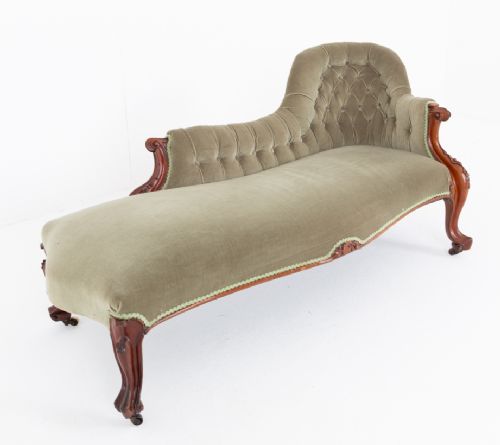
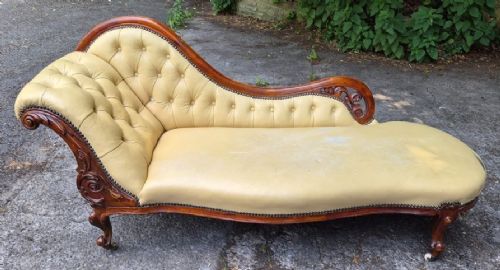


Tufted Daybed Sofa
A tufted daybed sofa offers a place for reclining in the home, bringing nineteenth-century seating into modern spaces.
Tufted Daybed Sofa
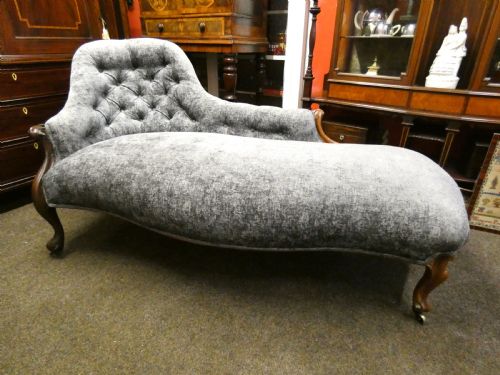
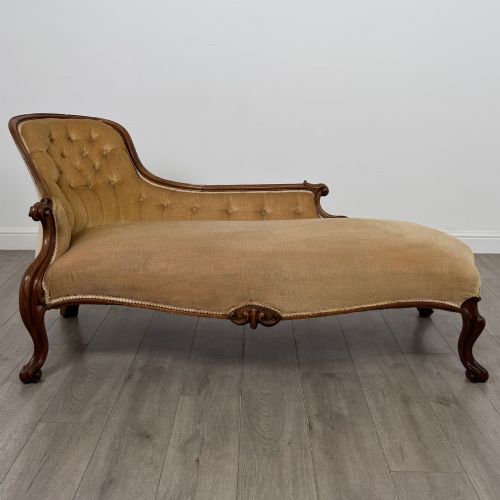
A tufted daybed sofa combines the function of a settee, couch and day bed within nineteenth-century furniture design. Buyers searching for a tufted daybed sofa encounter Victorian and Regency pieces that function for daytime resting and sitting.
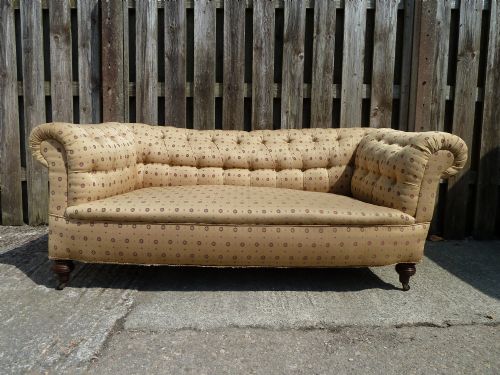
The selection on this page consists primarily of Victorian and nineteenth-century chaise longues, daybeds and chesterfield sofas. These items originate from periods spanning the eighteen-fifties to the eighteen-nineties, alongside earlier Regency examples.
Makers such as Howard & Sons, Holland & Sons, Jas Shoolbred, H. Goodall & Sons and Miles & Edwards appear in the titles. Forms vary from double spoonback and scroll end settees to open arm sofas and reclining day beds.
Materials and construction
Makers utilised solid timbers such as mahogany, rosewood and walnut to construct the exposed frames of these daybeds and sofas. Carved mahogany and rosewood define many of the Victorian and Regency pieces.
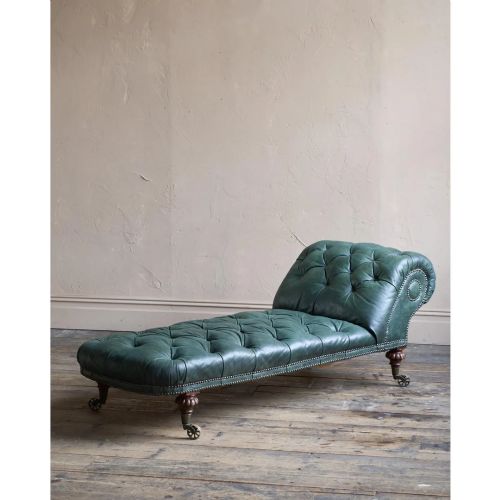
Upholstery materials include velvet, leather, fabric and blue damask, fitted over sprung or padded foundations. Brass details and Ionic column legs occasionally appear on the frames.
Several pieces feature Ionic column legs, allowing nineteenth-century loungers to rest upon miniature architectural ruins.
Judging quality in nineteenth-century seating
The standard of carving on the timber frames distinguishes the output of workshops like Holland & Sons or Howard & Sons from standard production. Crisp detailing on scroll ends, spoonbacks and column legs indicates superior cabinet work.
The execution of the buttoning and the choice of textile, whether leather, velvet or damask, affect the overall integrity of the piece. Substantial mahogany and rosewood frames provide the structural foundation for the best examples.
Howard & Sons·H Goodall & Sons·Holland & Sons·Jas Shoolbred·Miles & Edwards
The Tufted Daybed Sofa Glossary
- Chaise longue
- An upholstered sofa in the form of a chair with a long seat for reclining. This French term translates as long chair and describes many nineteenth-century daybeds.
- Chesterfield sofa
- A form of upholstered settee featuring deep button tufting and rolled arms. These pieces appear in leather, velvet and fabric.
- Spoonback
- A chair or settee back shaped to resemble the bowl of a spoon, providing ergonomic support. Victorian makers utilised this form on double spoonback chaise longues.
- Regency
- An architectural and furniture style dating from the early nineteenth century. Pieces from this period exhibit classical restraint and mahogany frames.
- Scroll end
- A furniture arm or terminal shaped in a continuous spiral curve. Early nineteenth-century day beds and settees frequently employ this design.
Tufted Daybed Sofa: Frequently Asked Questions
How do I identify a Victorian daybed?
Victorian daybeds and chaise longues generally date from eighteen-fifty to eighteen-ninety, featuring timber frames in mahogany, rosewood or walnut. Look for characteristic details like carved spoonbacks, scroll ends and Ionic column legs.
Upholstery choices range from blue damask and velvet to whisky brown leather. Maker attributions to firms like Jas Shoolbred often appear on nineteenth-century examples.
Where were these daybeds made?
These daybeds and sofas originate from nineteenth-century British workshops and cabinet makers. Prominent firms like Howard & Sons and Miles & Edwards operated during this period.
French daybeds from the same era also appear within the nineteenth-century selection. English cabinet makers utilised native and imported hardwoods for the frames.
How do I care for antique leather upholstery?
Antique leather upholstery on nineteenth-century chesterfield sofas and daybeds requires gentle cleaning and conditioning to maintain the material. Avoid placing leather seating in direct sunlight or near heat sources.
Consult professional restorers for deep cleaning or repairs to buttoned leather surfaces. Regular dusting preserves the finish on restored nineteenth-century pieces.