


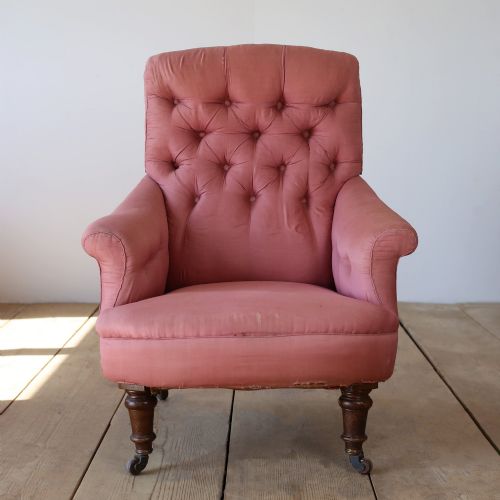
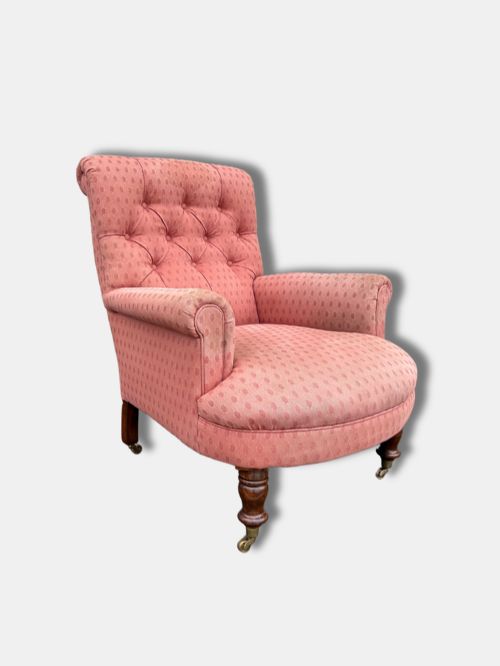
Tufted Button Chair
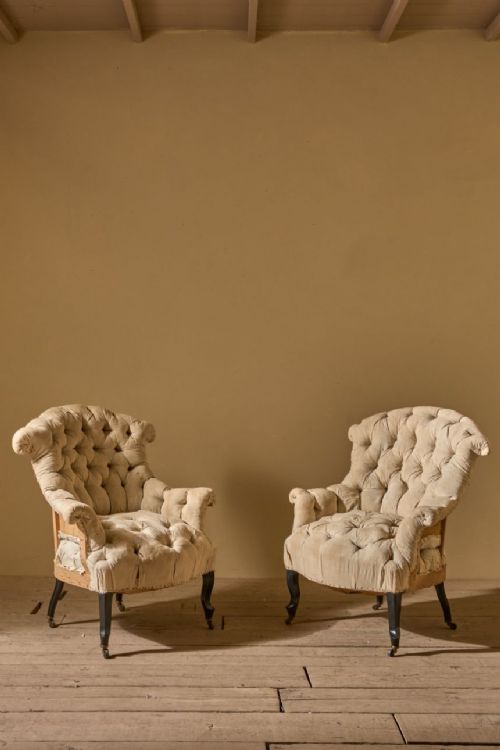
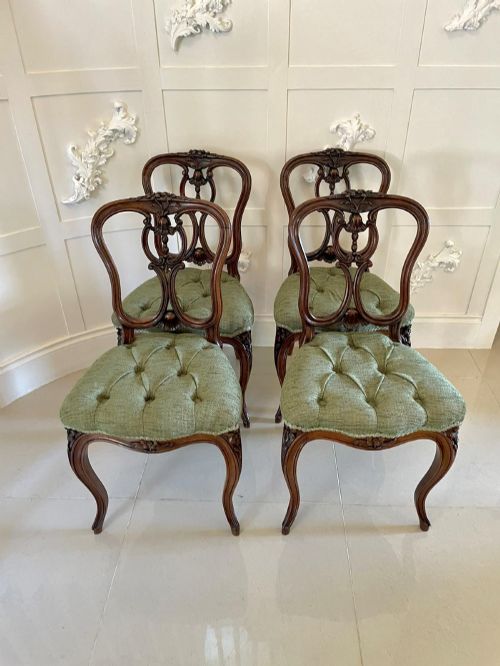
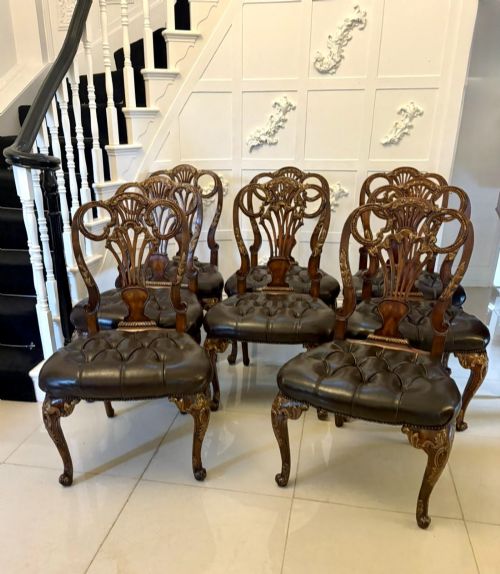
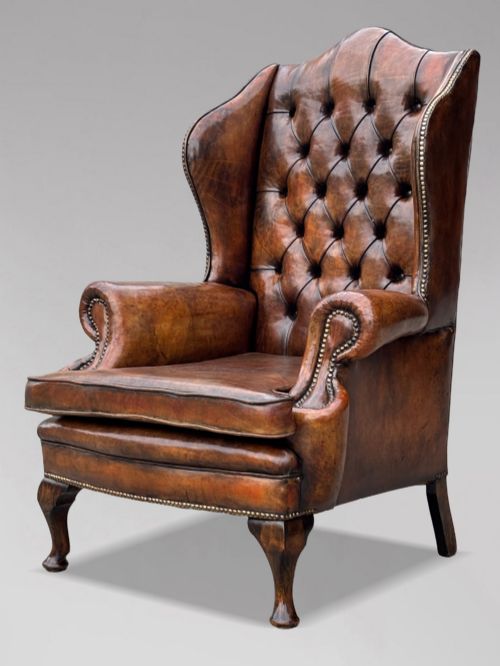
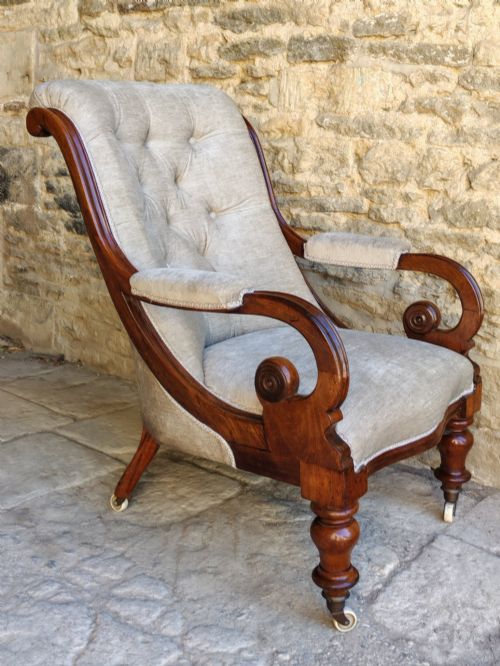
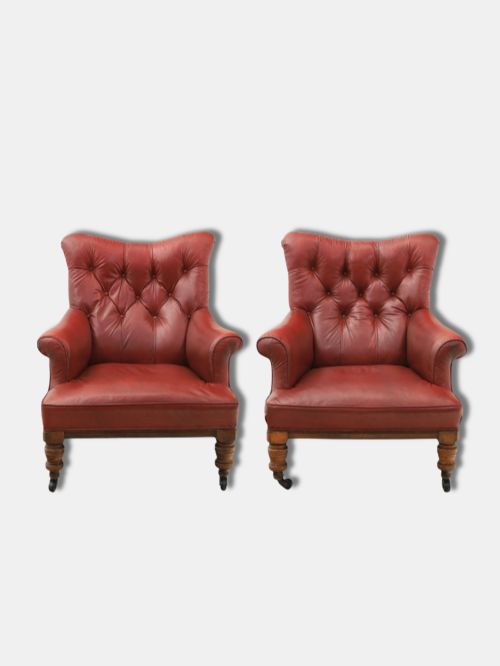
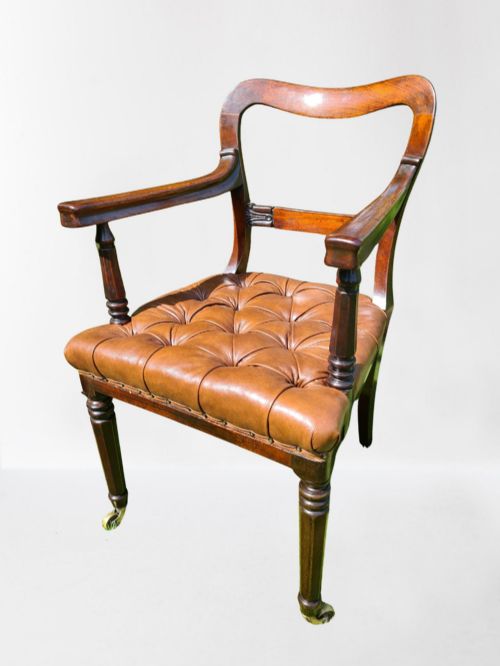
These tufted button chairs combine deep upholstery work with robust timber frames, offering substantial comfort and period character.
Tufted Button Chair
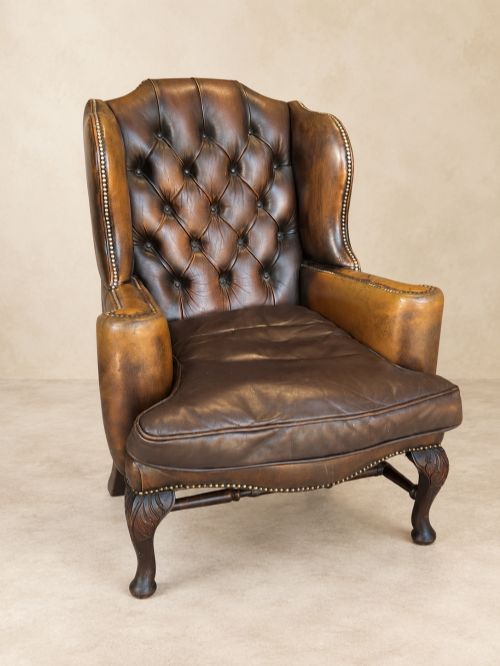
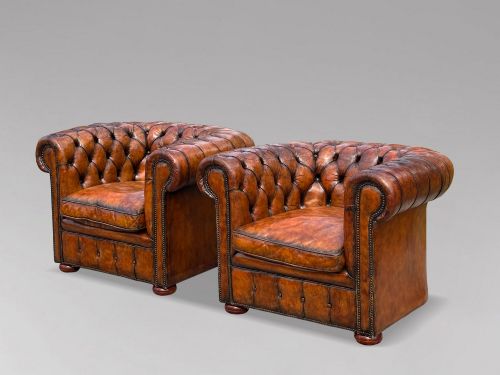
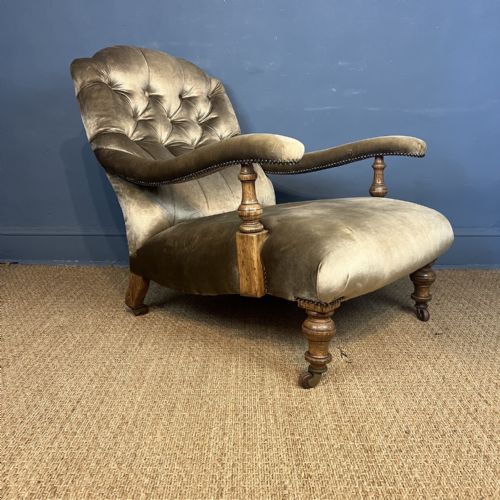
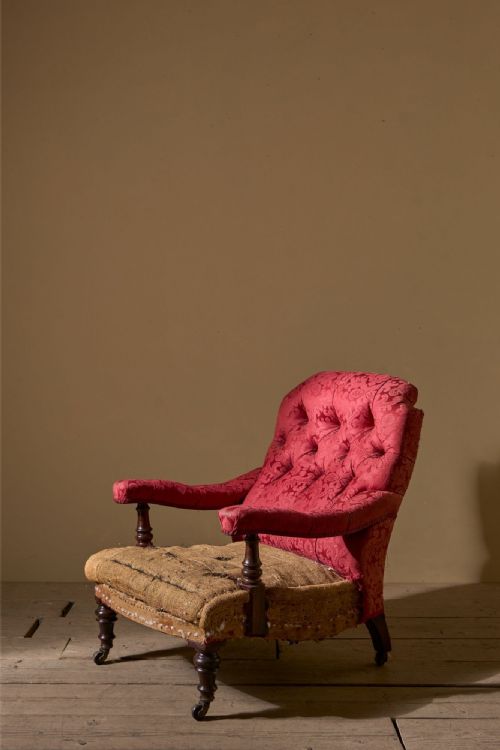
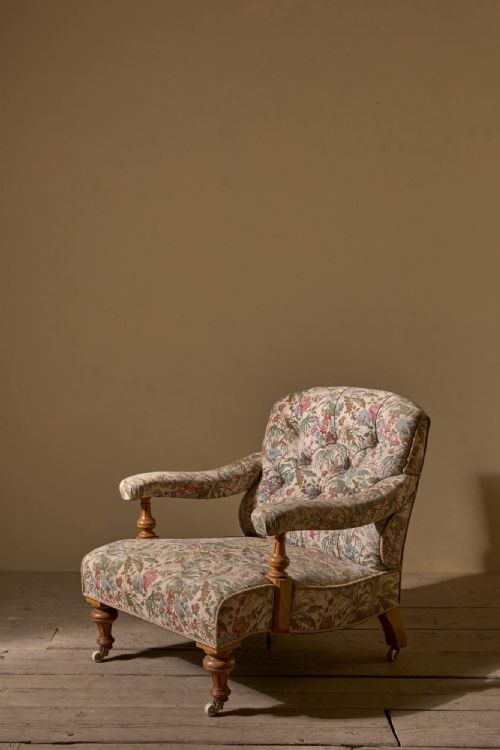
When you search for a tufted button chair, you encounter a wide variety of seating forms spanning the nineteenth century and early twentieth century. Armchairs, wing armchairs, library chairs, and slipper chairs dominate the selection, often featuring the characteristic deep buttoning on the backrest that defines the style. Victorian examples appear frequently, alongside Edwardian pieces and occasional Regency or mid-century interpretations.
The assortment ranges from compact bedroom chairs and revolving desk chairs to large country house armchairs and Chesterfield club chairs. Makers and designers of the period utilised various seating layouts, including chaise longues, settees, and complete salon suites, all unified by padded upholstery anchored with buttons.
How they were made
Makers built the foundational framework of these chairs using sturdy hardwoods such as mahogany, oak, walnut, rosewood, and beech. These timbers formed the exposed legs, arms, and structural frames, which often display carved details, brass castors, or aesthetic movement influences.
Upholsterers applied layers of stuffing beneath durable outer coverings of leather, velvet, fabric, calico, or rexine. They secured the padding using systematic button tufting, pulling the material deep into the interior to create the signature diamond-shaped cushioning pattern.
Listings feature nineteen-century Victorian and Edwardian periods alongside materials such as mahogany, walnut, rosewood, leather, velvet, and brass.
What varies in quality
The distinction between ordinary seating and exceptional pieces rests in the integrity of the timber framing and the precision of the upholstery work. Superior examples exhibit tightly fitted joinery, substantial proportions, and high-grade materials like fine grain leather or richly carved walnut and mahogany.
Makership also dictates value, with signed workshop pieces or those bearing distinct stylistic attributions demonstrating superior craftsmanship in both internal webbing and external finishing details.
Howard & Sons·Holland & Sons
The Tufted Button Chair Glossary
- Button back
- A traditional upholstery technique where buttons are pulled deep into the padding to form a geometric tufted pattern. This method secures the internal filling while providing firm support to the sitter.
- Wing armchair
- An upholstered seat featuring protective side panels attached to the arms and backrest. These wings historically blocked drafts and retained heat from a fireplace.
- Library chair
- A heavy, stable armchair designed for prolonged reading and study, frequently paired with writing surfaces or constructed with sturdy timber frames. These pieces often incorporate leather upholstery for durability.
- Slipper chair
- A low-seated bedroom chair originally designed to assist ladies with putting on footwear. They typically lack arms and sit close to the floor.
- Chaise longue
- An elongated upholstered seat intended for reclining, combining the characteristics of a chair and a day bed. Examples often feature scroll ends or carved wooden legs.
Tufted Button Chair: Frequently Asked Questions
What is a tufted button chair?
A tufted button chair is an upholstered seat characterised by deep buttoning across the backrest, creating a gathered pattern. These pieces emerged strongly during the Victorian era.
They appear in various forms, including library armchairs, low bedroom chairs, and large club seats upholstered in leather, velvet, or fabric.
How do I date a tufted button chair?
Dating relies on examining the timber frame, upholstery materials, and overall style of the piece. Victorian examples often feature heavy mahogany or walnut frames with carved details.
Later Edwardian or 1920s versions may incorporate different wood species or alternative coverings like rexine while maintaining the traditional tufted aesthetic.
How should I care for leather upholstery?
Leather upholstery requires regular dusting and occasional conditioning to maintain its suppleness. Keeping the material away from direct heat sources prevents cracking.
Natural ageing and patination form part of the historic character of vintage leather armchairs.