

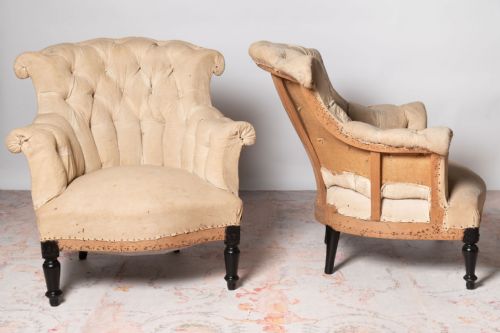

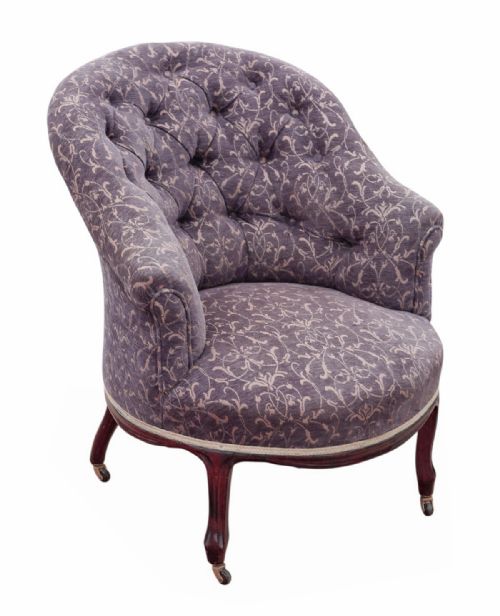


Tufted Back Tub Chair
A tufted back tub chair provides deep, enveloping comfort through curved upholstered lines and buttoning found across Victorian and Edwardian examples.
Tufted Back Tub Chair
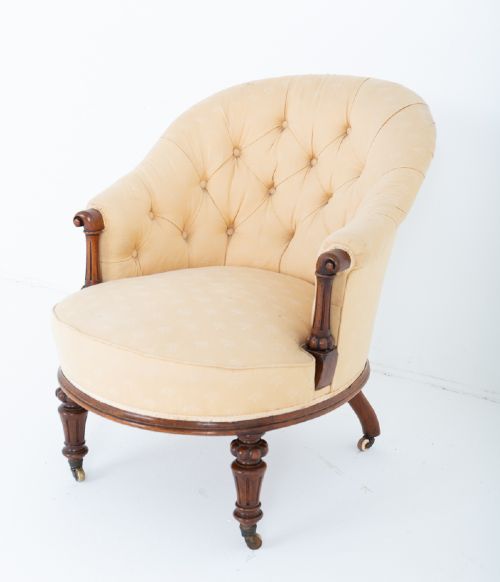
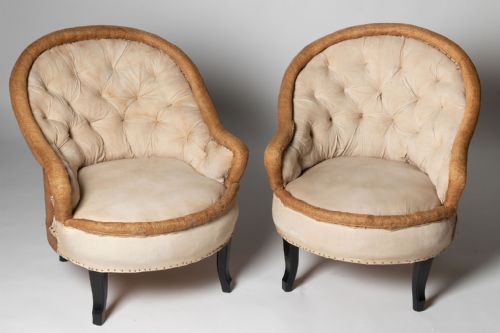
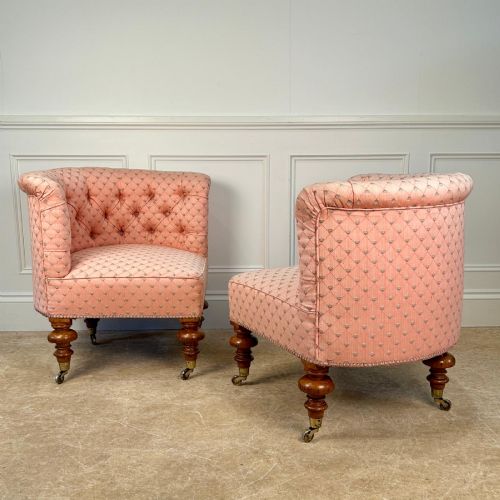
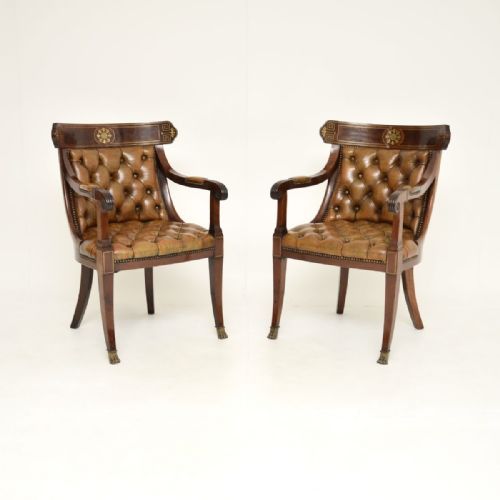
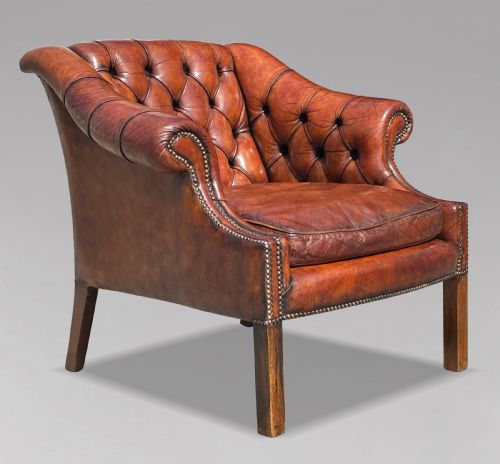
A tufted back tub chair combines a continuous curved back and armrest structure with buttoned upholstery, creating a rounded profile designed for comfortable sitting. These pieces appear across Victorian, Edwardian, and Regency periods, showing how makers adapted the enclosed seat form through the nineteenth and early twentieth centuries.
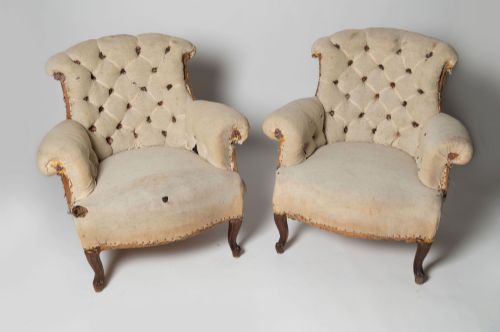
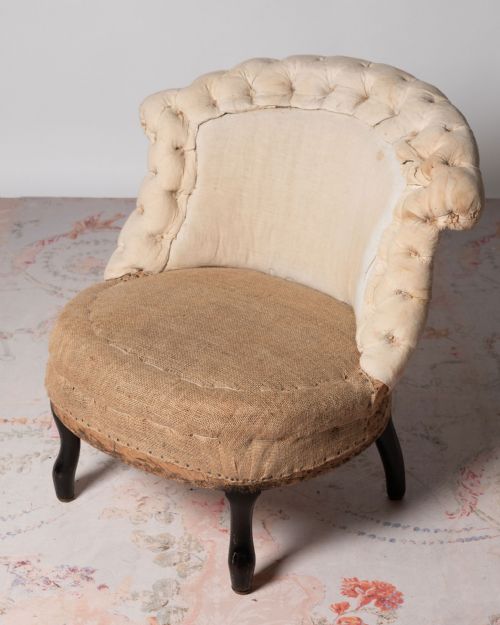
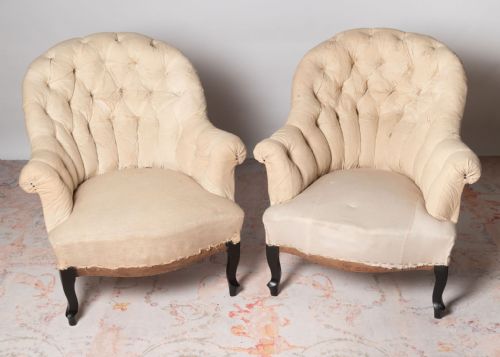
The selections available here range from compact nineteenth-century ladies tub chairs to larger English lounge armchairs and French fauteuils. Buyers frequently encounter nineteenth-century Victorian examples alongside Edwardian barrel back armchairs and vintage French cotton or velvet variations.
Materials and construction
The wooden frames underpinning these chairs rely on mahogany, oak, beech, and painted or silver-gilt timbers, providing structural stability beneath the upholstery. Brass elements occasionally appear as inlay work or decorative detailing on Regency pieces.
Upholstery involves traditional textile choices such as velvet, leather, fabric, linen, and vintage French cotton. Deep buttoning secures the padding to the curved back, requiring careful tension to shape the characteristic tufted surface.
Tufted Back Tub Chair Retail Price Guide 2026
Typical asking prices for tufted back tub chair among the pieces listed under this phrase on Sellingantiques today, from the lower quarter to the upper quarter. They describe what is for sale here now, not the wider market.
Listings feature pieces spanning the 19th Century, Regency, Victorian, and Edwardian periods, utilising mahogany, oak, beech, leather, velvet, and linen.
Assessing quality in construction
Quality rests upon the proportion of the curved timber frame and the precision of the joinery hidden beneath the padding. Firmer frames maintain their structural integrity through decades of daily use.
The standard of the upholstery work distinguishes finer pieces, particularly in the regularity of the deep buttoning and the choice of materials like heavy leather or plush velvet. Superior examples balance supportive padding with refined decorative details such as brass inlay or gilt finishes.
Howard and Sons
The Tufted Back Tub Chair Glossary
- Tub chair
- An armchair featuring a continuous curved back and arms that form a single enclosing shape. This form surrounds the sitter to provide sheltered comfort.
- Deep buttoned
- An upholstery technique where buttons are pulled deep into the padding at regular intervals to create a tufted diamond pattern. This secures the internal stuffing while adding texture.
- Barrel back
- A chair back shaped with a rounded, semicircular curve resembling a halved wooden barrel. It wraps closely around the user.
- Fauteuil
- An open-armed French armchair with an exposed wooden frame, typically dating from periods like Louis XV Revival or Napoleon III. These chairs combine carved woodwork with upholstered seats and backs.
- Regency
- A British design period spanning the early nineteenth century defined by classical restraint and occasional Egyptian or Roman revival motifs. Pieces from this era frequently utilise mahogany and brass.
Tufted Back Tub Chair: Frequently Asked Questions
What is a tufted back tub chair?
A tufted back tub chair is an upholstered seating form characterised by a curved, enclosing backrest and deep buttoning across the fabric or leather.
These chairs appear in Victorian, Edwardian, and French styles, offering a rounded silhouette designed to wrap around the sitter.
How do I date a tub chair?
Dating relies on examining the timber frame, upholstery style, and design markers associated with periods like the Victorian era or Edwardian times.
Subtle changes in wood selection, such as mahogany or beech, combined with buttoning techniques help narrow down the decade of manufacture.
Are these chairs comfortable for daily use?
These armchairs were designed for relaxation, offering supportive padding enclosed by curved armrests and high backs.
Their deep buttoning and upholstered construction provide a cushioned seat suitable for reading rooms or living spaces.
What materials were used originally?
Original construction typically involved hardwood frames made from mahogany, oak, or beech, sometimes enhanced with brass inlay or gilt finishes.
Upholstery materials range from traditional leather and velvet to linen, cotton, and patterned fabrics.