



Tudor Storage Chest
A tudor storage chest is a heavy wooden receptacle for domestic goods, offering robust security and centuries of functional history.
Tudor Storage Chest
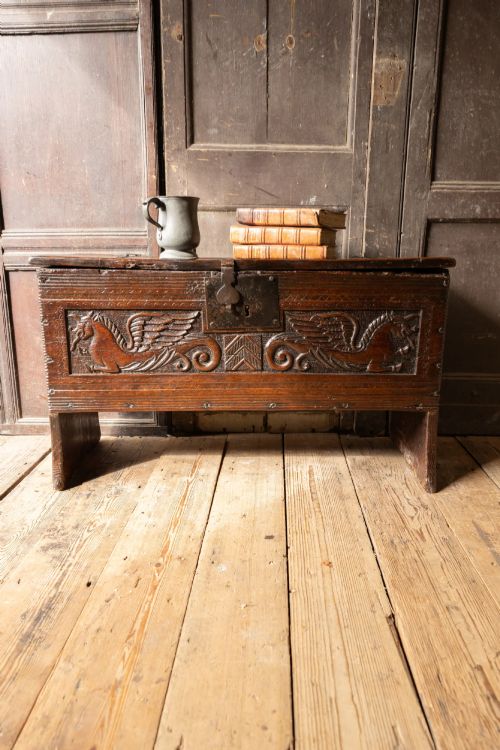
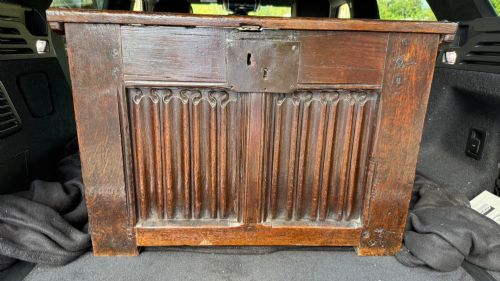
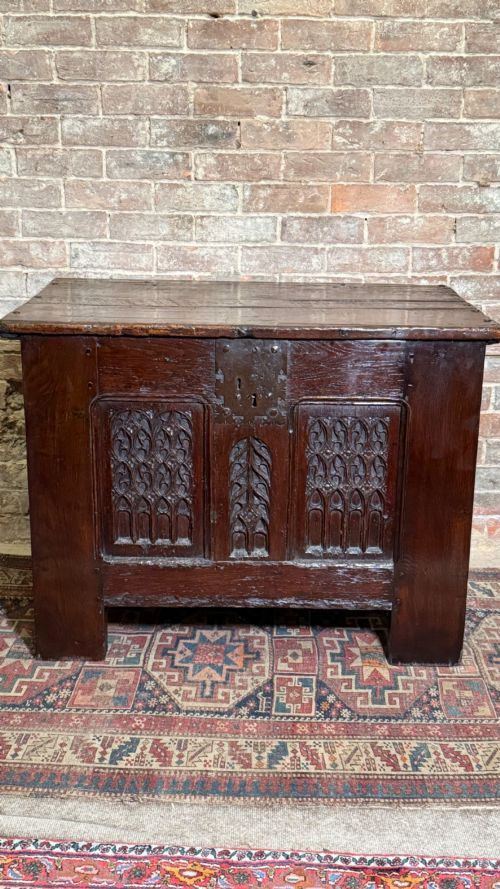
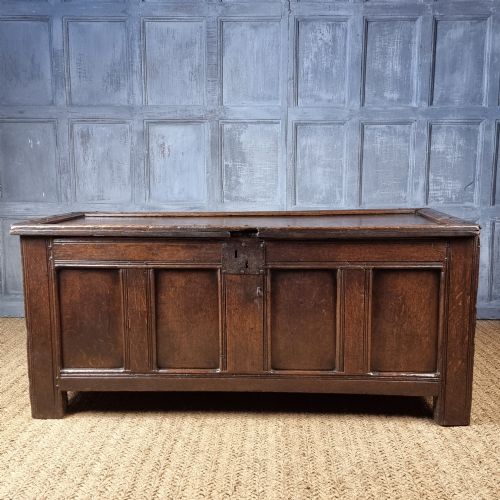
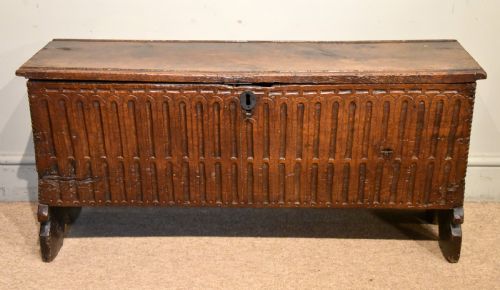
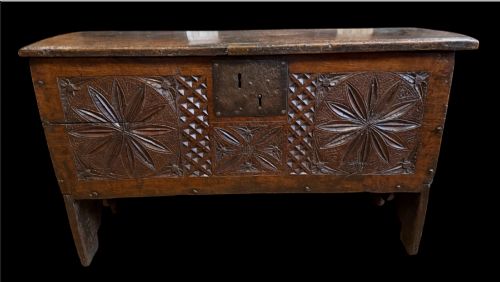
A tudor storage chest primarily takes the form of a boarded coffer, plank coffer, or carved chest constructed during the 16th century. These pieces served domestic households for keeping linen, valuables, and provisions secure against theft and dampness.
The inventory on this page also includes later Tudor Revival interpretations from 1920, such as linenfold cupboards and lift-top cabinets. Buyers will encounter both authentic 16th-century examples featuring linenfold and fluted carving alongside early 20th-century revival pieces modelled on the same early forms.
Regional variations appear across the selection, including Welsh oak chests and pieces attributed to the West Country with winged fantastic beasts. These regional markers help separate local craftsmanship from standard metropolitan production of the period.
Materials and construction methods
Construction relies heavily on solid oak timber, frequently quarter-sawn to expose the medullary rays and provide structural stability for heavy panels. Carpenters joined these thick planks using pegging and tongue-and-groove methods rather than modern metal fasteners.
Iron and wrought iron appear extensively in the hinges, strapwork, and massive locking mechanisms that secured these receptacles. Brass and inlaid wood occasionally supplement the primary timber structure on more decorative domestic examples.
Tudor Storage Chest Retail Price Guide 2026
Typical asking prices for tudor storage chest among the pieces listed under this phrase on Sellingantiques today, from the lower quarter to the upper quarter. They describe what is for sale here now, not the wider market.
Listings span from the 16th century through to 1920, uniting authentic Tudor plank coffers with later revival oak cupboards.
Differentiating quality across pieces
Quality separates along the depth and precision of the carved ornamentation, ranging from simple plain plank construction to elaborate fluting, winged beasts, and linenfold panels. The sophistication of the ironwork hinges and the complexity of the internal lock mechanisms also indicate higher workshop standards.
The integrity of the original timber joints and the extent of later replacement wood dictate the overall grade of survival. Pieces retaining their primary base boards and original boarded construction sit firmly at the upper end of the range.
Jaycee
The Tudor Storage Chest Glossary
- Linenfold
- A style of wood carving that mimics folded linen fabric. It appears commonly on panels of 16th-century cupboards and chests.
- Boarded chest
- A primitive chest constructed from thick vertical planks nailed or pegged together at the edges. This method represents the earliest form of box construction.
- Plank coffer
- A simple storage box hewn directly from heavy timber planks. These utilitarian objects predate sophisticated frame-and-panel cabinetry.
- Tudor Revival
- An architectural and decorative style popular around 1920 that emulates 16th-century forms. It utilises older motifs on newer furniture carcasses.
Tudor Storage Chest: Frequently Asked Questions
What is a tudor storage chest?
A tudor storage chest is a heavy wooden box used in 16th-century households to store textiles, valuables, and documents. These pieces utilised sturdy oak planks and iron hardware to protect contents from pests and theft.
Today, buyers use them as functional coffee tables or statement storage units in traditional and contemporary interiors alike.
How do I date a 16th-century chest?
Dating relies on examining the construction joints, tool marks left by adzes and saws, and the specific style of carving present on the panels. Regional motifs and historical references, such as linenfold patterns or linen-panelling, help narrow the decade.
Later 1920 revival pieces often betray their modern origins through standardised machine-cut timber and lighter ironwork hinges.
Were these chests used for travel?
Most surviving examples functioned primarily as static household furniture rather than travel luggage due to their immense weight and solid oak construction. They sat at the foot of beds or against great hall walls to hold household linens and woollens.
Iron bindings and strapwork provided structural rigidity and security rather than handles for frequent transit.
How do I care for antique oak?
Antique oak requires a stable indoor environment away from direct heat sources and rapid humidity fluctuations to prevent wood splitting. Applying a traditional beeswax polish helps nourish the dry timber and maintains the natural patina.
Avoid modern liquid cleaners or silicone polishes that can permanently penetrate the historic grain of the wood.