

Tub Desk Armchair
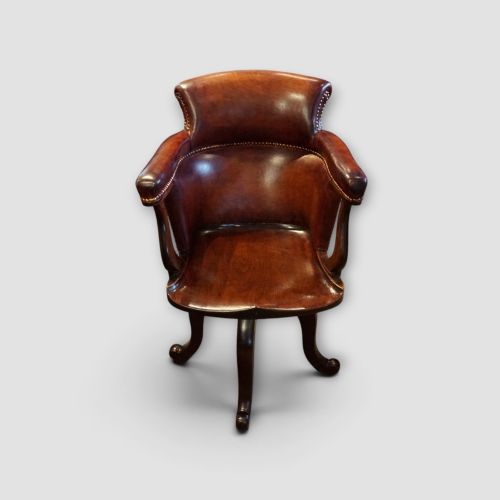
A tub desk armchair offers a supportive curved back for long hours at work, combining comfort with classic British office style.
Tub Desk Armchair
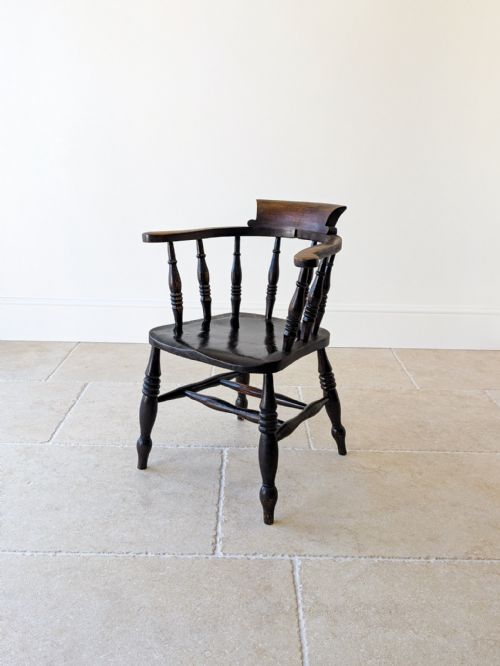
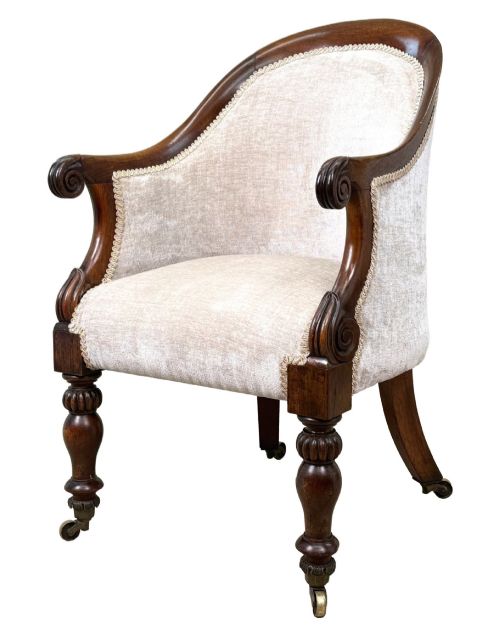
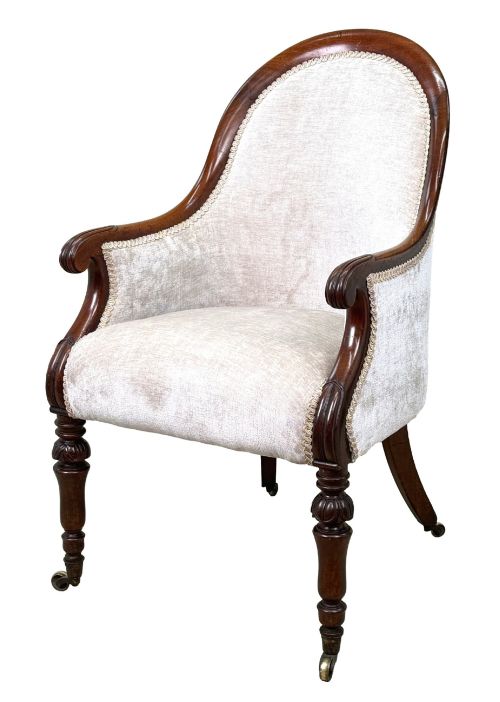
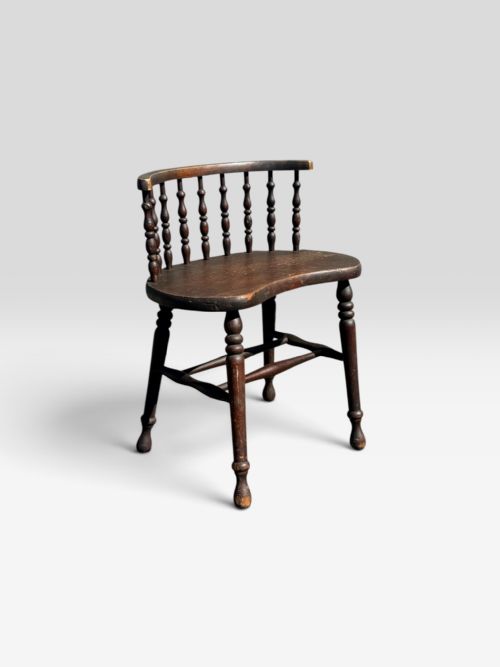
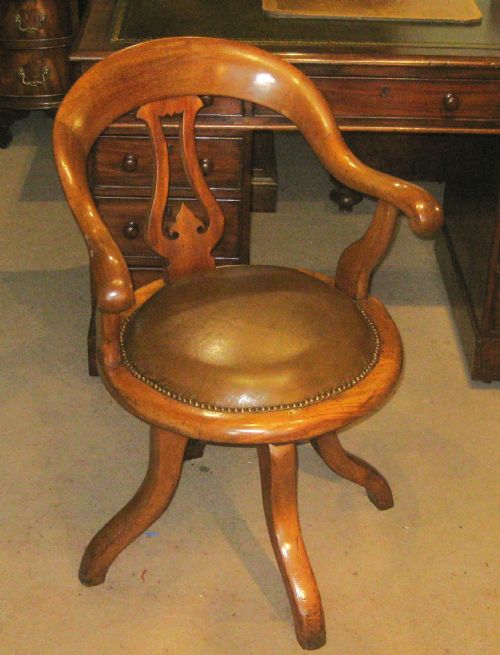
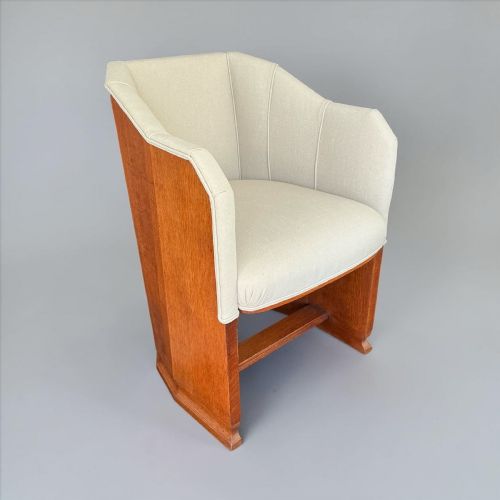
A tub desk armchair brings together the enclosed curving back of a traditional tub seat with the practical height and stability required for a working environment. These pieces appear frequently from the Victorian and Edwardian periods, alongside earlier Regency examples and robust country variants.
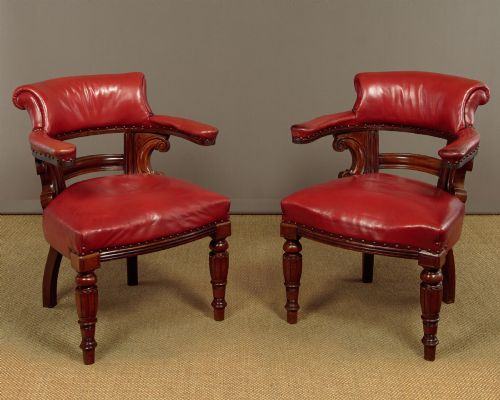
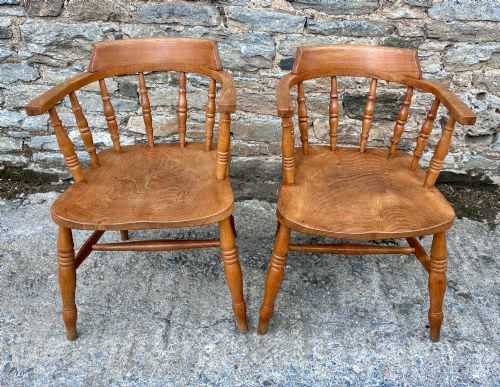
The form adapts readily to different settings, serving as a revolving office seat, a library armchair, or a sturdy smoker's bow for a reading corner. Most examples met on this page span the nineteenth and early twentieth centuries, constructed in regional timbers or polished hardwoods.
Makers designed these chairs to offer lumbar support through low, enveloping arms that flow continuously into the backrest. Buyers seek out these seating options for studies and home offices where traditional craftsmanship meets daily utility.
Materials and construction
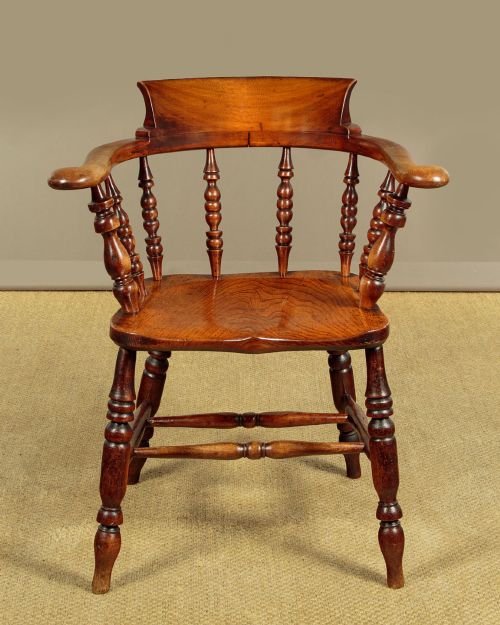
Makers relied on durable timbers such as mahogany, oak, elm, and beech to build the frames of a tub desk armchair, often turning solid wood for spindles and legs. Bending techniques shaped the continuous backrails of country Captain's chairs and Windsor variants from resilient hardwoods.
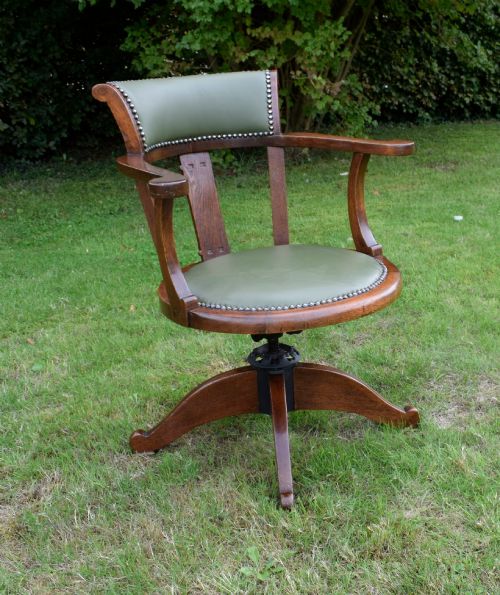
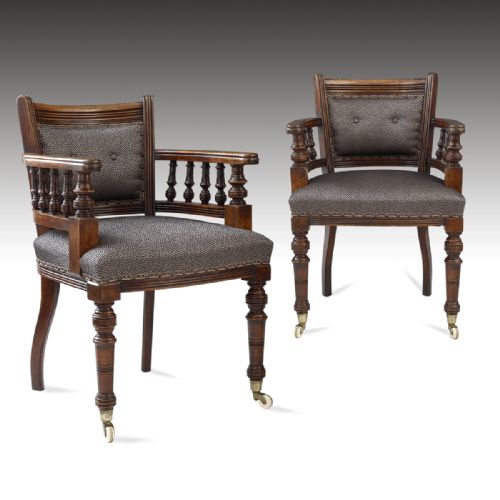
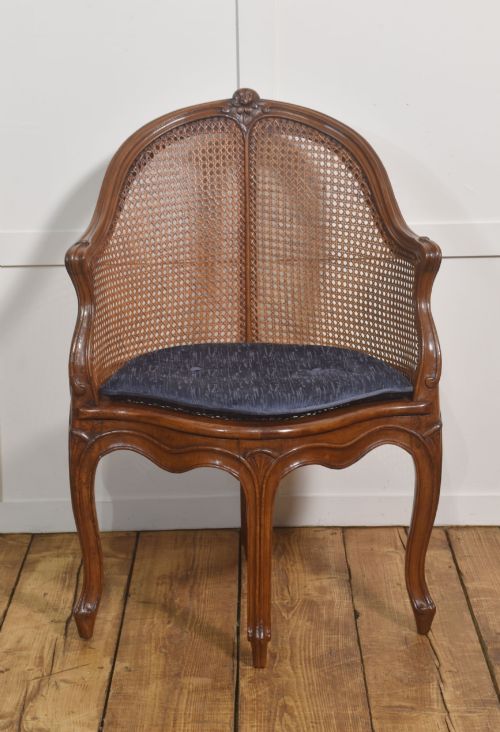
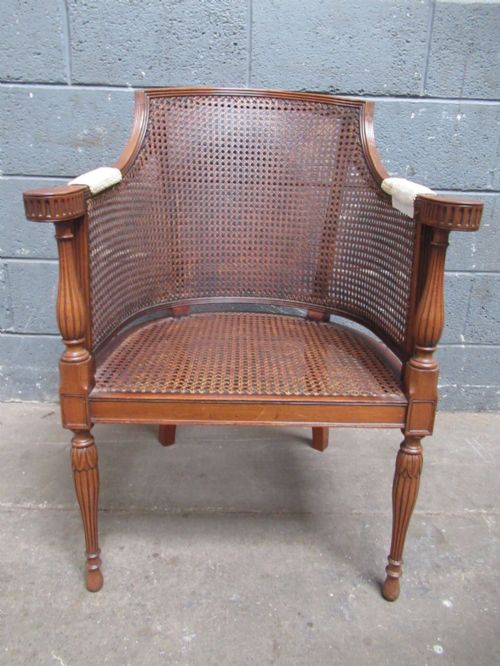
Upholstered versions incorporate supple leather or woven cane panels fitted tightly into the curved wooden frameworks. Brass fittings, castors, and swivel mechanisms appear on nineteenth-century library and office iterations to provide mobility.
Listings feature woods including mahogany, oak, elm, walnut, and beech across Victorian, Edwardian, and Regency periods.
Distinctions in craftsmanship
The distinction between standard utility seating and finer workshop production lies in the selection of timber and the complexity of the joinery. Figured mahogany, deep brass inlay, and carefully turned spindles indicate a higher grade of manufacture.
Subtleties in the hand-carving of the crest rail and the tightness of the timber joints separate provincial examples from sophisticated London pieces. Original leather upholstery with neat studding or well-preserved cane work alters the overall integrity of the finished piece.
C. Hindley & Sons
The Tub Desk Armchair Glossary
- Tub chair
- A seating form characterised by a low, curved backrest that wraps continuously around the sides to form enclosed armrests. This design provides a cocooning shape suited for extended periods of reading or writing.
- Captain's chair
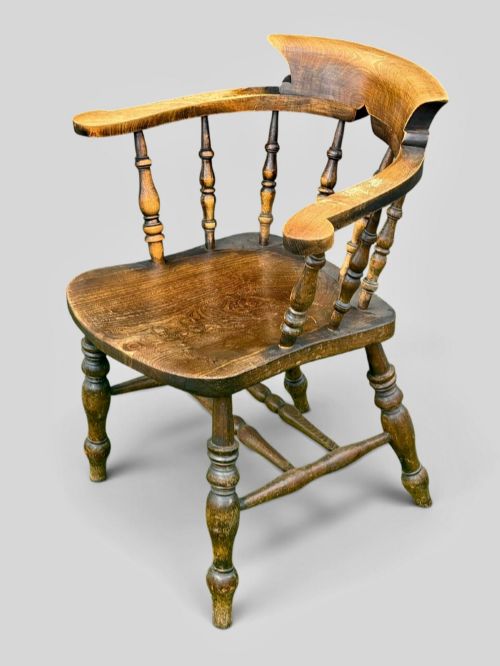
- A sturdy wooden armchair featuring a rounded spindle back and a solid saddle seat, historically utilised in offices and ships. Country variations often combine elm and beech timbers for structural strength.
- Smoker's bow
- A low-backed Windsor-style armchair with a curved armrail supported by turned spindles above a comfortable wooden seat. These chairs gained widespread popularity in nineteenth-century English households and public spaces.
- Bergere
- An upholstered French-style armchair featuring enclosed sides filled with woven cane lattice work. This technique lightens the visual weight of heavy wooden frames.
- Revolving desk chair
- A working seat fitted with a central spindle and underframe mechanism that allows the upper section to turn through a full circle. These often feature height adjustments and brass castors for office mobility.
Tub Desk Armchair: Frequently Asked Questions
What is a tub desk armchair?
A tub desk armchair is a seating option featuring a curved, enclosing backrest designed to offer support during work or reading. These pieces blend the comfort of a traditional library chair with the proportions needed for a desk.
Craftsmen built them across the nineteenth and twentieth centuries in various woods, often mounting them on swivel bases or securing them with leather upholstery.
How do I tell Victorian from Edwardian chairs?
Victorian examples generally utilise heavier timbers like dark mahogany and oak, often displaying richer grain patterns, deeper carving, and substantial leather upholstery. Edwardian pieces tend to present lighter mahogany, satinwood stringing, or delicate cane panels.
Examining the construction methods, turning styles, and secondary woods helps clarify the specific period of manufacture.
Were these chairs used only for desks?
While many examples served as office or library seating, the form also functioned in drawing rooms, bedrooms, and halls. Captain's chairs and smoker's bows saw widespread domestic and commercial use as comfortable elbow seats.
Their sturdy frames and compact dimensions made them versatile additions to various rooms in a traditional house.
How should I care for leather upholstery?
Leather upholstery benefits from regular dusting with a soft cloth and occasional treatment with appropriate leather balms to prevent drying. Avoiding direct sunlight and excessive heat preserves the natural suppleness of the hide.
Gentle maintenance ensures that the original patina remains intact over years of daily use.