

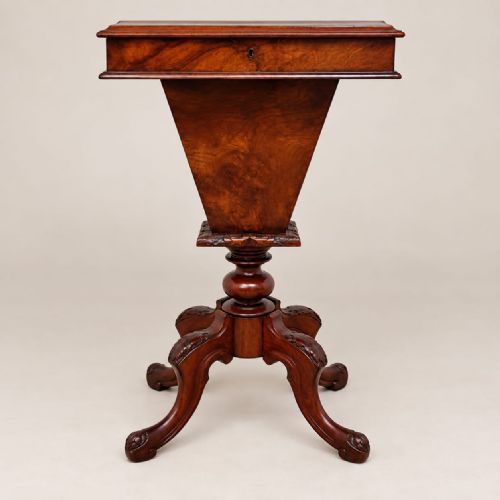
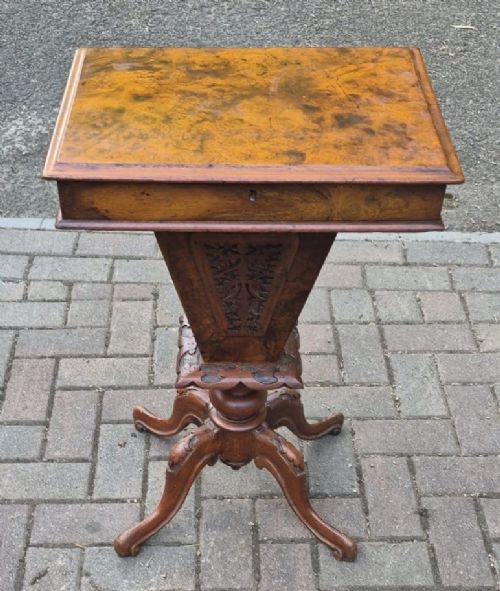

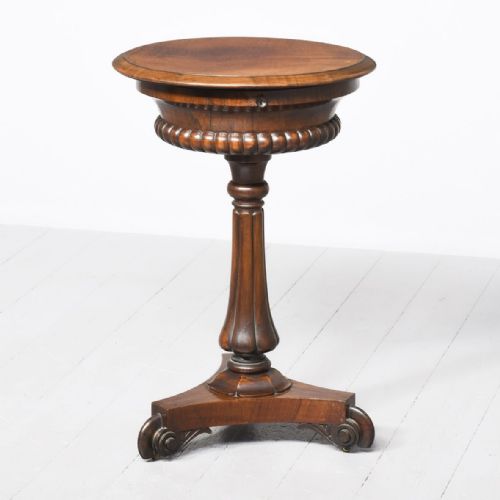


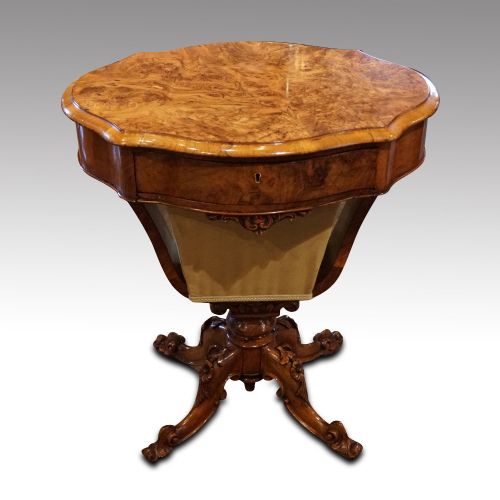


Trumpet Worktable
A trumpet worktable is a Victorian sewing piece with a flared hexagonal or octagonal body, offering both storage and a distinctive silhouette for the home.
Trumpet Worktable
A trumpet worktable is a Victorian sewing table, work table, or occasional table designed with a characteristic flared lower body resembling a trumpet or cone. These pieces date from the nineteenth century, including examples from the eighteen-fifties, eighteen-sixties, eighteen-seventies, and eighteen-eighties.
Buyers encounter variations in form, such as standard sewing tables with interior compartments, games-top worktables, and dedicated workboxes. The construction typically incorporates a hinged lid opening to reveal fitted compartments above the tapering octagonal or hexagonal receptacle.
Originating predominantly in the Victorian era, these tables served practical domestic purposes for needlework and games while functioning as decorative occasional furniture in sitting rooms and parlours.
How they were made
Makers constructed these tables from dense cabinet timbers, primarily utilising solid walnut, burr walnut, mahogany, and rosewood. Sections of burr veneer provided decorative figured grain across the lids and bodies.
Surface embellishment frequently involved marquetry inlay and wood inlay detailing, alongside carved wooden elements. Interiors were lined with fabric to house sewing accessories and materials.
Structural support often derived from turned or carved pedestals standing on tripod or multi-footed bases, sometimes incorporating brass components.
Trumpet Worktable Retail Price Guide 2026
Typical asking prices for trumpet worktable among the pieces listed under this phrase on Sellingantiques today, from the lower quarter to the upper quarter. They describe what is for sale here now, not the wider market.
Some Victorian makers included hidden compartments beneath the cone to conceal unfinished embroidery from unexpected callers.
What varies in quality
The choice of primary timber and decorative veneer dictates the visual impact, with figured burr walnut and richly grained rosewood sitting at the upper end of the range compared to standard mahogany or plain walnut.
Execution of marquetry inlay and wood inlay, alongside the crispness of carved wooden details, separates standard production pieces from finer examples. The complexity of the interior fittings and the retention of original fabric linings also influence the overall standard.
The Trumpet Worktable Glossary
- Burr walnut
- A prized timber veneer obtained from the deformed growth or burl of a walnut tree, showing swirling grain patterns. It was frequently utilised on the lids and bodies of Victorian sewing boxes.
- Marquetry inlay
- Decorative patterns formed by fitting small pieces of veneered wood into a prepared surface. This technique created intricate floral or geometric designs on the tops of work tables.
- Workbox
- A portable or table-mounted box intended for holding sewing implements and materials. In trumpet forms, this box expands downwards into a cone-shaped receptacle.
- Pedestal base
- A central column support rising from a footed base to hold the table body. It frees up floor space while providing stability for the flared trumpet shape.
Trumpet Worktable: Frequently Asked Questions
What is a trumpet worktable?
A trumpet worktable is a Victorian sewing table characterised by a hinged lid and a distinctive cone-shaped lower body that flares outwards toward the base. These pieces combine decorative occasional furniture with practical interior storage for needlework.
Most examples date from the mid to late nineteenth century and utilise timbers such as walnut, burr walnut, and rosewood. They frequently incorporate fitted interior compartments and decorative inlay.
How were trumpet worktables used?
Victorian households utilised these tables primarily for sewing, embroidery, and needlework tasks, storing threads, needles, and fabric inside the fitted compartments beneath the lid. Some variants also featured integrated games tops for recreational use.
Beyond their practical function in the parlour, they served as decorative occasional tables for holding small objects or displaying floral arrangements.
Where should I place a trumpet worktable?
These tables suit sitting rooms, bedrooms, or hallways as occasional furniture where their compact footprint and distinctive silhouette can be appreciated. Their finished tops and decorative wood grains make them suitable for freestanding placement rather than pushing against a wall.
They pair well with period interiors and provide a practical surface alongside seating while offering enclosed storage.
How do I identify Victorian periods?
Identification relies on observing specific timber choices, decorative techniques, and structural forms characteristic of the nineteenth century. Burr walnut, rosewood, and marquetry inlay point towards mid-Victorian manufacturing.
Earlier examples from the William IV period display heavier rosewood construction and distinct joinery traits, while later Victorian pieces show evolving decorative preferences.