

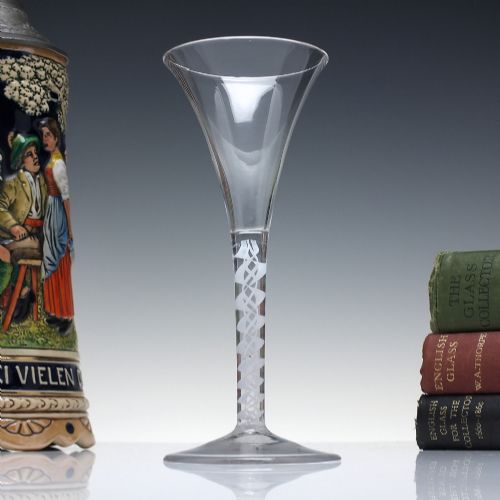
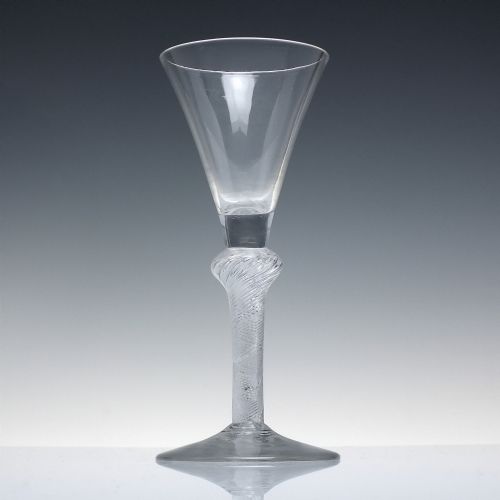


Trumpet Bowl Goblet
These trumpet bowl goblet pieces are Georgian drinking vessels prized for their slender forms and clear lead crystal handles.
Trumpet Bowl Goblet
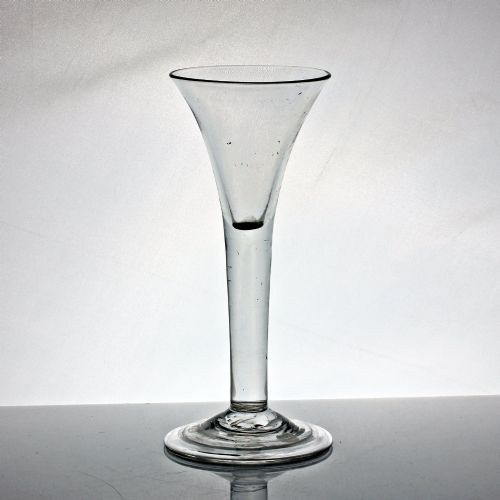
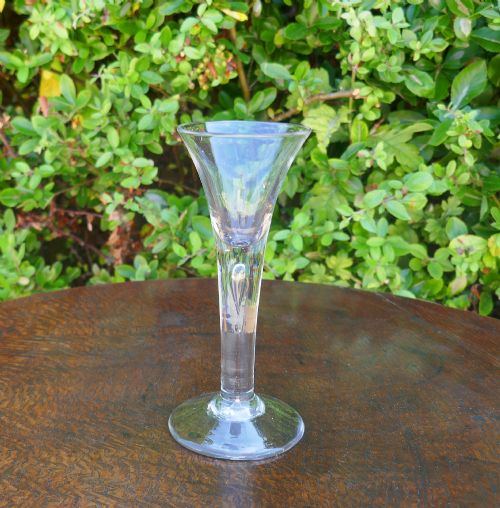
A trumpet bowl goblet represents the quintessential eighteenth century English drinking vessel, defined by its characteristic flaring bowl shape. These pieces primarily date from the Georgian era, offering collectors tangible examples of early glassmaking skill.
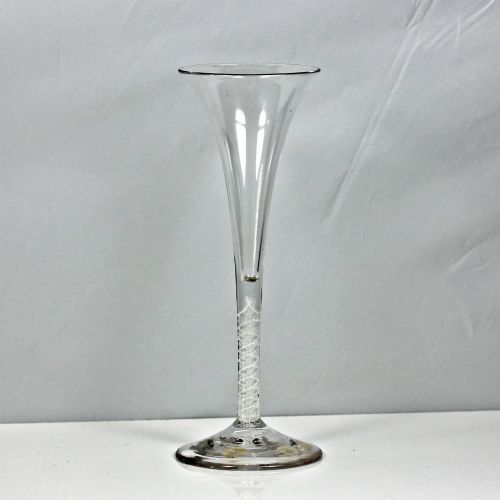
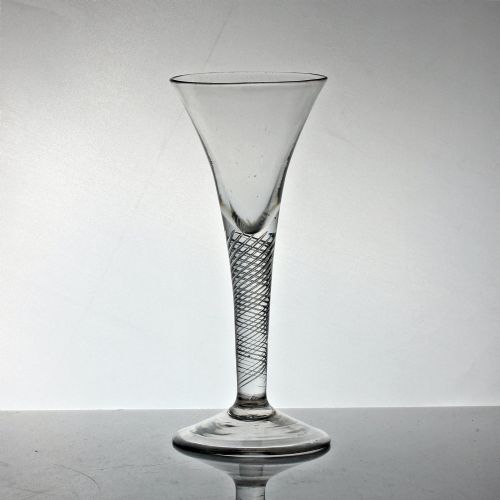
The most common form encountered here is the wine glass featuring either an air twist or opaque twist stem. Collectors find these examples span the mid-eighteenth century, particularly around seventeen fifty.
Various stems support the distinctive trumpet bowl, ranging from simple balustroid forms to complex multi spiral variations. Certain specimens include decorative touches like air bubbles trapped within the metal or vermicular collars.
Materials and construction
Glasshouses manufactured these vessels using heavy lead glass and flint glass, which provided the necessary weight and clarity for twist stems. Craftsmen manipulated molten metal while hot to draw out slender stems and shape the expansive trumpet bowls.
Techniques such as air twist and opaque twist creation required exceptional dexterity to entrap air or white enamel threads inside the stem. Masters then finished the foot, sometimes adding collar details like vermicular wraps beneath the bowl.
Listings feature lead glass and flint glass forms exclusively from the Georgian period and eighteenth century.
Assessing craftsmanship and form
Quality in a trumpet bowl goblet depends largely on the precision and symmetry of the internal twist within the stem. Finer specimens display uniform spiral threads running cleanly from base to bowl without distortion.
The clarity of the lead crystal and the proportional balance between bowl, stem, and foot distinguish superior examples. Subtle additions like intentional air bubbles or collars elevate the visual interest of individual pieces.
The Trumpet Bowl Goblet Glossary
- Trumpet bowl
- A drinking vessel bowl shaped like an inverted trumpet, widening steadily from the stem to the rim. This form allows aromas to release effectively during consumption.
- Air twist
- A stem containing elongated threads of air trapped inside the glass during the pulling process. These form delicate spiral patterns visible under normal light.
- Opaque twist
- A stem incorporating white or coloured enamel glass threads twisted into linear or complex lattice designs. This technique became popular during the mid-eighteenth century.
- Balustroid
- A stem form intermediate between the heavy baluster and the later slender stems, featuring swelling nodes. It frequently appears on drinking glasses from the seventeen forties.
- Vermicular collar
- A decorative band of glass applied below the bowl, resembling worm tracks or undulating threads. It adds texture and visual weight to the upper stem.
Trumpet Bowl Goblet: Frequently Asked Questions
What defines a trumpet bowl goblet?
A trumpet bowl goblet is an eighteenth century drinking vessel featuring a bowl that flares outward continuously toward the rim.
These pieces typically sit on shaped stems containing air or opaque twists rather than plain supports.
How were air twist stems made?
Glassmakers formed air twists by pricking air into a hot gathering of metal before drawing and twisting the glass.
This trapped elongated bubbles inside the stem in regular helical patterns as the material cooled.
What distinguishes opaque twists?
Opaque twist stems incorporate rods of white enamel glass melted into the clear metal matrix.
Craftsmen then twisted the combined mass to create dense internal threads running through the stem.
When were these glasses produced?
The pieces available on this page belong entirely to the Georgian period and the eighteenth century.
Most examples date specifically between seventeen forty and seventeen sixty during the height of English lead glass production.