
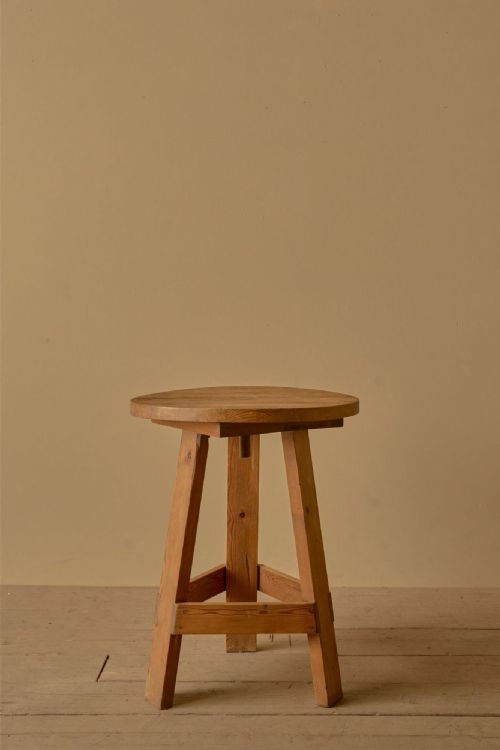
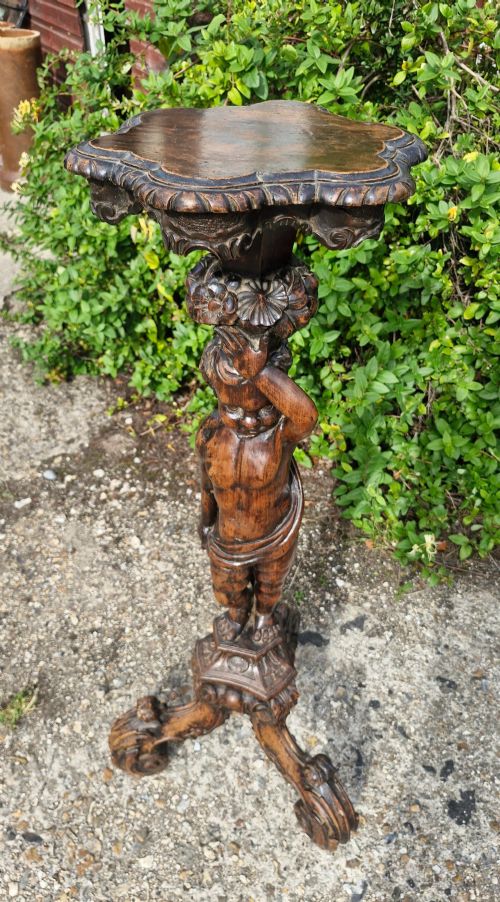
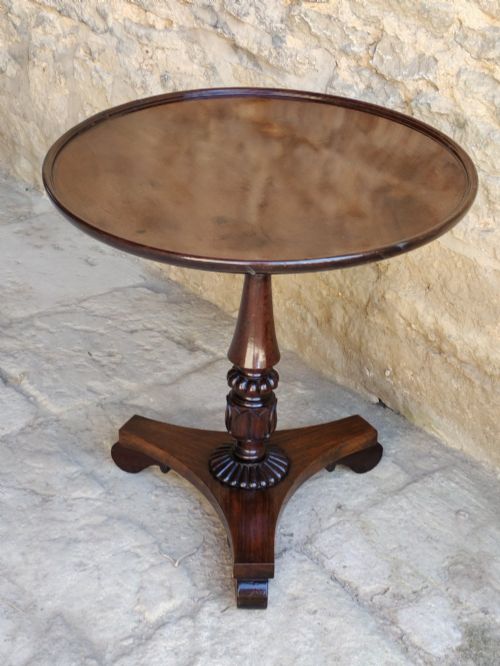
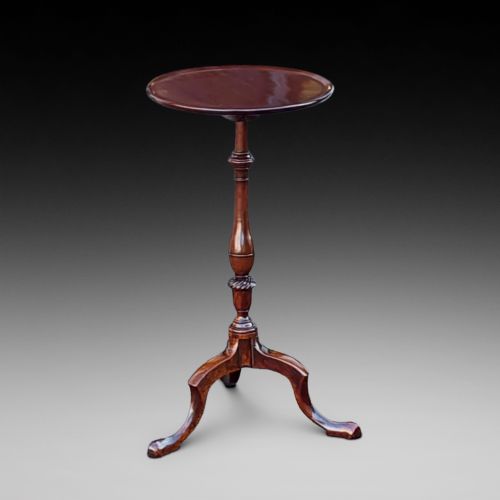
Tripod Pedestal Stand
A tripod pedestal stand raises a small surface on three legs, offering a compact spot for a lamp or glass that sits easily beside a chair.
Tripod Pedestal Stand
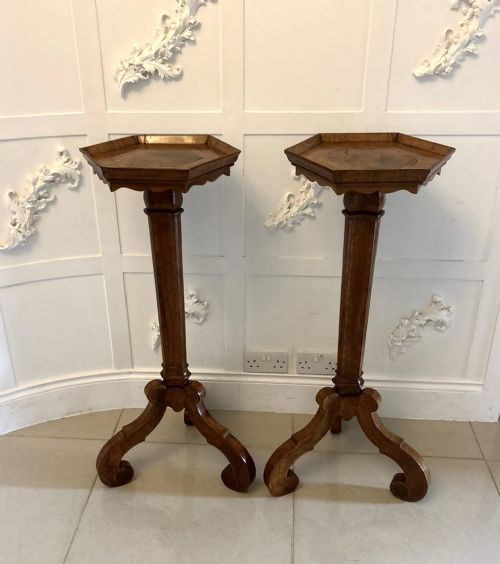
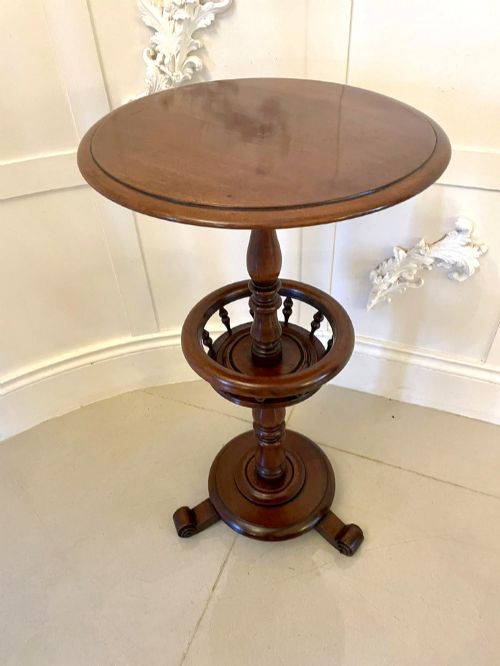
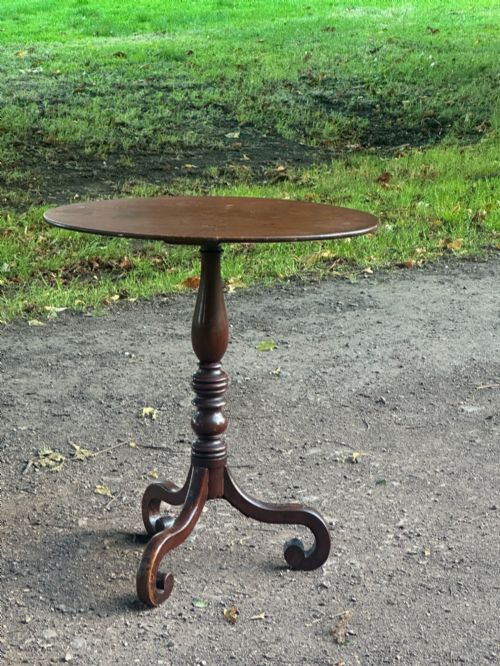
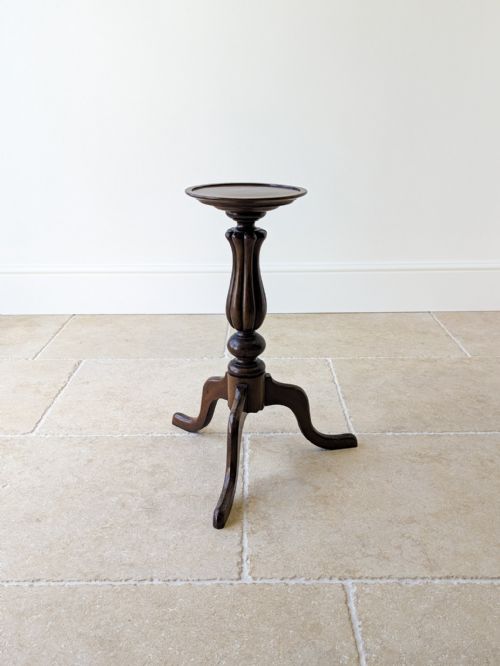
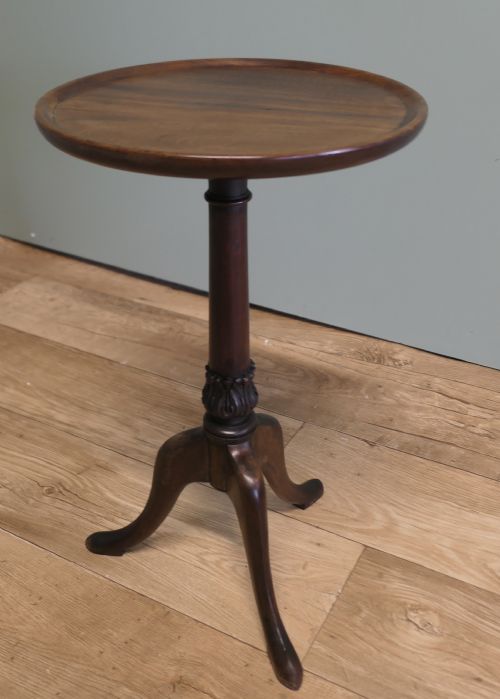
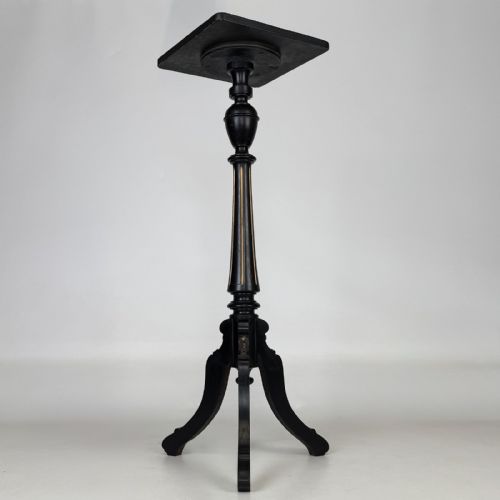
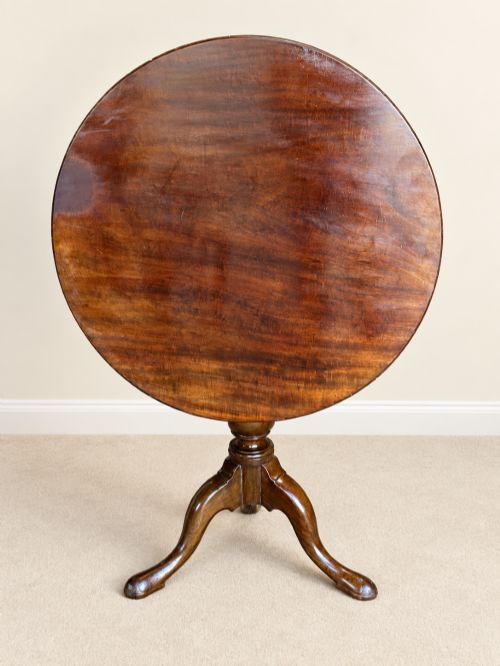
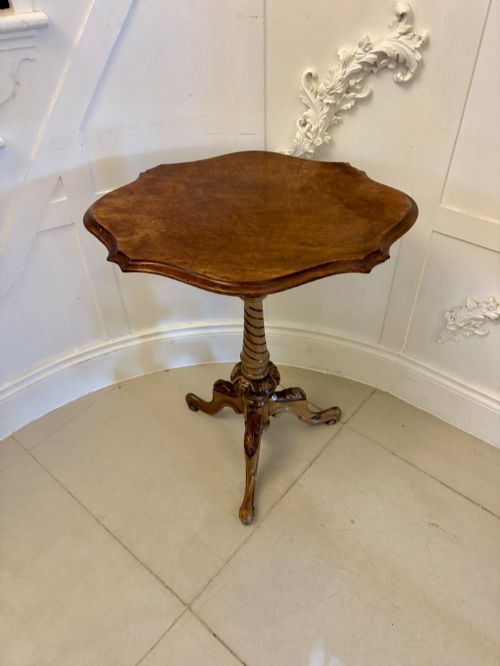
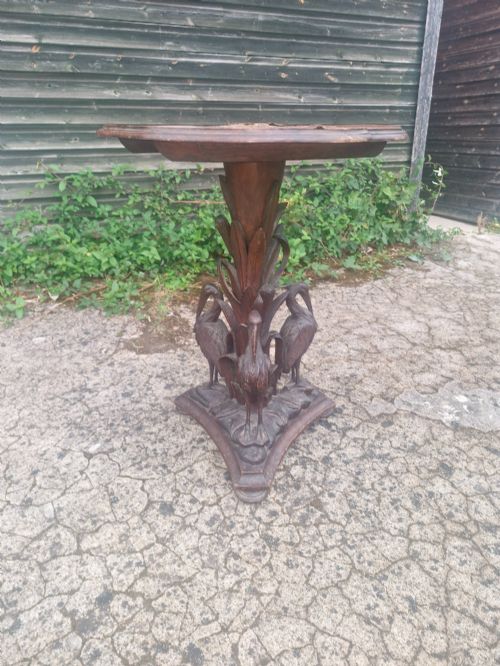
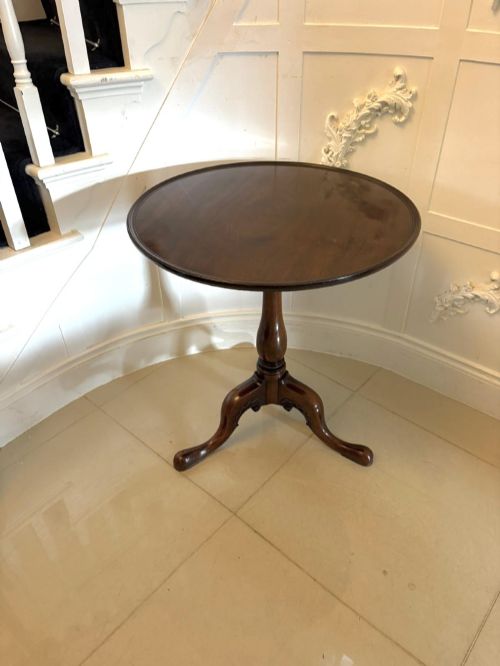
A tripod pedestal stand supports a small top on three legs radiating from a central pillar, appearing in forms ranging from wine tables and torchers to plant stands and display tables. When you search for a tripod pedestal stand, you encounter pieces designed primarily for utility in domestic spaces, whether holding a candle, a book, or a tea service.
Mahogany and walnut examples dominate the selection, spanning periods from the eighteenth century through the Edwardian era, with Victorian iterations appearing with particular frequency. These tables often feature circular or shaped tops, sometimes incorporating tilt mechanisms or raised rims.
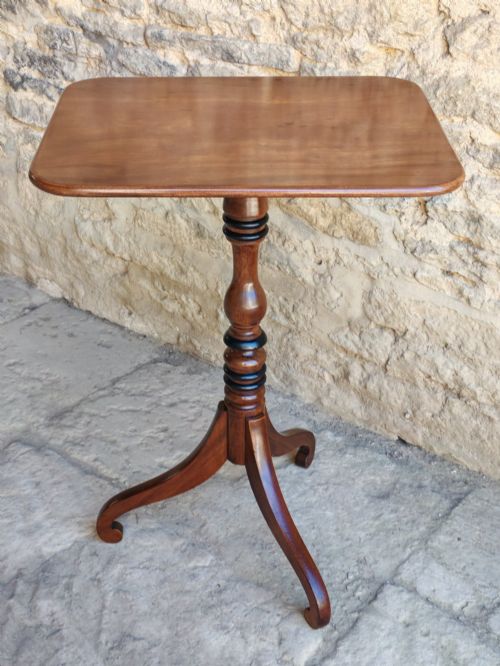
Origins stretch across Georgian, Regency, and Victorian workshops, reflecting changes in social habits where moveable, light furniture became essential for drawing rooms and parlours. Most surviving pieces rely on a central turned column rooted in three splayed legs for stability.
Materials and construction methods
Cabinetmakers constructed these stands using dense timbers such as mahogany, walnut, rosewood, and oak, often selecting burr wood veneers or fruitwood for decorative tops. Brass fittings appear on adjustable mechanisms, while occasional pieces utilise exotic woods like ebony and satinwood for inlaid surface detail.
Joinery combined turned central pedestals with tenoned legs, frequently employing birdcage or tilt-top mechanisms that allowed the tabletop to fold flat when not in use. Carving adorned knees and pillar shafts on finer examples, contrasting with the simpler turned columns found on standard wine tables.
Listings feature eighteenth-century pieces alongside Victorian and Edwardian examples, constructed in mahogany, walnut, rosewood, and oak.
Distinguishing quality across the range
The degree of hand-carving on the pillar and legs separates standard production from superior examples, where crisp moulding and balanced proportions demonstrate the joiner's skill. Timbers selected for the tabletop also dictate grade, with figured mahogany and burr walnut commanding greater visual depth than plain utility woods.
Mechanism design plays a significant role in evaluation, distinguishing rigid fixed tops from smoothly operating tilt mechanisms and brass-fitted adjustable stands. The integration of the three legs into the central block reveals the precision of the underlying construction.
The Tripod Pedestal Stand Glossary
- Tilt-top
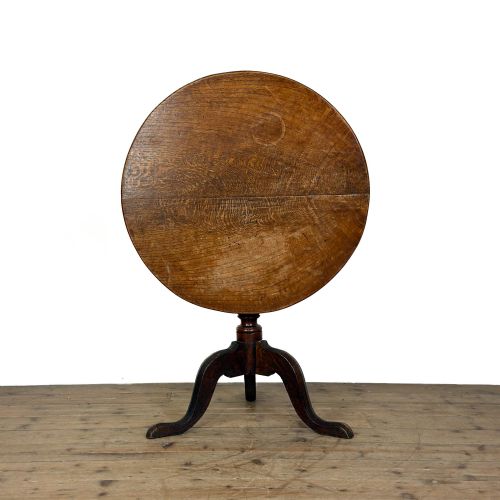
- A tabletop mounted on a hinge mechanism that allows the surface to fold vertically into a flat position for storage against a wall.
- Torchere
- A tall, slender stand designed specifically to elevate a light source or candle, frequently featuring an ornate carved column and small circular top.
- Pie crust rim
- A raised, decoratively carved tabletop edge shaped with small undulating curves resembling pastry work.
- Birdcage
- A rotating box-like wooden frame beneath the tabletop that allows the surface to both pivot and tilt on the central pillar.
- Tripod base
- A support structure comprising three diverging legs joined to a central vertical shaft for balanced elevation.
Tripod Pedestal Stand: Frequently Asked Questions
What is a tripod pedestal stand used for?
These small stands served various domestic functions throughout history, primarily holding candles, glasses, or small lamps beside seating areas. They also functioned as plant stands, music stands, and occasional tables in principal rooms.
Because of their lightweight construction, occupants could easily reposition them around a room as evening lighting or seating arrangements shifted.
How do I date a tripod table?
Dating relies on timber selection, leg profile, and the turning style of the central pillar, alongside construction details like dovetailing and screw types. Georgian examples often display simpler, restrained mahogany turnings with pad feet, while Victorian versions incorporate heavier carving or burr veneers.
Later Edwardian and revival pieces frequently copy earlier Georgian or Chippendale proportions but reveal their age through machine-sawn timber marks and modern fixings.
Are tilt-top tables stable?
Tilt-top tables rely on a catch mechanism beneath the surface to lock the top horizontally onto the central column. Over decades of use, the wooden block or brass latch can wear, causing slight movement when pressure is applied to the edge.
When locked properly, a well-made mechanism holds the tabletop firm, though owners should exercise caution when placing heavy items near the perimeter.
Where should I place a tripod stand?
The compact footprint of a tripod base makes these stands ideal for awkward corners, narrow hallways, or beside armchairs where space is limited. Their modest height suits placement next to low seating for resting cups or books.
Avoid positioning them in high-traffic pathways where the three splayed legs might present a tripping hazard.