

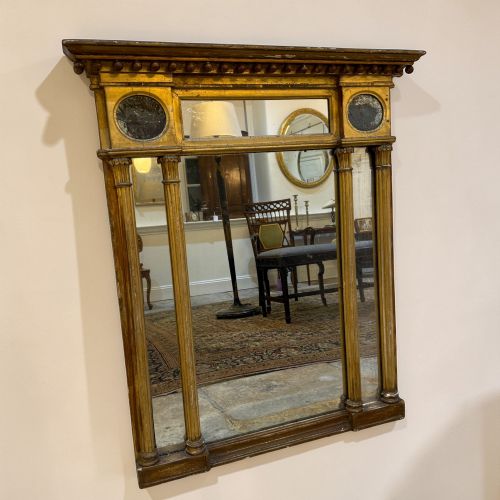
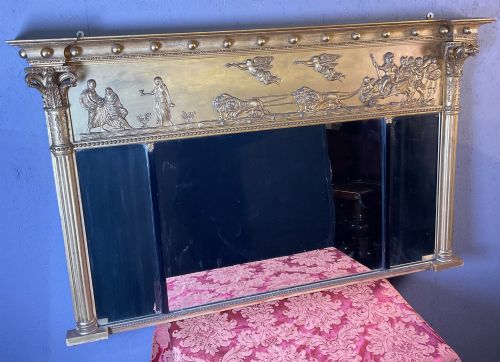


Tripartite Gilt Wall Mirror
A tripartite gilt wall mirror brings architectural width and reflecting light to a room, drawing on centuries of Regency, Georgian, and Victorian design.

Tripartite Gilt Wall Mirror
A tripartite gilt wall mirror divides its reflecting surface into three distinct vertical sections, most frequently seen here as wide overmantel mirrors designed to sit above a fireplace. These large formats emerge across the 18th Century, Regency, and 19th Century periods, spanning styles from Rococo and Neoclassical to Victorian and Chippendale Style.
The form functions primarily to bounce daylight across principal reception rooms while grounding the wall space with substantial giltwood, gesso, or mahogany frames. While wall mirrors appear in smaller formats such as pier mirrors, the overmantel remains the predominant form represented in this selection.
How they were made
Makers constructed the primary frames of pine, mahogany, or walnut, applying layers of gesso to carve intricate ornamentation before gilding the surface with gold leaf. This traditional application produces the characteristic metallic sheen that defines giltwood and gilded gesso pieces.
Mirror glass is set into sectional rebates, dividing the plate into the tripartite arrangement using wooden dividers or gilded muntins. Heavier structural timber supports the backboards, necessary to bear the considerable weight of large 19th Century overmantel plates.
Tripartite Gilt Wall Mirror Retail Price Guide 2026
Typical asking prices for tripartite gilt wall mirror among the pieces listed under this phrase on Sellingantiques today, from the lower quarter to the upper quarter. They describe what is for sale here now, not the wider market.
Some Victorian mirrors are so heavy they require four people and a stout cup of tea just to move them an inch.
What varies in quality
The distinction between standard and exceptional pieces rests upon the depth and crispness of the carved detail within the giltwood or gesso ornament. Hand-carved mouldings display a precision and sharpness that moulded compo decoration simply cannot replicate.
The integrity of the original mercury or silvered mirror glass plate, alongside the preservation of the original gilding without heavy modern overpainting, dictates the standing of an individual mirror within its period.
Ciceri and Co·Nosotti
The Tripartite Gilt Wall Mirror Glossary
- Giltwood
- Wood carved and subsequently covered with gold leaf. This material forms the primary aesthetic finish for the majority of formal period wall mirrors.
- Gesso
- A plaster-like mixture applied to a wooden base and carved into decorative relief before gilding. It allows for highly intricate surface ornamentation on Regency and Victorian frames.
- Overmantel mirror
- A large mirror specifically designed to hang on the wall directly above a fireplace mantelpiece. These pieces often feature tripartite plates to span the width of the chimney breast.
- Pier mirror
- A tall, narrow mirror designed to hang on the wall space between two windows. These share the gilt finishes common to larger overmantel examples.
- Regency
- A British design period spanning the early 19th Century, known for classical restraint and bold architectural framing. Pieces from this era frequently utilise rich gilding.
Tripartite Gilt Wall Mirror: Frequently Asked Questions
Where should a tripartite mirror hang?
These mirrors traditionally occupy the wall space directly above a mantelpiece, where their width balances the proportions of a fireplace. They also suit large expanses of wall in dining rooms or entrance halls.
Because of their substantial weight and scale, they require secure fixing directly into structural wall anchors rather than standard plaster fixings.
How do I identify a Regency mirror?
Regency examples typically display classical architectural motifs such as reeded columns, ball-stud friezes, or bold convex mouldings. The gilding often has a bright, warm tone characteristic of the early 19th Century.
Makers of this era favoured rectangular formats that emphasised clean, symmetrical lines over the exuberant curves of earlier Rococo styles.
Are these mirrors heavy?
Most pieces possess considerable weight due to the dense timber frames, thick gesso layers, and large glass plates. Overmantel mirrors, in particular, require robust wall support.
When handling or hanging these objects, support the frame structure entirely rather than relying on decorative crests or hanging loops alone.
What is the difference between gesso and giltwood?
Giltwood refers to solid timber that has been gilded, whereas gesso involves a chalk and glue mixture applied over a wooden base to take detailed carvings. Both finishes are subsequently covered in gold leaf.
Many period pieces combine both techniques, using a timber carcass with gesso mouldings applied for intricate decorative relief.