


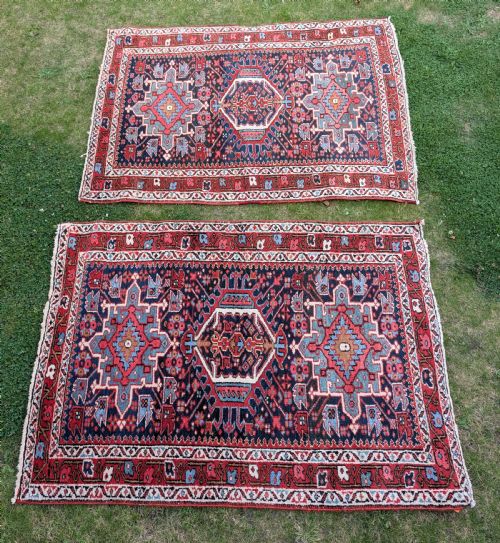
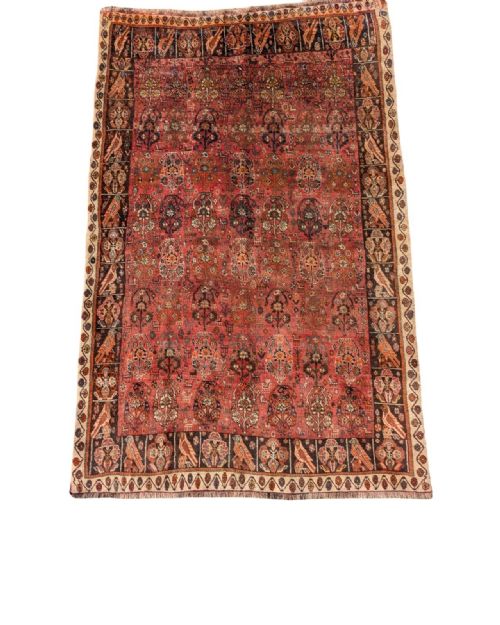
Tribal Wool Rug Mat
A tribal wool rug mat brings nomadic weaving traditions and geometric village patterns directly onto the floor.
Tribal Wool Rug Mat
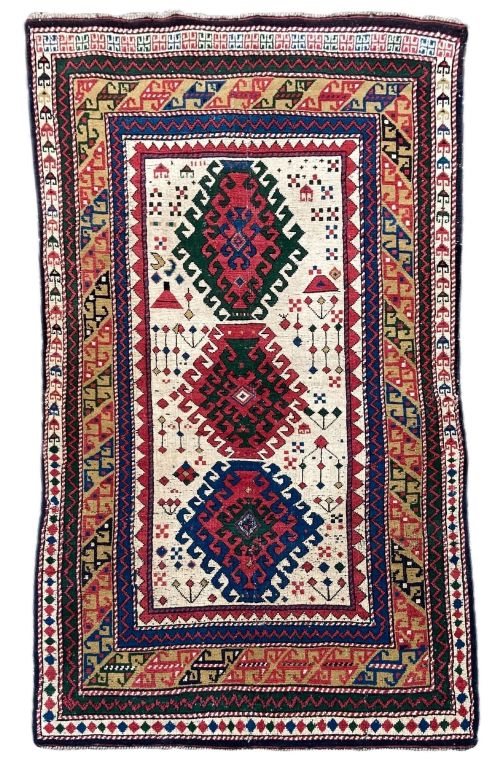
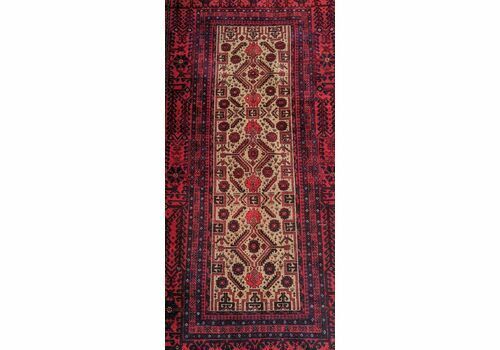
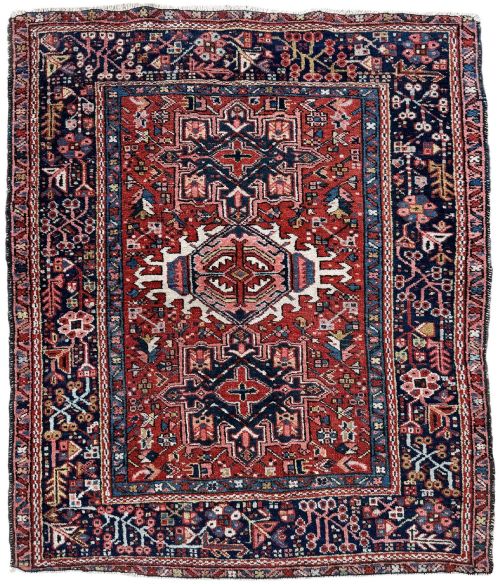
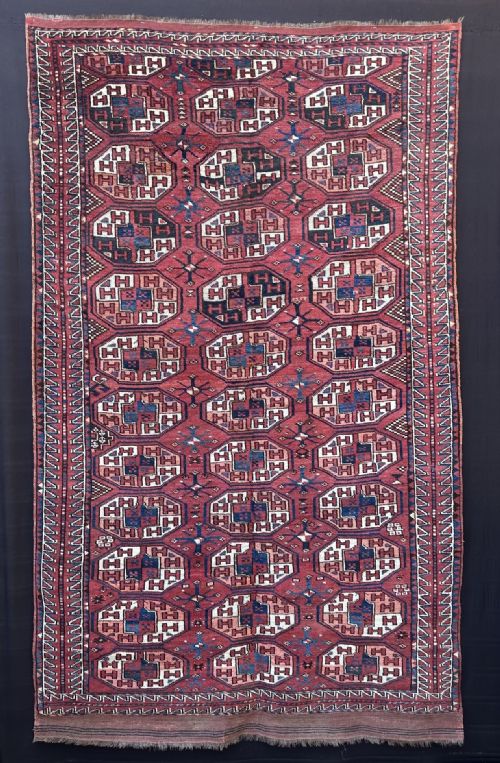
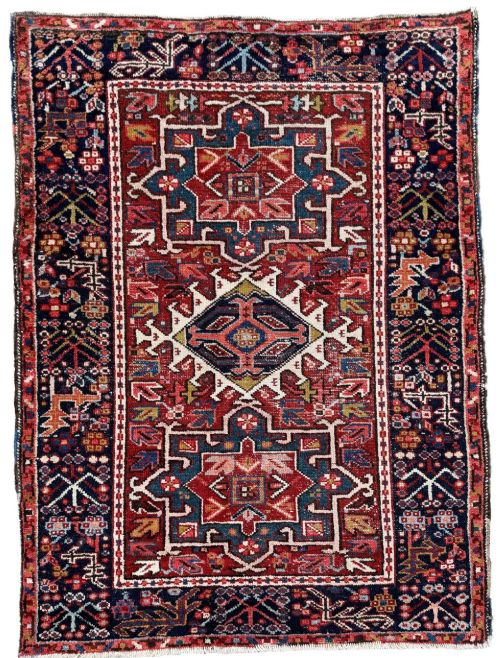
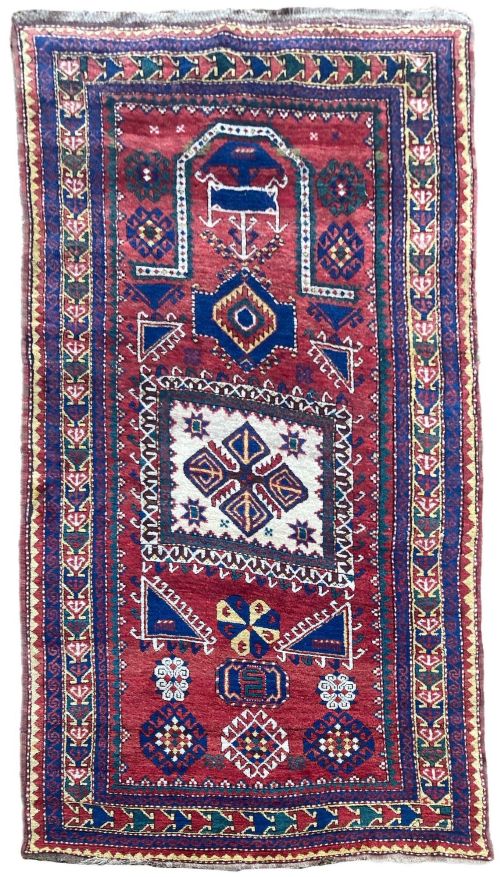
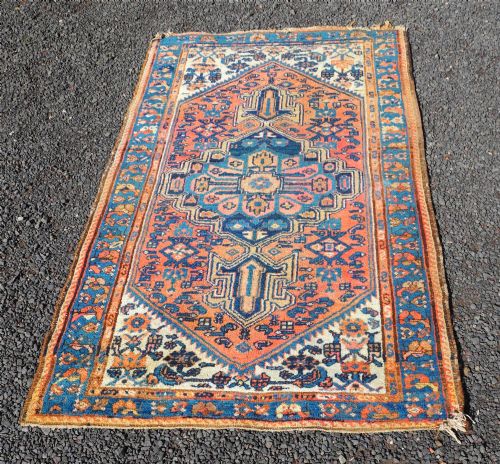
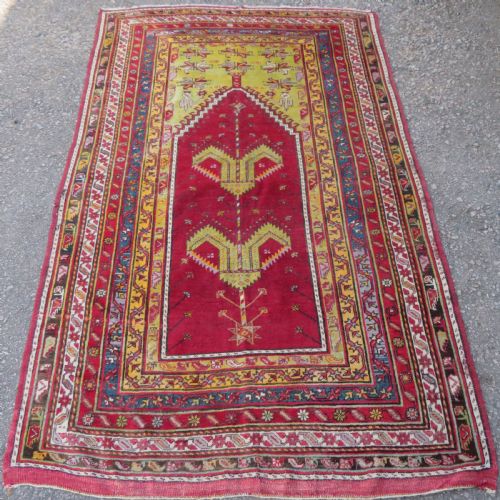
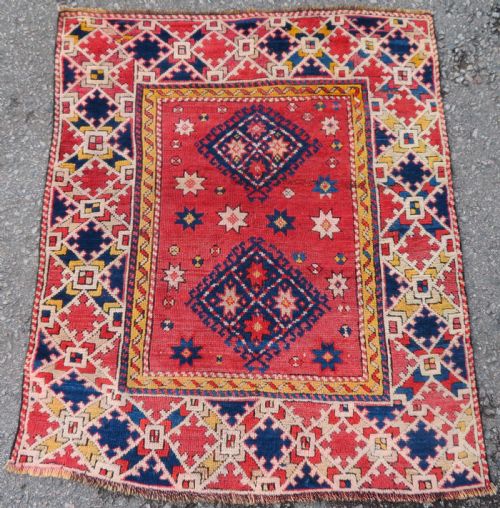
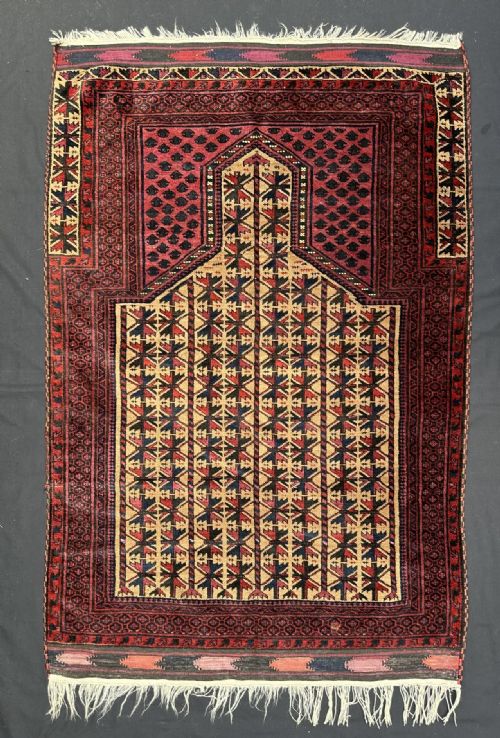
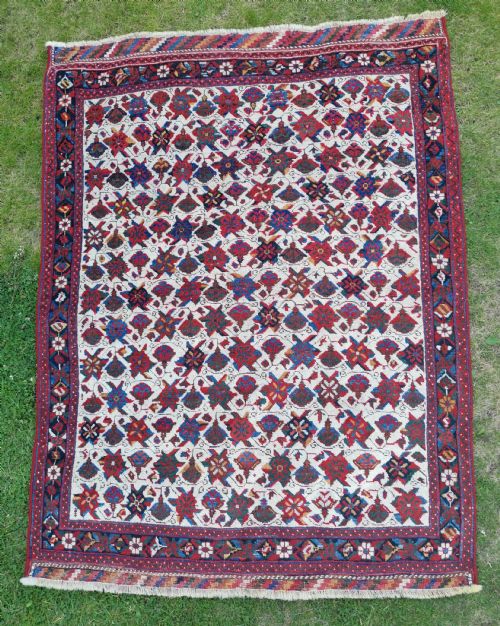
When searching for a tribal wool rug mat, collectors encounter diverse nomadic and village textiles originating across Persia, Anatolia, the Caucasus, Central Asia, and Tibet. These pieces take many practical forms including prayer rugs, saddle covers, hearth-sized mats, sofres, and small square formats.
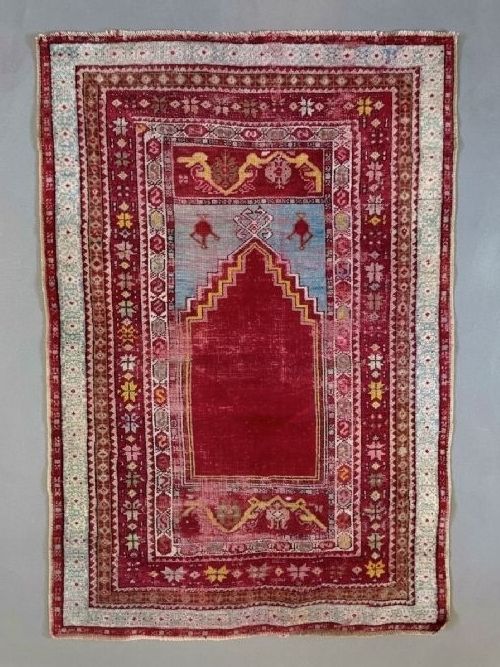
The inventory on this page spans from the mid nineteenth century through the early twentieth century, capturing distinct regional weaves like Baluch, Karaja, Ersari, and Qashqai. Buyers frequently meet smaller format mats and prayer rugs featuring traditional double mihrab designs or geometric lattice patterns.
Materials and Construction
Weavers constructed these textiles predominantly using wool, hand-spun wool, and cotton foundations, occasionally incorporating goat hair, silk, camel wool, or Tibetan wool for specific textural contrasts. Natural dyes provide the enduring palette seen across these nomadic and village carpets.
Nomadic workshops and village households utilised traditional hand-knotting and flatweaving techniques, sometimes finishing pieces with original tassels or supplementary embroidery as seen in Lakai examples.
Several nomadic saddle covers retain their original tassels, having spent their early days bouncing across the Central Asian steppes.
Evaluating Quality and Execution
Quality in a tribal wool rug mat rests upon the precision of the tribal motif, the handling of natural dyes, and the integrity of the wool foundation. Finer examples display saturated, luminous colour variations and tightly packed knots that define crisp geometric borders.
The handle and weight of the textile reveal the quality of the hand-spun wool and the care taken in preparation. Pieces retaining original elements such as selvedges, ends, and tassels command greater attention from discerning collectors.
The Tribal Wool Rug Mat Glossary
- Prayer Rug
- A textile featuring a mihrab arch design, traditionally used for daily Islamic prayers. These rugs often indicate the direction of Mecca during use.
- Sofreh
- A flatwoven or piled spread used for dining, kneading bread, or serving food within nomadic households. They often display striking geometric field designs.
- Mihrab
- The niche or arch depicted on prayer rugs that points toward Mecca. Double mihrab formats feature arches at both ends of the field.
- Saddle Cover
- A specialised smaller rug or mat fashioned to fit over animal tack or pack saddles. These frequently survive with original tassels intact.
- Natural Dyes
- Colourants derived from plant, insect, and mineral sources prior to the widespread adoption of synthetic aniline dyes. They impart a rich, shifting depth to the wool.
Tribal Wool Rug Mat: Frequently Asked Questions
How do I identify a tribal rug?
Tribal rugs typically exhibit spontaneous geometric patterns, asymmetrical village designs, and earthy colour palettes created by nomadic weavers. They reflect the specific cultural motifs of regional confederacies rather than standardised urban workshop patterns.
Examining the weave structure, fringe construction, and wool quality helps connect a piece to specific tribal groups such as the Baluch, Qashqai, or Ersari Turkmen.
Where were these mats used?
Nomadic and village households utilised these textiles on tent floors, sleeping platforms, or as seating coverings during daily life. Smaller formats also served as prayer mats or protective saddle covers.
Their portable nature suited nomadic migration, allowing weavers to roll and transport furnishings easily across Anatolia, Persia, and Central Asia.
How should I clean my antique rug?
Antique wool textiles require gentle care, starting with regular, cautious vacuuming without a rotating power brush. Professional specialist cleaning remains essential for deep washing to protect natural dye stability.
Avoiding direct, harsh sunlight prevents premature fading of the natural wool fibres over years of display.
What does prayer rug design mean?
The central arched niche, or mihrab, serves to orient the user toward Mecca during prayer. Different weaving regions adapted this architectural motif into distinct stepped or floral variations.
Even when utilised purely as decorative floor coverings in modern settings, these architectural prayer designs retain their symbolic geometry.