

Tribal Pattern Rug
A tribal pattern rug brings geometric weight and historic wool into a room with direct, unpretentious clarity.
Tribal Pattern Rug
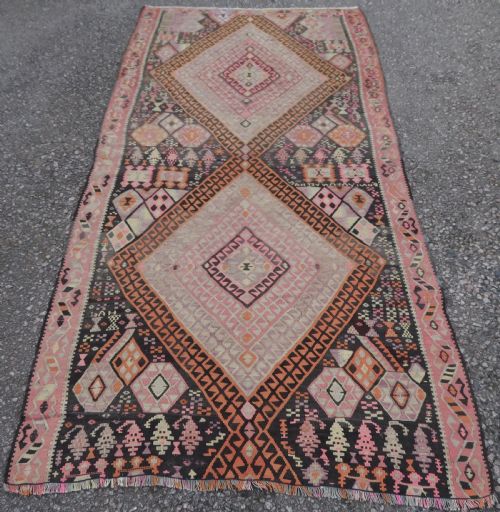
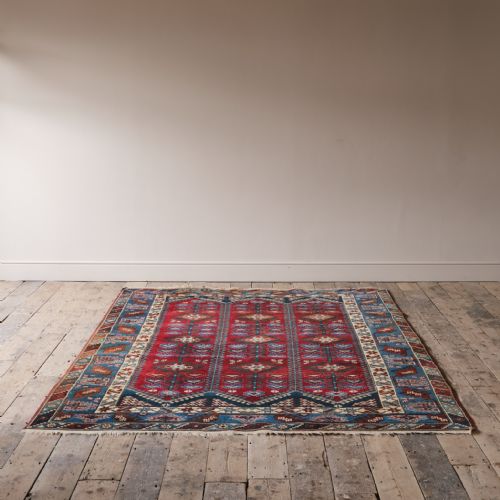
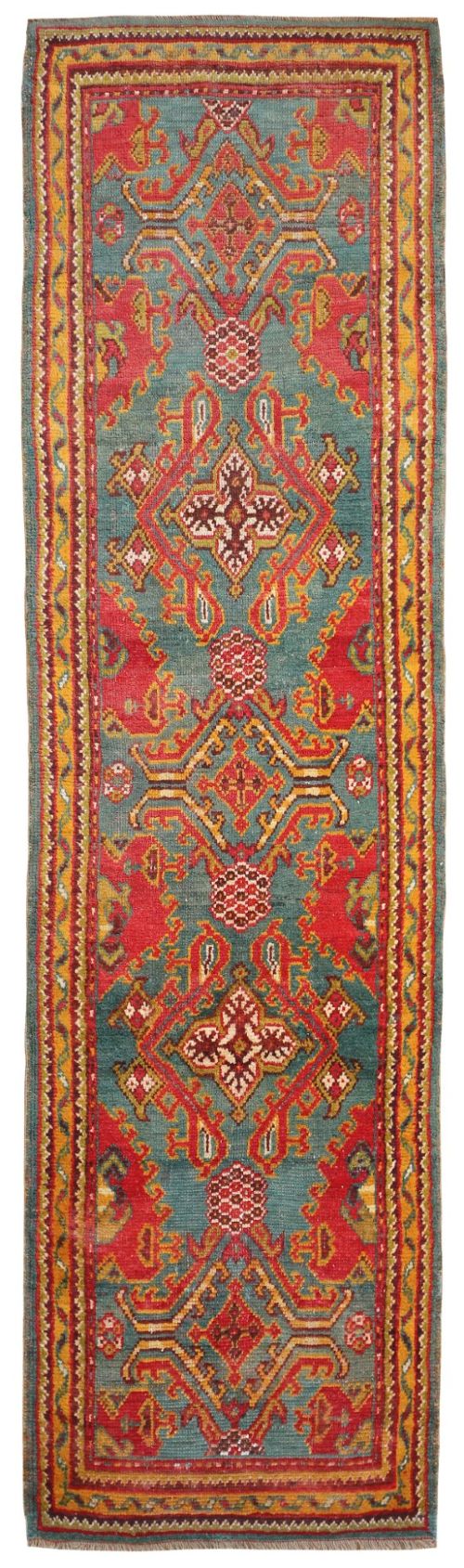
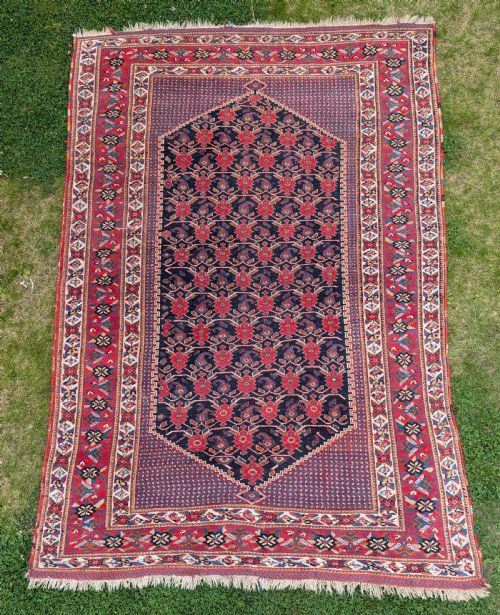
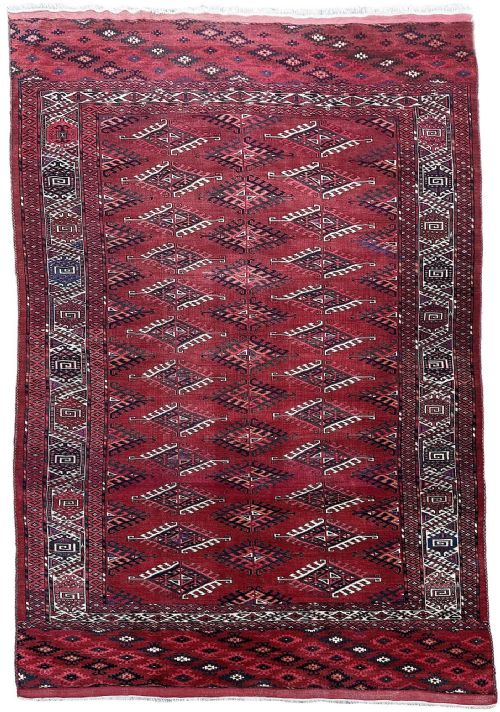
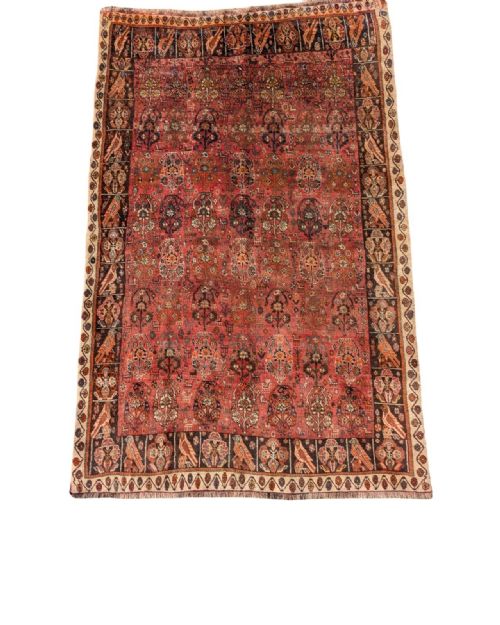
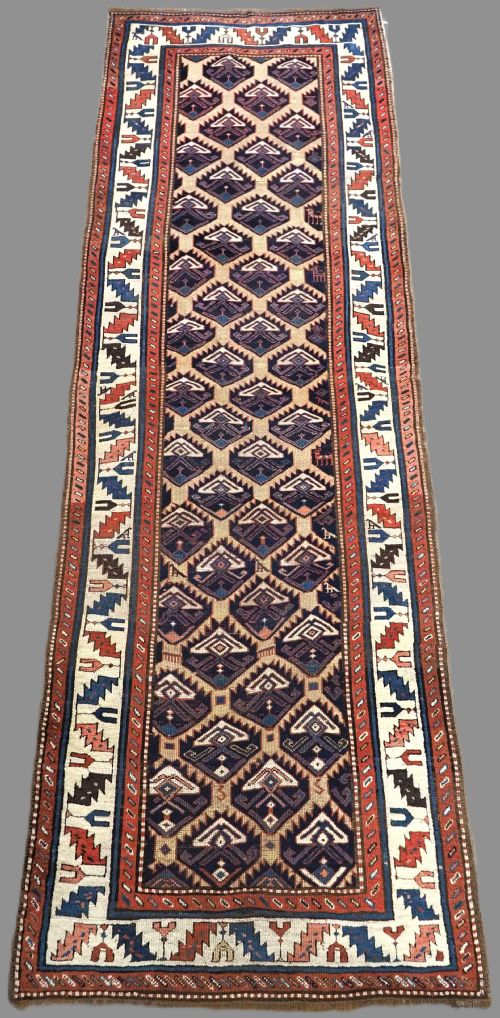
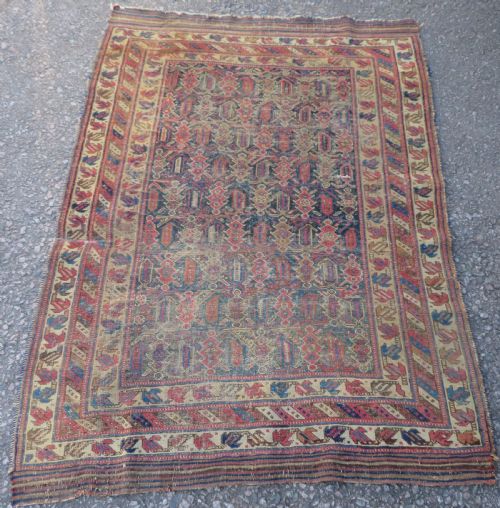
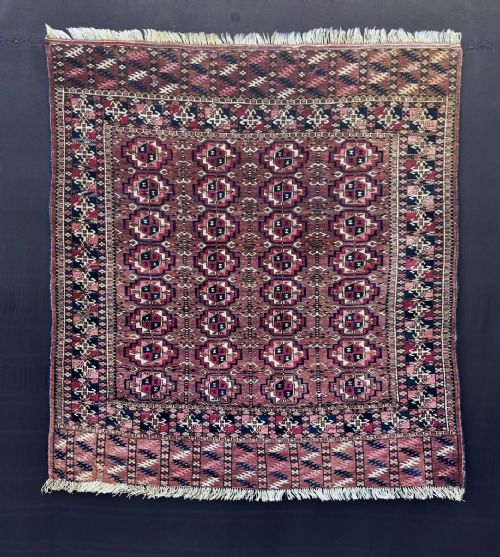
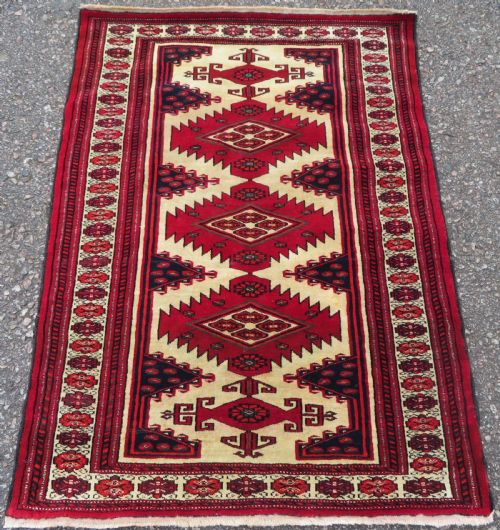
A tribal pattern rug encompasses hand-knotted and woven floor coverings, runners, and domestic textiles originating from nomadic and village traditions across Central Asia, the Caucasus, and Persia. When exploring a tribal pattern rug, a buyer encounters pieces shaped by specific tribal groups including the Turkmen, Afshar, Kurdish, and Qashqa'i peoples, spanning from the late nineteenth century into the early decades of the twentieth century.
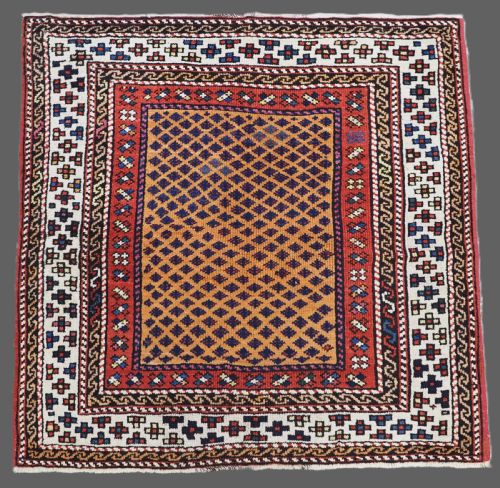
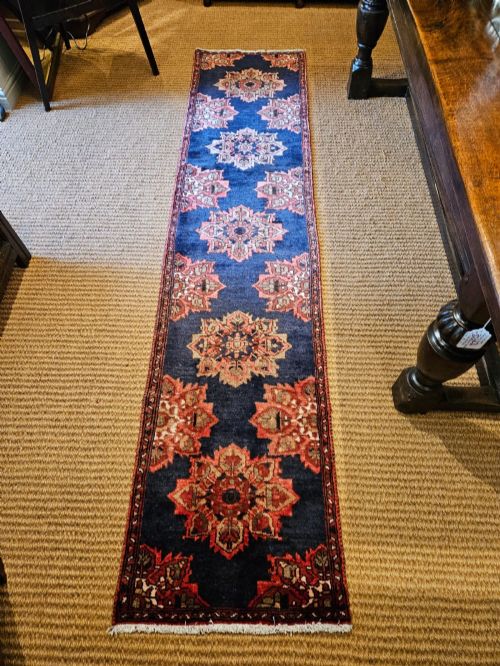
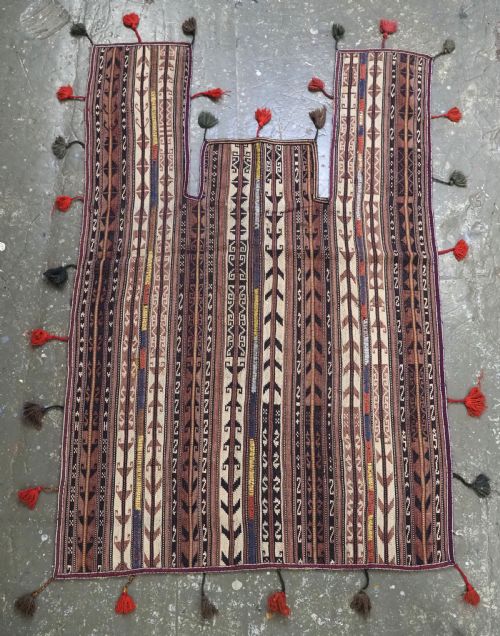
The selection ranges from large carpets and long hallway runners down to small square formats, tent door rugs, animal covers, and ceremonial torba faces. Village and nomadic makers produced these textiles for utilitarian household use, wedding dowries, and ceremonial functions, resulting in durable floor furnishings rather than purely decorative court commissions.
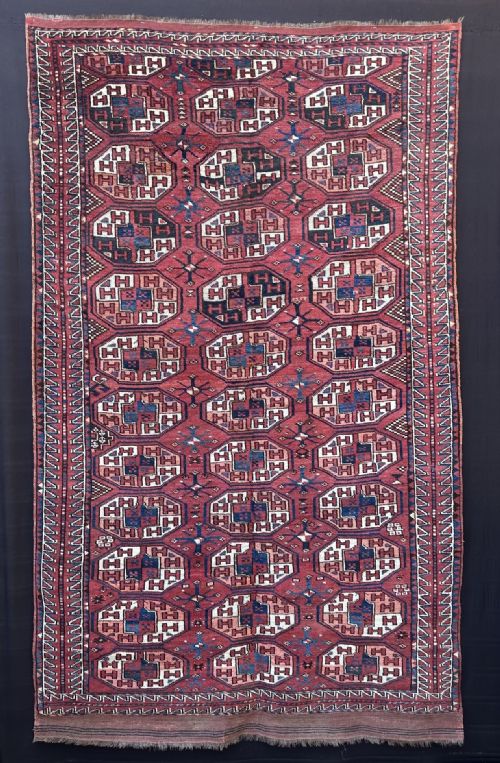
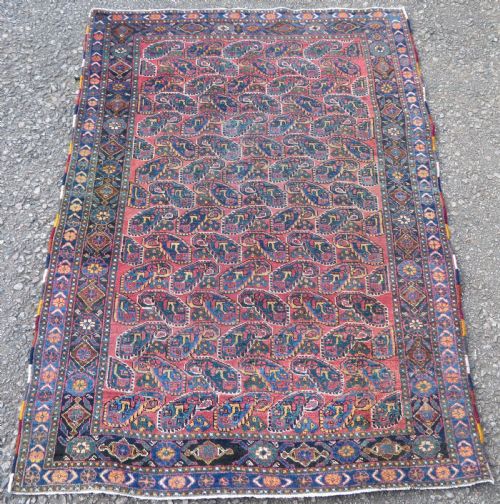
Nomadic and village weavers relied on geometric motifs, repeated medallions, lattice designs, and boteh patterns rather than the curved floral scrolls typical of city workshops. The survival of these floor coverings demonstrates the resilience of traditional weaving methods practiced across provincial settlements and seasonal encampments.
Materials and construction
Weavers constructed these pieces using hand-spun wool for both the pile and the foundational warps and wefts, paired with cotton in specific regional productions. This reliance on locally sourced wool yields substantial weight, dense pile, and a tactile handle that distinguishes older nomadic weaving from modern commercial manufacturing.
Natural dyes provide the characteristic colour palette, drawing on madder roots, indigo, and plant extracts that mellow into rich patinas over decades of exposure and use. Hand-knotting techniques secure the pile firmly to the foundation, creating resilient textiles designed to endure heavy household foot traffic.
The listings feature wool, cotton, and natural dyes across periods spanning the nineteenth and early twentieth centuries.
Standards of execution
Quality rests upon the tightness of the knotting, the handling of the wool, and the clarity of the geometric drawing. Denser foundations and finely beaten wefts produce a heavier, more stable carpet that retains its structural integrity through generations of domestic use.
The nuance of the natural dye palette and the precision of tribal motifs dictate the upper tier of these textiles. Strong saturation, subtle abrash colour shifts, and confident execution of traditional guls separate standard village weaving from exceptional collector examples.
The Tribal Pattern Rug Glossary
- Abrash
- Variations in colour shade across the field of a rug caused by changes in dye batches or hand-spun wool lots. This subtle tonal striping indicates traditional hand-dyeing methods.
- Boteh
- A stylised almond or pear-shaped motif representing a floral shoot or cypress tree. It appears frequently in Persian and village weaving.
- Gul
- A repeating medallion or octagonal floral motif characteristic of Turkmen and Central Asian tribal carpets. Each tribal group utilised distinct gul variants to signal lineage and identity.
- Engsi
- A specialised rug used as a tent hanging or door flap by Turkmen tribes. These pieces feature distinctive cross-shaped panel designs dividing the field.
- Torba
- A small wall-hanging bag or storage sack produced by nomadic weavers. They display intricate face designs executed in fine knotting.
Tribal Pattern Rug: Frequently Asked Questions
How do I identify a tribal rug?
Look for geometric motifs, repeating medallions, and heavily saturated natural wool rather than curved floral scrolls. Tribal pieces often display irregularities in symmetry that reflect hand-weaving in village or nomadic settings.
Examine the fringe and edges for hand-spun wool and uneven selvedges. These structural traits confirm origin outside industrialized urban factories.
Where were these rugs made?
Production centres span Central Asia, the Caucasus, and Persia, driven by specific tribal groups and nomadic confederations. Regions such as Turkmenistan, Fars, and the Caucasus yielded distinct regional styles.
Weavers worked within local communities, utilising native materials and traditional designs passed down through generations.
How should I clean my antique rug?
Vacuum gently without using a rotating beater bar to protect the hand-knotted pile and delicate wool foundations. Professional specialist cleaning remains essential for addressing deep dirt safely.
Avoid harsh chemical detergents or saturation with water, which can damage natural dyes and historic wool fibres.
Can I place these rugs in hallways?
Many surviving pieces function effectively as hallway runners due to their narrow proportions and durable hand-knotted wool construction. High-traffic areas require a quality underlay to prevent slipping and reduce friction against the floor.
Regular rotation distributes wear evenly across the length of the runner over decades of domestic use.