



Tribal Khorjin Bag Face
These tribal khorjin bag face examples are nomadic textiles woven for practical storage on journeys, offering vivid tribal patterns that collectors prize for display.
Tribal Khorjin Bag Face
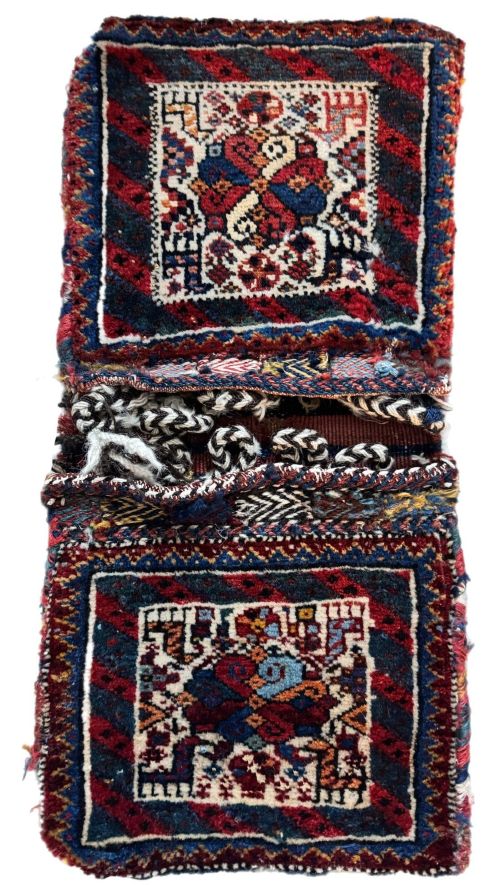
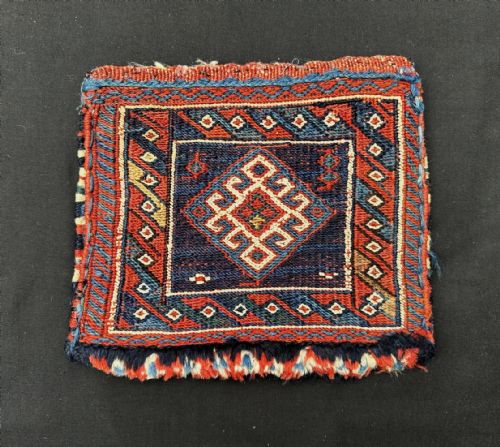
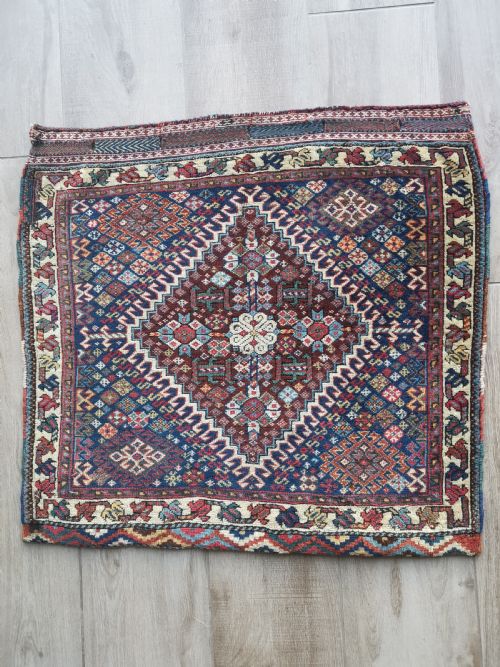
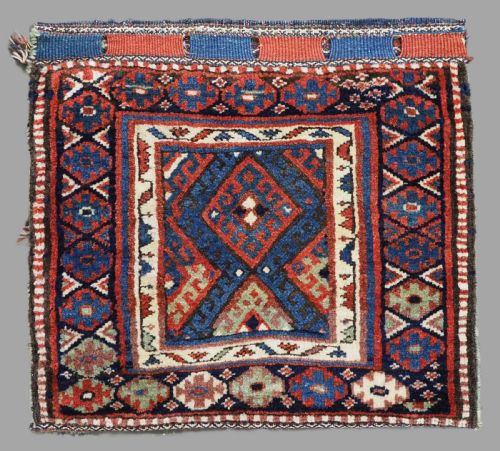
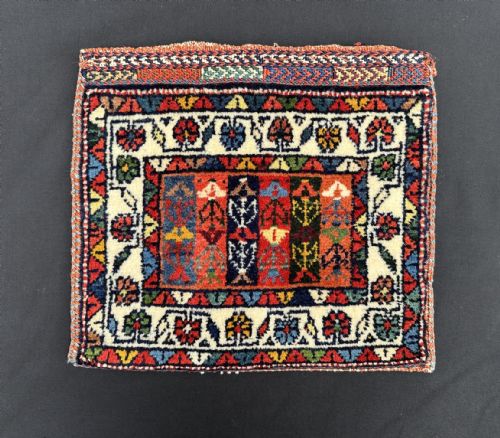
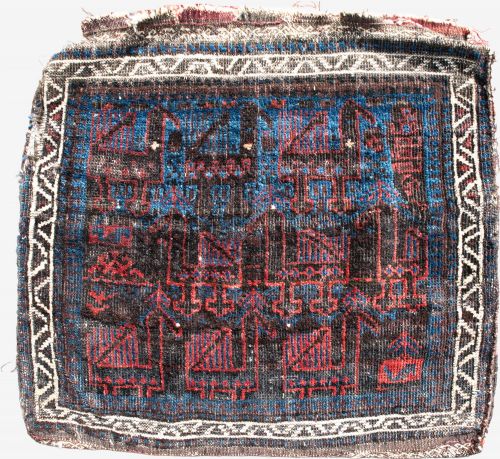
A tribal khorjin bag face represents the front panel of a traditional saddlebag utilised by nomadic and village weavers across Persia, Afghanistan, and the Caucasus. These textile fragments originate from nineteenth-century tribal groups including the Qashqai, Afshar, Baluch, Shahsavan, Lori, and Jaf Kurd. Most items encountered here are single bag faces or halved sections removed from complete double saddlebags over generations of use.
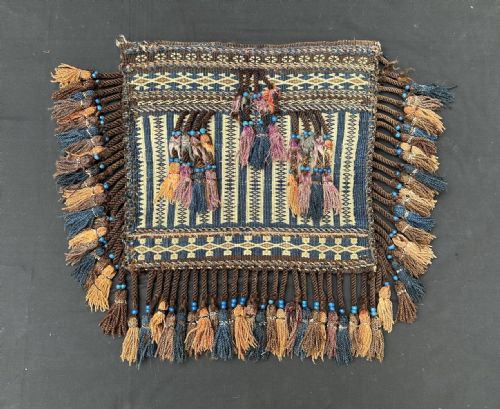
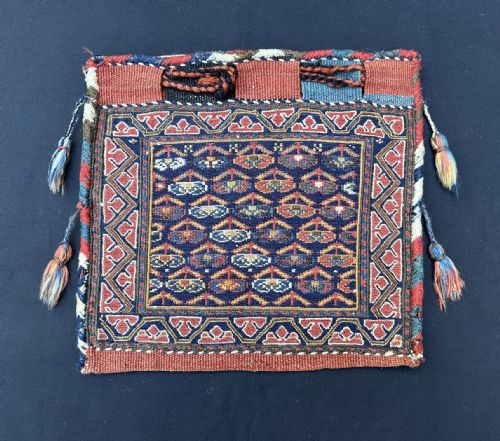
Makers fashioned these works for carrying personal belongings, household goods, or provisions during seasonal migrations. The formats vary from small vanity bags and personal chanteh pouches to larger storage containers and cushion covers. Surviving examples display the distinct aesthetic vocabulary of specific tribal confederations, marked by geometric medallions, repeated boteh motifs, and tile patterns.
How they were made
Weavers constructed these pieces using hand-spun wool for the pile and foundation, occasionally incorporating cotton for structural warp threads and glass beads for small embellishments. Natural dyes derived from local plants and minerals provide the deep colour palettes found across the nomadic pieces. Artisans employed hand-knotting techniques alongside flat-weave Soumac methods to create durable surfaces designed to withstand rigorous daily transport.
The integration of plain weave wool backs on certain surviving bags demonstrates the original construction of complete khorjin pairs. Tightly packed wool foundations ensured the structural integrity required for animal transport across mountainous terrain.
Tribal Khorjin Bag Face Retail Price Guide 2026
Typical asking prices for tribal khorjin bag face among the pieces listed under this phrase on Sellingantiques today, from the lower quarter to the upper quarter. They describe what is for sale here now, not the wider market.
Listings feature nineteenth-century nomadic textiles from Persia, Afghanistan, and the Caucasus, constructed using hand-spun wool, cotton, and natural dyes.
What varies in quality
The distinction between standard village production and exceptional nomadic weaving lies in the handling of materials and the precision of the design layout. Finer examples utilise lustrous, luminous wool combined with saturated natural dyes that yield remarkable depth across the surface. Knot density and the crisp execution of complex geometric or medallion motifs separate superior tribal pieces from simpler utility items.
Preservation of the original weave structure, including complete borders and intact plain weave backs, elevates the standing of an individual bag. The vitality of the colour palette and the clarity of regional tribal symbols ultimately determine the grade of each textile.
Qashqai Tribes·Afshar Tribes·Baluch Tribes·Shahsavan Nomads·Luri Tribes·Jaf Kurd
The Tribal Khorjin Bag Face Glossary
- Khorjin
- A traditional double saddlebag utilised by nomadic peoples for transport during migrations. The face sections are frequently separated to survive as decorative panels.
- Bag face
- The decorative front portion of a storage bag or saddlebag that displays the primary woven pattern. These panels are often preserved independently from their utilitarian backs.
- Soumac
- A flat-weave technique where coloured wrap threads pass over and under warp threads to create a textured, durable surface. This method appears frequently on Caucasian and Shahsavan pieces.
- Boteh
- A stylised almond or paisley motif representing a floral shoot or cypress tree. This symbol is widely distributed across Afshar and Persian tribal weaving.
- Chanteh
- A small personal bag or pouch used by nomads for carrying small valuables or personal items. These miniature pieces mirror the designs of larger storage bags.
Tribal Khorjin Bag Face: Frequently Asked Questions
What is a khorjin bag face?
A khorjin bag face is the decorative front panel of a traditional nomadic saddlebag. These woven textiles served practical storage functions during seasonal migrations.
Over time, many double bags were separated into individual panels for preservation and display. They showcase the distinct geometric patterns of specific tribal groups.
How were these bags used?
Nomadic weavers utilised these containers to transport personal possessions, household goods, and provisions on pack animals. The robust wool construction protected contents during mountain journeys.
Smaller pouches functioned as personal vanity bags or storage for small items. Today, collectors typically mount these panels on walls or convert them into cushions.
How do I identify different tribes?
Tribal attribution relies on specific design vocabulary, colour combinations, and structural techniques. Qashqai and Afshar pieces often feature intricate medallions and boteh motifs.
Baluch and Jaf Kurd examples display distinct geometric repeats and dark palettes. Examining the wool quality and dyeing materials aids in determining the regional origin.
How should I care for a textile?
Protect antique wool textiles from direct sunlight to prevent natural dye fading. Gentle vacuuming with a mesh screen attachment removes surface dust safely.
Professional textile conservation cleaning is recommended for deep maintenance. Avoid placing heavy furniture directly onto bag faces used as floor coverings.