



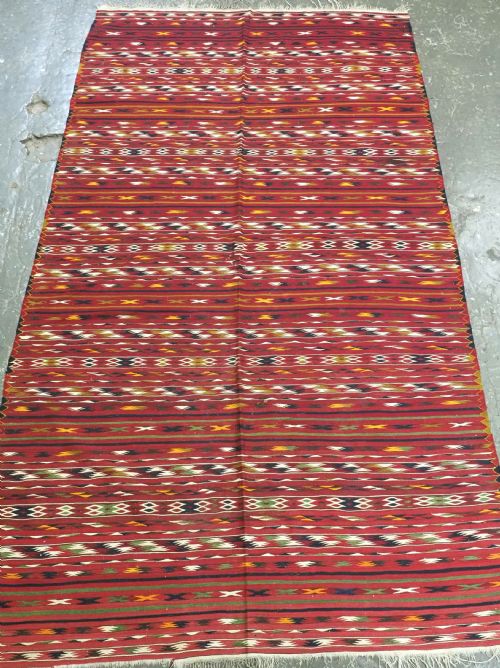

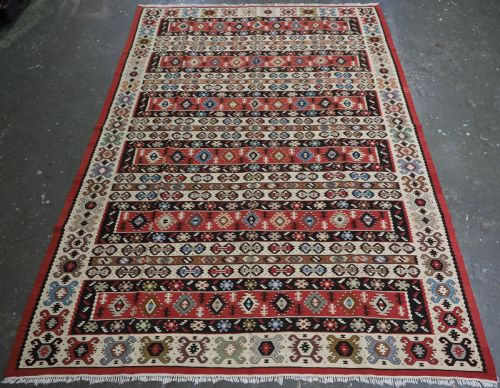

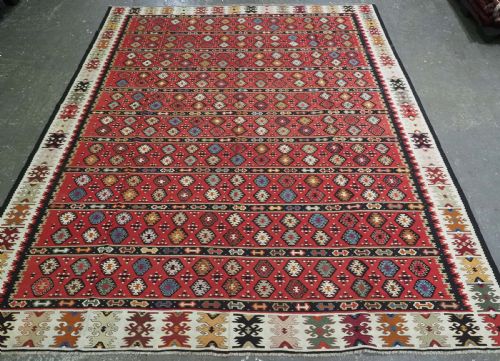


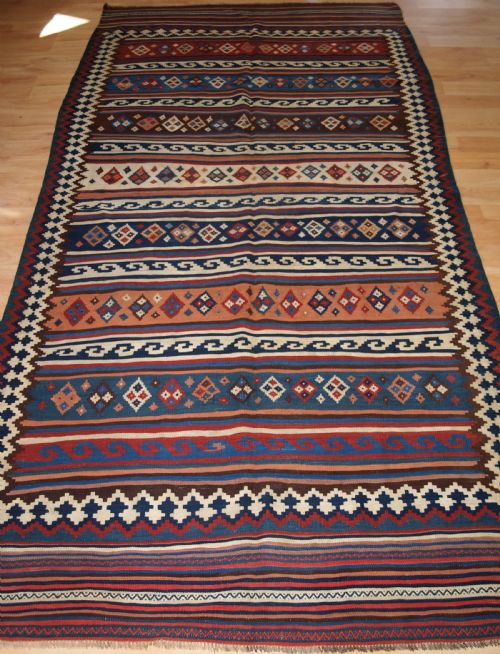

Tribal Flatweave Band
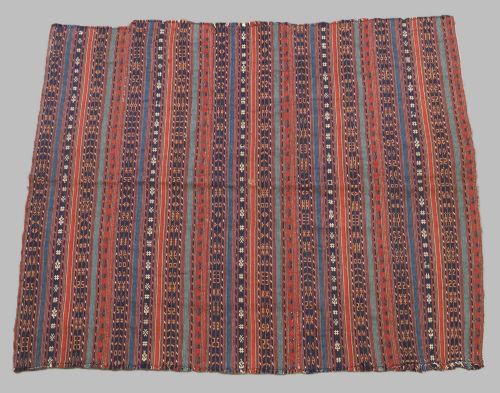
A tribal flatweave band brings linear energy and nomadic artistry into a room through horizontal stripes of woven pattern.
Tribal Flatweave Band
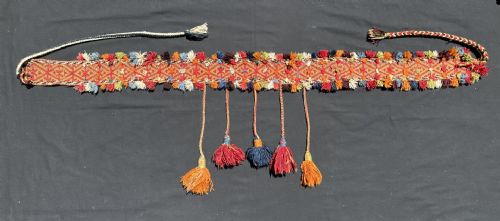
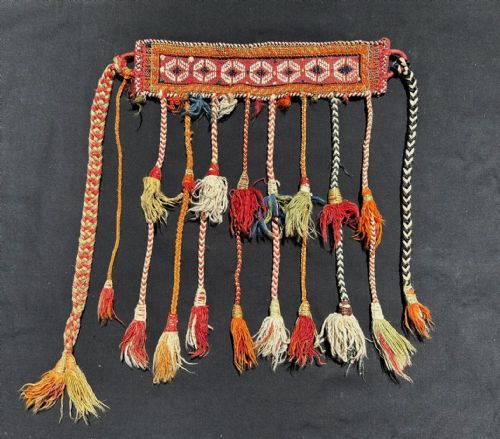
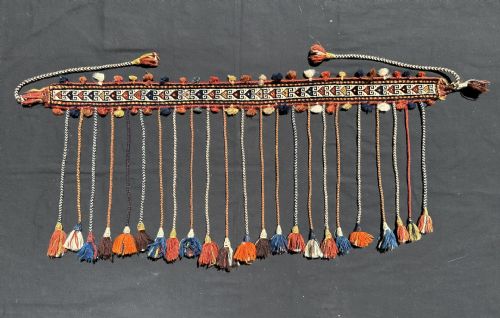
A tribal flatweave band presents a linear arrangement of horizontal stripes, geometrical motifs and weft-faced patterns produced by nomadic and village weavers. These textiles originate from Central Asian, Persian, Caucasian and Balkan regions, spanning the late nineteenth and early twentieth centuries.
Most examples encountered on this page take the form of utilitarian tent bands, animal trappings, storage bags or flatweave kilims configured with distinct bands of decoration. Weavers utilised wool and cotton materials, often combining hand-spun fibres with natural dyes to create these striking horizontal compositions.
The aesthetic centres on rhythmic repetition and stark contrasts between darker outlines and softer background tones. Pieces range from large tent bands measuring many feet to compact kilims and small saddlebag faces.
Materials and construction methods
Makers constructed each tribal flatweave band primarily from wool and cotton, frequently relying on hand-spun wool for the foundational warps and wefts. This natural yarn absorbs vegetable and natural dyes unevenly, resulting in subtle tonal variations across the surface.
Weavers employed flatweave techniques such as slit tapestry and weft-work to build up crisp geometric lines without a piled surface. The resulting textiles are structurally sound, dense and flat, designed to endure the rigorous demands of nomadic life or domestic utility.
Tribal Flatweave Band Retail Price Guide 2026
Typical asking prices for tribal flatweave band among the pieces listed under this phrase on Sellingantiques today, from the lower quarter to the upper quarter. They describe what is for sale here now, not the wider market.
Listings feature pieces spanning from the late nineteenth century through the 1930s, constructed predominantly from hand-spun wool and cotton.
Judging quality and execution
Quality in a tribal flatweave band rests upon the fineness of the weave and the precision of the geometric motifs. Tighter, denser weft work allows intricate patterns to remain sharp and readable along every stripe.
The depth and harmony of the palette elevate certain pieces above others. Natural dyes that have mellowed gracefully over decades provide a warmth that distinguishes superior examples from simpler village work.
The Tribal Flatweave Band Glossary
- Flatweave
- A textile constructed without pile by interlacing warp and weft threads directly. This method produces a thin, durable fabric often associated with kilims and utility bands.
- Tent band
- A long, narrow structural strip woven by nomads to secure the framework of a yurt or tent. These functional bands display dense geometric patterns across their length.
- Weft-work
- A technique where coloured weft threads are patterned across the foundational warp threads. It creates the characteristic horizontal bands seen in these textiles.
- Mafrash
- A large rectangular storage sack or bedding bag used by nomadic tribes. The face is often repurposed or woven in striking banded designs.
- Natural dye
- Colour derived from plant, insect or mineral sources prior to the widespread adoption of synthetic alternatives. These dyes yield rich, complex tones that age with considerable character.
Tribal Flatweave Band: Frequently Asked Questions
What is a tribal flatweave band used for?
Originally, many of these textiles functioned as structural tent bands for securing nomadic dwellings or served as animal trappings and storage sacks. Today, collectors utilise them as striking runner rugs, wall hangings or decorative interior accents.
The long, linear format makes them particularly effective in hallways, on staircases or mounted to display their intricate geometric geometry at eye level.
How do I care for an antique flatweave?
Maintenance requires gentle vacuuming without a rotating brush roll to protect the flat textile surface. Professional rug cleaners experienced with antique wool and natural dyes should handle any washing.
Keeping the piece out of direct, harsh sunlight preserves the integrity of the natural dyes and prevents the wool fibres from becoming brittle over time.
How do I tell regional styles apart?
Caucasian and Shirvan pieces often feature crisp, balanced geometric motifs in soft or contrasting palettes. In contrast, Persian Qashqai and Central Asian Yomut or Baluch works frequently employ darker rich tones and specific tribal symbols.
Examining the tightness of the weave and the specific arrangement of the horizontal bands helps point toward the originating nomadic group or workshop region.
Are these pieces made with natural dyes?
Many examples from the late nineteenth and early twentieth centuries rely on traditional natural dyes sourced from plants and insects. These colourants produce a characteristic mellow appearance that shifts slightly under different lighting conditions.
Closer inspection often reveals subtle abrash, where the shade shifts naturally across a single band due to variations in dye batches.