



Tri Fold Mirror Table
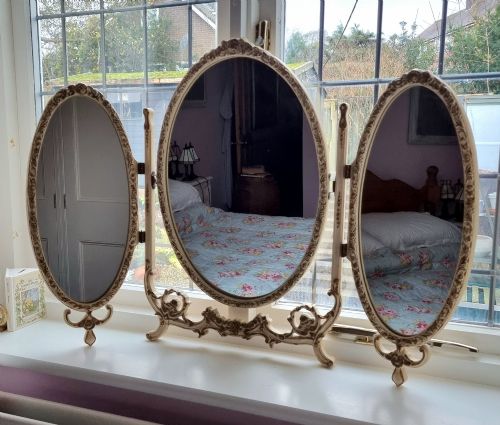
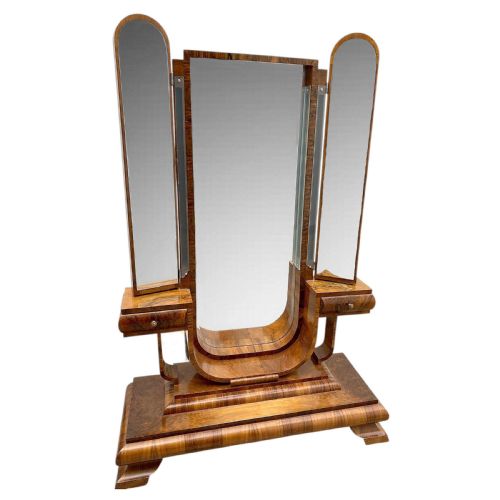
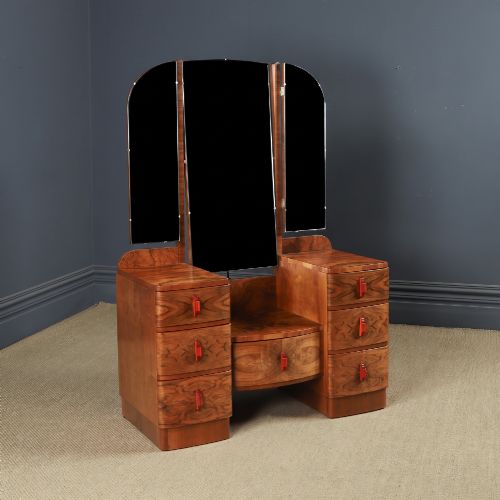
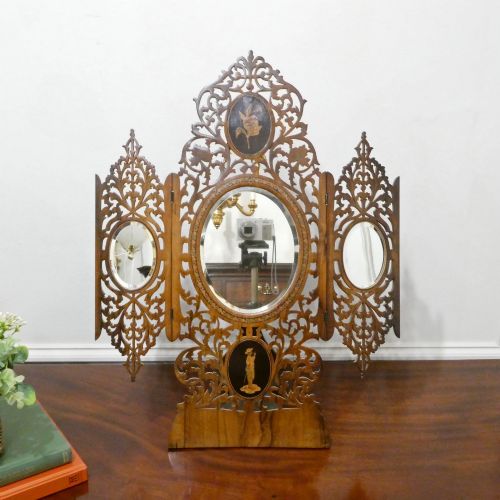
These pieces for tri fold mirror table searches are adjustable dressing mirrors and mirrored dressing tables built to catch the light from multiple angles.
Tri Fold Mirror Table
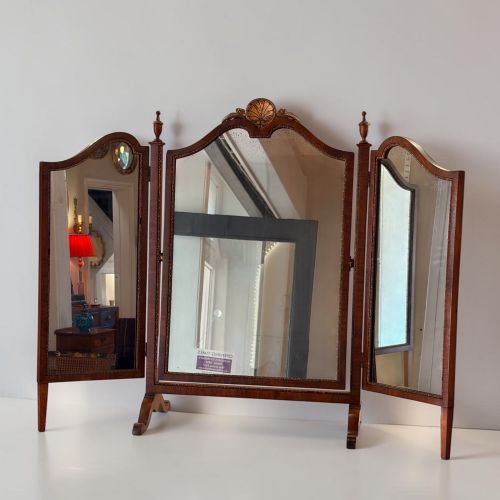
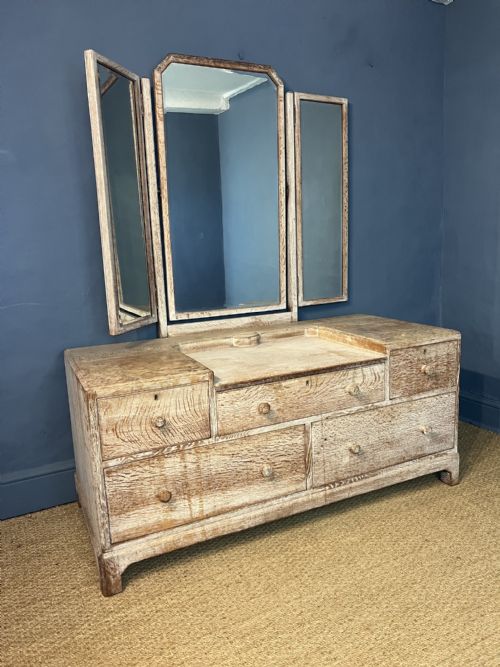
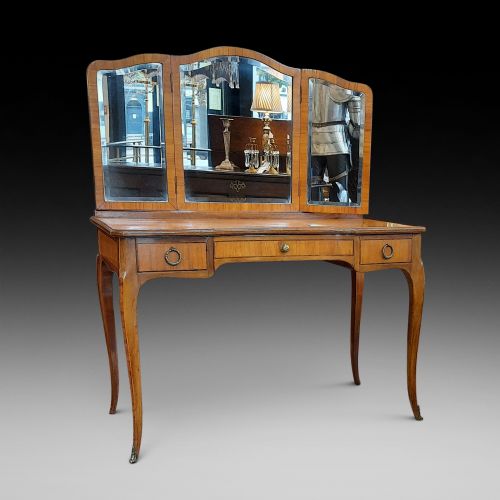
A tri fold mirror table brings together adjustable side glasses and a central plate, designed for a dressing table or vanity setup. You encounter dressing mirrors, complete dressing tables, and washstands spanning from the late nineteenth century through the Art Deco era.
The selection ranges from compact Edwardian and Italian table mirrors in walnut to large French pedestal vanities in mahogany, oak, and kingwood. Many pieces utilise hinged side wings, allowing the user to angle the reflection precisely during grooming routines.
How they were made
Cabinetmakers constructed the frames using solid and veneered timbers such as walnut, mahogany, oak, and figured walnut, often enhanced by crossbanding or carved details. Brass fittings, gilt frames, and marble tops appear frequently to add weight and decorative contrast to the timber structures.
Makers utilised bevelled glass for the mirror plates, mounted on sturdy hinges that permit the outer wings to fold inward or outward smoothly. Some later twentieth-century examples incorporate materials like bakelite alongside traditional brass framing.
Tri Fold Mirror Table Retail Price Guide 2026
Typical asking prices for tri fold mirror table among the pieces listed under this phrase on Sellingantiques today, from the lower quarter to the upper quarter. They describe what is for sale here now, not the wider market.
Early twentieth-century dressing tables occasionally hide secret compartments behind their folding wings for storing small powders and trinkets.
What varies in quality
Quality rests in the crispness of the timber selection, such as richly figured walnut or crossbanded kingwood, and the solidity of the hinge mechanisms supporting the folding panels. Superior examples display refined hand-carving and well-fitted marble surfaces rather than plain or heavily restored joinery.
The clarity of the original mirror glass and the integration of brass embellishments distinguish finer atelier pieces from standard utilitarian dressing items. Heavier frames maintain their alignment better over decades of adjusting the side mirrors.
Heals
The Tri Fold Mirror Table Glossary
- Triptych
- A three-panel mirror configuration where two hinged side wings flank a fixed central glass. This layout allows the user to view profiles while dressing.
- Cheval mirror
- A freestanding full-length or large dressing mirror suspended on a frame with pivot pins. It tilts back and forth to adjust the angle of reflection.
- Crossbanding
- A decorative border technique where strips of veneer are laid across the grain of the main timber panel. It frames the perimeter of drawer fronts and table tops.
- Pedestal vanity
- A dressing table design featuring banks of drawers flanking a central kneehole space, often surmounted by a fixed or folding mirror. It provides generous storage alongside the mirror surface.
Tri Fold Mirror Table: Frequently Asked Questions
How do I clean an antique mirror frame?
Dust the timber and carved details regularly with a dry, soft cloth to prevent grime build-up.
Avoid spraying liquid directly onto the glass or wooden joints to protect the old finishes.
Can the side mirrors be adjusted?
Most folding mirror frames utilise brass hinges that allow the outer wings to angle inward or outward.
Check that the pivot screws are stable before altering the position of heavy glass plates.
Are these mirrors attached to tables?
Some pieces comprise a standalone table mirror designed to sit atop an existing surface, while others form an integrated part of a vanity or dressing table.
Verify whether the glass stands independently or bolts directly into the rear of the timber cabinet.
What periods do these pieces date from?
The selection spans from late Victorian and Edwardian workshops up through Art Deco designs of the mid-twentieth century.
Stylistic cues like curved walnut veneers or gilt Rococo revival frames help identify the era of manufacture.