

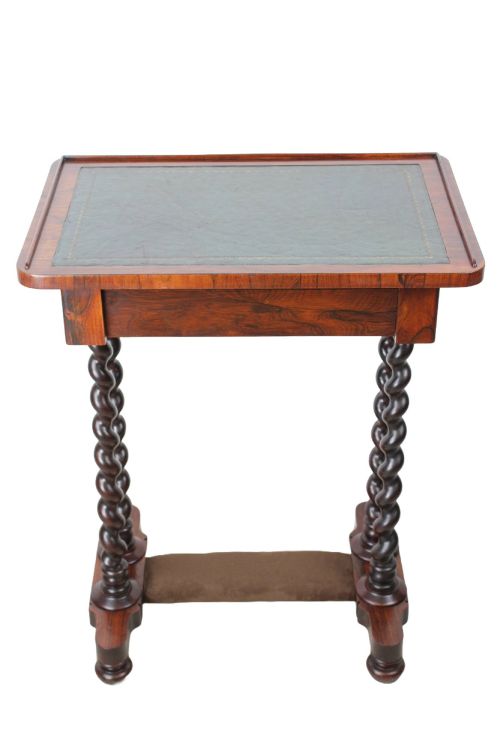
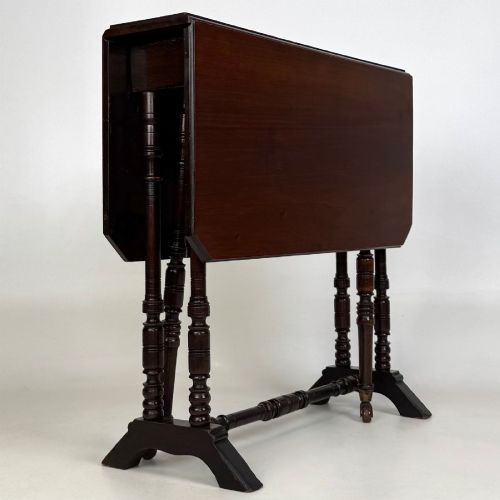
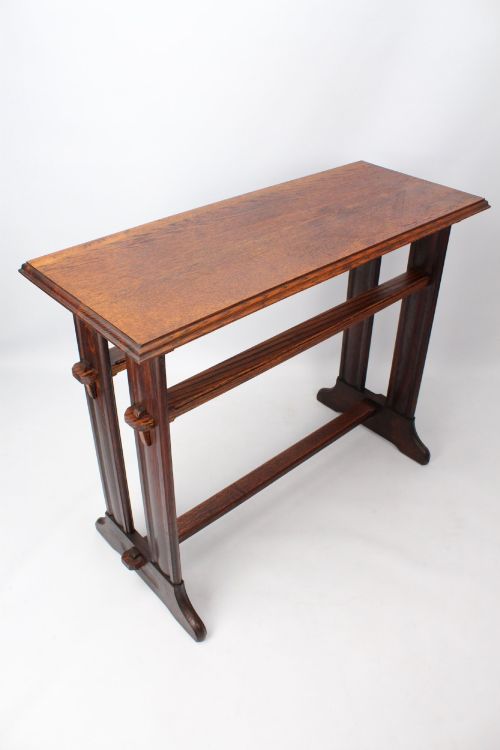
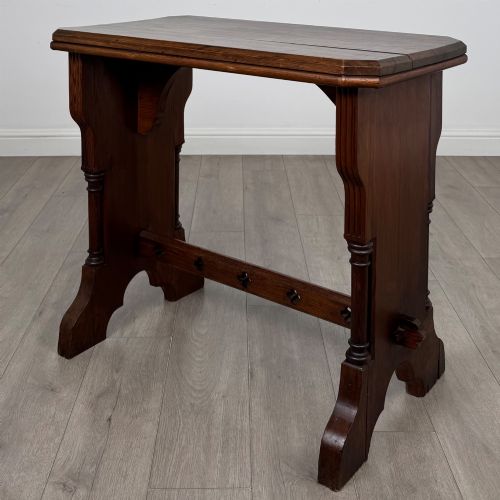
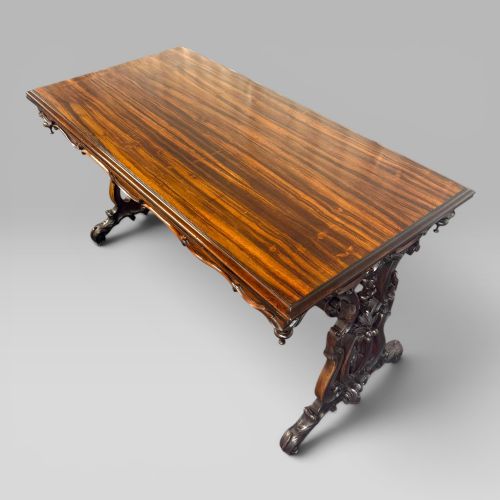
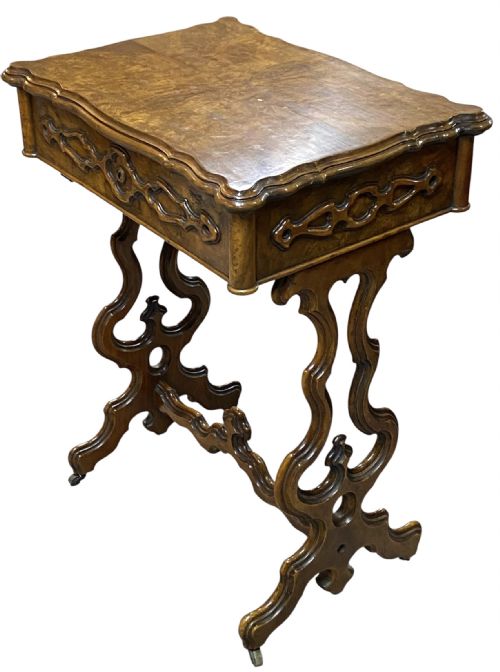
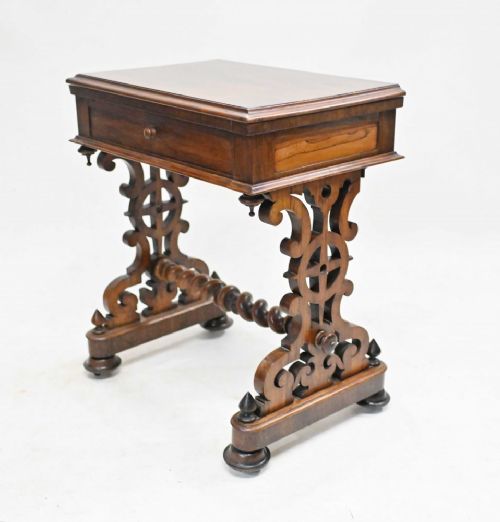

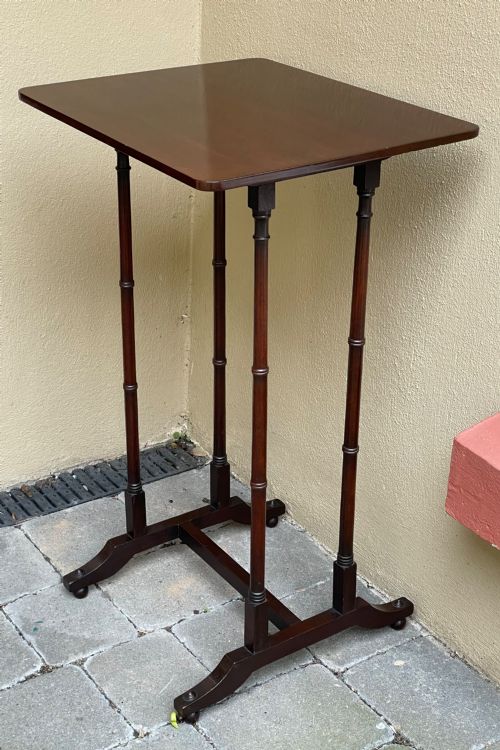

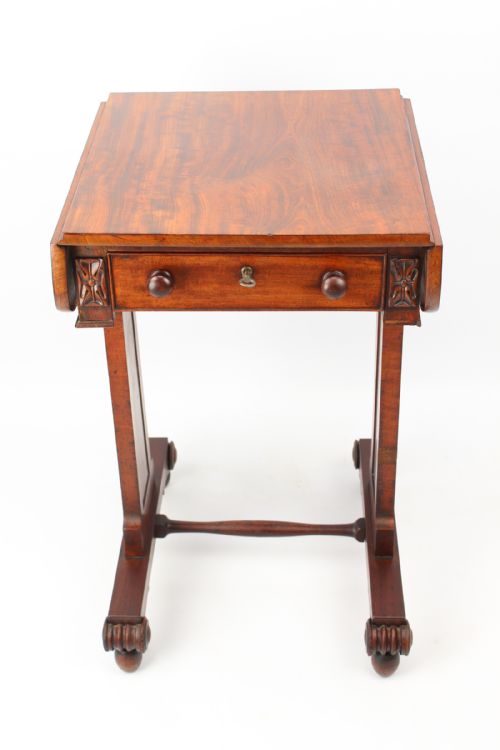


Trestle Occasional Table
A trestle occasional table offers a compact surface rooted in nineteenth-century utility, prized for its portability and architectural timber frame.
Trestle Occasional Table
A trestle occasional table combines movable support uprights with a portable top, arriving in forms such as side tables, lamp tables, and work tables. When exploring a trestle occasional table, buyers encounter pieces spanning the Regency, Victorian, and Edwardian eras, alongside later twentieth-century interpretations.
The material palette of these smaller surfaces ranges from rich rosewood and figured mahogany to oak, burr walnut, and pitch pine. Construction styles lean towards Regency elegance, Victorian solidity, and the functional integrity of Arts and Crafts design.
Origins stretch from English workshops to Anglo-Indian studios and Chinese export hubs, bringing varied timber choices to the same compact footprint. Most examples serve flexible domestic roles, functioning beside seating as reading, writing, or display stands.
Materials and Construction
Cabinetmakers utilised dense hardwoods such as mahogany, rosewood, and walnut, frequently applying fine veneers like satinwood, yew, or burr walnut to primary display surfaces. Solid timbers formed the structural legs, stretchers, and folding trestle supports required for daily stability.
Joinery methods balanced lightweight portability with load-bearing strength, utilising mortise and tenon joints for frames alongside delicate dovetails for small drawers in sewing and writing formats. Brass hinges, castors, and drop-flap brackets enabled folding mechanisms to operate smoothly without compromising the overall rigidity of the piece.
Trestle Occasional Table Retail Price Guide 2026
Typical asking prices for trestle occasional table among the pieces listed under this phrase on Sellingantiques today, from the lower quarter to the upper quarter. They describe what is for sale here now, not the wider market.
Listings feature woods spanning mahogany, rosewood, oak, walnut, pitch pine, and satinwood.
Assessment of Quality
Quality rests upon the selection and figure of the timber, where richly grained rosewood, burr walnut, or banded satinwood denote a more ambitious commission than plain secondary woods. Crispness of carving, depth of patination, and the retention of original brass fittings elevate certain examples above standard workshop output.
Structural integrity governs everyday utility, separating robustly jointed frames from tables weakened by loose stretchers or warped drop-leaves. The precision of veneering work and the unhindered movement of folding or sliding components reflect the skill of the original maker.
Heal And Son·Gillows Of Lancaster
The Trestle Occasional Table Glossary
- Trestle
- A supporting framework consisting of a horizontal beam fixed to two pairs of splayed legs. This design provides stable support while maintaining open floor space beneath the surface.
- Drop-flap
- A hinged leaf attached to the main table top that can be raised to extend surface area or lowered when space is restricted. Brass brackets usually support the leaf in its upright position.
- Quartetto
- A matched set of four graduating tables designed to slide neatly beneath one another. They gained popularity during the Regency period for versatile entertaining.
- Patina
- The surface sheen and mellowing developed by wood and polish over decades of handling and exposure to light. It serves as a visual indicator of age and careful maintenance.
Trestle Occasional Table: Frequently Asked Questions
Where were trestle tables used?
These tables served primarily in morning rooms, libraries, and parlours as adaptable surfaces for books, sewing implements, or lamps.
Their light construction allowed servants to reposition them easily according to the daily routine of the household.
How do I identify a Regency table?
Regency pieces often display classical proportions, dark rosewood or mahogany timbers, and restrained brass mounts inspired by ancient Roman and Greek forms.
Look for refined pillar supports or elegant splayed legs rather than heavy Victorian mouldings.
Are nest of tables antique?
Nesting tables appear in sets of three or four, constructed from woods like mahogany, rosewood, or marquetry-inlaid hardwoods dating from the nineteenth century onward.
They were engineered to maximise floor space in smaller reception rooms while offering multiple surfaces when entertaining.
How should I clean wood furniture?
Dust surfaces regularly with a soft, dry cloth to prevent microscopic particle accumulation from dulling the historic polish.
Apply a microcrystalline wax sparingly once or twice a year to nourish the timber without building up sticky residue.