

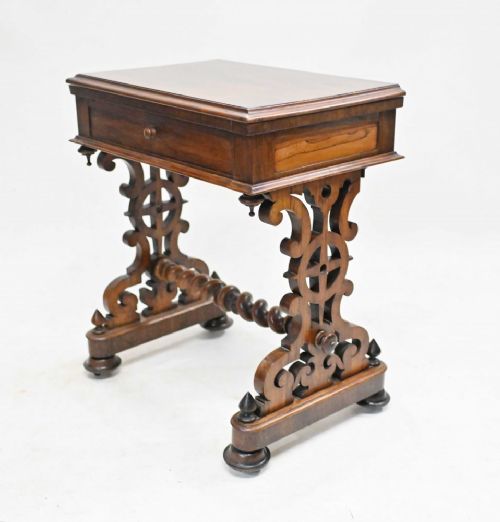


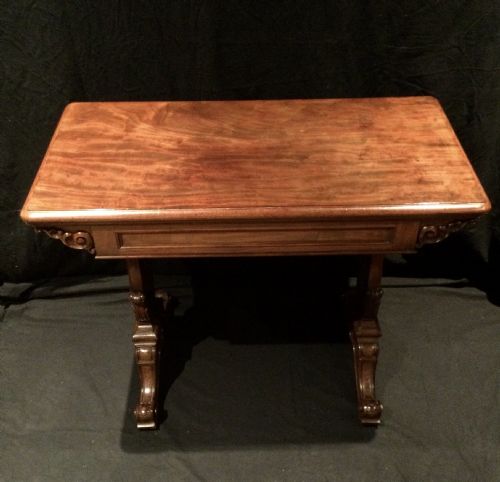


Trestle Games Table
These trestle games table pieces offer folding surfaces and dual-purpose boards, bringing traditional parlour entertainment into your sitting room.
Trestle Games Table
When you search for a trestle games table, you are looking at furniture designed specifically for evening entertainment in the home, combining social pastime functions with traditional woodwork. The selection available spans the Georgian, Regency, and Victorian periods, alongside Arts and Crafts examples, covering various iterations of fold-over card and combination tables.
You are most likely to meet Victorian walnut and burr walnut versions on this page, often featuring inlaid chess boards, backgammon markers, or swivel tops. These pieces range from modest mahogany designs to ornate marquetry pieces and ebonised variants.
Alongside standard card tables, the records show specialised forms such as combination games or work tables, as well as quartetto nests of tables. Each piece reflects the domestic pursuits of the nineteenth century, functioning equally as a side table when closed.
How they were made
Cabinet makers utilised dense cabinet woods such as mahogany, oak, and figured walnut to build stable frames capable of supporting folding leaves and heavy usage. Burr walnut veneers and ebonised wood frequently appeared on Victorian pieces to create rich surface contrasts.
Inlayers applied boxwood inlay, marquetry, and brass details to mark out chess boards or decorate the friezes and fold-over tops. Joiners constructed the folding mechanisms to allow the top surface to pivot and reveal concealed storage wells for counters and cards.
Trestle Games Table Retail Price Guide 2026
Typical asking prices for trestle games table among the pieces listed under this phrase on Sellingantiques today, from the lower quarter to the upper quarter. They describe what is for sale here now, not the wider market.
What varies in quality
The standard of a piece rests largely on the choice of timber and the precision of the marquetry or boxwood inlay. Figured walnut and burr walnut veneers demonstrate superior selection by the original maker compared to plain, unfigured surfaces.
Construction fidelity in the pivoting hinge mechanisms and the stability of the folding top separate robust examples from weaker ones. Finer items exhibit crisp carving, precise stringing, and well-balanced proportions that maintain rigidity whether closed as a side table or opened for play.
The Trestle Games Table Glossary
- Trestle games table
- A support structure holding a dual-purpose top designed for card playing or board games. These pieces typically feature folding leaves or pivoting surfaces.
- Marquetry
- Decorative veneer work forming pictures or geometric patterns using various coloured woods. This technique adorns the top surfaces of finer Victorian gaming furniture.
- Burr walnut
- Timber taken from the warted excrescence of a walnut tree, yielding highly figured grain patterns. Cabinet makers prized this wood for high-status Victorian tables.
- Ebonised wood
- Timber treated with a dark stain or finish to imitate ebony. Makers utilised this method to create sharp visual contrasts alongside lighter boxwood elements.
- Quartetto
- A set of four graduated occasional tables designed to slide neatly beneath one another. The evidence includes Regency period examples in rosewood.
Trestle Games Table: Frequently Asked Questions
What is a trestle games table used for?
These tables served primarily as multi-functional furniture for the parlour, providing a sturdy surface for card games, chess, and backgammon during the nineteenth century. When closed, they functioned as ordinary side or console tables.
Their dual nature made them practical for smaller drawing rooms where space was at a premium, allowing hosts to clear away gaming equipment quickly.
How do I identify a Victorian games table?
Victorian examples frequently utilise walnut, burr walnut, or ebonised wood, often incorporating elaborate marquetry and boxwood inlay on the top. The styles lean towards serpentine edges and heavy turned or carved supports.
They commonly date between the mid and late nineteenth century, reflecting the era's fondness for dedicated parlour pastimes and decorative cabinet work.
Where should I place a games table in my home?
These pieces sit well against a wall as a side table when folded, displaying the grain of the walnut or mahogany top. Placing them in a sitting room or study allows you to open them out when hosting guests.
Ensure they are kept away from direct heat sources to protect the veneers and the movement of the folding mechanisms.