

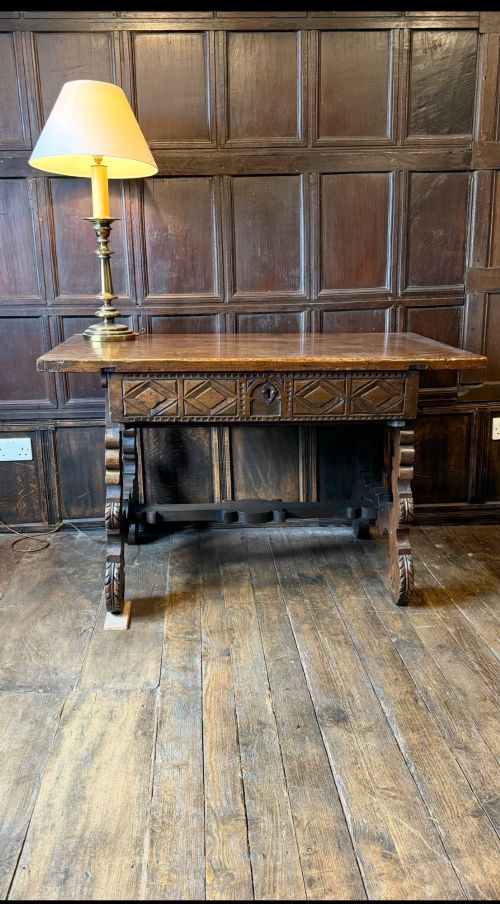
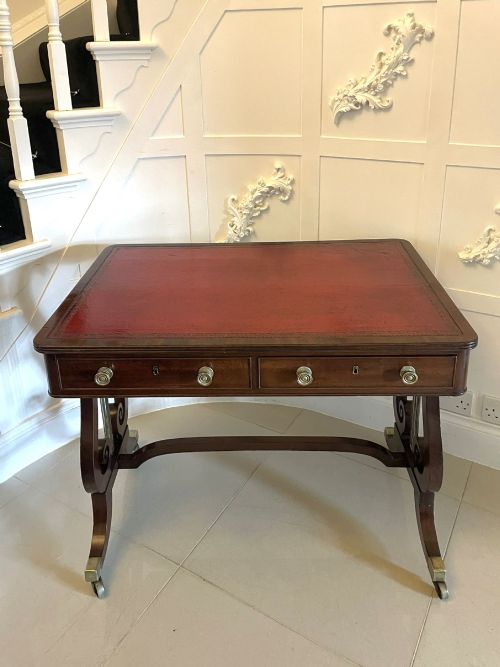
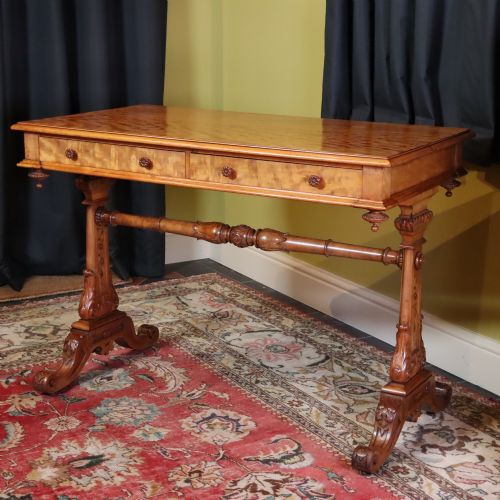


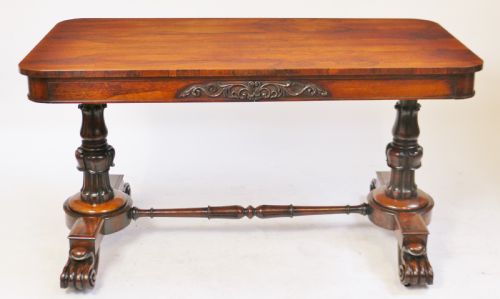


Trestle End Writing Desk
A trestle end writing desk offers a sturdy platform and clean architectural lines, bringing period character and practical workspace to a room.
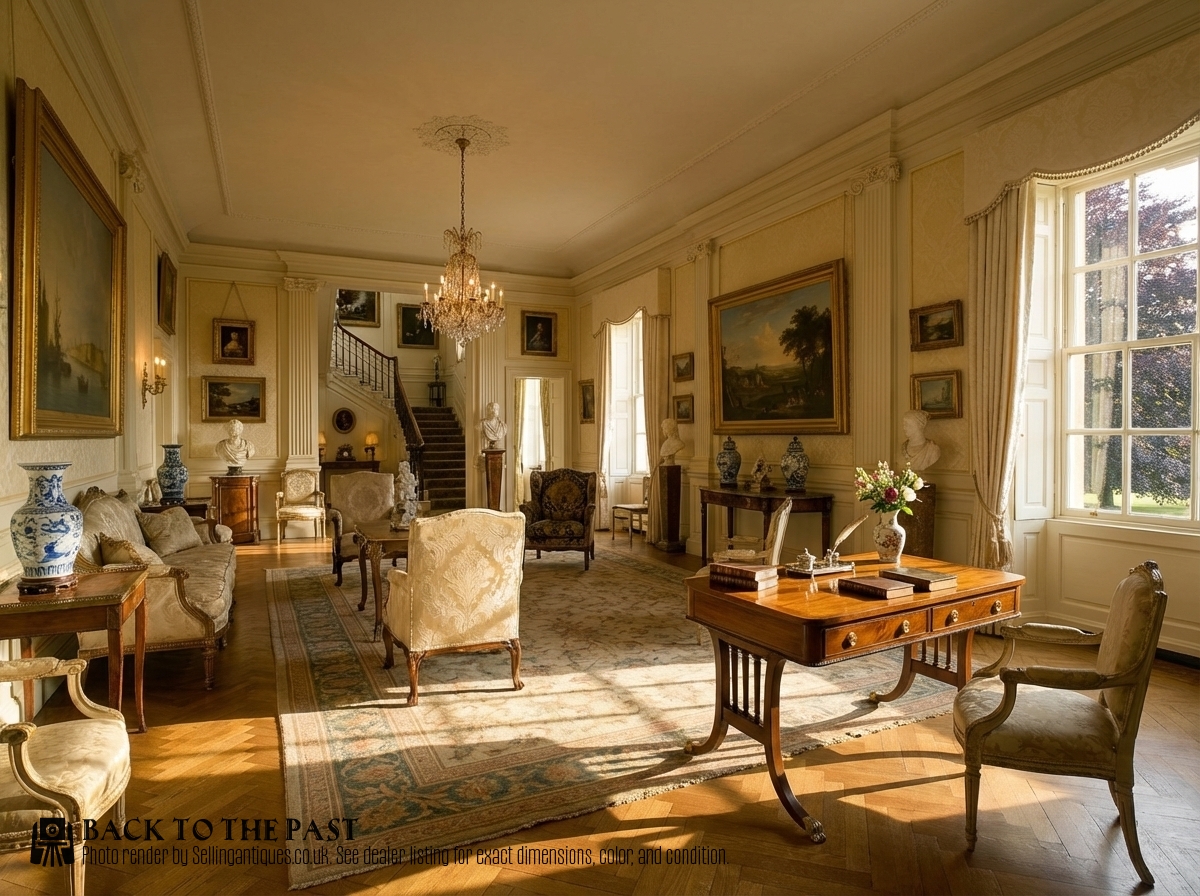
Trestle End Writing Desk
A trestle end writing desk is a form of writing furniture supported by sturdy side standards or end supports rather than standard corner legs.
The selections available span the nineteenth century, including Regency, George IV, William IV, and Victorian periods.
Makers utilised various formats, ranging from library writing tables and two drawer writing desks to side tables and sofa tables.
How they were made
Craftsmen utilised timbers such as mahogany, rosewood, satinwood, walnut, and pitch pine to construct these pieces.
Details often include leather writing surfaces and brass hardware, alongside specialised structural elements like end supports.
Trestle End Writing Desk Retail Price Guide 2026
Typical asking prices for trestle end writing desk among the pieces listed under this phrase on Sellingantiques today, from the lower quarter to the upper quarter. They describe what is for sale here now, not the wider market.
At least one maker left a stamp, proving that even a humble writing desk appreciates a proper signature.
What varies in quality
The choice of timber and the sophistication of the styling dictate the distinction between simpler side tables and grander library writing tables.
Construction methods, from basic pine framing to finely figured mahogany and rosewood with brass accents, define the tier of each piece.
Gillows
The Trestle End Writing Desk Glossary
- Trestle end
- A structural support system utilising vertical side standards connected by a stretcher or beam. This design provides sturdy lateral stability.
- Sofa table
- A rectangular table traditionally placed in front of a sofa, frequently featuring drop leaves and drawers. They share similar end support architecture with writing tables.
- Library table
- A substantial freestanding table used for reading and writing, often finished on all sides to allow placement in the centre of a room.
- Side table
- A smaller occasional table designed to stand against a wall or beside furniture, sometimes adapted for writing use.
Trestle End Writing Desk: Frequently Asked Questions
What is a trestle end writing desk?
A trestle end writing desk is a nineteenth century form of writing furniture supported by end standards or side supports rather than conventional corner legs.
These pieces appear in styles ranging from Regency and George IV to Victorian Gothic, utilising timbers such as mahogany, rosewood, and walnut.
How were these writing desks used?
They served as dedicated surfaces for correspondence and reading, often placed centrally in a library or study due to their finished backs.
Many examples incorporate drawers for stationery storage, while broader library tables accommodated larger volumes and papers.
Where should I place a trestle end desk?
Because many nineteenth century examples feature finished backs, they suit placement in the middle of a room as a centre table.
They also function effectively against a wall or in a home office, depending on the scale and configuration of the end supports.
How do I identify the period of a desk?
Period identification relies on observing stylistic markers such as Regency reeding, Victorian Gothic details, or William IV robust proportions.
Timber choice also aids dating, as satinwood, rosewood, and mahogany predominated during specific phases of the nineteenth century.