




Trestle End Sofa Table
These trestle end sofa table pieces bring compact elegance to a room, offering adaptable surfaces originally designed for use beside seating.
Trestle End Sofa Table
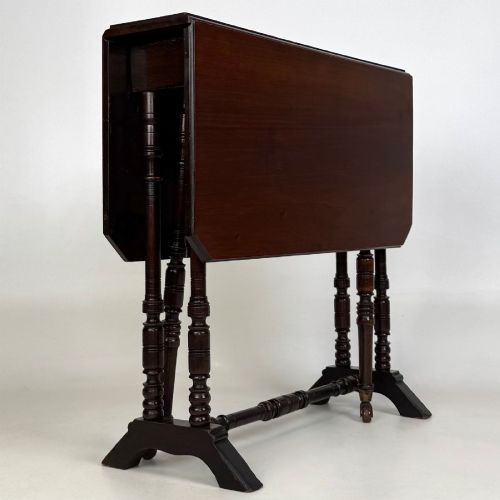
A trestle end sofa table is a versatile form typically encountered in nineteenth century periods including Regency, Victorian, and Edwardian eras. These pieces function primarily as occasional, lamp, side, or writing tables, often featuring end support structures.
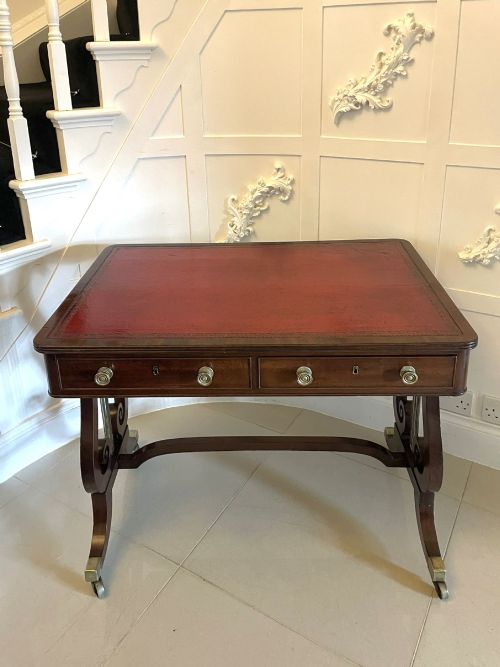
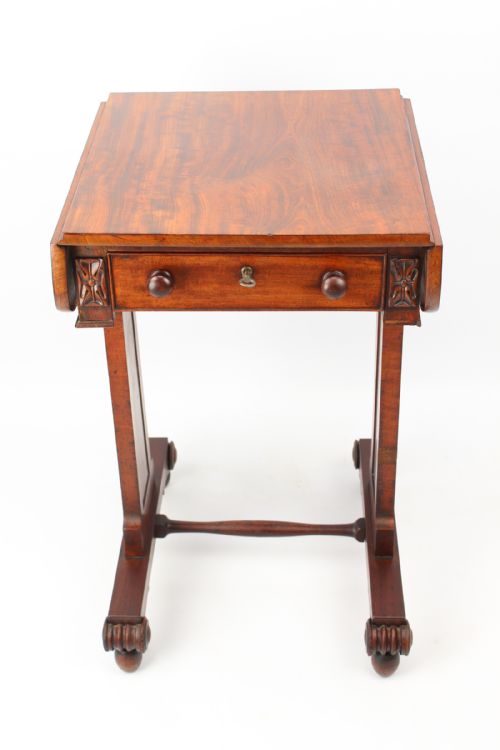
The selections span from George IV and William IV examples down to Late Victorian interpretations. Formats range from drop-flap variants and two-drawer centre tables to smaller occasional pieces designed for parlours and morning rooms.
Makers and designers from these periods utilised solid timbers and veneers to create practical furniture for domestic settings. Buyers searching for a trestle end sofa table encounter various wood types adapted for domestic display and writing tasks.
How They Were Made
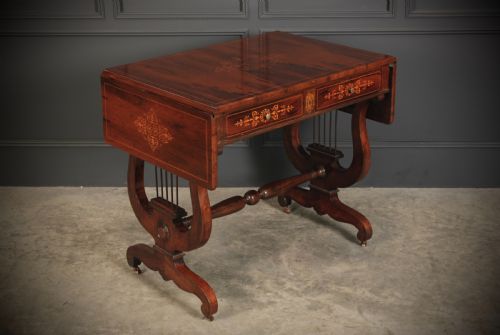
Cabinet makers constructed these tables predominantly using figured hardwoods such as mahogany, rosewood, palisander, walnut, and oak. Surfaces frequently incorporate decorative elements like marquetry inlay and brass details.
Structural stability relies on end support trestle designs, which allow the tables to stand free or position neatly beside upholstery. Leather inserts also appear on writing variants designed for library and study use.
Several tables appear ready for morning room reading or midnight correspondence, complete with drop-flaps for sudden bursts of paperwork.
What Varies in Quality
The calibre of a piece depends heavily on the selection of timber grains, such as figured mahogany or rosewood, and the precision of marquetry or brass inlay. Finer examples display careful joinery in their trestle supports and drawer construction.
Proportion and execution distinguish standard utilitarian furniture from items associated with notable workshops. The integration of functional elements like drop-flaps and leather writing surfaces demonstrates higher grade craftsmanship.
Gillows·George Smith
The Trestle End Sofa Table Glossary
- Trestle end
- A support structure featuring feet connected by a central beam or uprights at each end of the table. This design provides sturdy clearance beneath the top.
- Drop-flap
- A hinged leaf on a table top that drops down when not in use. It allows the surface area to expand or contract according to space requirements.
- Marquetry inlay
- Decorative patterns formed by fitting contrasting veneers into a prepared wood surface. This technique creates geometric or pictorial ornamentation.
- Centre table
- A freestanding piece finished on all sides intended to stand away from walls. These tables often incorporate drawers or decorative end supports.
Trestle End Sofa Table: Frequently Asked Questions
Where were these tables placed?
These tables were traditionally positioned beside sofas, in morning rooms, or utilised in libraries and writing spaces.
Their compact dimensions allowed them to function easily as lamp stands, side pieces, or writing surfaces within domestic interiors.
How do I identify a Regency period table?
Regency pieces often display classical proportions, dark timbers like mahogany and rosewood, and restrained brass or inlay details. Stylistic cues draw upon classical antiquity and the designs popular during the early nineteenth century.
Maker stamps or specific structural motifs help confirm attribution to this distinctive era of British furniture making.
What is a drop-flap table used for?
A drop-flap table provides an expandable surface that adapts easily to smaller rooms or variable daily requirements. Raising the leaves creates extra space for writing or serving.
When dropped, the table occupies less floor space while retaining its decorative trestle end appearance.
How should I care for rosewood and mahogany?
Maintain timber surfaces by keeping them away from direct sunlight and fluctuating heat sources to prevent veneer lifting. Regular dusting with a soft, dry cloth preserves the polished finish.
Avoid commercial silicone polishes and instead use traditional wax sparingly to nourish the grain.