

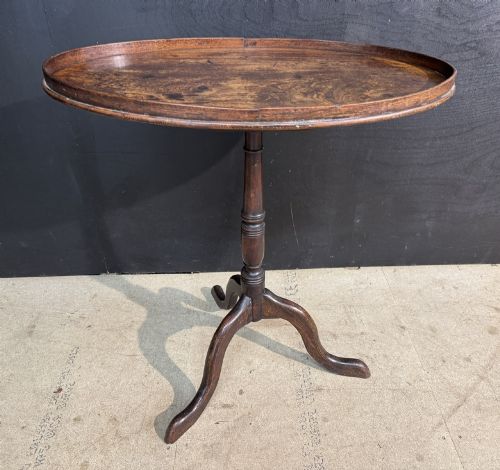
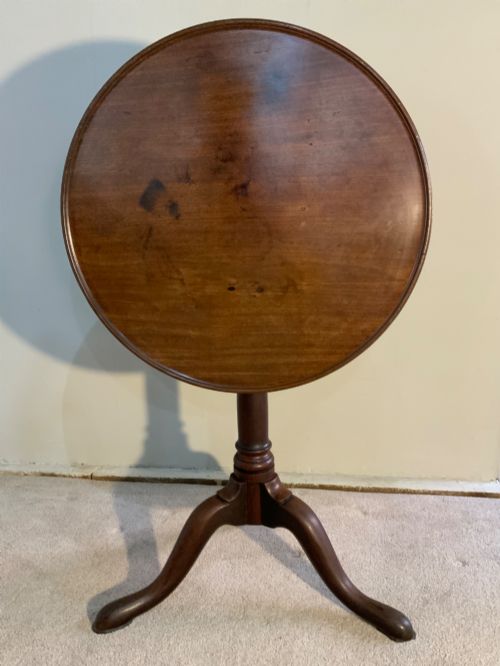


Tray Top Tripod Table
These tray top tripod tables are compact occasional tables with raised rims, offering both practicality and classic charm for any room.
Tray Top Tripod Table
A tray top tripod table is a compact item featuring a raised edge designed to prevent items from rolling off, supported by a central pillar on three feet. When searching for a tray top tripod table, you encounter diverse examples ranging from simple Georgian timber pieces to more ornate Victorian and Edwardian interpretations.
Origins stretch from domestic British cabinet-making traditions to Italian Art Nouveau brass and copper creations, alongside Anglo-Indian lacquered pieces. This variety ensures that whether you seek a formal Georgian tea table or an eclectic 1920s brass piece, several distinct interpretations present themselves.
Materials and construction methods
Construction relies heavily on dense hardwoods such as mahogany and oak, often turned on a lathe for the central pillar and shaped by hand for the tripod legs. Many iterations utilise a tilt-top mechanism, allowing the surface to fold vertically when not in use.
Surfaces feature integrated or applied raised rims, sometimes carved directly from the solid timber plank or constructed with mouldings fixed to the edge. Decorative techniques span from hand-painted lacquered finishes to engraved copper trays paired with brass frameworks.
Tray Top Tripod Table Retail Price Guide 2026
Typical asking prices for tray top tripod table among the pieces listed under this phrase on Sellingantiques today, from the lower quarter to the upper quarter. They describe what is for sale here now, not the wider market.
The recorded items span from eighteenth-century Georgian designs through Victorian and Edwardian periods into the 1920s.
Factors that define quality
Quality rests upon the selection of timber, the crispness of the turning on the central column, and the stability of the tripod base. Superior examples display thoughtful grain matching and robust joinery where the legs meet the pillar.
The execution of the raised tray rim dictates much of the finesse, especially where corners or moulded edges require careful hand-shaping. Finer pieces maintain balanced proportions between the top and the spread of the legs, ensuring physical stability alongside visual grace.
Gillows
The Tray Top Tripod Table Glossary
- Tripod table
- A small standalone table supported by a central pillar resting on three feet. This design became popular in British interiors during the eighteenth century.
- Tray top
- A table surface finished with a raised gallery or rim around the perimeter. This feature prevents small objects or tea wares from sliding off the edge.
- Tilt top
- A hinged table mechanism that allows the surface to pivot into a vertical position. It enabled easy storage against a wall when the table was not in active use.
- Thuyawood
- A fragrant softwood derived from the Tetraclinis articulata tree, known for its intricate burl patterns. Cabinet-makers utilised it for decorative veneers.
- Dumb waiter
- A tiered freestanding serving table with rotating or fixed circular trays. These were placed beside dining tables to hold dishes without requiring servant attendance.
Tray Top Tripod Table: Frequently Asked Questions
What were tray top tripod tables used for?
These tables served primarily as convenient stands for taking tea, holding candlesticks, or displaying small decorative objects in formal reception rooms. Their light weight allowed them to be moved easily around the home as daily needs shifted.
Over time, their versatility made them suitable for use beside seating areas or as bedside stands in larger residences.
How do I spot an eighteenth-century example?
Eighteenth-century iterations typically employ solid mahogany or oak with hand-turned central pillars and traditional dovetail or peg joinery. The timber often shows rich patination and wear consistent with age.
Examining the underside of the top and the mechanism of the spider or birdcage support reveals the hand-worked construction methods characteristic of the period.
Can I use these tables in modern rooms?
Their compact footprint makes them ideal for placing beside sofas or armchairs to hold drinks, books, or lamps without cluttering the floor space. The raised rim provides practical security for contemporary items.
Mixing these older wooden or brass pieces with modern furnishings adds textural contrast and historical character to contemporary interior schemes.
What is a tilt-top mechanism?
A tilt-top mechanism uses a wooden or metal catch beneath the table surface that pivots on a hinge, allowing the top to lie flat or stand upright. This clever engineering saved valuable floor space in historical homes.
When inspecting a tilt-top table, check that the catch secures the surface firmly in the horizontal position without excessive wobble.