

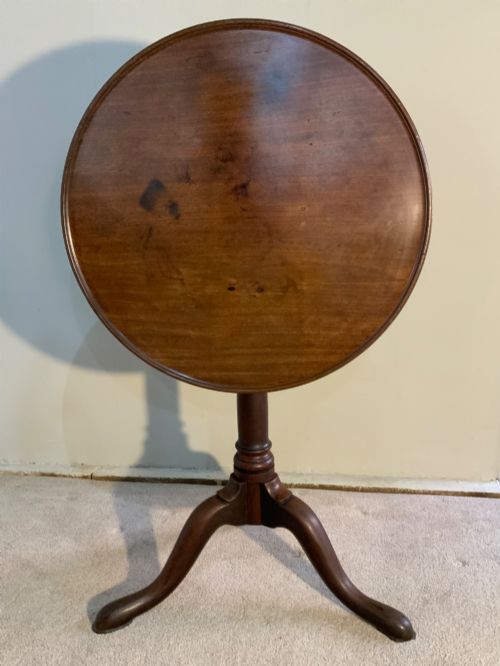
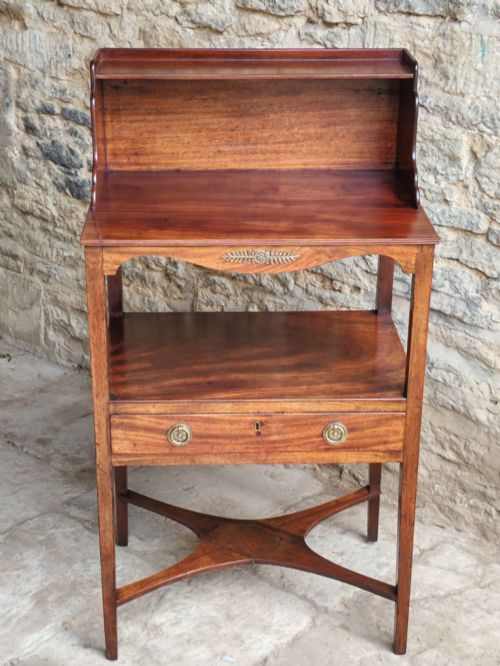
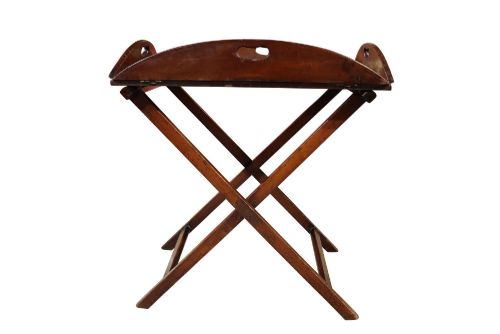
Tray Table on Stand
A tray table on stand offers a versatile surface combining a removable serving tray with a sturdy folding or fixed base.
Tray Table on Stand
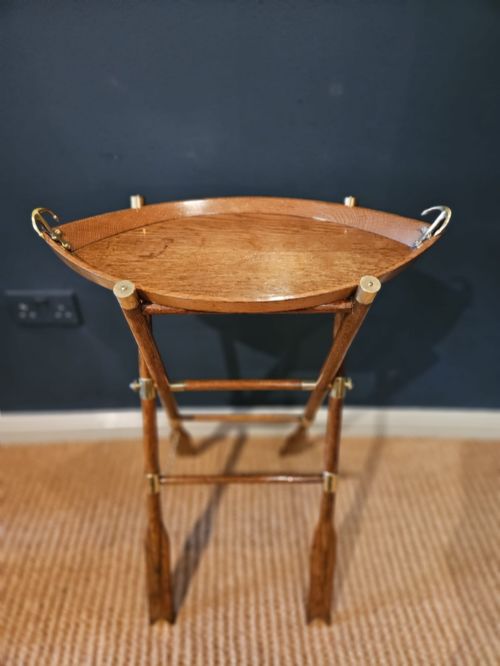
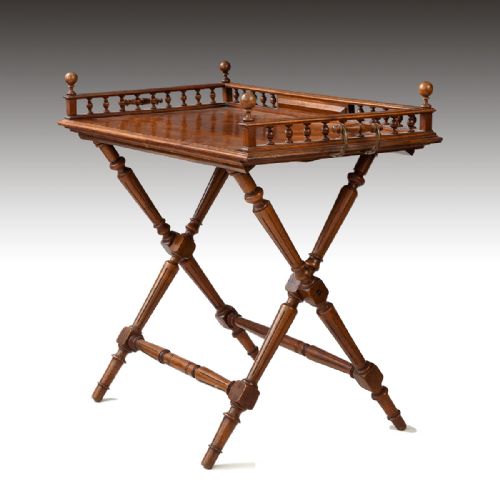
A tray table on stand unites portable serving vessels with dedicated support frames, originating primarily from 18th-century and 19th-century domestic utility. Buyers searching for a tray table on stand encounter pieces designed for portable hospitality, ranging from traditional English butler trays to oriental brass chargers on folding wooden supports.
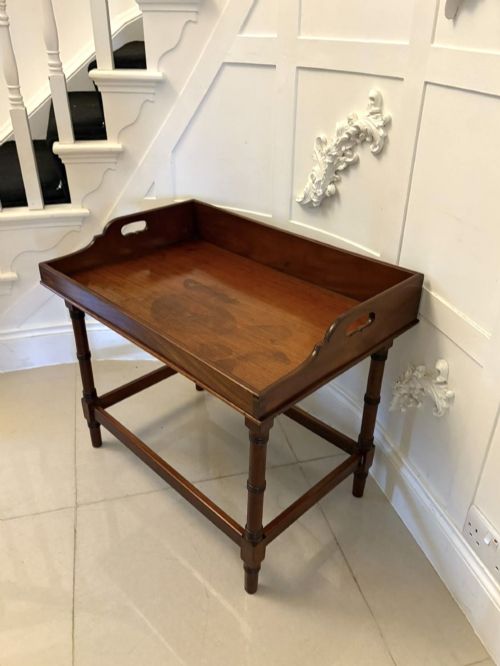
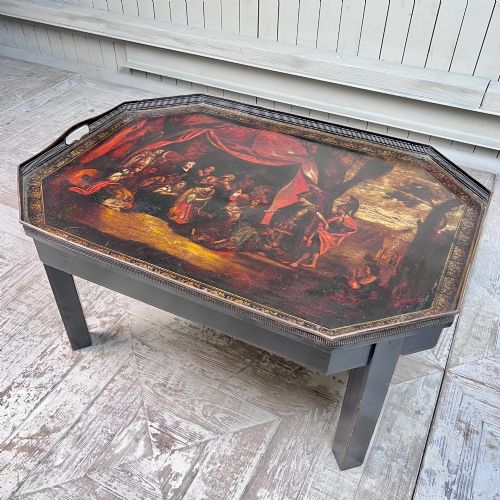
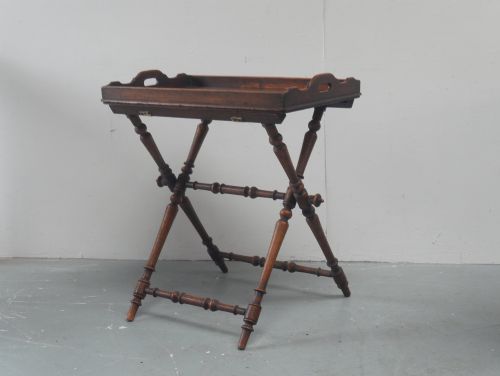
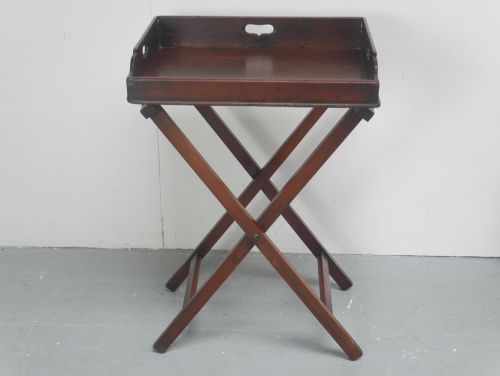
The most common examples on this page are mahogany butler trays resting on X-frame folding stands, alongside decorative brass Benares trays and papier-mâché surfaces from the Victorian and Edwardian eras. These variations reflect both formal domestic service and colonial trade influences adopted into period interiors.
Materials and construction methods
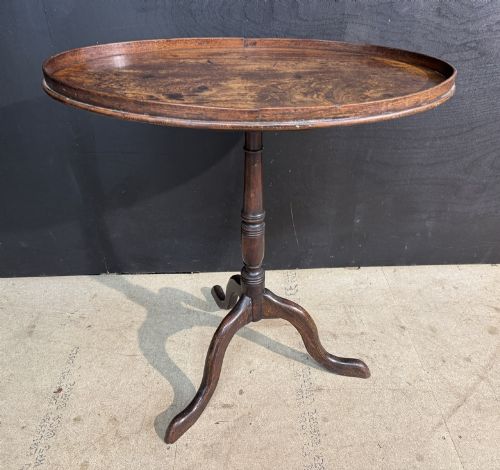
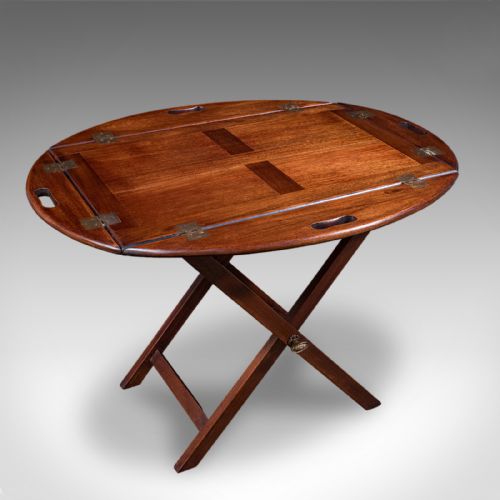
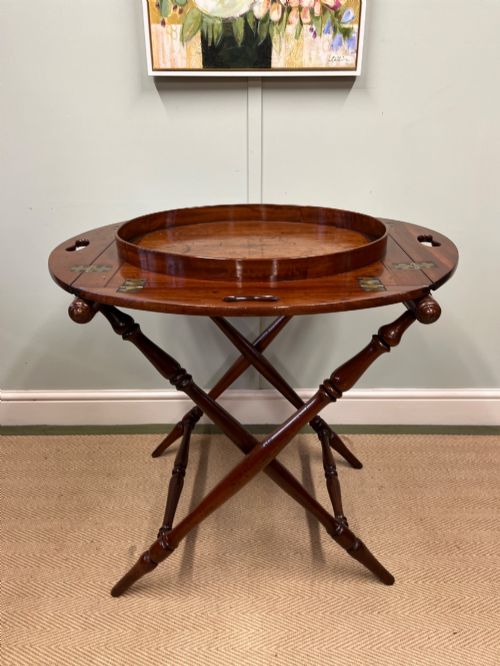
Cabinet makers utilised dense hardwoods such as mahogany, oak, walnut and rosewood for structural durability, frequently incorporating raised edges or hinged flaps to secure contents during transport. Metal elements like brass bound decoration, hinges and carrying handles provide both functional reinforcement and visual contrast against the dark timber grains.
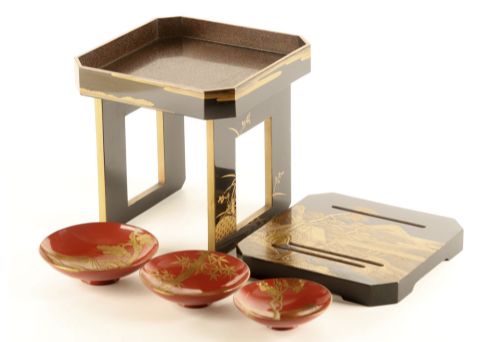
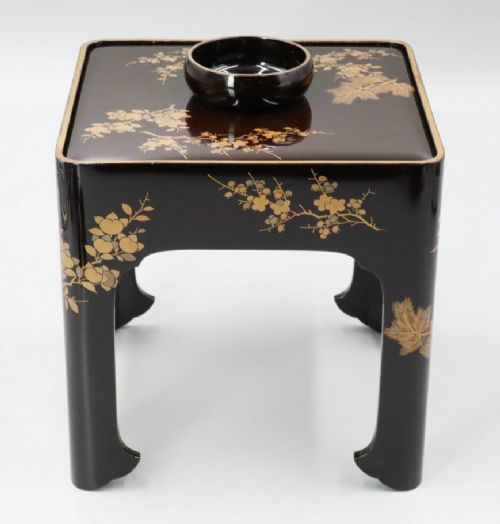
Alternative traditions apply intricate craftsmanship to lighter bases, pairing engraved brass, copper or decorated black lacquer trays with ebonised or carved hardwood folding stands. These constructions rely on precise joinery for the folding mechanisms to ensure the removable top sits securely during daily use.
Materials recorded across the inventory include mahogany, brass, oak, walnut, lacquer, gold leaf, metal, satinwood, rosewood and copper.
Evaluating period quality
Superior examples demonstrate crisp joinery in the tray gallery and solid timber selection without excessive secondary woods, whereas lesser pieces show rushed dovetailing or later replacements of the supporting stand. The integration between the tray base and the stand dictates structural integrity, with original matching stands commanding greater historical consistency.
Surface finish and hand-engraving define the upper tier of decorative metal and papier-mâché examples, where worn lacquer or poorly re-soldered brass joints indicate heavy utility or modern intervention. Original patination on untreated timber surfaces preserves the tactile character expected from authentic Georgian and Victorian workshop production.
The Tray Table on Stand Glossary
- Butler tray
- A portable wooden tray featuring four sides, often with hinged flaps that drop down to form a flat serving surface when lifted by built-in cut-out handles.
- Folding stand
- A collapsible X-frame support designed to hold a removable tray at table height for serving or display.
- Tole
- Painted or lacquered metal, typically tin, used to form decorative and durable serving trays decorated with classical scenes or floral motifs.
- Benares tray
- An Indian brass tray densely engraved with traditional geometric, animal or floral patterns, commonly placed upon carved folding wooden bases for export to British homes.
Tray Table on Stand: Frequently Asked Questions
What is a tray table on stand used for?
These furnishings originally served domestic staff for carrying and presenting food, drinks or silverware before placing the portable vessel onto a supporting frame in a drawing room.
Today, owners utilise them as flexible coffee tables, bedside surfaces or drinks stands that can be easily rearranged or stored flat when floor space is required.
How do I distinguish a Georgian tray from a later copy?
Georgian versions rely on closely grained mahogany with hand-cut dovetails joining the gallery corners, often displaying understated brass hinges and natural wax patination developed over centuries.
Later reproductions and Edwardian interpretations frequently feature machine-cut elements, lighter secondary timbers or differing proportions that reveal a more commercial manufacturing origin.
Are the tray and the stand usually original to each other?
Many surviving trays outlasted their original folding bases due to heavy use, leading to period or later marriages where a 18th-century tray rests upon a 19th-century stand.
Collectors look for consistent wear patterns, matching wood species and proportional harmony between the rim depth and the supporting leg assembly to confirm an original pairing.
How should I care for an antique wooden tray table?
Maintain the timber by applying occasional natural beeswax rather than modern silicone polishes, avoiding direct heat sources or damp environments that cause the wood to warp or split.
Protect finished surfaces from liquid spills by using coasters, as period polished finishes and lacquered decoration remain sensitive to moisture and alcohol.