

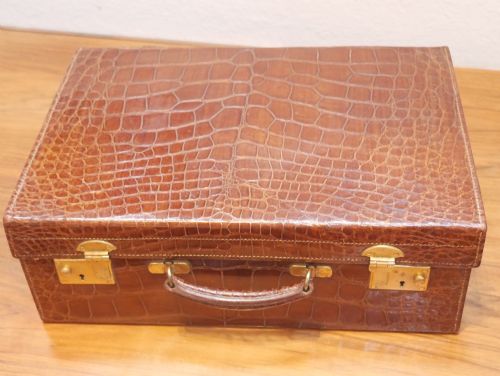
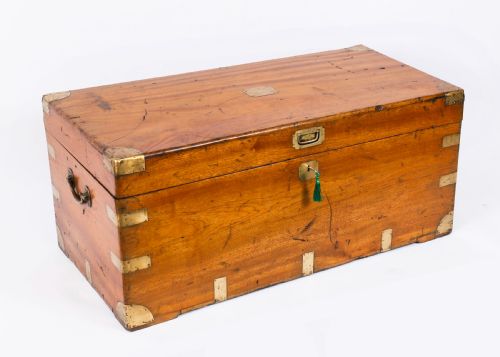
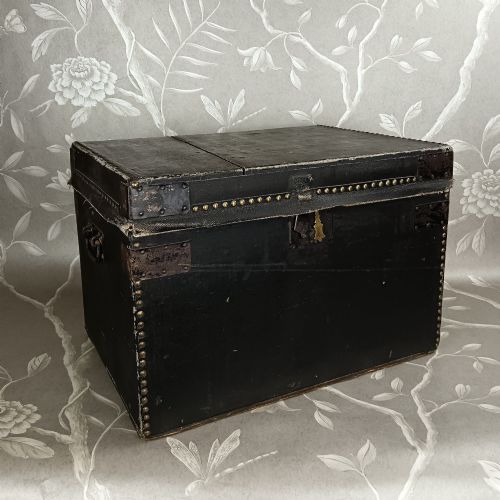
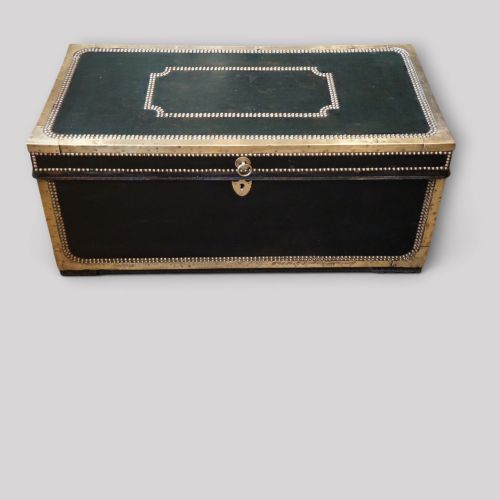
Travelling Brass Trunk
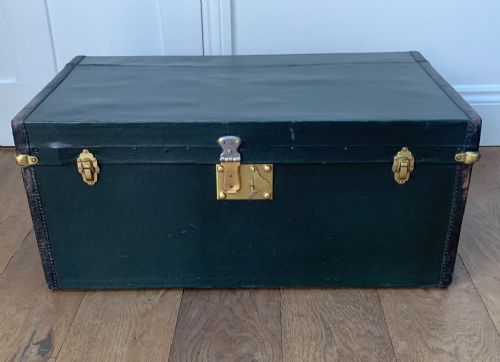
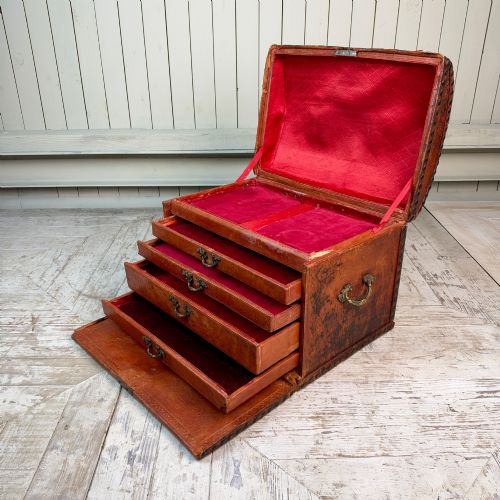
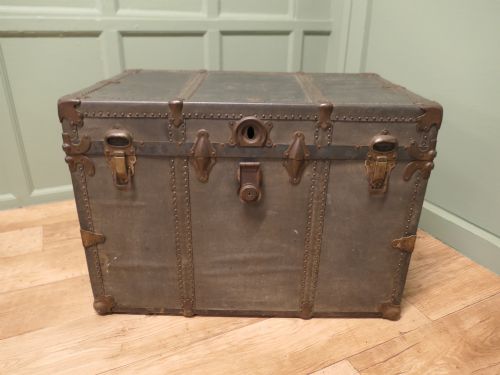
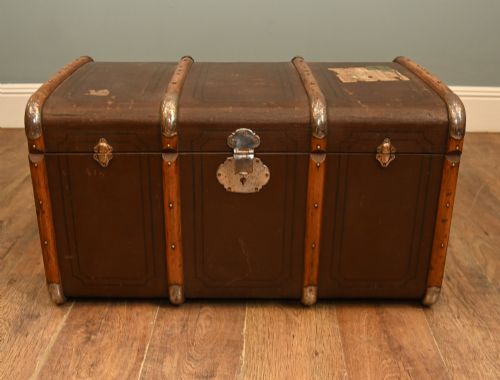
A travelling brass trunk brings the heavy-duty craftsmanship of past journeys directly into a modern room.
Travelling Brass Trunk
A travelling brass trunk serves as a sturdy container designed for long journeys, typically bound in metal for protection and strength during transit. Buyers searching for a travelling brass trunk frequently encounter pieces built from robust timber and reinforced with brass studs, corners, or binding.
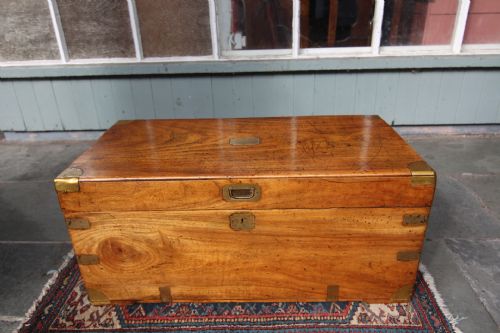
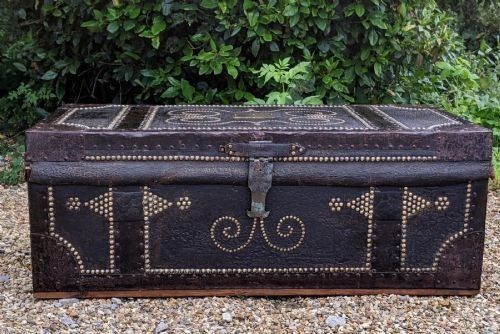
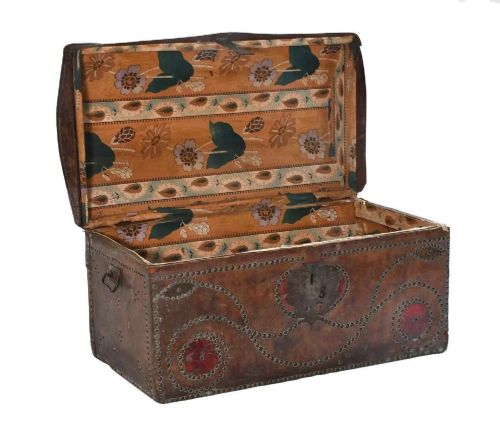
The selections span from the late seventeenth century through the Regency and Victorian eras up to the early twentieth century. Examples range from heavy leather and hide covered chests to fragrant camphor wood military boxes built for colonial service.
Many of these containers double as functional storage furniture in contemporary settings, offering generous interior space for blankets or apparel alongside a distinct historical character.
Materials and construction
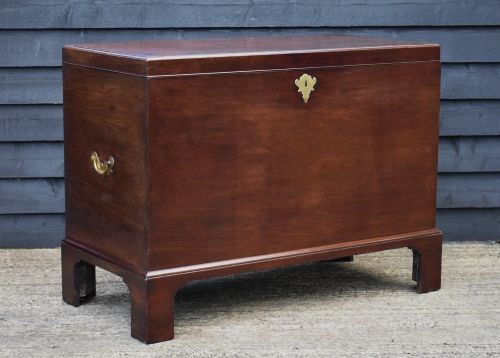
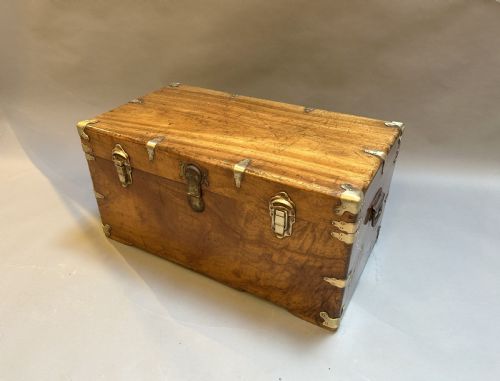
Makers built these pieces using durable woods like camphor, teak, and mahogany, often selected for their resistance to moisture and insects during transport. These timbers were paired with robust exterior coverings of leather, canvas, or hide.
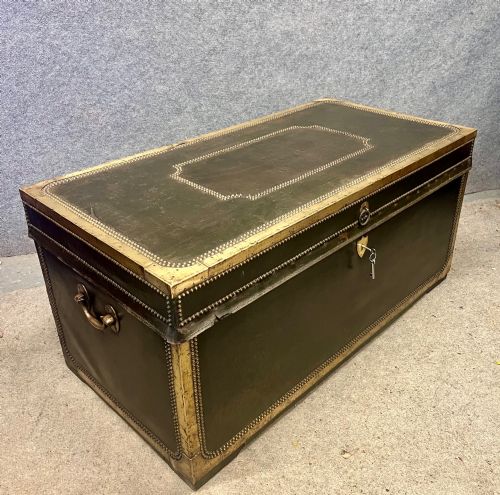
Brass formed an integral part of the construction, appearing as heavy corner brackets, flush-fitting drop handles, and precise rows of decorative studwork that secured the outer layers. Iron and steel reinforcement hardware added further rigidity to heavy luggage intended for maritime or rail travel.
Travelling Brass Trunk Retail Price Guide 2026
Typical asking prices for travelling brass trunk among the pieces listed under this phrase on Sellingantiques today, from the lower quarter to the upper quarter. They describe what is for sale here now, not the wider market.
Listings span from the seventeenth century to the 1920s, incorporating materials such as camphor wood, brass, leather, and steel.
Indicators of quality
The standard of a piece rests in the integrity of its original hardware, the density of the brass studwork, and the preservation of its interior compartments. Surviving maker marks and original fitted trays elevate the historical significance of the trunk.
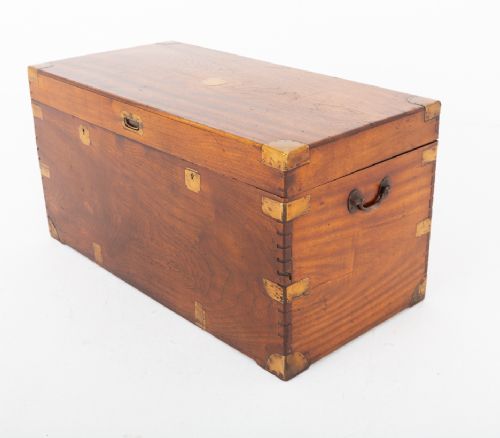
Higher tier examples show careful dovetail joinery in the timber core and clean integration of metal strapping that sits flush with the exterior skin. Pieces retaining their original working locks and keys demonstrate a superior level of initial craftsmanship.
Wm Insall of Bristol·Arthur Wannop·Seaward·Chapple and Sons·Seabrook of St Pauls London·Aux Etats Unis of Paris
The Travelling Brass Trunk Glossary
- Campaign chest
- A portable set of drawers or a trunk designed to dismantle or travel easily with military officers on deployment. These pieces often feature recessed brass handles and reinforced corners to withstand rough handling.
- Camphor wood
- An aromatic timber native to Asia, frequently utilised for nineteenth-century trunks due to its natural ability to deter insects and keep stored garments fresh. It remains identifiable by its distinct medicinal scent.
- Steamer trunk
- A lower-profile luggage case designed specifically to fit beneath the cabin berths of ocean liners during the early twentieth century. They often include internal compartment dividers and heavy canvas or vellum exterior coatings.
- Studded leather
- An exterior finish where heavy animal hide is secured to a timber carcase using numerous individual brass or iron nails. The metal heads often form geometric patterns across the lid and sides.
- Dome top
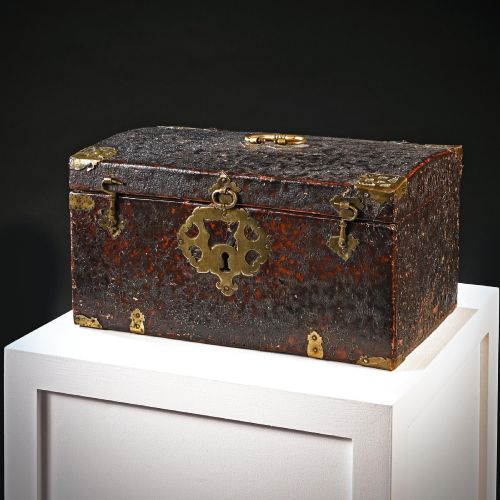
- A curved lid construction on older travel chests that allowed rainwater to run off easily during outdoor transit. This profile is frequently seen on eighteenth and nineteenth-century examples.
Travelling Brass Trunk: Frequently Asked Questions
How were travelling brass trunks used?
These trunks carried uniforms, personal belongings, and valuable equipment for officers, diplomats, and wealthy travellers on extended voyages.
Built to endure the rigours of shipboard and coach transport, they protected contents from moisture, dust, and heavy impacts.
What woods are inside these trunks?
Many campaign pieces use camphor wood or teak for its durability and natural insect-repellent properties in tropical climates.
Other examples utilise standard cabinet timbers such as mahogany or pine beneath their exterior leather or canvas coverings.
How do I date a leather trunk?
Dating relies on examining the construction methods, the style of the brass hardware, and the materials used for the core carcase.
Earlier eighteenth-century pieces often feature heavy dome tops and hand-forged ironwork, whereas Victorian and Edwardian examples show machine-made fixings and fitted internal trays.
Can I use an antique trunk for storage?
These sturdy chests provide practical space for household linens, blankets, or seasonal clothing in modern living areas.
Their flat or domed lids allow them to function effectively as coffee tables or accent pieces while concealing everyday items.