

Travel Desk Clock
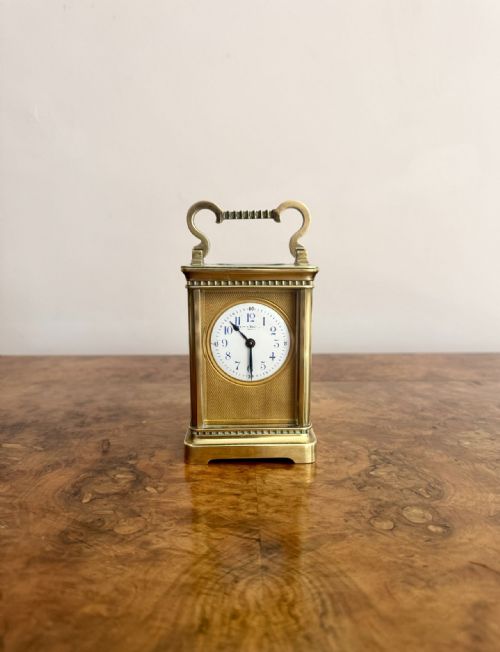
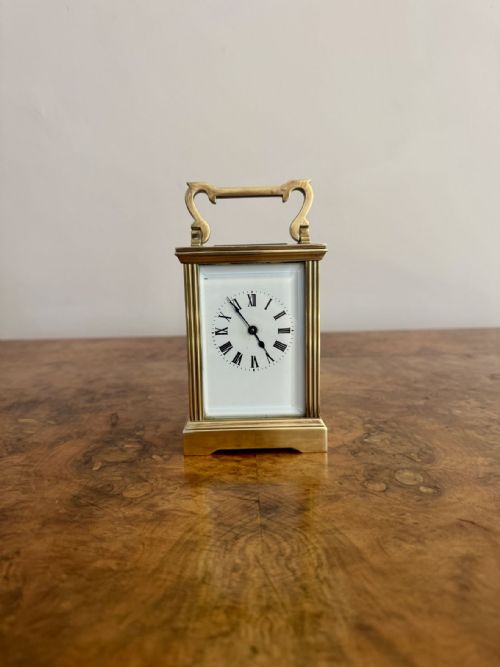
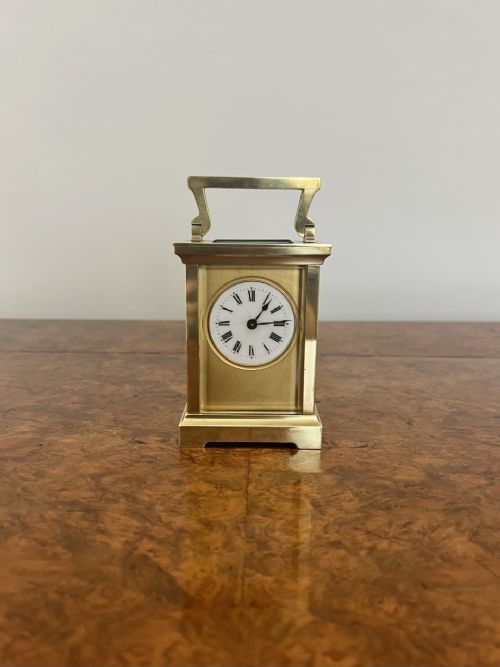
A travel desk clock brings precision engineering into a portable brass or silver case designed for journeys across the Victorian and Edwardian periods.
Travel Desk Clock
When you search for travel desk clock, you encounter portable timepieces designed to keep accurate hours away from a fixed mantelpiece. These pieces span the Victorian and Edwardian eras, emerging from the nineteenth century through the early decades of the nineteen hundreds.
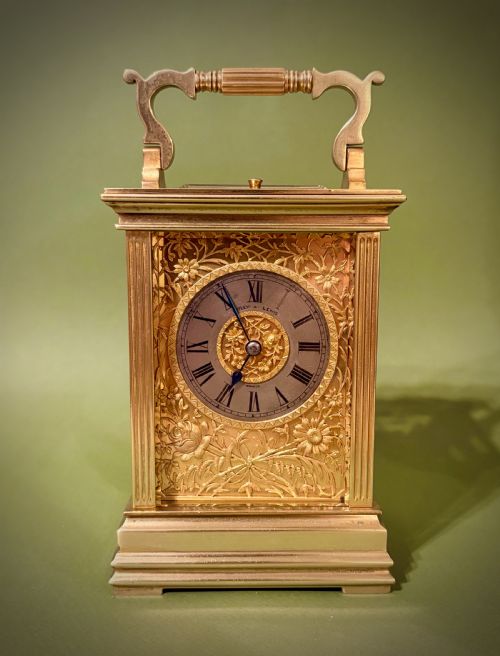
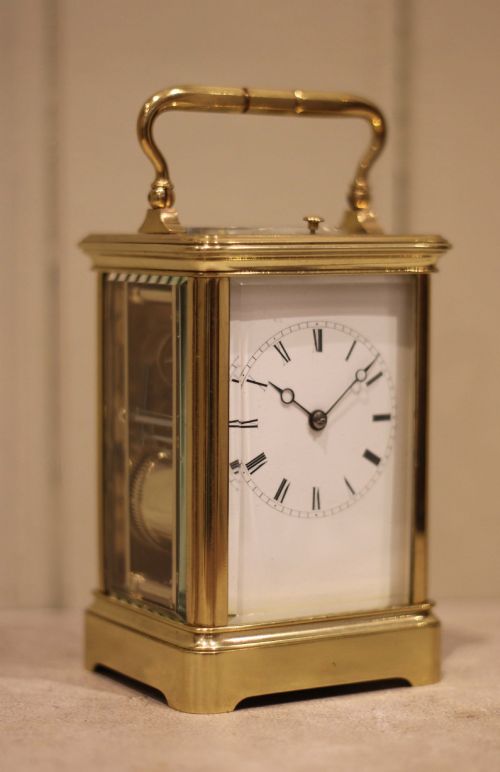
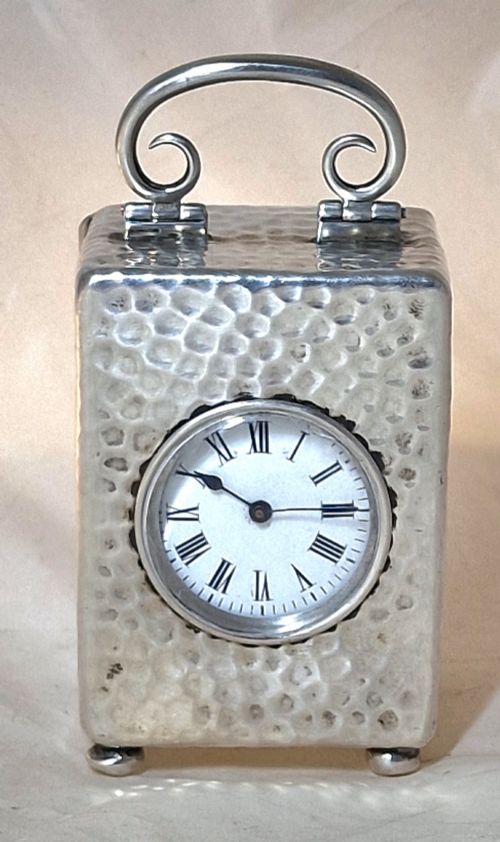
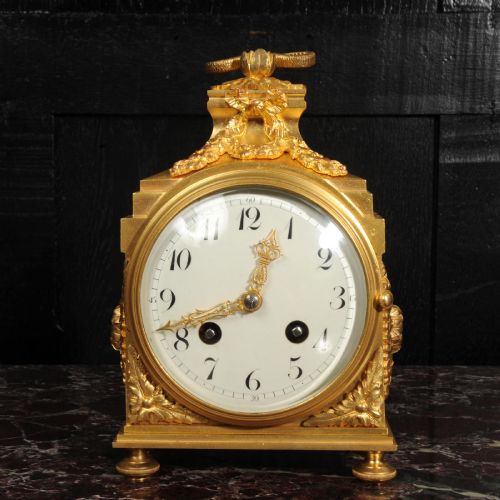
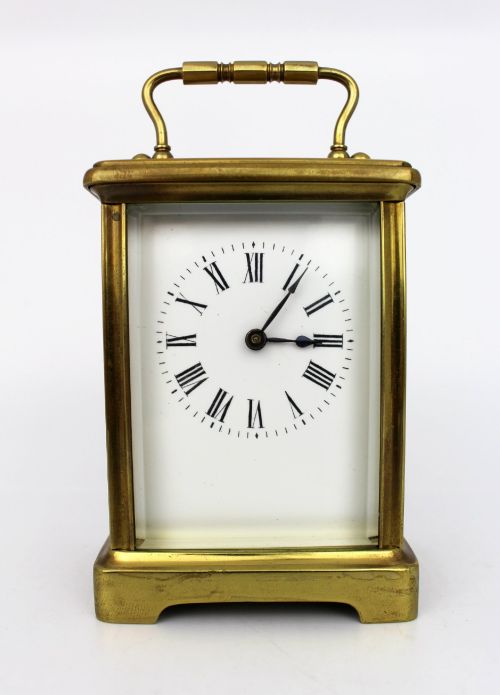
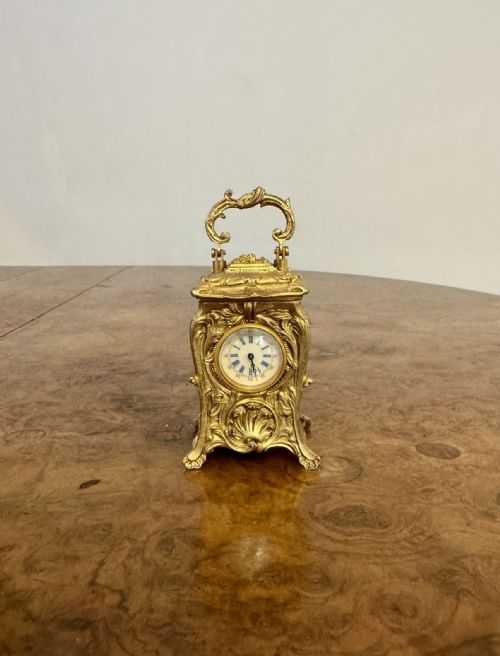
The carriage clock dominates this selection, housed in brass, gilt brass, or silver cases fitted with bevelled glass panels. You also find miniature carriage clocks, pocket watches housed in protective travel cases, and bedside travel clocks equipped with alarms.
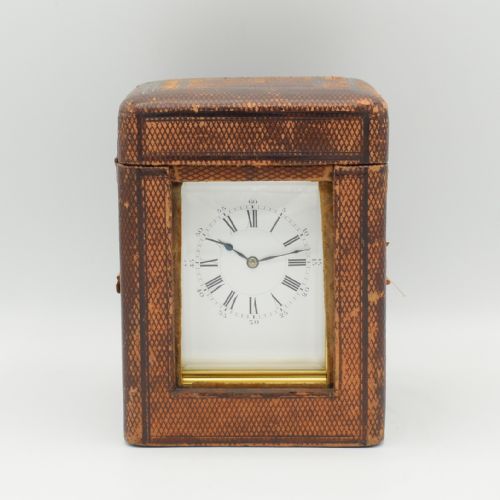
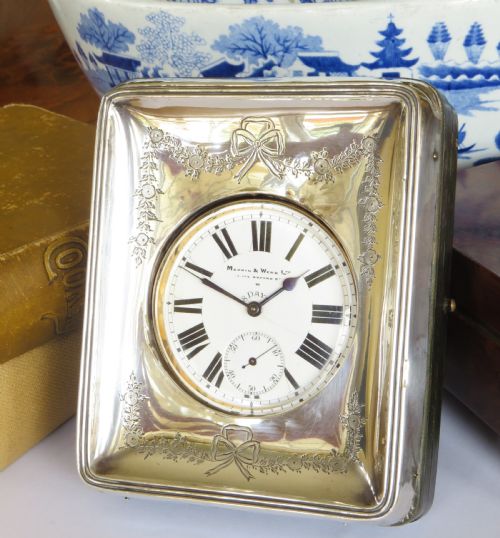
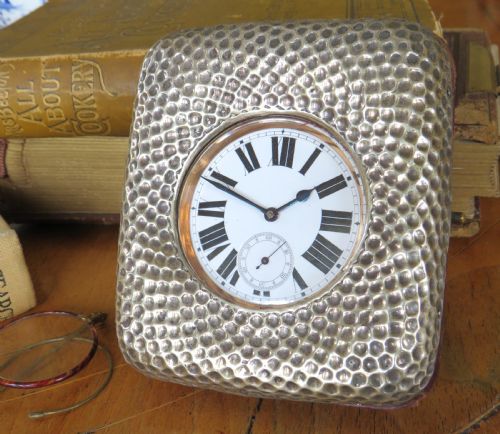
French workshops and English makers produced the majority of these examples, ranging from simple timepieces to complex repeating movements with striking mechanisms. Many retain their original leather travel cases for protection on the road.
Materials and Construction
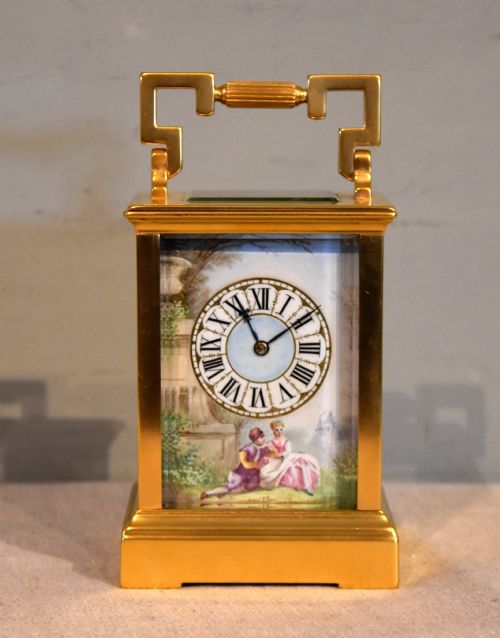
Makers constructed these cases primarily from heavy brass, gilt brass, and silver, occasionally mounting them with porcelain panels or delicate enamel work. Bevelled glass panels set into the metal frames allow a clear view of the escapement and gear train within.
Movements rely on steel and brass components, driven by mainsprings and regulated by platforms that allow the clock to keep time despite movement. Engraved gilt brass cases often feature intricate floral or geometric patterns chased directly into the metal surface.
Some travel clocks feature a Delft enamel dial, bringing unexpected blue and white Dutch artistry into a brass French carriage case.
Assessing Quality and Craftsmanship
Quality rests in the complexity of the movement and the crispness of the case casting. Pieces featuring repeat striking mechanisms, alarm functions, and fully engraved gilt brass cases represent higher tiers of production than simple timepieces.
The presence of an original leather travel case and the signature of a known maker elevate a piece significantly. Finer examples maintain thick bevelled glass panels without chips and retain their original fire gilding on the brass case.
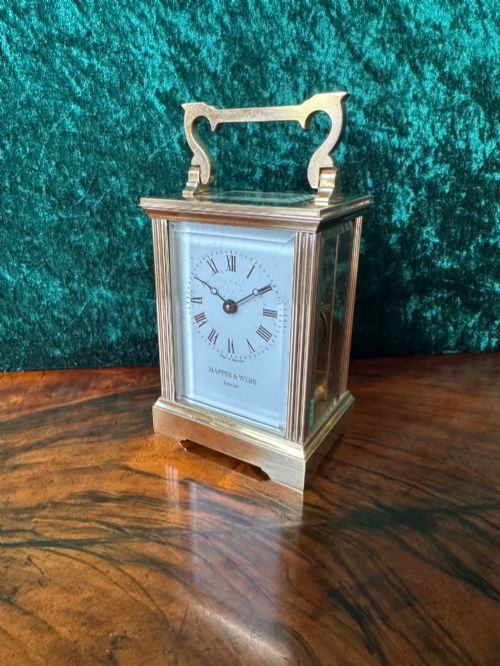
Henri Jacot·Mappin and Webb·Doxa·Drocourt Paris·Antoine Redier of Paris·Duverdrey and Bloquel·Latshea and Sons Edinburgh·Henry Jacob·Pickford of London
The Travel Desk Clock Glossary
- Carriage clock
- A portable spring-driven clock with a carrying handle, originally designed for officers and travellers during the nineteenth century. Most examples feature glass panels on all sides to display the internal mechanics.
- Gorge case
- A distinct rectangular brass carriage clock case style featuring stepped mouldings at the top and base. This form appeared frequently in late nineteenth-century French workshops.
- Pendule d'Officier
- An officer's clock, representing an early French military precursor to the standard carriage clock. These typically feature robust brass cases and simpler time-only or striking movements.
- Goliath watch
- An extra-large pocket watch, often measuring several inches across, housed in a dedicated leather travel case for desk use. They function as portable bedside or desk clocks.
- Platform escapement
- The small horizontal sub-assembly containing the balance wheel and hairspring, fitted to the top of the movement. This innovation allowed carriage clocks to operate accurately while portable.
- Repeating movement
- A mechanical complication that sounds the hours and quarters upon pressing a button on the case. This feature allowed travellers to check the time in darkness.
Travel Desk Clock: Frequently Asked Questions
How do I wind a carriage clock?
Most travel desk clocks require a key inserted into the winding squares on the back plate to tension the mainspring. Turn the key gently until you feel firm resistance, taking care not to overwind the movement.
Some models feature a butterfly key permanently attached to the back, while older examples rely on a separate brass key stored within the travel case.
What is a repeating carriage clock?
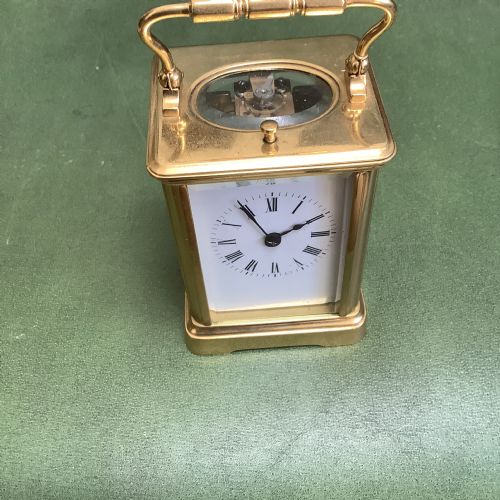
A repeating carriage clock includes a mechanism that chimes the last hour and the quarters upon demand. Pressing a plunger on top of the case activates the strike.
This complication proved essential for travellers wishing to check the time during the night without striking a light.
How do I set the alarm on a travel clock?
Alarm models feature a secondary hand or central dial used to align the trigger time. Winding the alarm train via its dedicated arbor prepares the mechanism to sound when the hour hand reaches the set point.
Victorian bedside travel clocks utilise this function to wake officers and travellers in temporary quarters.