

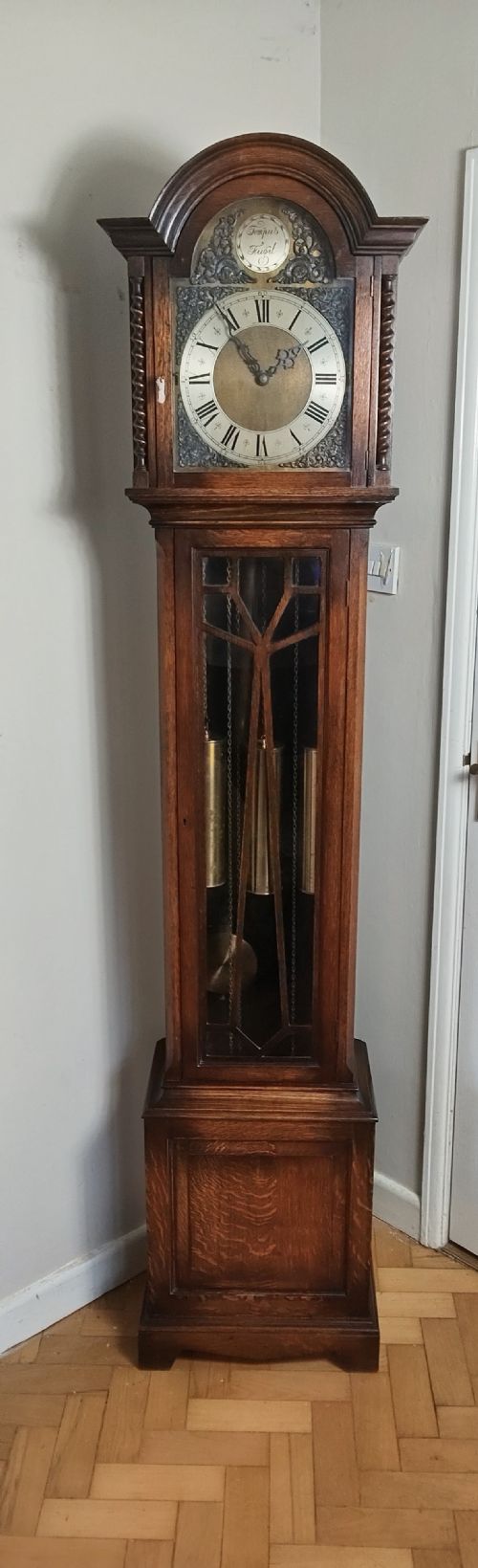
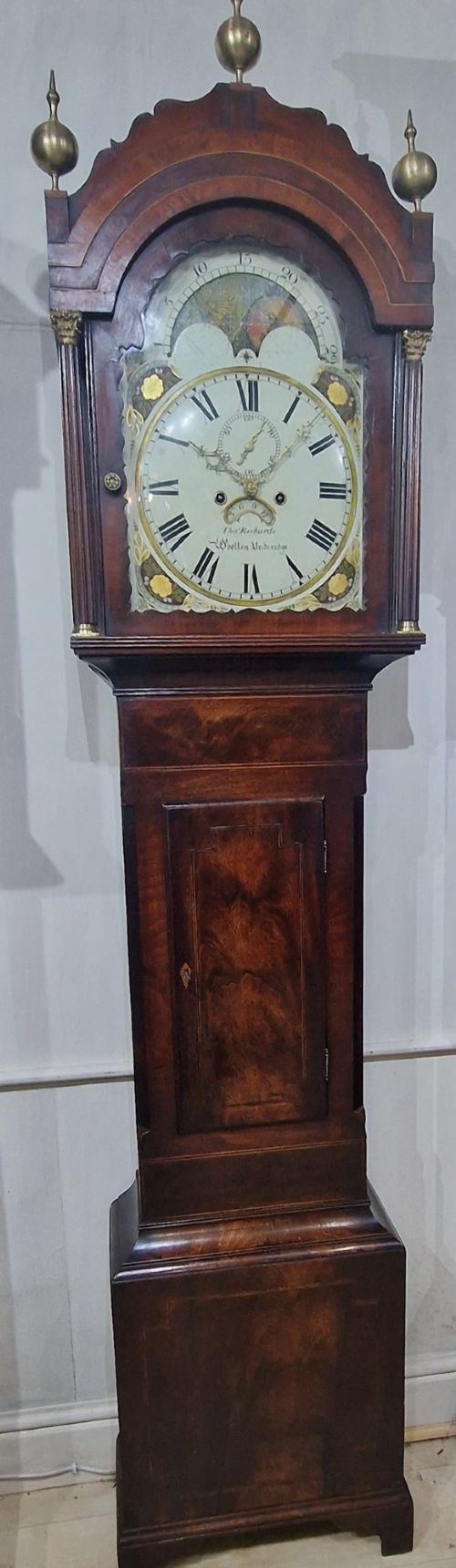


Traditional Wooden Tall Clock
These traditional wooden tall clocks stand as architectural fixtures in a room, bringing mechanical precision and architectural presence together.
Traditional Wooden Tall Clock
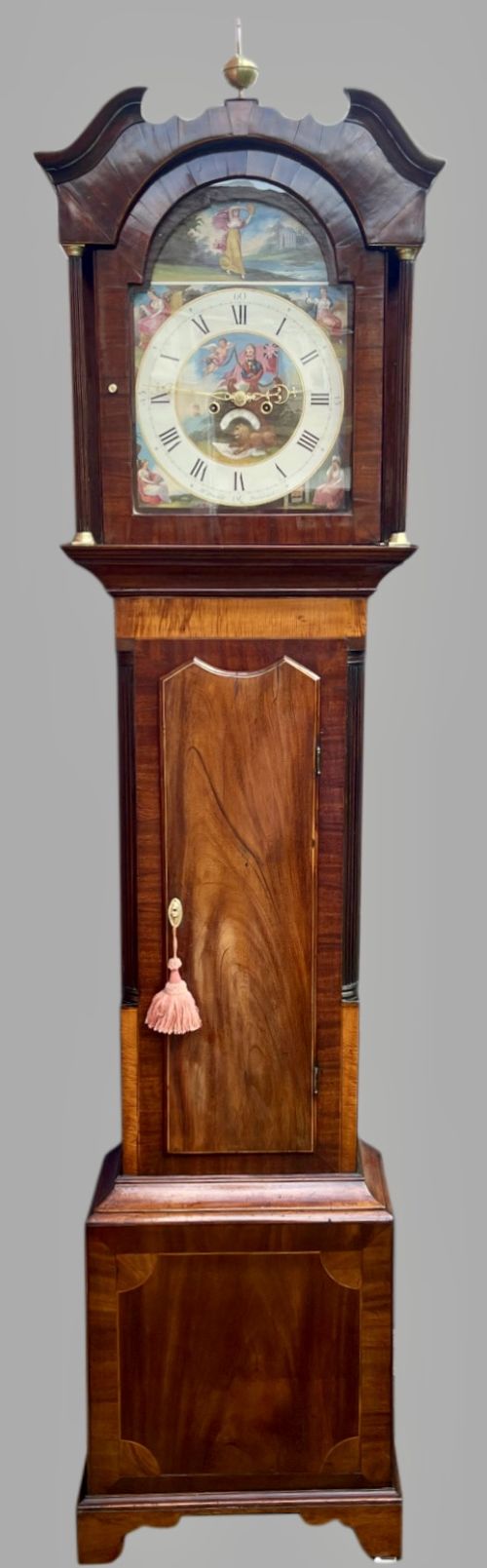
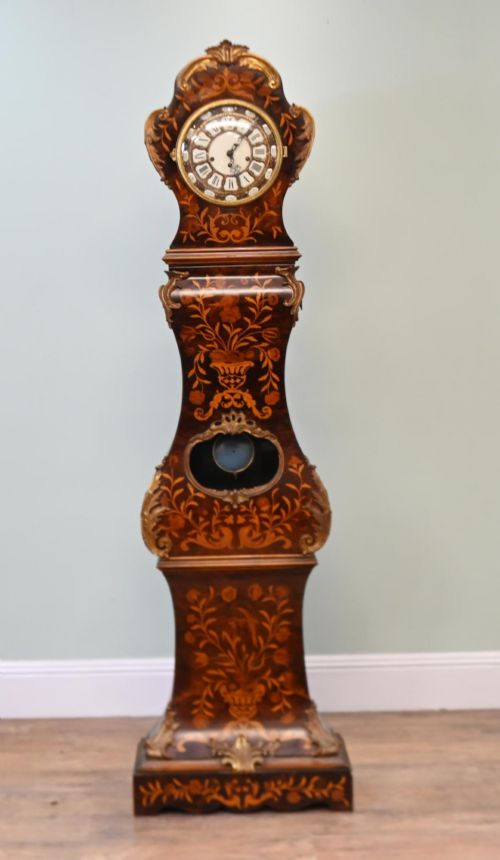
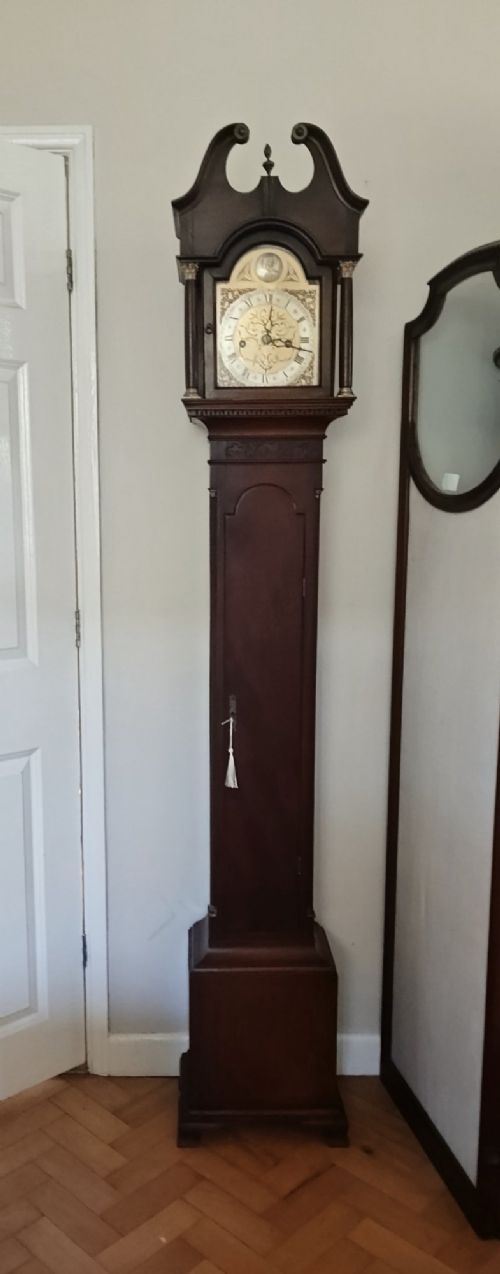
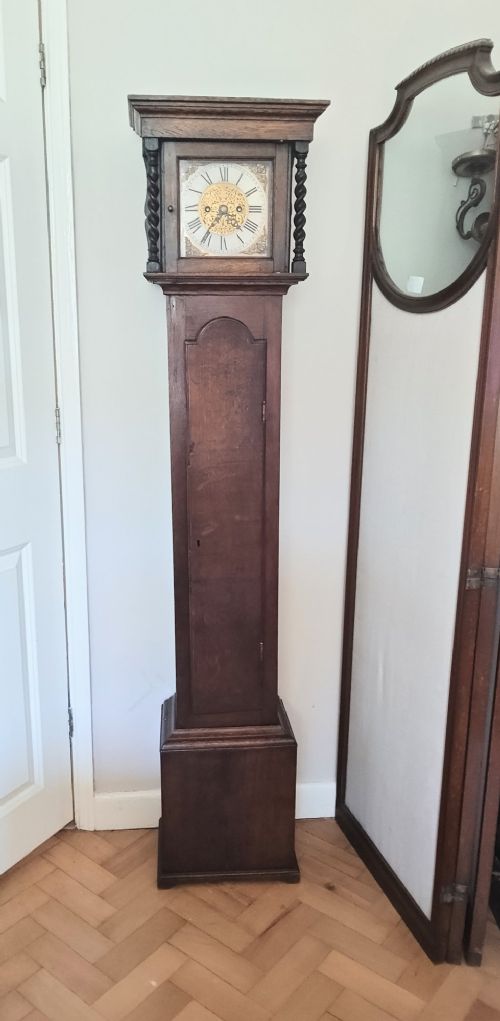
A traditional wooden tall clock combines housing cabinetry with weighted movement, appearing most frequently in forms from the Georgian and 18th Century periods up to the Victorian era. These pieces arrive in mahogany or oak cases, spanning grand proportions down to smaller grandmother clock formats.
Makers housed these movements in regional styles such as Scottish Georgian or English provincial designs, incorporating arched dials, painted iron faces or brass details. The selection ranges from plain provincial oak bodies to flame mahogany cases with rolling moon mechanisms.
Regional variations appear across England, Scotland and the Channel Islands, offering eight-day movements alongside single-weight or triple-weight musical configurations. The tall clock functions simultaneously as timekeeper and furniture centrepiece.
Materials and construction
Cases rely primarily on solid oak and mahogany timbers, sometimes crossbanded with walnut or detailed with flame mahogany veneers. Timber selection dictates the weight and natural colour of the housing, from dark eighteenth-century oak to rich nineteenth-century mahogany.
Interiors house brass and iron mechanisms driven by weights, protected behind glass-faced hoods. Dials utilise brass, painted iron or enamel surfaces, lettered by provincial and city makers alike.
Traditional Wooden Tall Clock Retail Price Guide 2026
Typical asking prices for traditional wooden tall clock among the pieces listed under this phrase on Sellingantiques today, from the lower quarter to the upper quarter. They describe what is for sale here now, not the wider market.
Listings span oak and mahogany cases across the Georgian, Regency and Victorian periods, alongside 18th century and 19th century examples.
Standards of craftsmanship
Proportion and timber figure separate standard provincial pieces from exceptional examples, where flame mahogany veneers or crossbanding catch the light. The architectural balance between the hood, trunk and base dictates the visual harmony of the piece.
The sophistication of the dial work and movement complexity, such as rolling moon phases or musical barrels, elevates certain clocks above simpler time-only models. Dial execution, from engraved brass to fine painted iron work, marks the hand of a superior maker.
James Coster Of Henley·John Banks Oldham·Garman Meonstoke·Samuel Young Nantwich·Packer Of Reading·Wm Stanford·Jn Wright Linton·Rob Parry Pwllheli·Edward Renouf Jersey·James McCabe London·Samuel Whalley
The Traditional Wooden Tall Clock Glossary
- Longcase clock
- An alternative term for a tall pendulum clock housed in a wooden case. It stands directly on the floor with the weight-driven movement enclosed above.
- Grandfather clock
- A common descriptor for a tall floor-standing clock, traditionally referring to taller variations of the longcase form. Smaller versions are often termed grandmother clocks.
- Grandmother clock
- A scaled-down version of the traditional tall clock, built with shorter overall proportions while retaining weight-driven timekeeping. These suit lower ceiling heights.
- Crossbanding
- A decorative technique where veneer strips are applied across the grain of the primary wood. This borders panels on mahogany and oak cases.
- Rolling moon
- A dial mechanism displaying the lunar phases through a rotating disc behind the clock face. It tracks the cycle of the moon alongside the hour.
Traditional Wooden Tall Clock: Frequently Asked Questions
How do I wind a tall clock?
Weights inside the trunk descend slowly as the mechanism operates, requiring periodic elevation using a crank or pulling the chains depending on the movement type.
Care must be taken not to over-wind the clock, stopping promptly when resistance is felt to protect the internal cords or gut lines.
Where should I place a longcase clock?
These clocks require a stable, level floor against a solid interior wall to ensure the pendulum swings evenly without catching the case sides.
Avoid positioning them in areas subject to dampness, direct sunlight or rapid temperature fluctuations which can affect the timber case and delicate movement.
How do I date an oak tall clock?
The construction methods, timber choice and dial style offer primary clues to age, with earlier eighteenth-century examples featuring square brass dials and simpler oak proportioning.
Maker signatures inscribed on the dial or movement backplate often allow direct research into the active working years of the clockmaker.
What is the difference between a grandfather and grandmother clock?
Grandfather clocks generally exceed six feet in height with commanding proportions, whereas grandmother clocks are considerably shorter floor-standing timepieces built with reduced dimensions.
Both utilise identical weight-driven pendulum systems, but the smaller format was developed to fit modern room scales without dominating the floor space.