





Traditional Wooden Parlour Game
A traditional wooden parlour game brings tactile social pastimes from the nineteenth and early twentieth centuries straight onto the modern table.
Traditional Wooden Parlour Game
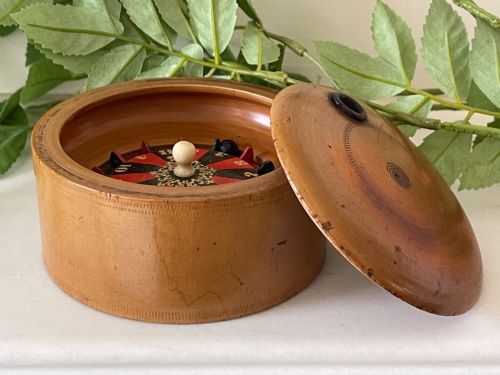
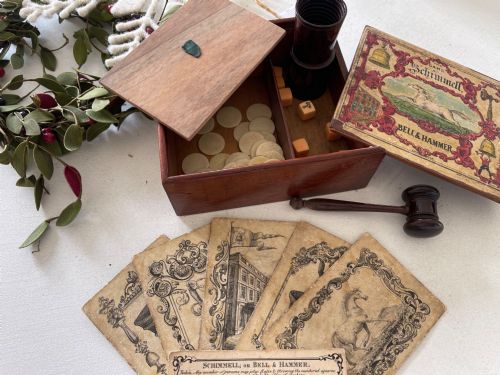
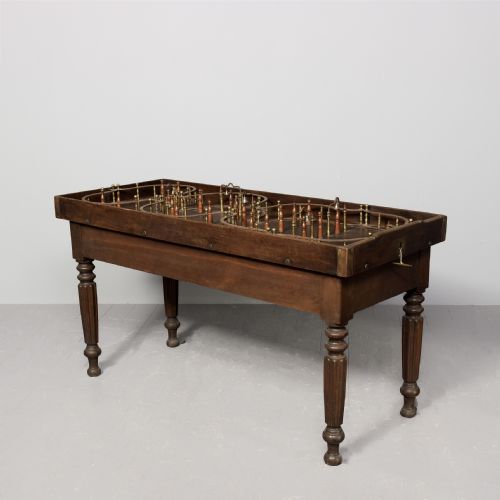
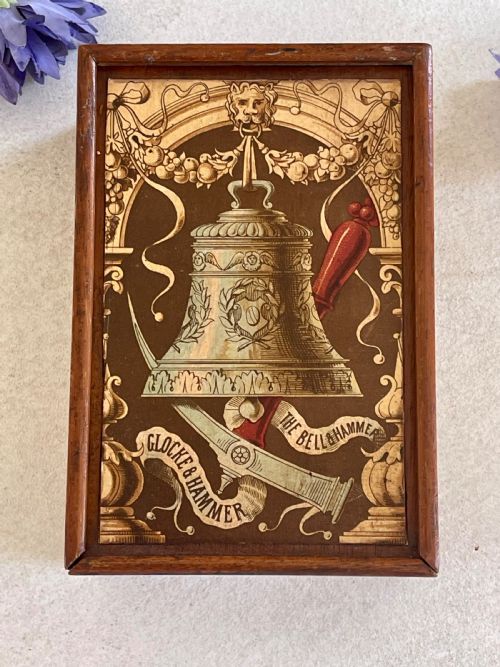
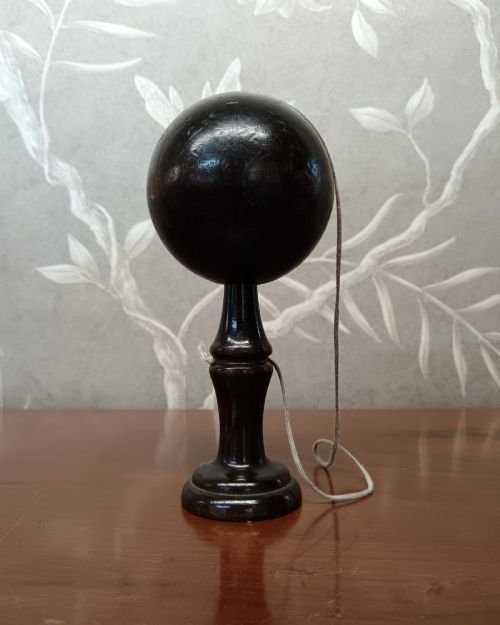
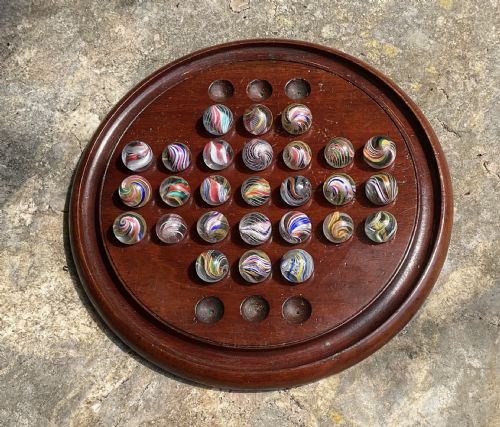
A traditional wooden parlour game encompasses nineteenth and early twentieth century pastimes designed for indoor entertainment, ranging from table croquet and skittles to bell and hammer sets, bilboquet ball and cup toys, and the game of squails. On this page, a buyer will most frequently encounter solitaire boards, cribbage sets, and dominoes originating from the Victorian, Georgian, and Edwardian periods.
Materials and construction
Makers utilised dense hardwoods such as mahogany, rosewood, and oak for stable boards and playing surfaces, frequently applying ebonising for a uniform dark finish. Intricate decorative elements appear in specialist techniques like Tunbridge ware, which incorporates mosaic woodwork.
Associated components integrate contrasting materials including bone for scoring pieces or tiles, brass for hinges and markers, glass or stone marbles for solitaire, and painted details on wooden surfaces. Cord and paper instructions frequently complete the surviving sets.
Traditional Wooden Parlour Game Retail Price Guide 2026
Typical asking prices for traditional wooden parlour game among the pieces listed under this phrase on Sellingantiques today, from the lower quarter to the upper quarter. They describe what is for sale here now, not the wider market.
Distinctions in quality
Quality rests upon the selection of timber, the precision of turned wooden elements, and the completeness of original playing pieces such as marbles, skittles, or dominoes. Superior examples exhibit refined joinery, intact original surfaces, and specialised decorative work like mosaic inlay.
Pieces retaining their original boxes, instruction sheets, or matching components command greater interest than assembled sets. The durability of the materials and the crispness of turned wood or painted details separate standard utility items from finer parlour pastimes.
British Chess Company
The Traditional Wooden Parlour Game Glossary
- Tunbridge ware
- Small wooden objects decorated with mosaic patterns formed from tiny wood blocks of various natural colours. This technique creates intricate geometric or pictorial designs on boxes and boards.
- Bilboquet
- A traditional toy consisting of a ball attached to a handle or cup by a string. Players attempt to catch the ball in the cup or impale it on a pin.
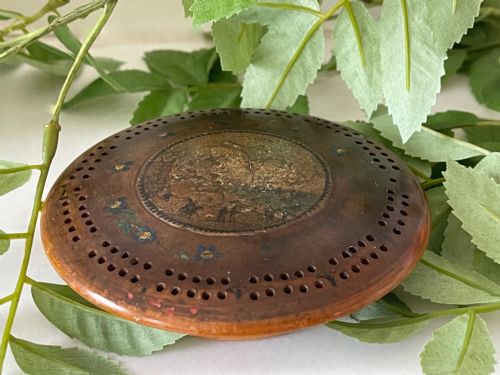
- Cribbage board
- A board used to keep score in the card game cribbage, featuring rows of small holes for pegs. These boards are frequently fashioned from solid hardwoods or decorated with inlay.
- Solitaire
- A single-player board game where marbles or pegs are jumped over one another and removed from the board. Boards are typically circular or square and turned from timber.
- Squails
- A Victorian table game where wooden discs are flicked across a surface toward a central target. The discs require smooth turned edges and flat bases for consistent movement.
- Ebonising
- A chemical or staining process applied to light timber to imitate ebony. This finish gives wooden game pieces a deep black appearance.
Traditional Wooden Parlour Game: Frequently Asked Questions
What is a bell and hammer game?
A bell and hammer game is a traditional gambling and wagering parlour pastime from the nineteenth century. Players use a small mallet to strike numbered blocks corresponding to a central bell.
The complete sets often retain their original wooden components, illustrated rules, and brass bells. They provide a lively social activity that typifies Victorian domestic entertainment.
How do I care for antique wooden games?
Antique wooden games require stable indoor humidity away from direct sunlight and strong heat sources. Excessive dryness causes timber to split, while moisture damages paper labels and finishes.
Dust surfaces gently with a dry, soft cloth and avoid applying modern chemical polishes. Preserving original dry surfaces maintains the historical character of the piece.
Are these games complete with pieces?
Many surviving sets retain their original components, such as marbles for solitaire, pins for skittles, or bone tiles for dominoes and mahjong. Descriptions specify whether a set is complete.
Listings note any replacement elements where applicable. Buyers should check the specific details provided for each individual game.
How do I date a wooden game?
Dating relies on stylistic clues, timber choice, construction techniques, and accompanying packaging or instructions. Georgian and Victorian pieces often show hand-turned joinery and period typography.
Comparative analysis with dated examples helps establish an approximate period of manufacture. Surviving labels and patent dates also provide clear chronological markers.