
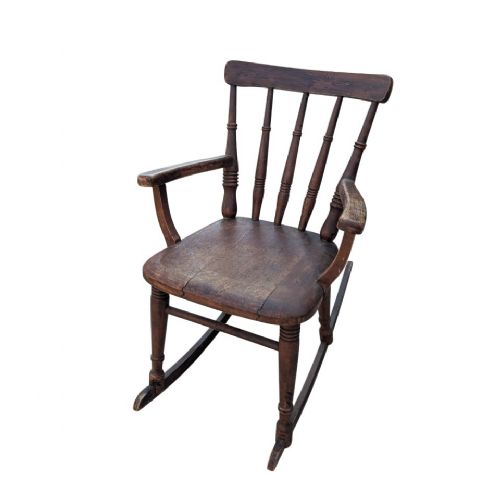


Traditional Wooden Childs Chair
A traditional wooden childs chair brings centuries of domestic history into a room through scaled-down proportions and honest craftsmanship.
Traditional Wooden Childs Chair
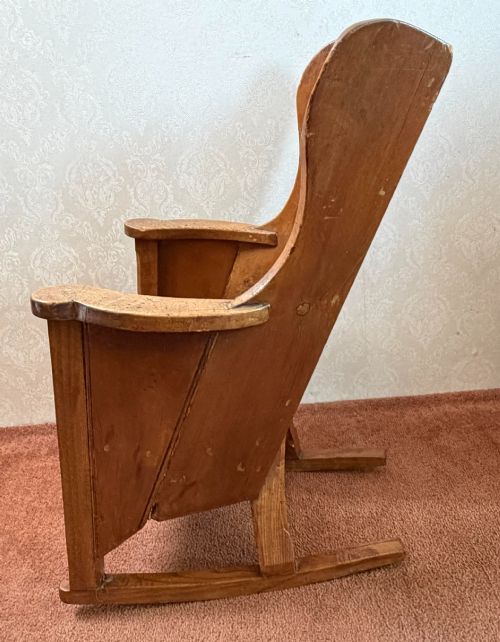
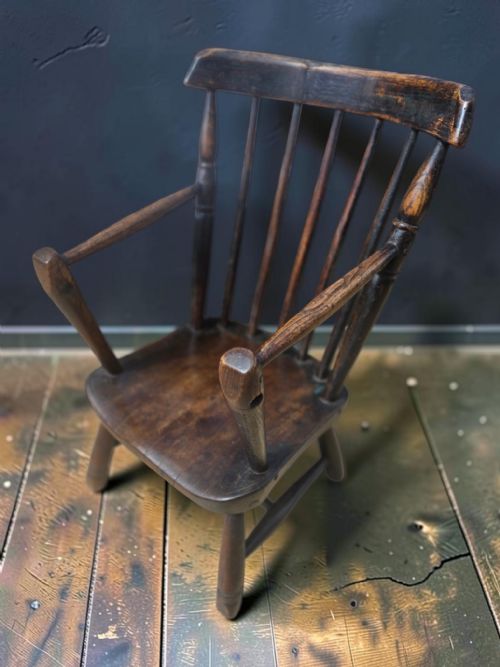
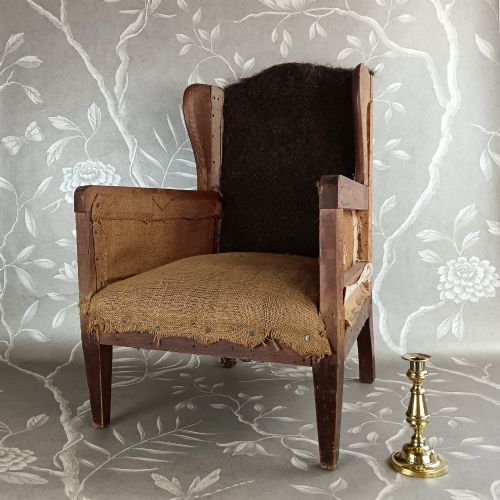
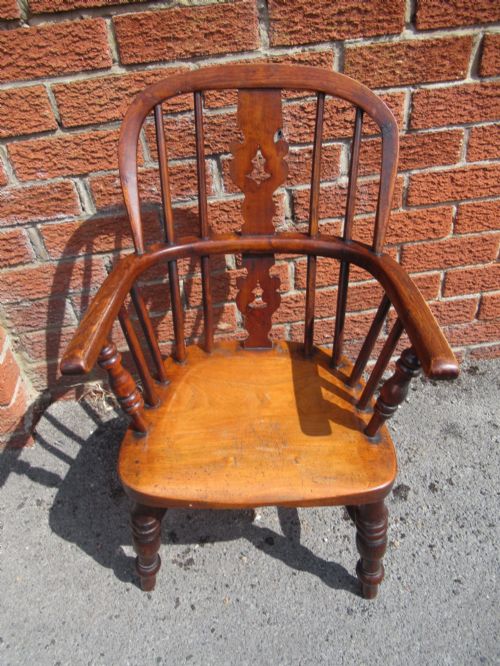
When searching for a traditional wooden childs chair, buyers encounter domestic seating scaled for children across the Georgian, Victorian, and early twentieth-century periods. These include Windsor armchairs, ladderback high chairs, rocking chairs, and stickback forms made by regional vernacular makers.
The version most frequently met on this page is the nineteenth-century childs Windsor chair or rocking chair, often constructed from mixed timbers like ash and elm. These seating options span simpler country pieces to more formally styled mahogany and yew wood examples.
Regional variations appear in the selection, ranging from English country vernacular designs to West Country pieces and Swedish rocking chairs. Forms encompass low armchairs, high chairs with footrests, potty chairs, and folding chairs tailored for domestic life.
Materials and construction methods
Construction relies heavily on native timbers such as elm, ash, oak, yew, and mahogany, chosen for strength and grain pattern. Woodturners and vernacular makers shaped spindles, legs, and bow backs using traditional greenwood and joining techniques.
Seating areas frequently incorporate solid plank wood, woven cane, rush, or bergere panels inserted into frames. Rocking chairs utilise curved wooden rockers fixed to the base, while high chairs often feature integrated trays, footrests, or elevated underframes.
Listings span the Georgian, Victorian, and Edwardian periods, utilising elm, ash, yew, oak, mahogany, cane, and rush.
Distinctions in quality and execution
Quality rests upon the selection of timber, such as figured yew wood or well-grained elm, alongside the refinement of the spindle turnings and steam-bent components. Finer examples display balanced proportions that mirror adult furniture accurately rather than serving as crude miniatures.
The integrity of the original construction, including pegged joints and untouched surface patination, separates standard utility items from pieces showing superior regional craftsmanship. Variations in seating materials, from tight rush weaving to intact cane work, also influence the character of the object.
The Traditional Wooden Childs Chair Glossary
- Windsor chair
- A chair built with a solid wooden seat into which the legs and back spindles are bored directly. These seating forms often feature steam-bent bow backs and arm structures.
- Vernacular
- Objects made by regional craftspeople following local traditions rather than strict academic design patterns. These pieces utilise locally available timbers and practical construction methods.
- Bergere
- A type of woven cane work used for seats and back panels in upholstered or framed wooden chairs. This technique offers flexible support while maintaining a light visual profile.
- Stickback
- A minimalist chair construction where turned wooden sticks form the backrest rather than carved splats. This vernacular style provides sturdy support through simple geometric arrangements.
- Potty chair
- A specialised childs chair featuring a pierced seat designed to accommodate a chamber pot underneath. These functional pieces date frequently from the Georgian and Victorian eras.
Traditional Wooden Childs Chair: Frequently Asked Questions
What were childs high chairs used for?
Historical childs high chairs elevated infants to table height for meals or kept them secure during domestic tasks. They frequently incorporated enclosed safety rails, trays, and footrests.
Over time, many of these elevated seats transitioned from practical nursery furniture into decorative collector pieces displayed within living spaces.
What is a potty chair?
A potty chair is a low wooden childs seat fitted with a circular cut-out in the solid plank seat. This opening held a chamber pot beneath the seated child.
Examples from the Georgian and Victorian periods often combine this practical function with traditional vernacular framing and turned supports.
How do I live with antique child seating?
These chairs fit easily into modern interiors as standalone display pieces, corner accents, or decorative seating in living rooms and hallways. Their compact scale makes them adaptable for styling on tabletops or beside larger furniture.
Care involves maintaining stable indoor humidity to protect historic timber, cane, and rush seating surfaces from drying out.
How can I tell the period of a chair?
Dating relies on observing construction marks, timber choices, and stylistic cues characteristic of Georgian, Regency, or Victorian cabinetmaking. Earlier pieces from around eighteen hundred often display hand-turned components and distinct vernacular wear patterns.
Later Victorian and early twentieth-century examples introduce factory-assisted turning, alternative seating materials like bergere, and mechanical folding frames.