
Traditional Wooden Captain Chair
A traditional wooden captain chair offers sturdy low-back seating rooted in nineteenth-century vernacular furniture design.
Traditional Wooden Captain Chair
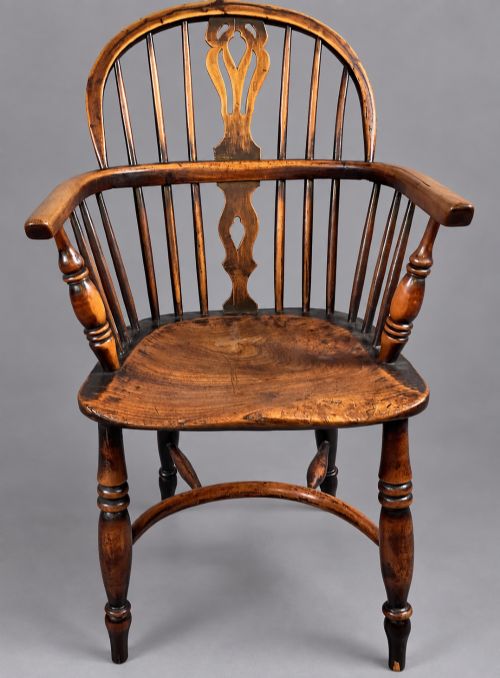
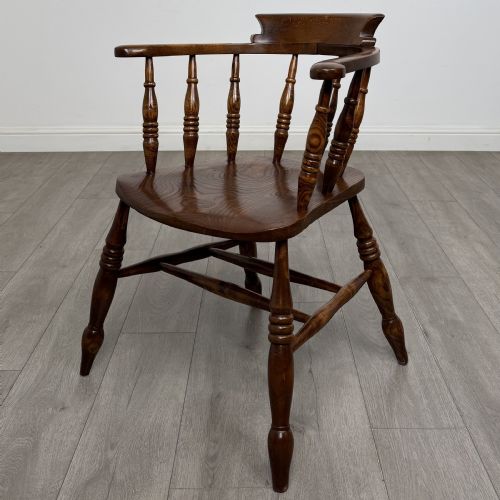
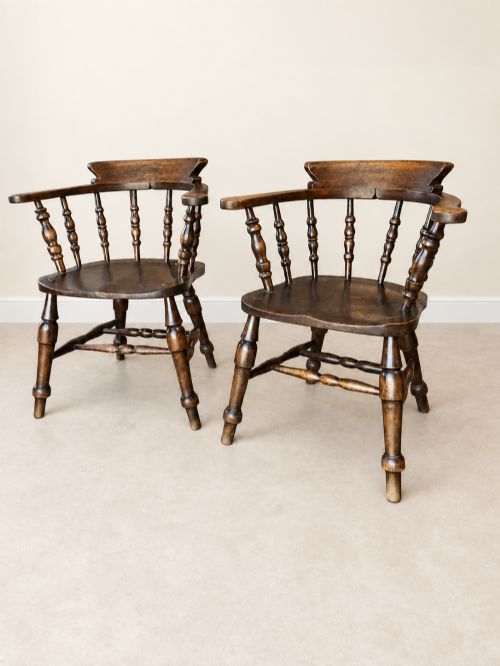
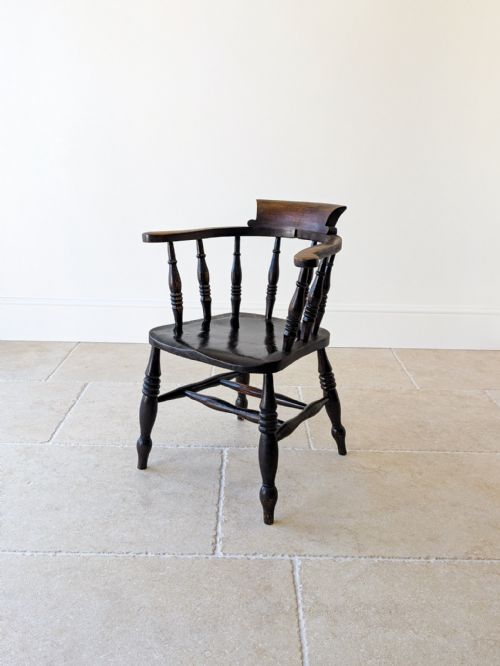
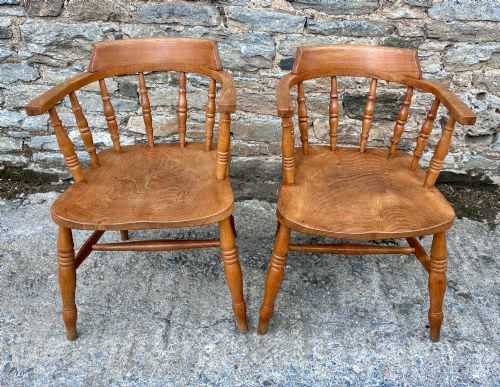
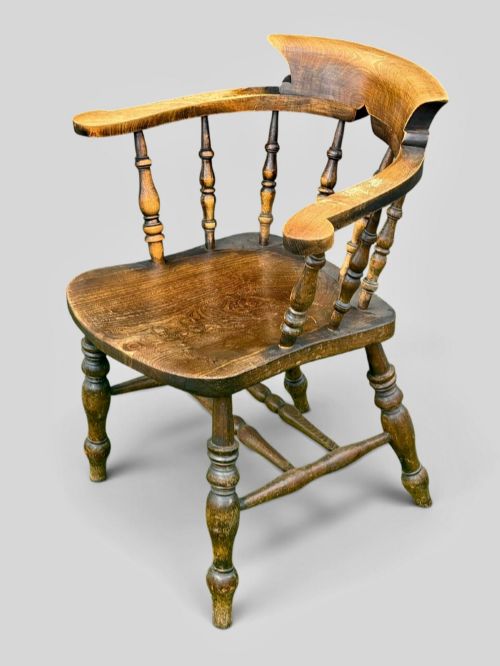
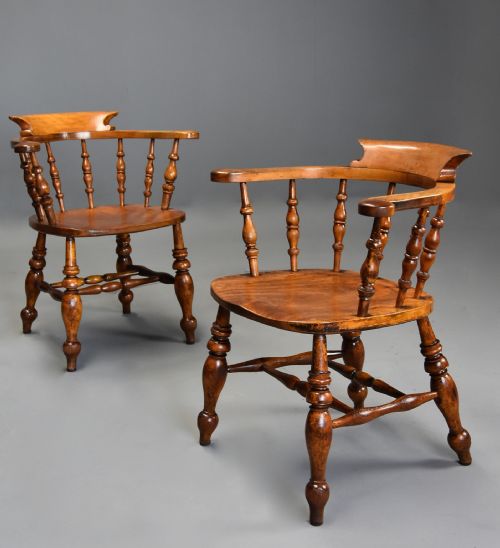
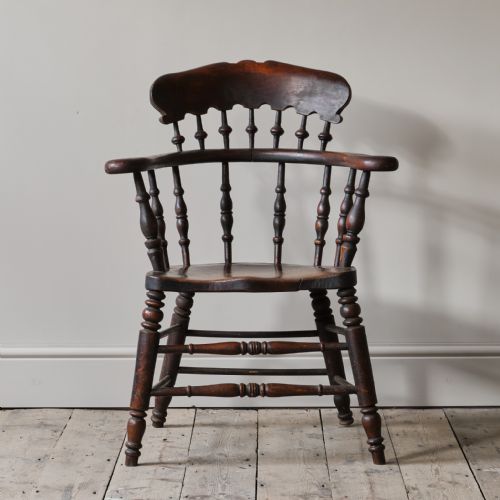
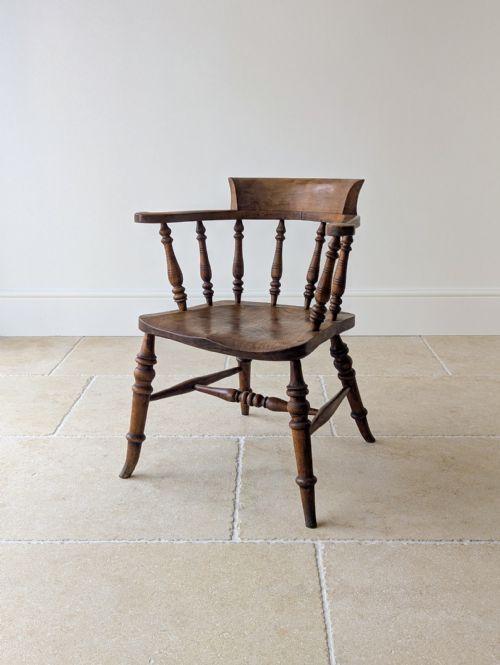
A traditional wooden captain chair is a low-backed armchair designed for domestic or commercial use, frequently referred to in listings as a smoker's bow or Windsor variant. These sturdy elbow seats emerge across the nineteenth and early twentieth centuries in various regional British forms.
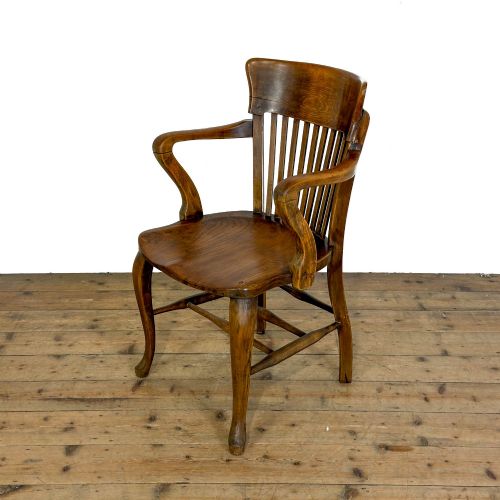
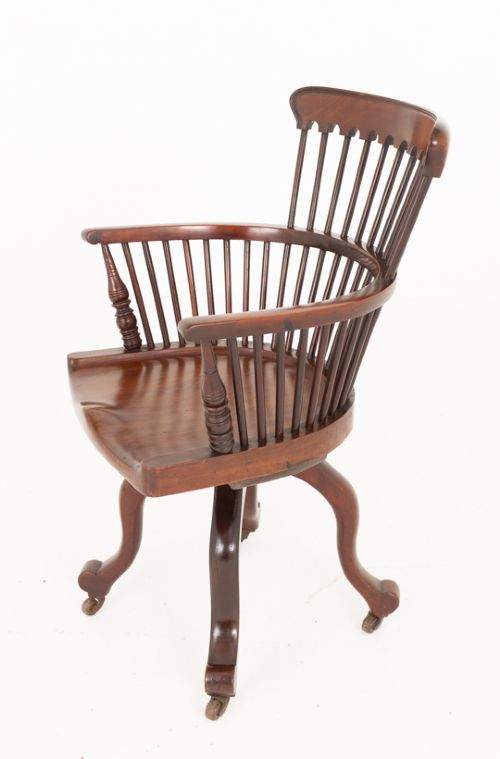
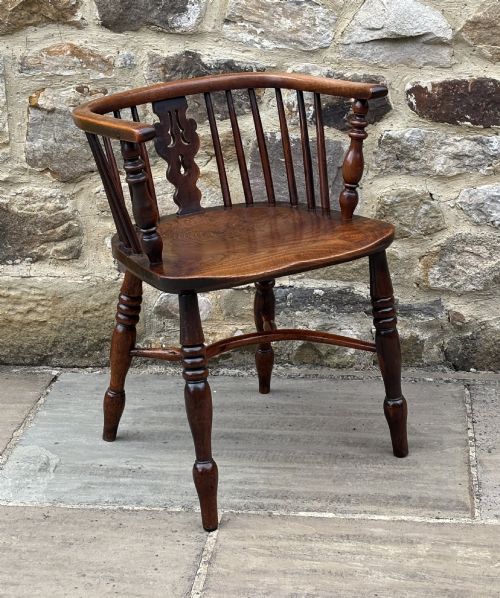
Most examples found here date from the Victorian and Edwardian periods, stretching from the mid-nineteenth century up to the nineteen-twenties. Common vernacular forms include ash and elm farmhouse armchairs, low-back Windsor chairs, and office or desk seats.
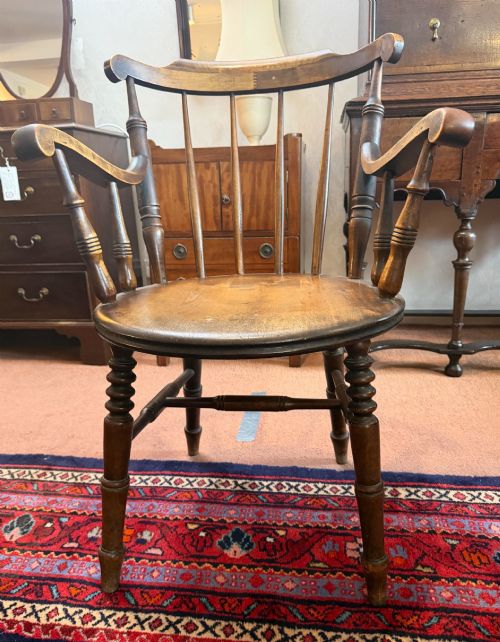
Regional variations span English country pieces to provincial styles, incorporating spindle backs, scroll arms, and lyre motifs. They serve equally well as desk chairs, library carvers, or occasional seating around a dining table.
How they were made
These chairs rely on timber combinations typical of British vernacular furniture, pairing solid elm seats with bent ash or beech for the curved arm rails and spindles. Occasionally, makers utilise yew, oak, mahogany, alder, or fruitwood depending on the regional workshop.
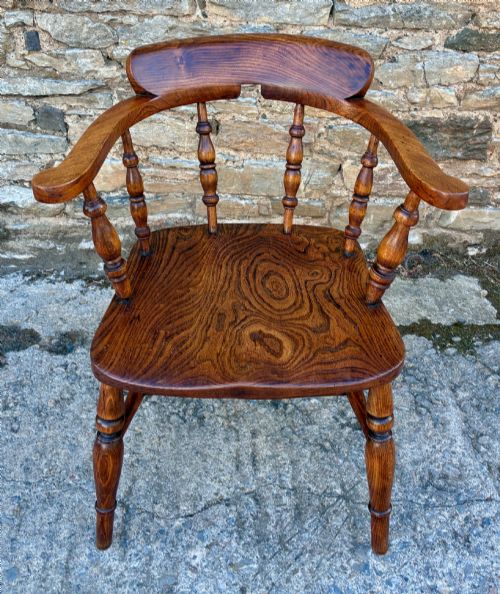
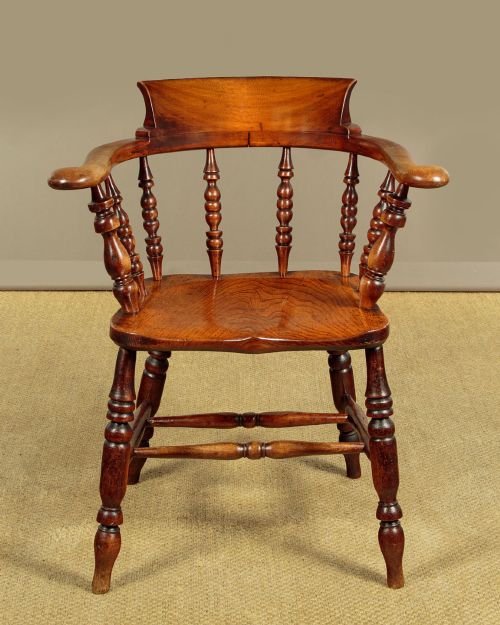
Construction methods combine turned wood components with steam-bent timber to form the continuous bow back and armrest. Saddled wooden seats are commonly scooped for comfort, supported by robust turned legs fitted directly into the underside.
Several chairs double as smoking seats, built with low bows specifically to let eighteenth and nineteenth-century gentlemen lean back comfortably while enjoying a pipe.
What varies in quality
Quality rests primarily in the selection of timbers and the depth of the grain visible on the elm seat. Pieces featuring rich figuring and a deep patination achieved through decades of use stand apart from plainer examples.
Constructional integrity defines the upper tier, seen in the fluid tension of steam-bent bows and the tightness of traditional wedged joints. Well-proportioned turnings and harmonious wood pairings elevate a chair above standard utility seating.
Howard and Sons
The Traditional Wooden Captain Chair Glossary
- Smoker's bow
- A low-backed Windsor armchair with a continuous curved arm rail, popular in nineteenth-century pubs and country homes.
- Windsor chair
- A chair built with a solid wooden seat into which the legs and back spindles are independently inserted.
- Carver chair
- An armchair, often matching a set of simpler dining chairs, used at the head of a table or as a desk seat.
- Saddled seat
- A wooden seat base carved into a concave shape for ergonomic comfort.
- Spindle back
- A chair back constructed from thin, turned vertical wooden rods supporting the top rail.
Traditional Wooden Captain Chair: Frequently Asked Questions
What is a traditional wooden captain chair?
A traditional wooden captain chair is a sturdy low-backed armchair, often closely related to the smoker's bow or low-back Windsor form. These pieces typically feature a continuous steam-bent arm rail supported by turned spindles above a solid timber seat.
Originating primarily in the nineteenth and early twentieth centuries, they were built for practical durability in domestic, commercial, and office settings. Today they function flexibly as desk chairs, library armchairs, or dining carvers.
How do I tell Victorian from Edwardian chairs?
Victorian examples generally date from the mid to late nineteenth century and often display darker patination, heavier elm and ash construction, and traditional country joinery. They frequently take the form of smoker's bows or vernacular farmhouse armchairs.
Edwardian pieces stretch into the early twentieth century and sometimes incorporate office-specific mechanics like swivel and tilt bases, or alternative timbers such as oak and beech paired with leather upholstery.
Were these chairs used at desks?
Many nineteenth-century examples served dual purposes as desk chairs, office seating, or library armchairs. Listings frequently categorise robust wooden elbow seats as desk chairs due to their supportive low backs and sturdy proportions.
Swivel and tilt variants emerged by the Edwardian period, combining traditional wooden framework with mechanical height adjustment for office work.
How should I care for a wooden captain chair?
Maintain the timber by keeping the chair away from direct heat sources and sudden humidity changes that can dry out old wood. Regular dusting with a dry cloth helps preserve the surface finish.
Feed dry surfaces occasionally with a suitable traditional wax polish to nourish the grain and maintain the natural patination built up over generations.