

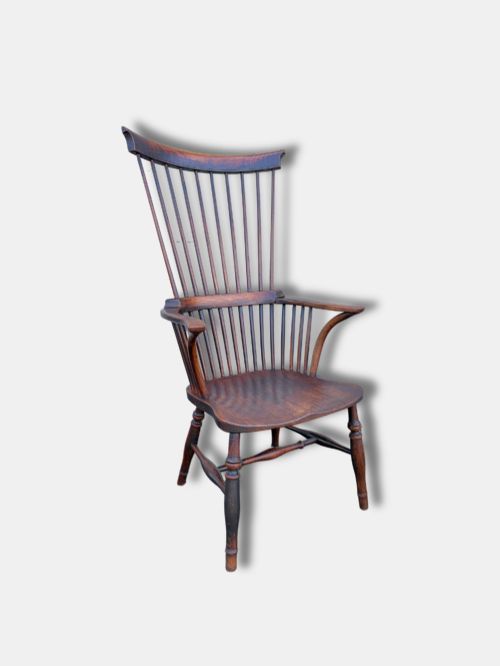
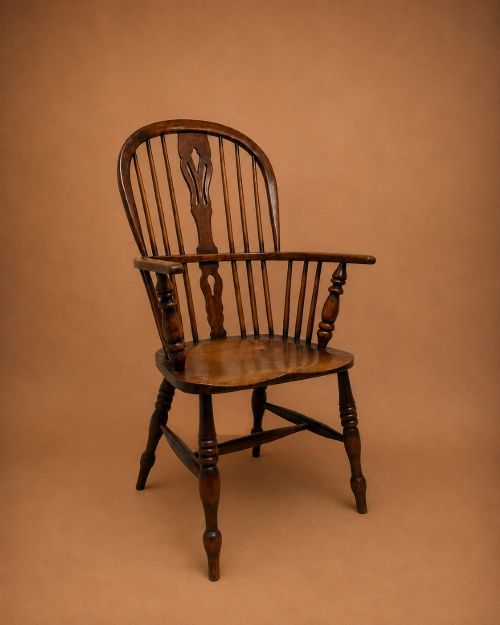
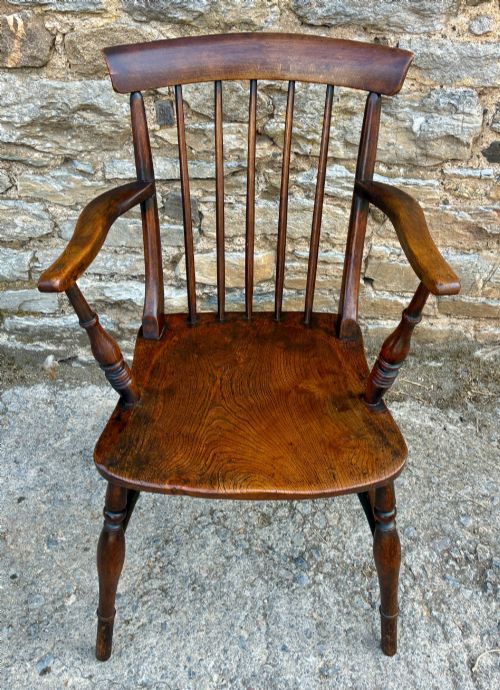


Victorian Stick Back Armchair
A victorian stick back armchair brings honest country craftsmanship and robust timber construction into a modern interior.
Victorian Stick Back Armchair
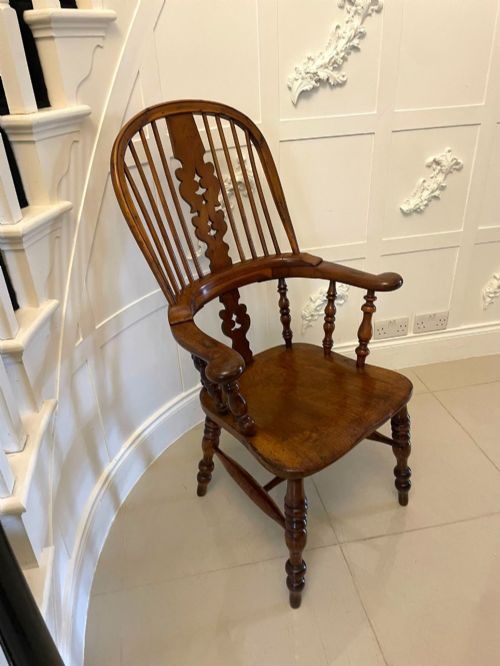
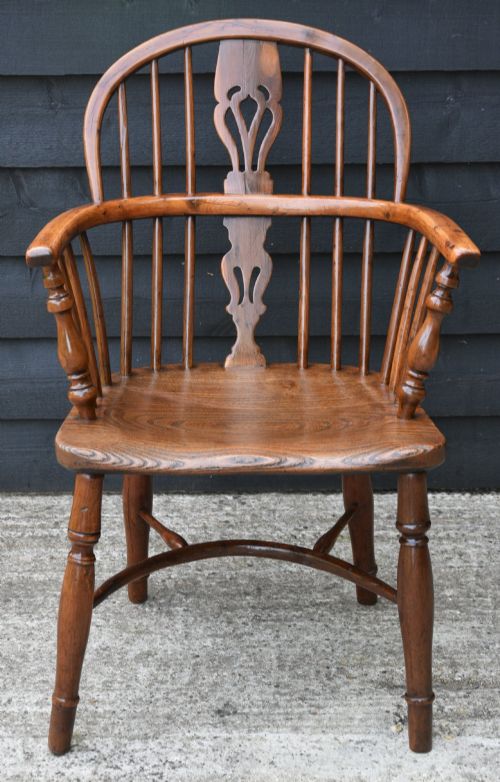
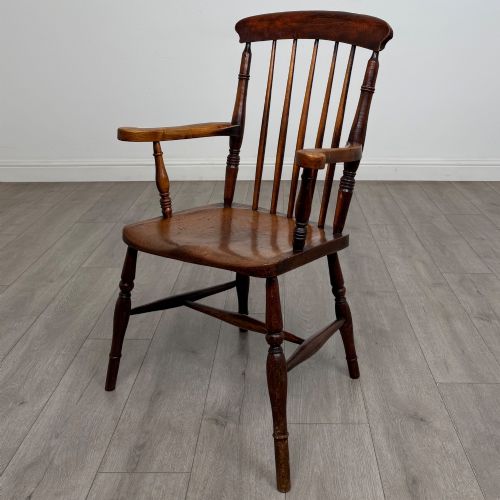
A victorian stick back armchair is a traditional country seat designed for domestic utility and enduring strength. These chairs emerge from nineteenth century vernacular traditions, combining a rigid hoop or comb framework with vertical spindles supporting the back. Buyers encounter robust seating forms built for daily use in farmhouses, kitchens, and regional parlours.
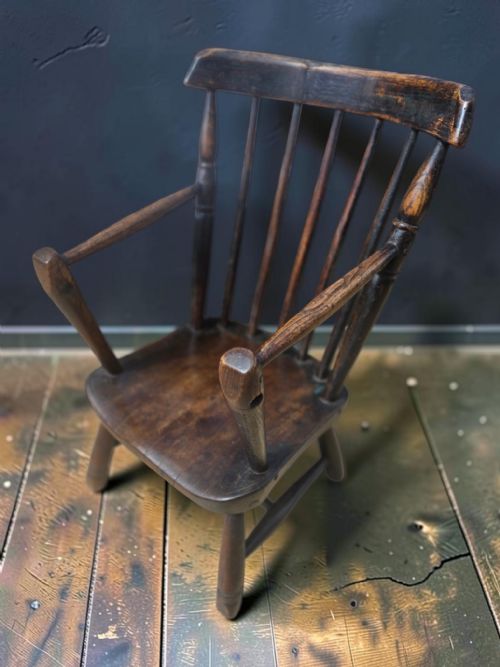
The most frequent examples on this page unite elm seats with ash or beech spindles and legs. Many pieces adopt Windsor configurations, featuring solid saddle seats and distinct arm bows shaped from bent timber. Alongside standard adult armchairs, the selection includes smaller child variants and occasional dining sets sharing the same stick back vocabulary.
How they were made
Maker construction relies on contrasting timbers selected for specific structural roles within the chair. Solid elm provides a dense, interlocking grain ideal for carved saddle seats that resist splitting under weight. Ash, beech, and oak supply flexible strength for steam-bent bows, slender spindles, and turned undercarriages.
Joinery methods depend on traditional wedged tenons where spindles and legs pierce the seat board directly. Craftsmen shape components using drawknives and pole lathes before assembling the dry timbers so that ambient moisture locks the joints permanently. Surface finishes develop naturally through decades of polishing and handling.
Listings span the nineteenth century, utilising regional timbers including elm, ash, beech, oak, and yew wood.
What varies in quality
The distinction between ordinary utility seating and superior examples lies in timber selection and sculptural fluency. Finer pieces display richly figured yew wood or carefully matched elm and ash grains that catch the light. Generously proportioned arms and well-sculpted comb or hoop backs demonstrate the maker's eye for balance.
Structural integrity and untouched surface character determine the standing of an individual chair. Examples retaining deep patination from continuous domestic service hold greater visual weight than heavily stripped or over-restored surfaces. The crispness of the turned leg details and the tightness of the wedged joints complete the hierarchy.
The Victorian Stick Back Armchair Glossary
- Comb back
- A Windsor chair variation where vertical spindles rise through a horizontal crest rail resembling the teeth of a comb.
- Windsor chair
- A timber seat constructed with individual legs and back spindles inserted directly into a solid carved seat block rather than an independent frame.
- Broad arm
- A chair arm widened significantly on one side to serve as a writing surface or resting place.
- Stick back
- A general designation for seating constructed with slender turned or cleft spindles forming the backrest.
- Vernacular
- Objects designed by regional craftsmen for practical utility rather than following strict academic architectural styles.
Victorian Stick Back Armchair: Frequently Asked Questions
Where were these chairs used originally?
These seats served principally in farmhouse kitchens, regional cottages, and country dining spaces throughout the nineteenth century. Their sturdy construction suited demanding daily domestic environments.
Later Victorian examples also appeared in provincial parlours and cottage studies as comfort took precedence in domestic design.
How do I care for timber chairs?
Keep wooden armchairs away from direct heat sources and drastic humidity changes to prevent timber shrinkage and joint loosening. Apply natural wax polish occasionally to nourish the historic surface.
Avoid synthetic cleaning sprays that strip away the accumulated patination developed over generations of use.
Are these chairs comfortable for daily seating?
The solid elm seats feature ergonomic saddle depressions carved to fit the human form during extended sitting. High comb backs and steam-bent arm bows provide reliable support for the upper body.
Adding a simple loose cushion can enhance comfort while preserving the historic timber framework.