



Traditional Wooden Canopy Bed
A traditional wooden canopy bed anchors a room with architectural presence, offering monumental scale and historic craftsmanship.
Traditional Wooden Canopy Bed
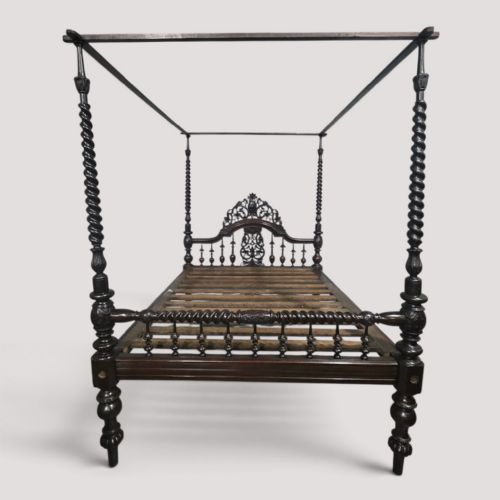
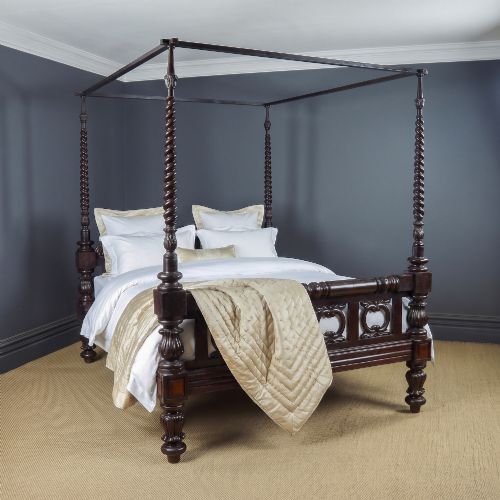
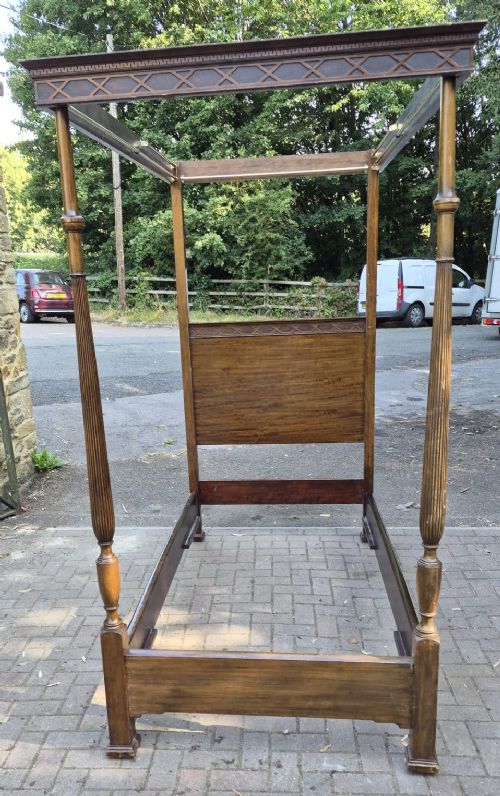
A traditional wooden canopy bed provides a commanding focal point in a bedroom, defined by vertical posts and an overhead tester or canopy frame. When you search for a traditional wooden canopy bed, you encounter substantial furniture pieces designed to create an enclosed, private sleeping space.
The selections span significant historical eras, including seventeenth-century oak examples, Georgian and Regency mahogany frames, and nineteenth-century Chinese hardwood and lacquered marriage beds. These pieces range from grand full tester designs to Victorian burr walnut half tester beds and painted pine canopy top cradles.
You are most likely to meet mahogany and oak four poster bedframes that reflect periods from the seventeenth century through the Edwardian era. These beds often incorporate stylistic revivals, traditional joinery, and substantial timber construction.
Materials and construction methods
Makers utilised dense timbers such as mahogany, oak, pine, elm, and exotic hardwoods to build structurally sound frames capable of supporting heavy canopies and testers. Joinery relied on traditional mortise and tenon techniques, ensuring stability across monumental bedposts and overhead frames.
Surface finishes include applied red lacquer, painted pine decoration, and fruitwood inlay work, particularly visible on seventeenth-century and nineteenth-century examples. Metal elements such as brass appear in structural fittings, while textiles complete the traditional enclosed canopy structure.
Traditional Wooden Canopy Bed Retail Price Guide 2026
Typical asking prices for traditional wooden canopy bed among the pieces listed under this phrase on Sellingantiques today, from the lower quarter to the upper quarter. They describe what is for sale here now, not the wider market.
Object types include standard four poster beds, half tester beds, wedding beds, and painted canopy top cradles.
Markers of quality and craftsmanship
Quality resides in the selection of timber grain, the depth and crispness of carved ornamentation on the posts and headboards, and the integrity of the original joinery. Superior examples display harmonious proportions between the heavy tester frame and the slender or turned support columns.
The distinction between standard execution and exceptional work lies in the handling of decorative details such as fruitwood inlay, lacquered finishes, and period-appropriate hardware. Original timber patination and structural cohesion separate unaltered historic pieces from later revivals.
Howard And Sons
The Traditional Wooden Canopy Bed Glossary
- Tester
- The wooden canopy frame suspended above a bed to support drapery or decorative hangings. It creates the defining architectural ceiling of a four poster bed.
- Half Tester
- A wall-mounted or post-supported canopy that covers only the head portion of the bed rather than the entire frame. This style became popular during the Victorian period.
- Marriage Bed
- A heavily decorated, enclosed wooden bed originating from Chinese traditions, frequently featuring intricate red lacquer and carved panels. These pieces served as significant family dowry items.
- Mortise and Tenon
- A fundamental woodworking joint where a projecting tenon fits snugly into a matching mortise hole, securing traditional wooden frames without metal fasteners.
- Inlay
- A decorative technique where contrasting woods or materials are inserted into recesses within the primary timber surface to create patterns.
Traditional Wooden Canopy Bed: Frequently Asked Questions
How do I clean a wooden canopy bed?
Dust timber surfaces regularly with a soft, dry cloth to prevent accumulation in carved details and mouldings. Avoid harsh chemical polishes that can degrade historic wax and lacquer finishes.
Condition the wood periodically using traditional beeswax to maintain the natural moisture and rich patination of mahogany or oak.
Will a four poster bed fit standard ceilings?
Most traditional canopy beds require high ceilings to accommodate the full height of the vertical posts and overhead tester frame. Measure your room height carefully before acquiring a grand piece.
Consider the clearance needed for decorative finials and any textile hangings attached to the top structure.
How do I date a wooden canopy bed?
Examine the timber species, tool marks left by early saws, and the complexity of the joinery used in the frame construction. Oak construction frequently points to seventeenth-century origins, while mahogany became prominent in Georgian and Regency periods.
Compare stylistic motifs such as Jacobean carving or Victorian walnut veneers against documented furniture eras.
Are these beds difficult to assemble?
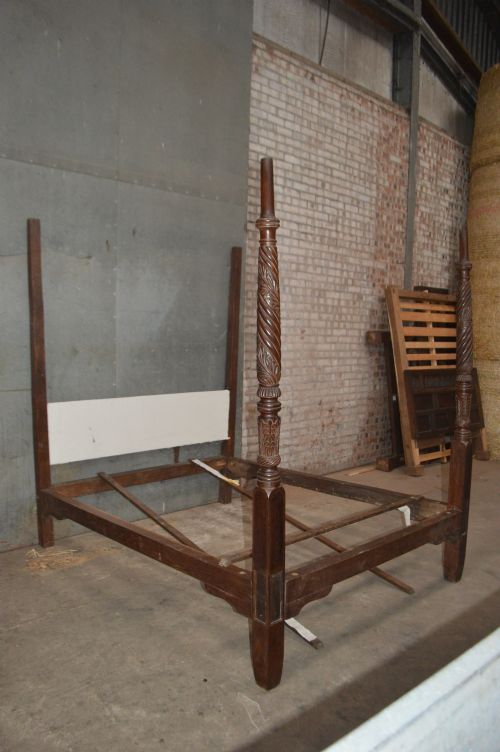
Historic wooden beds often utilise pegged mortise and tenon joints or heavy bolts that require careful alignment during assembly. Professional installation ensures the structural integrity of the tester and posts is maintained.
Take note of component positions during disassembly to simplify the rebuilding process in your bedroom.