



Traditional Wood Candle Holders
Traditional wood candle holders bring warmth and texture to a room, spanning periods from the eighteenth century to the early twentieth.
Traditional Wood Candle Holders
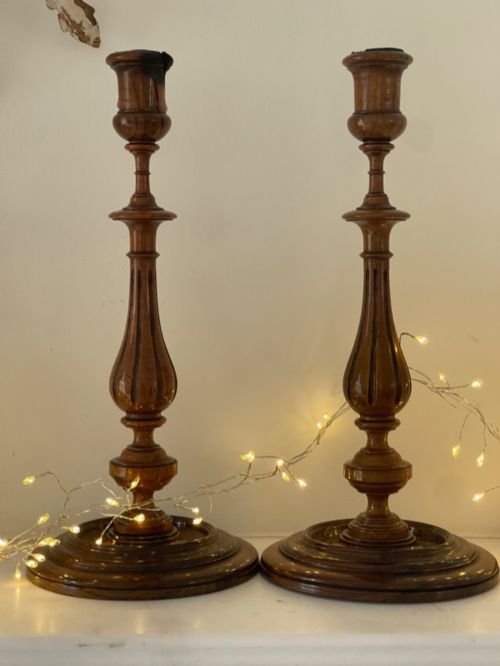
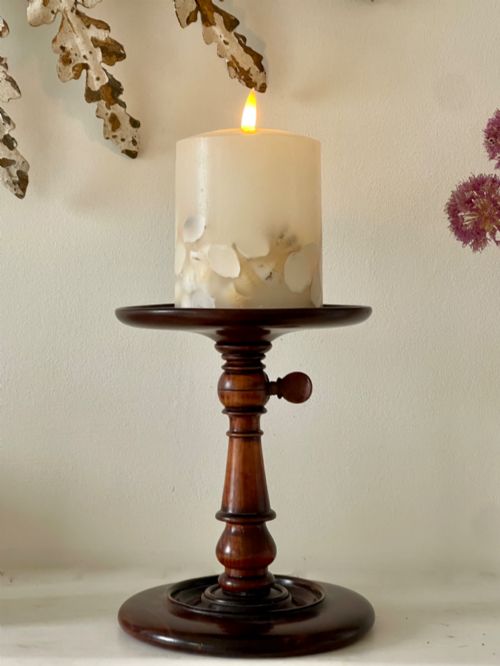
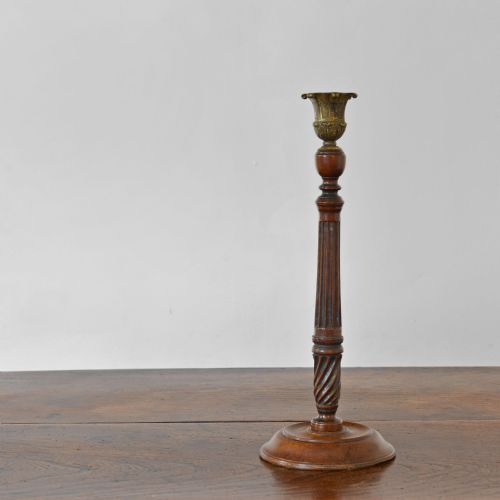
Traditional wood candle holders encompass candlesticks, wall sconces, and candle lights made from timbers such as mahogany, oak, walnut, and hardwood. When searching for traditional wood candle holders, buyers encounter turned candlesticks, barley twist designs, and carved folk art figures.
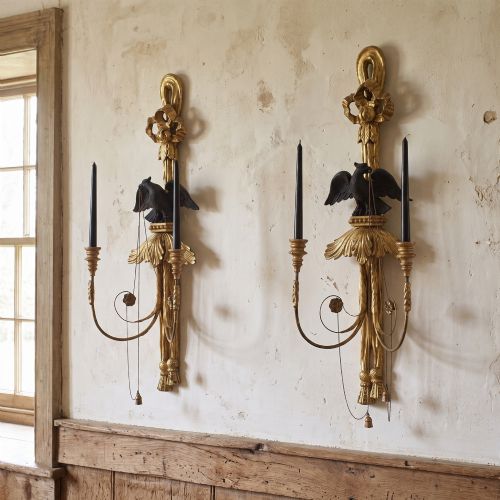
The selection ranges from Georgian vernacular mahogany pieces to early twentieth-century oak pairs and nineteenth-century treen items. Sconces with brass fittings and mirrored backs also appear alongside simple turned timber forms.
How they were made
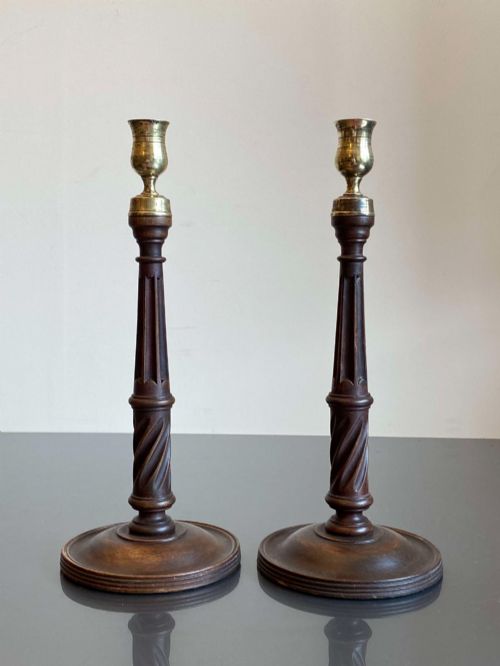
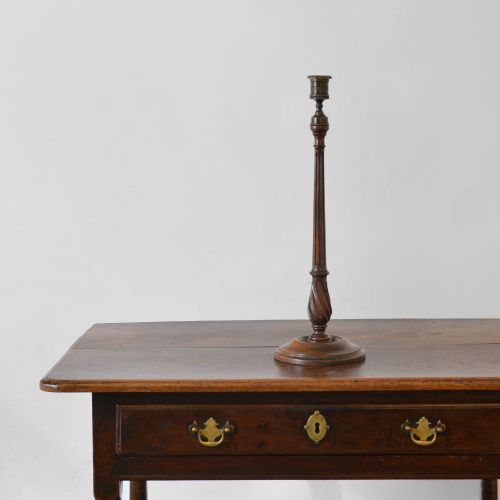
Turnery dominates the construction of these pieces, utilising lathes to shape hardwood, mahogany, and oak into barley twists and tapered columns. Carving also appears in folk art examples and giltwood wall sconces.
Many examples incorporate metal elements, combining wood with brass sconces, nozzles, and prickets to secure the candle safely. Giltwood and mirrored panels enhance specific wall sconces from the late nineteenth and early twentieth centuries.
Traditional Wood Candle Holders Retail Price Guide 2026
Typical asking prices for traditional wood candle holders among the pieces listed under this phrase on Sellingantiques today, from the lower quarter to the upper quarter. They describe what is for sale here now, not the wider market.
One exceptional pair of nineteenth-century folk art sticks depicts poachers carrying game.
What varies in quality
The refinement of the turning and the depth of the carving separate standard examples from finer pieces. Crisp details on barley twists and well-proportioned columns indicate superior craftsmanship.
The selection of timber grain and the integration of brass components influence the overall finish. Matched pairs command greater attention than assembled ones.
The Traditional Wood Candle Holders Glossary
- Treen
- Small handmade wooden household objects. These items display the skill of early turners and woodworkers.
- Pricket
- A sharp metal spike in a candlestick that holds the candle in place. This fitting appears on older ecclesiastical and domestic lights.
- Barley twist
- A spiral column shape turned on a lathe. This decorative technique is common in seventeenth-century revival and early twentieth-century pieces.
- Sconce
- A candle holder fixed to a wall. These often feature backplates of brass, mirror, or carved wood to reflect light.
- Vernacular
- Everyday objects made by local craftsmen rather than high-style workshops. These pieces reflect regional materials and traditional designs.
Traditional Wood Candle Holders: Frequently Asked Questions
How do I date an old wooden candlestick?
Dating relies on timber types, tool marks, and turning styles. Georgian pieces often feature dense mahogany, while early twentieth-century items commonly display oak or turn-of-the-century factory methods.
Examining the base and the method used to fix the candle socket provides further clues to the period of manufacture.
Are these candle holders safe to use?
Most traditional wood candle holders accommodate standard taper candles securely, especially those fitted with brass nozzles. Ensuring the base is stable prevents tipping during use.
For older or more delicate folk art pieces, utilising dripless candles or LED alternatives protects the timber from wax damage.
How do I care for antique wooden candle holders?
Maintaining wooden candle holders involves keeping them away from direct heat sources and strong sunlight, which can dry out the timber. Gentle dusting preserves the surface finish without stripping natural patination.
Avoiding excessive moisture prevents warping and protects any integrated brass or giltwood elements.