






Traditional Walnut Shelves
Traditional walnut shelves deliver warm timber tones and period character to a room, offering practical storage disguised as fine furniture.
Traditional Walnut Shelves
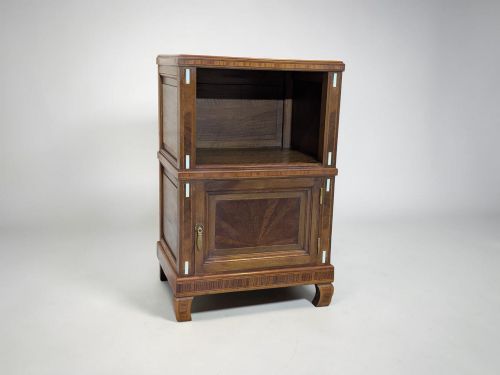
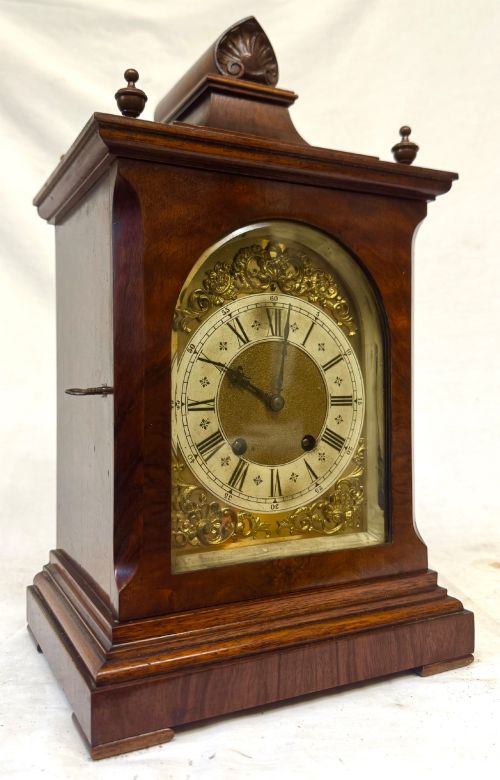
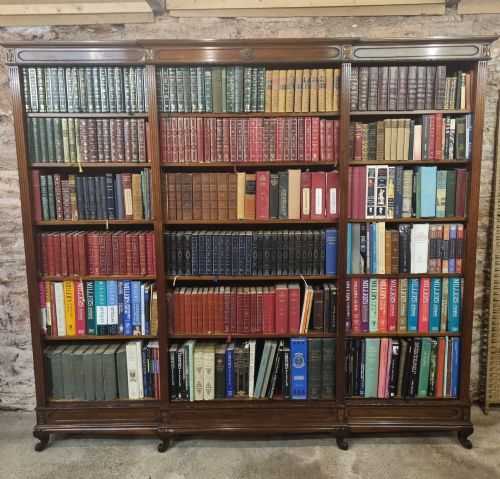
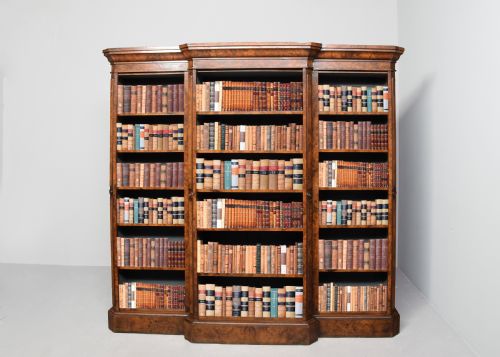
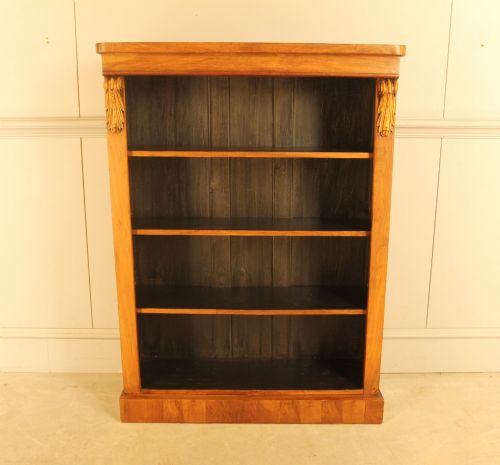
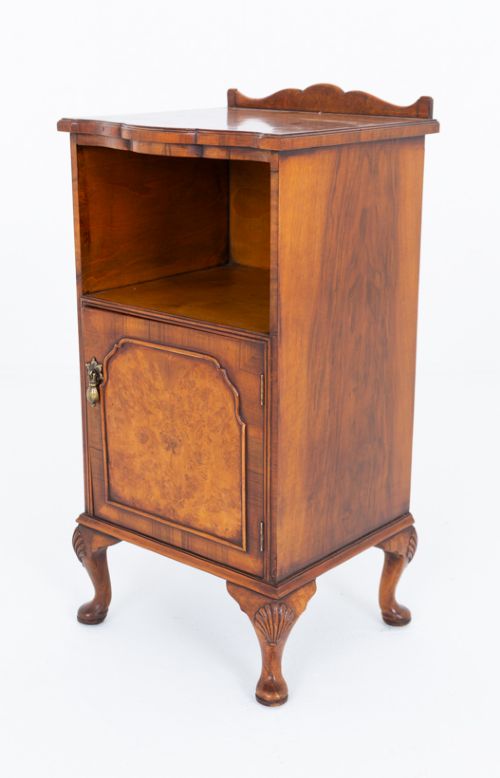
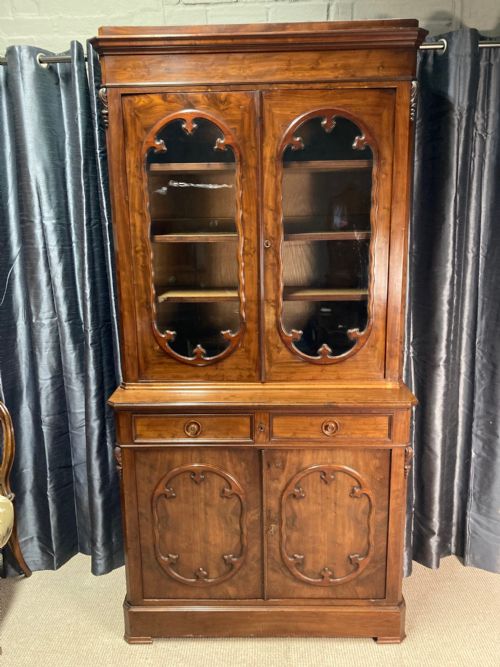
Traditional walnut shelves encompass open bookcases, dressers, plate racks, and bedside cabinets that bring rich, dark timber grain into domestic spaces. When exploring traditional walnut shelves on this page, buyers frequently encounter open bookcases from the Victorian and Edwardian eras, alongside fitted clock brackets and smaller bedside cupboards.
These items originate across the nineteenth and twentieth centuries, spanning Victorian, Edwardian, and later traditional revivals. Makers constructed them primarily as functional storage for books, clocks, and display objects in studies, libraries, and living rooms.
The selection ranges from simple stepped open bookcases with adjustable shelves to grand breakfront pieces featuring carved friezes and barley twist columns. Smaller items such as bedside tables and wall-mounted plate racks also appear, offering varied ways to introduce the wood into smaller interiors.
Factors influencing quality
Quality rests primarily on the selection of the timber veneer and the depth of the figuring across the primary surfaces. Burr walnut and highly figured grain denote superior material choice compared to plain, uniform timber boards.
Structural refinement also separates finer examples from simpler workshops, evident in crisply carved friezes, well-turned barley twist columns, and robust adjustable shelving systems that operate smoothly without binding.
Traditional Walnut Shelves Retail Price Guide 2026
Typical asking prices for traditional walnut shelves among the pieces listed under this phrase on Sellingantiques today, from the lower quarter to the upper quarter. They describe what is for sale here now, not the wider market.
A ladies Davenport sits quietly among the heavy bookcases, offering a compact writing desk disguised with charming internal stationery compartments.
Connell of London·Lenzkirch·H.A.C.
The Traditional Walnut Shelves Glossary
- Burr walnut
- A veneer taken from the knotted growth of a walnut tree, showing swirling, irregular grain patterns. It adds rich texture to cabinet fronts and tabletops.
- Breakfront
- A piece of furniture where the central section projects forward from the flanking wings. This architectural arrangement creates depth and shadow on large bookcases.
- Marquetry
- Inlays of different woods or materials fitted into a veneer to form decorative patterns. It appears frequently on panels and clock cases.
- Frieze
- The broad horizontal band of timber situated just below the cornice of a bookcase or cabinet. Carvers often decorated this area with floral or geometric relief work.
- Delft rack
- A wall-mounted wooden shelf designed to display plates and ceramics upright. These racks often feature shaped sides and plate grooves.
Traditional Walnut Shelves: Frequently Asked Questions
How do I date a walnut bookcase?
Dating relies on stylistic clues such as carved friezes, column styles, and the presence of adjustable shelf mechanisms. Victorian examples often display heavier architectural details, while Edwardian pieces can be lighter in proportion.
Construction methods also help determine age, as machine-sawn timber and simpler fixings became more common toward the twentieth century. Comparing the piece against known nineteenth and twentieth-century design periods narrows down the decade of manufacture.
What is burr walnut?
Burr walnut is a specialised veneer cut from the deformed growth or burl on a walnut tree. The resulting timber exhibits dense, swirling clusters of knots that create a highly decorative surface pattern.
Because of its striking appearance, makers reserved burr walnut for the most prominent areas of high-end furniture, such as door panels and drawer fronts.
Are the shelves adjustable on these bookcases?
Many of the open bookcases feature adjustable shelving systems, allowing owners to alter shelf heights for different book sizes. This practical arrangement was common in Victorian and Edwardian libraries.
Buyers should inspect the interior cabinet walls for the original slot mechanisms, rack strips, or peg supports that facilitate this adjustability.
How should I care for walnut furniture?
Walnut furniture benefits from stable indoor humidity and protection from direct sunlight, which can fade the rich brown tones of the wood over time. Regular dusting with a soft, dry cloth preserves the polished finish.
Applying occasional specialist wax feeds the timber and enhances the grain patterns without building up a heavy, cloudy residue.