

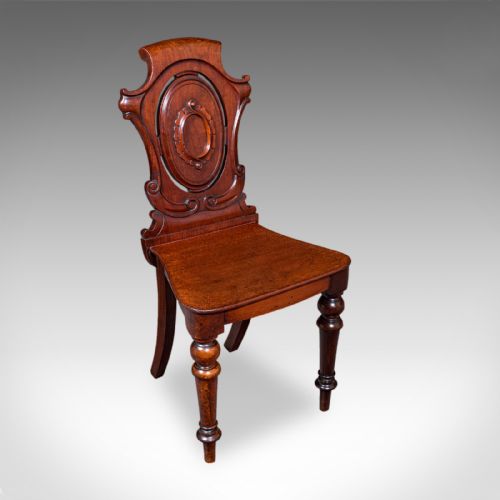


Traditional Walnut Hall Chairs
Traditional walnut hall chairs bring striking timber grain and historical presence to an entrance, making them a fine choice for practical seating.
Traditional Walnut Hall Chairs
Traditional walnut hall chairs comprise timber seating designed for entrances and reception spaces, drawing on periods such as the 18th Century, Regency, and Victorian eras. These pieces often arrive as pairs, fulfilling the historical need for symmetrical furniture flanking a hallway or landing.
The forms span Queen Anne style high backs, shield backs, and Swiss Alpine folk art designs. Most examples function equally well as side chairs or reception seats in domestic settings.
Makers and workshops across Britain and continental Europe shaped these items from rich timbers, incorporating textiles or leather where upholstery was required.
How they were made
Makers utilised solid walnut and burr walnut for the primary frames, frequently carving the timber to achieve ornate backrests and sturdy legs. Oak occasionally appears in internal or secondary structural elements.
Upholstered variants incorporate textiles, needlepoint, fabric, tapestry, and leather secured with brass details. Carved ornamentation defines the wooden surfaces across diverse regional styles.
Recorded regional origins on this page span Scottish workshops, English makers, and Swiss Alpine folk art traditions.
What varies in quality
The refinement of the carving dictates the distinction between standard utilitarian seating and high-status examples. Crisp detailing in the woodwork shows the skill of the original hand.
The selection of timber grain, particularly figured burr walnut, elevates the visual depth of the piece. Superior structural integrity in the joints ensures lasting stability for daily use.
The Traditional Walnut Hall Chairs Glossary
- Walnut
- A dense, dark hardwood prized for its rich grain patterns and durability in cabinetmaking. It forms the primary material foundation for these seating pieces.
- Needlepoint
- A form of canvas work embroidery used for historic upholstery and seat cushions. This textile technique brings intricate patterns to antique chairs.
- Escabelle
- A traditional type of wooden stool or chair often associated with Alpine folk art. These pieces showcase regional carving traditions.
- Shield back
- A chair backrest shaped like a heraldic shield, popular during the eighteenth and nineteenth centuries. This design highlights classical proportions.
- High back
- A tall vertical chair construction designed to provide upper body support and formal presence. Such proportions are typical of early eighteenth century seating.
Traditional Walnut Hall Chairs: Frequently Asked Questions
Where should I place traditional walnut hall chairs?
These chairs sit well in entrance halls, landings, or reception rooms where their decorative backs can be fully appreciated.
Because they traditionally served as occasional seating rather than lounging chairs, they function best against a wall or in pairs flanking a doorway.
How do I care for walnut furniture?
Keep walnut furniture away from direct heat sources and strong sunlight to prevent the timber from drying out or fading. Regular dusting with a soft, dry cloth preserves the natural sheen of the wood.
Avoid using silicone-based polishes, opting instead for traditional beeswax when the surface requires nourishment.
Are these chairs comfortable for daily sitting?
Most hall chairs were built for formal reception spaces rather than long periods of relaxation. Wooden seated variants offer firm posture, while upholstered versions provide softer support.
Consider adding a subtle custom cushion if you intend to use them daily at a desk or dining table.
How can I tell the period of a chair?
The style of the carved details, the joinery methods, and the specific shape of the backrest offer clear clues to the date of manufacture. Queen Anne and George I pieces display distinct cabriole legs and high backs, whereas Victorian examples often feature heavier carved framing.
Comparing the timber patination and wear patterns further helps confirm the age of the piece.