




George I Walnut Seating
George I walnut seating brings robust 18th-century cabinetmaking into a room, offering rich timber grain and classic proportions that anchor a traditional interior.
George I Walnut Seating
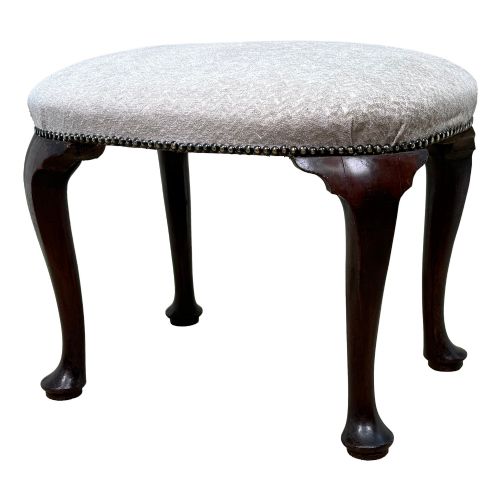
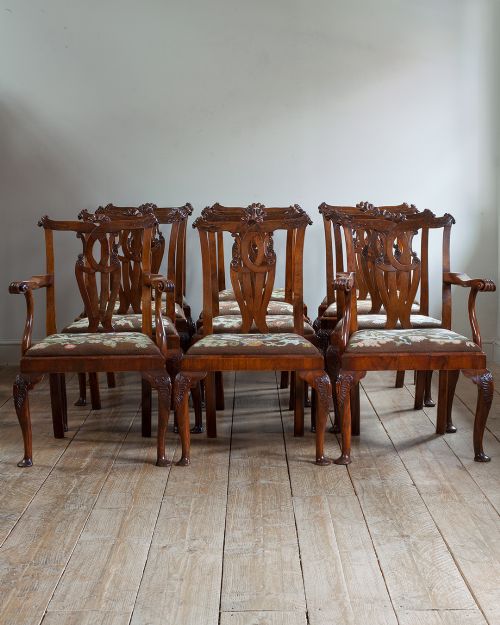
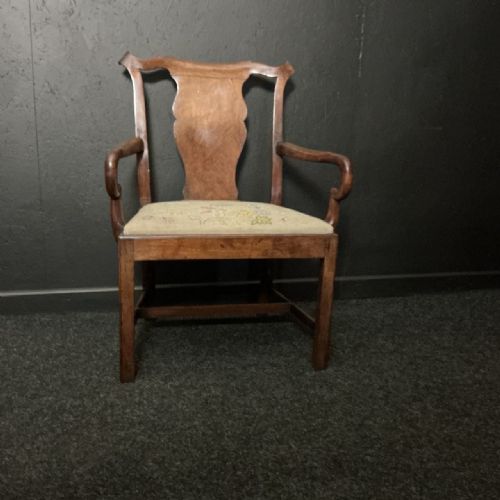
George I walnut seating encompasses a variety of domestic forms produced during the early Georgian period and later revival eras, including side chairs, dining chairs, armchairs, stools, corner chairs, and settees. These pieces frequently employ solid walnut or burr walnut timbers, often paired with upholstered elements like needlepoint, tapestry, or leather.
The objects span original 18th-century examples alongside later 19th-century and 20th-century revival interpretations, such as pieces made in 1880, 1910, and 1930. Buyers encounter both individual statement pieces, like high-back chairs and corner reading desks, and larger matched sets intended for dining spaces.
What varies in quality
The calibre of george i walnut seating depends on the selection and figuring of the walnut timber, particularly where decorative burr veneers are applied to the primary surfaces. Crisp execution of carved elements, such as cabriole leg details or shaped splats, distinguishes superior pieces from simpler workshop productions.
The integrity of the structural frame and the historical accuracy of the upholstery materials, whether original textile or period-correct needlepoint, further differentiate the standard of craftsmanship across the range.
Listings for george i walnut seating include examples dated to the 18th century, alongside revival pieces from 1880, 1910, and 1930.
The George I Walnut Seating Glossary
- Walnut
- A dense, dark timber prized for its rich grain patterns and durability in 18th-century furniture construction. It frequently serves as the primary solid wood or veneer for early Georgian seating.
- Burr walnut
- A specialised timber cut from tree growths containing intricate, swirling grain patterns. Cabinetmakers used these highly decorative veneers on prominent surfaces like chair backs.
- Cabriole leg
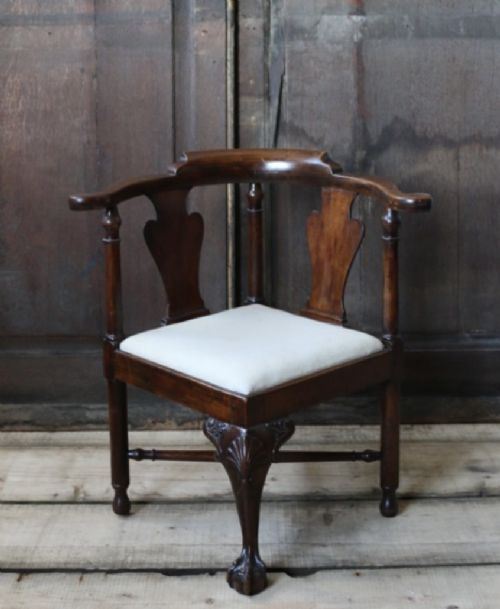
- A furniture leg featuring a double curve, bending outward at the knee and tapering inward toward the foot. This form is typical of early 18th-century seating design.
- Corner chair
- A specialised seat designed to fit into room angles, often featuring a triangular seat frame and a curved back rail. These pieces frequently served as desk or reading chairs.
- Needlepoint
- A type of canvas work embroidery used historically to cover seat inserts and drop-in pads. It provides a textured, decorative surface on period chairs and stools.
George I Walnut Seating: Frequently Asked Questions
How do I use a corner chair?
A corner chair fits neatly into room angles or functions independently as a designated desk and reading seat. Its unique triangular plan allows the sitter to utilise writing surfaces efficiently.
In modern spaces, these chairs serve well in hallways or studies where floor space is limited yet formal seating is desired.
Are walnut dining chairs sturdy for daily use?
Eighteenth-century and revival walnut dining chairs rely on rigid timber frames and traditional joinery designed to support regular weight. The dense nature of walnut provides inherent structural strength.
Proper maintenance of the joints ensures these dining sets remain functional for everyday meals and gatherings.
What is the difference between George I and George II styles?
George I seating generally reflects earlier 18th-century proportions with restrained ornamentation and robust structural lines. George II designs often introduce more developed carving and bolder cabriole forms.
Revival pieces from later centuries frequently blend these overlapping stylistic elements.
How do I care for antique upholstery?
Antique upholstery requires gentle cleaning methods suited to textiles like tapestry, leather, or velvet. Avoiding direct sunlight preserves the original colours of the fabric.
Professional textile conservation helps maintain the integrity of delicate needlepoint and older stuffing materials.